

In the modern furniture manufacturing industry, UV Roller Coating Machines have become indispensable equipment for high-quality surface treatment. They achieve high-efficiency, high-smoothness, and high-gloss UV coatings, widely used in flooring, cabinets, door panels, decorative panels, and other furniture applications.
However, during production, many manufacturers and operators have a question: Will using a UV Roller Coating Machine scratch furniture boards?
This question relates to the final appearance quality of the product and customer satisfaction. This article will explore this question in depth from multiple perspectives, including equipment structure, coating principle, analysis of scratch causes, scratch prevention methods, and maintenance points, helping you thoroughly understand and solve this common problem.
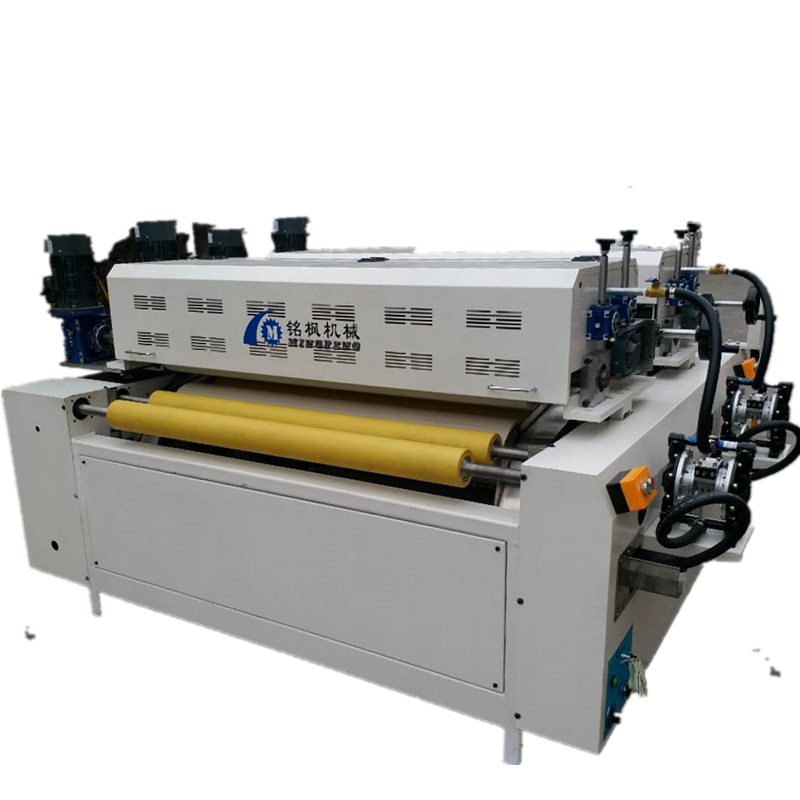
What is the coating principle of a UV Roller Coating Machine?
To determine whether a UV Roller Coating Machine will scratch furniture boards, it is essential to first understand its working principle.
1. Basic Working Process
The UV Roller Coating Machine uses multiple precision rollers (paint supply rollers, coating rollers, transfer rollers, etc.) to evenly transfer UV coating onto the furniture board surface.
During this process, the board moves smoothly along a conveyor belt, and the coating forms a thin film through the gaps between the rollers, ultimately achieving uniform coating. It then enters the UV curing system to form a hard, glossy coating.
2. Roller Surface Treatment
High-quality UV Roller Coating Machines typically use imported rubber rollers or high-precision steel rollers, which undergo mirror polishing and dynamic balancing calibration, resulting in a smooth and even surface.
Under normal use and maintenance conditions, the rollers will hardly cause mechanical scratches when in contact with the furniture board.
3. Coating Contact Characteristics
Roller coating is a non-cutting contact method; the coating acts as a lubricant between the roller and the substrate.
In other words, the roller contacts the board surface with the "buffer" of the coating film, resulting in extremely low friction and theoretically preventing scratches on the furniture board.
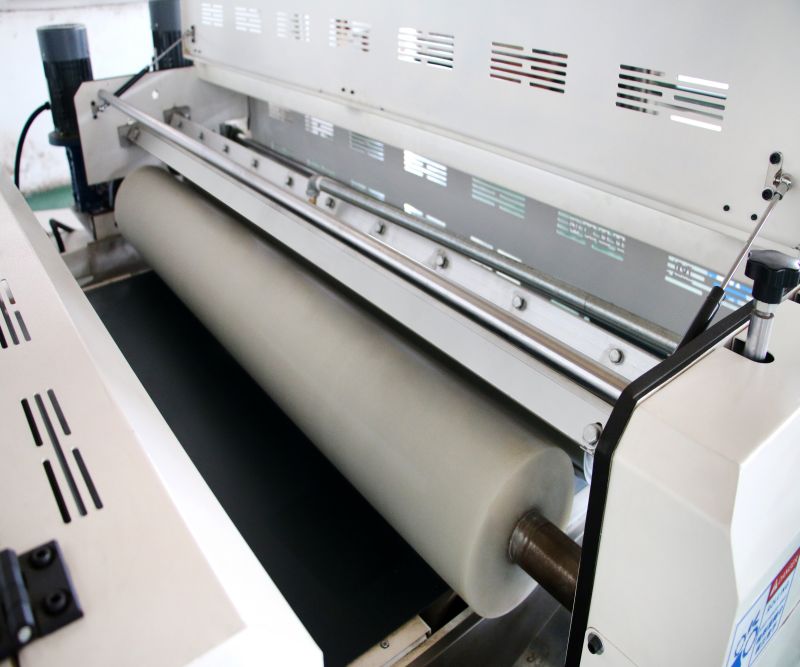
Why are furniture boards sometimes scratched?
Although theoretically UV Roller Coating Machines should not scratch furniture boards, in actual production, surface scratches, lines, or abrasions can still occur if the equipment or operation is improper.
The main causes of these problems include the following:
1. Hard particles adhering to the roller surface
If dust, sand, wood chips, or dried paint particles adhere to the roller or conveyor belt, they will be pressed into the board surface during the coating process, causing scratches.
These scratches are mostly linear and unidirectional, and are the most common type of scratch.
2. Foreign matter present on the furniture board surface
If the substrate surface is not thoroughly cleaned and contains foreign matter such as metal shavings, sand, or wood chips, they will be squeezed and dragged by the rollers when passing through the UV Roller Coating Machine, thus scratching the coating.
3. Improper adjustment of roller hardness or pressure
If the roller gap is too small or the pressure is too high, it will cause strong contact friction between the roller and the board; if the rubber roller is too hard, it cannot absorb the impact of particles, and it is also easy to cause minor scratches under high pressure.
4. Incomplete Coating Filtration
Fine cured particles, impurities, or gel-like substances mixed in with the UV coating can also form "hard spot scratches" during the roller coating process.
5. Conveyor Belt or Guiding System Issues
Severely worn conveyor belts or foreign matter on their surface can cause unstable movement of the furniture boards.
When the boards vibrate or shift under the rollers, friction marks can easily remain on the surface.
Does the design of a UV Roller Coating Machine pose a risk of scratches?
1. The Equipment's Design Principles Determine its Safety
High-quality UV Roller Coating Machines are designed with the safety of furniture board surfaces in mind.
The roller surface is precision ground (surface roughness Ra≤0.1μm), and the roller speed is strictly matched with the conveyor speed, ensuring uniform coating coverage without scratches.
Therefore, from a mechanical structure perspective, the UV Roller Coating Machine itself will not scratch the boards.
2. The Role of Equipment Protection and Cleaning Systems
Modern UV Roller Coating Machines are generally equipped with the following auxiliary systems to prevent scratches:
• Electrostatic dust removal system: Removes surface dust particles before the board enters the coating area.
• Self-cleaning roller system: Automatically cleans residual paint from the roller using a scraper and cleaning device.
• Filtration and circulation system: Ensures the coating is clean and free of impurities.
As long as these systems are operating properly, the risk of scratches is negligible.
3. Using Low-Hardness Buffer Rollers
To further reduce friction, some models are equipped with soft buffer rollers before the main roller. This design effectively absorbs minor vibrations, preventing mechanical friction from damaging the furniture board.
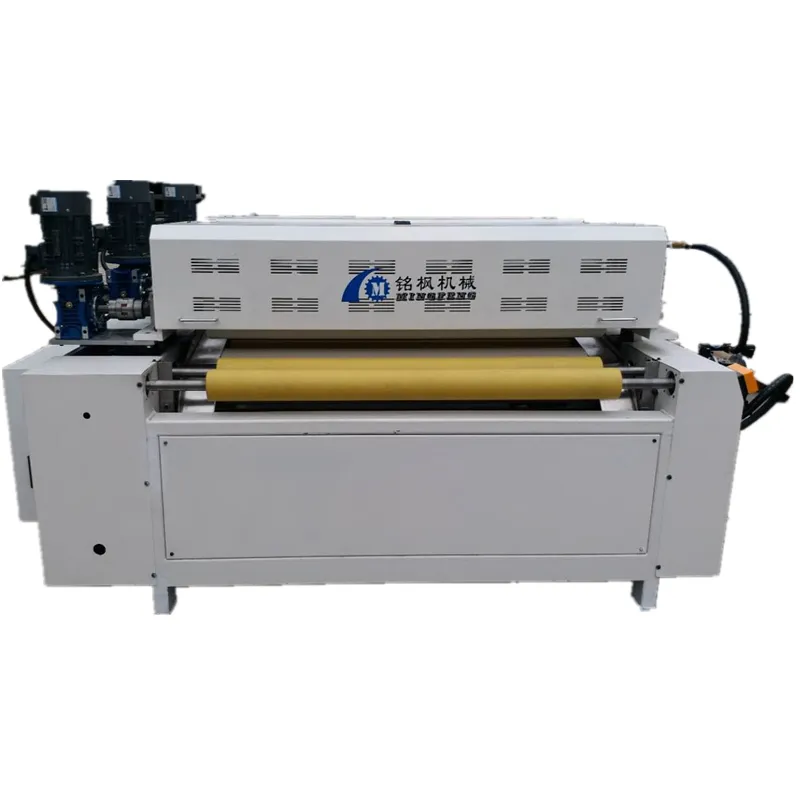
What are the specific manifestations of scratches on a UV Roller Coating Machine?
When furniture boards are scratched, the surface symptoms often vary. Observation can help determine the source of the problem:
Scratch Types | Appearance Characteristics | Main causes |
| Straight Scratch | Orientation is consistent with the conveying direction | Hard particles on the roller or conveyor belt |
| Curved Scratch | Curved shape | Misalignment of the sheet material or roller |
| Foggy Scratch | Surface is grayish-black | Rough roller surface or insufficient coating |
| Pit Indentation | Spots are regularly distributed | Curing particles mixed in the coating |
Once a scratch appears, the machine should be stopped immediately to inspect the roller surface and conveyor system to prevent further damage to subsequent boards.
How to prevent scratches through process and equipment adjustments?
1. Maintain Roller Cleanliness
• Clean the roller surface with a dedicated cleaning solution before and after each shift.
• If residual paint accumulates during coating, stop the machine immediately and wipe it clean.
• Keep the roller scraper sharp and installed evenly to prevent hardened residual paint from causing secondary scratches.
2. Strictly Control Roller Pressure and Gap
• The recommended gap between the main roller and the substrate is 0.1–0.3 mm.
• If the substrate thickness is uneven, calibrate it using the automatic leveling system.
• Adjust the coating pressure according to the substrate hardness to avoid overpressure.
3. Optimize the Coating Filtration System
The coating must be filtered before using the UV Roller Coating Machine.
• Use a filter screen of 200 mesh or finer to filter the coating.
• Clean the circulation pump and filter lines regularly.
• Replace the coating immediately if sediment or clumping is found.
4. Ensure Board Surface Cleanliness
Remove surface dust using an electrostatic dust collector or air blower before coating.
If the board has been sanded or polished, use a vacuum cleaner to remove fine powder to prevent hard particles from entering the coating area.
5. Control Environmental Conditions
• Maintain ambient temperature between 20℃ and 28℃;
• Control humidity between 40% and 60%;
• Avoid direct airflow towards the coating area to prevent dust particles from re-adhering.
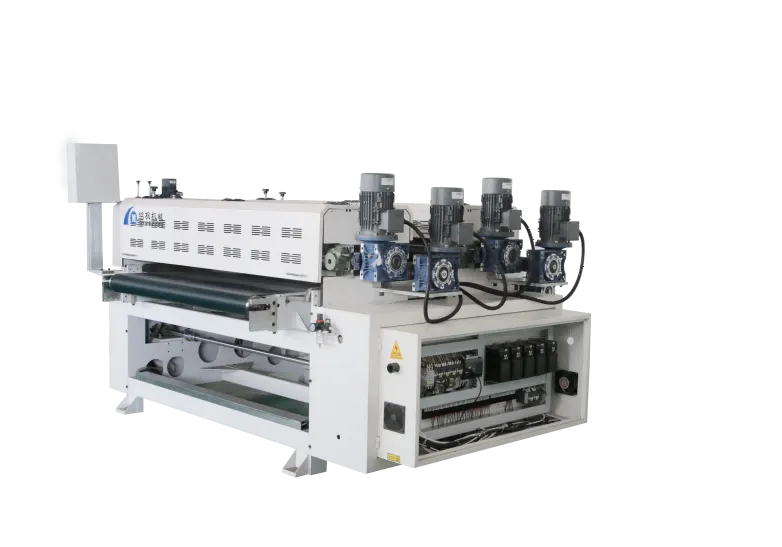
What should operators pay attention to during UV Roller Coating Machine operation?
1. Pre-operation Inspection
• Check if the roller surface is smooth and free of scratches;
• Confirm the squeegee angle and pressure are correct;
• Check the conveyor belt for any embedded foreign objects;
• Confirm the dust removal and filtration systems are operating normally.
2. Monitoring During Production
Operators should constantly observe the surface gloss and reflection of the furniture board. If any abnormal patterns are found, the equipment should be stopped immediately.
Meanwhile, frequent speed adjustments or temporary material additions should be avoided to prevent uneven paint flow and localized wear.
3. Post-Production Maintenance
• Clean all rollers and scrapers with a dedicated solvent;
• Thoroughly rinse the paint pump and circulation pipeline with thinner;
• Apply a protective treatment to the roller surface to prevent oxidation or residual UV curing.
Is the scratch problem related to the quality of the UV Roller Coating Machine?
1. High-precision equipment has a more critical roller processing technology
High-quality UV Roller Coating Machines use CNC precision grinding and chrome plating processes, resulting in high surface precision, strong wear resistance, and stable surface energy, effectively reducing the probability of scratches.
Conversely, low-end equipment, due to poor roller concentricity or high surface roughness, is more prone to scratches after long-term use.
2. Component Matching and Stability
High-end models are designed to ensure precise matching of rollers, bearings, and guide rails, guaranteeing smooth operation; while inexpensive equipment often suffers from micro-vibration problems, causing the furniture board's running trajectory to deviate and increasing friction.
3. Coating Thickness Control System
UV Roller Coating Machines equipped with Auto Gap Control monitor gaps in real time, preventing scratches caused by board thickness errors.
Can scratches be completely prevented through routine maintenance?
The answer is yes. Routine maintenance of the UV Roller Coating Machine is crucial for preventing scratches.
1. Daily Maintenance Points
• Clean the rollers and conveyor belt;
• Check for aging of the roller rubber layer;
• Lubricate the guide rails and bearings to ensure smooth operation.
2. Weekly Maintenance Points
• Check for wear on the doctor blades and replace them;
• Clean the UV lamp cover and dust filter;
• Calibrate the roller gap and record the parameters.
3. Monthly Maintenance Points
• Polish or fine-grind the rollers to ensure a smooth surface;
• Check the dynamic balance and transmission system of the equipment;
• Test the coating thickness uniformity to confirm that the equipment's accuracy has not decreased.
Continuous maintenance keeps the UV Roller Coating Machine in optimal operating condition, fundamentally eliminating the risk of scratches on furniture panels.
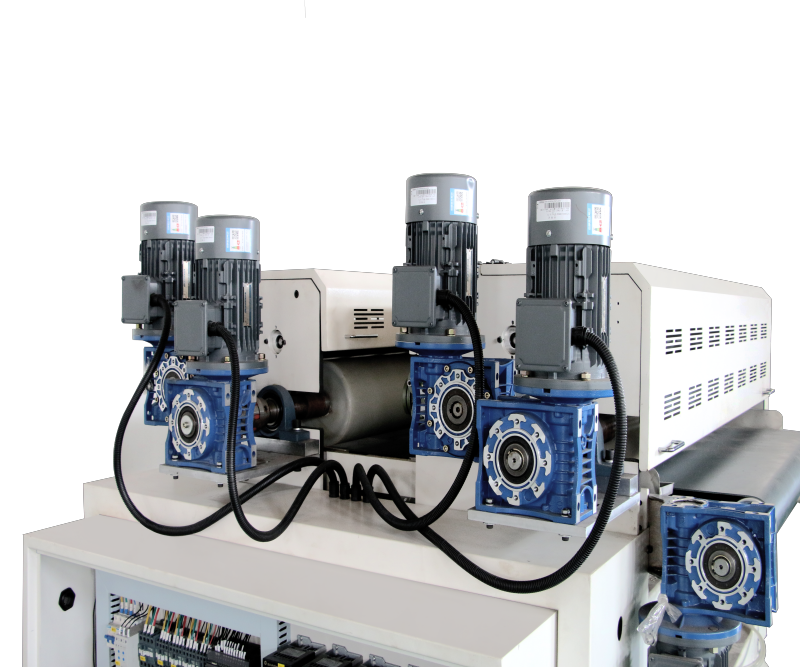
Will the UV Roller Coating Machine scratch furniture panels?
—No! Under normal operating conditions, with proper processes and maintenance, the UV Roller Coating Machine will not scratch furniture panels.
The root causes of scratches are usually:
• Insufficient environmental cleanliness;
• Paint impurities or improper filtration;
• Roller surface contamination;
• Incorrect parameter settings.
With proper equipment management and operating standards, the UV Roller Coating Machine can achieve scratch-free, high-gloss, and highly consistent furniture surface coating results.
What advantages do wholesale buyers gain from XMF Machinery?
Wholesale buyers receive exclusive benefits such as discounted prices, priority supply, customized branding options, and long-term cooperation agreements. Our factory is equipped to handle large orders while maintaining high-quality standards. These advantages make our company a strong partner for distributors and international buyers seeking reliable coating machinery at competitive wholesale prices.