
Why can UV dryer machines replace traditional drying ovens in furniture spray painting production lines?
For a long time, traditional hot-air drying ovens were the standard in furniture spray painting processes; their primary function was to heat and dry the coating after application, allowing the paint to cure gradually and form a protective film. However, as UV coating technology and UV curing equipment have matured, an increasing number of furniture manufacturers are adopting UV dryer machines to replace traditional ovens, integrating them as a key component of modern spray painting production lines. From panel furniture and solid wood furniture manufacturing to cabinet door processing and custom home furnishing finishing, UV furniture dryer machines are becoming a crucial driver of industry upgrades.
So, what specific advantages do UV furniture dryer machines offer? Why are they gradually replacing traditional drying ovens in spray painting production lines?
This article provides a comprehensive analysis across several dimensions, including working principles, production efficiency, energy conservation and environmental impact, product quality, and operating costs.
Why is the drying process so critical in a spray painting production line?
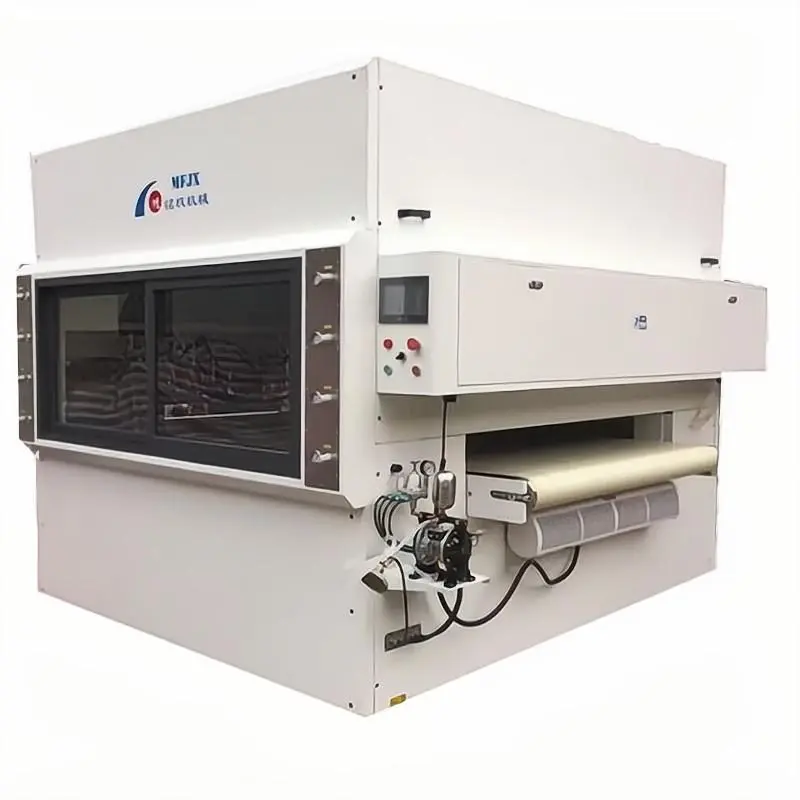
In a spray painting production line, the application of paint is only one part of the surface finishing process; the ability of the coating to form a film that provides both protection and aesthetic appeal depends largely on the subsequent drying and curing stages. Whether for wooden doors, wardrobes, cabinets, or office furniture, the applied paint layer must be fully cured to achieve the required hardness, adhesion, wear resistance, and corrosion resistance. Inadequate drying can lead to issues such as surface tackiness, scratches, loss of gloss, cracking, or even paint film delamination, thereby compromising product quality and brand image.
Traditional spray painting production lines primarily rely on hot-air circulation drying, using continuous heat to evaporate solvents and trigger the cross-linking reactions in resins necessary for curing. While this process is well-established, it suffers from drawbacks such as long drying times, high energy consumption, a large physical footprint, and significant environmental compliance challenges. In contrast, UV furniture dryer machines employ a completely different curing method: ultraviolet (UV) irradiation triggers a rapid chemical reaction involving photoinitiators within the UV coating, allowing the curing process to complete in an extremely short time. This rapid curing capability is the fundamental reason why they can replace traditional drying ovens.
What is the working principle of a UV furniture dryer machine? Why can it replace traditional drying ovens?
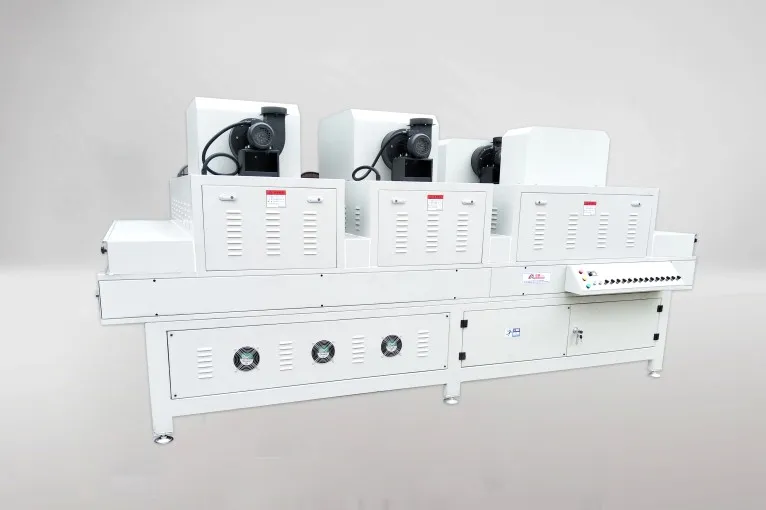
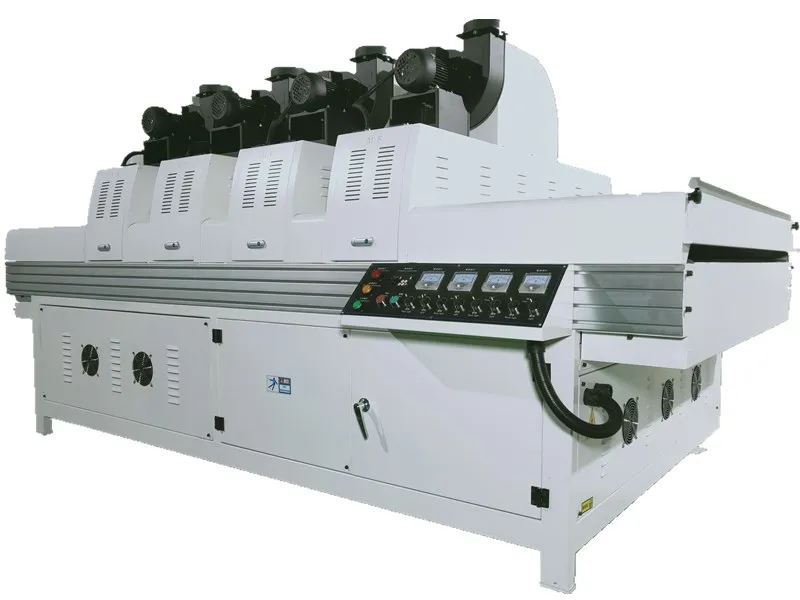
Traditional drying ovens rely on thermal energy for drying; their core mechanism involves raising the ambient temperature to accelerate solvent evaporation and resin cross-linking reactions, a process that often takes anywhere from ten to several tens of minutes. In contrast, UV dryer machines utilize photocuring technology. They expose UV coatings to specific wavelengths of ultraviolet light, causing photoinitiators within the coating to rapidly absorb energy and trigger free-radical reactions. This initiates rapid resin polymerization, ultimately forming a durable, stable finish.
Simply put, traditional ovens rely on heat, whereas UV furniture drying machines rely on light. This fundamental difference leads to significant distinctions in production efficiency, energy consumption, and equipment design.
Current UV drying machines on the market primarily utilize high-pressure mercury lamps, metal halide lamps, and—increasingly—LED UV light sources. LED UV systems, in particular, are becoming a key focus for upgrading spray painting production lines due to their lower energy consumption, longer service life, and minimal heat generation.
The greatest advantage of UV furniture drying machines: extremely fast curing speeds
For furniture manufacturers, production efficiency directly determines output capacity and profitability—areas where UV dryer machines offer a highly competitive edge.
Traditional hot-air drying ovens typically require 20 to 60 minutes for curing, with thick coatings sometimes taking hours to dry completely. UV furniture drying machines, however, measure curing time in seconds; most UV coatings achieve both surface-dry and through-dry states within just 3 to 20 seconds of exposure to UV light.
For instance, a spray painting line using traditional ovens might take over 40 minutes from the initial spraying stage to the finished product coming off the line. Conversely, a line equipped with a UV drying machine can complete the entire curing process in mere seconds. This allows enterprises to process a higher volume of products within the same timeframe, significantly boosting capacity utilization.
Data from large-scale custom furniture factories indicates that, within the same facility footprint, the introduction of UV furniture drying machines can increase overall production line capacity by over 50%, with some standardized products seeing efficiency gains of more than 100%.
UV Furniture Drying Machines Significantly Reduce Equipment Footprint
Traditional drying ovens often feature long tunnel-like designs to ensure sufficient heating and insulation time. The drying section of a medium-sized spray painting production line typically spans 20 to 50 meters, while large-scale lines can exceed 80 meters.
In contrast, UV furniture drying machines enable the entire curing process to be completed within just a few meters due to their rapid curing speeds. This allows for a more compact overall layout of the spray painting production line.
For enterprises facing land shortages or limited factory space, a smaller equipment footprint translates to lower facility construction costs and improved space utilization. This is particularly relevant given the rising land prices in major cities and industrial parks, making compact spray painting production lines a preferred choice for many furniture manufacturers.
Superior Energy Efficiency Compared to Traditional Drying Ovens
With energy costs steadily rising in recent years, an increasing number of furniture enterprises are focusing on the energy consumption of their spray painting production lines.
Traditional hot-air drying ovens require the continuous heating of large volumes of air to maintain a stable operating temperature, relying on electricity, natural gas, or diesel. For a medium-sized spray painting production line, a traditional oven typically has a power rating of 100 kW to 300 kW, resulting in substantial annual energy costs.
UV furniture drying machines, however, emit UV energy only during the instant of curing and do not require maintaining a high-temperature environment over extended periods, leading to significantly lower overall energy consumption. Industry data indicates that, for the same production capacity, UV dryer machines typically reduce total energy consumption by 30% to 70% compared to traditional ovens.
LED UV drying machines—which have become increasingly popular in recent years—offer even greater efficiency, potentially reducing energy consumption by more than 40% compared to traditional mercury-lamp UV systems. For furniture factories engaged in long-term, continuous production, the energy savings alone can allow the equipment to pay for itself within a few years.
More Consistent Product Quality
Beyond efficiency and energy consumption, product quality is another key reason furniture enterprises choose UV furniture drying machines.
During the curing process in traditional ovens, uneven temperature distribution—combined with factors such as ambient humidity and airflow fluctuations—can easily lead to issues like color variations, inconsistent gloss levels, and fluctuations in surface hardness across different product batches. UV dryer machines utilize a photocuring process, offering a reaction that is both precise and controllable. Provided the UV intensity remains stable, the curing energy received by each product is consistent, resulting in a highly uniform coating finish.
Practical applications demonstrate that spray painting production lines utilizing UV drying machines offer distinct advantages in several areas:
First, they provide superior hardness. UV coatings can typically achieve surface hardness ratings of 2H to 6H or even higher.
Second, they offer enhanced wear resistance. UV-cured furniture surfaces can withstand frequent daily friction.
Third, they ensure more stable gloss levels. High-gloss furniture achieves a mirror-like finish, while matte products maintain a uniform, refined texture.
Additionally, UV-cured coatings generally outperform traditional heat-cured systems in terms of adhesion, resistance to yellowing, and chemical corrosion resistance.
Environmental Benefits Drive the Rapid Adoption of UV Furniture Drying Machines
As environmental regulations tighten, the furniture industry faces increasingly strict controls on VOC (Volatile Organic Compound) emissions.
Traditional solvent-based spray painting lines release significant amounts of VOCs during the drying process, necessitating complex exhaust treatment systems. In contrast, many UV coatings are high-solid or even solvent-free formulations, resulting in extremely low VOC emissions during curing.
Consequently, adopting UV drying machines allows enterprises to reduce both exhaust emissions and the costs associated with environmental compliance.
Industry estimates indicate that furniture manufacturers using UV spray painting lines can reduce VOC emissions by over 70% compared to traditional painting processes. This advantage is of significant practical importance for companies seeking to pass environmental inspections and obtain "Green Factory" certification.
Synergy Between Automated Spray Painting Lines and UV Furniture Drying Machines
The furniture manufacturing industry is currently evolving toward smart factories, and UV drying machines offer natural synergy with automated spray painting lines.
Due to their rapid curing speeds, UV drying machines integrate seamlessly with automatic spraying equipment, robotic painting systems, and intelligent conveyor chains to create a continuous production flow. Products move immediately from spraying to curing, and then directly to inspection, packaging, or the next processing stage, thereby significantly shortening the production cycle. In contrast, traditional drying ovens often require long waiting times and can easily become an efficiency bottleneck for the entire spray painting production line.
Consequently, when setting up smart spray painting production lines, an increasing number of modern furniture factories prioritize UV dryer machines as their curing equipment.
Can UV furniture drying machines completely replace traditional drying ovens?
Although UV drying machines offer numerous advantages, current industry trends indicate that they cannot fully replace traditional drying ovens in every scenario.
UV furniture drying machines have become the mainstream choice for flat furniture panels, cabinet doors, laminate flooring, decorative boards, and mass-produced standardized products. However, traditional hot-air drying processes remain valuable for products with complex structures, significant shadowed areas, or those utilizing specialized paint systems.
Therefore, many high-end spray painting production lines currently employ a hybrid model combining UV curing and hot-air curing, flexibly selecting the process based on specific product characteristics to achieve optimal production results.
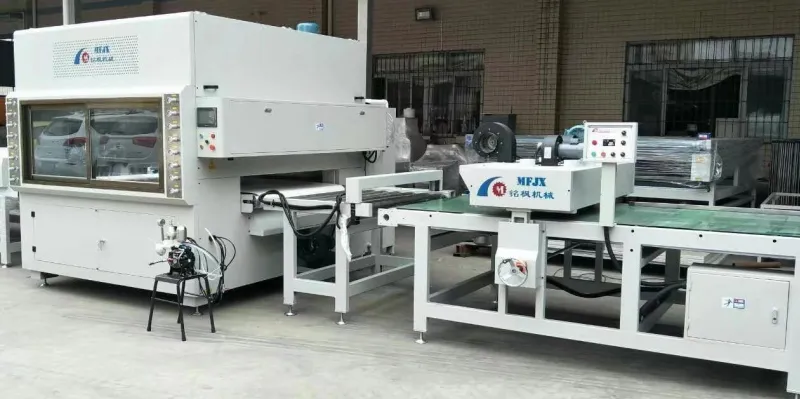
FAQ
FAQ 1: What is the main difference between a UV furniture drying machine and a traditional drying oven?
The primary difference lies in the curing principle. Traditional drying ovens rely on thermal energy for drying, whereas UV dryer machines utilize ultraviolet light to trigger a photochemical reaction, enabling rapid curing.
FAQ 2: How fast is the curing process with a UV furniture drying machine?
Most UV coatings cure within 3 to 20 seconds after exposure to a UV dryer machine, whereas traditional drying ovens typically require over 20 minutes.
FAQ 3: Are UV furniture drying machines energy-efficient?
Yes. Depending on production conditions, overall energy consumption is typically 30% to 70% lower than that of traditional drying ovens; LED UV equipment offers even greater energy savings.
FAQ 4: Are UV furniture drying machines suitable for all spray painting production lines?
Not necessarily. They are most effective for flat panels and standardized products, whereas products with complex structures may still require a combination with traditional hot-air curing processes.
FAQ 5: Is the investment cost for a UV dryer machine high?
Although the initial investment in the equipment is typically higher than that for standard drying ovens, most enterprises can achieve a return on investment within a relatively short period due to increased production efficiency, reduced energy consumption, and lower labor and environmental compliance costs.