

In modern coating production lines, CNC automatic spraying machines have become crucial equipment for improving coating efficiency and consistency. However, many operators encounter a common problem during use—uneven paint thickness.
Inconsistent paint thickness not only affects the appearance quality of the product but can also lead to insufficient adhesion, paint film cracking, or inconsistent surface gloss.
This article will analyze the causes of this phenomenon from multiple perspectives, including equipment structure, spraying parameters, operating settings, and environmental factors, and provide detailed solutions to help you better master the key points of using a CNC automatic spraying machine.
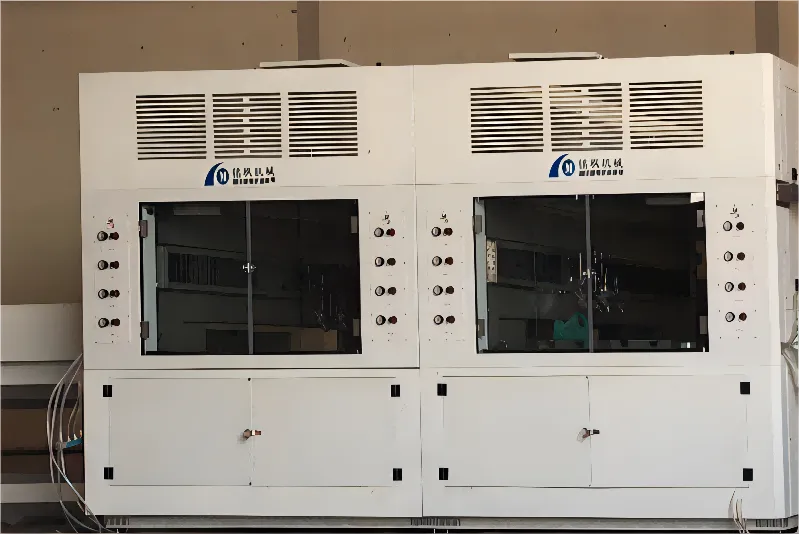
Why is the paint thickness easily uneven on a CNC automatic spraying machine?
Uneven paint thickness mainly stems from the combined effects of multiple factors, including spray gun control, paint atomization, stroke accuracy, and workpiece positioning. Although CNC automatic spraying machines rely on computer programs to control the spraying path, if any aspect is set improperly, even automated equipment cannot guarantee a consistent paint film.
Common direct causes of uneven paint thickness include:
• Unstable paint output from the spray gun;
• Improper spray path spacing settings;
• Mismatch between spray angle and workpiece surface;
• Uneven spraying speed;
• Poor paint atomization quality;
• Inadequate equipment maintenance.
To fundamentally solve the problem of uneven paint thickness, a comprehensive analysis and calibration of the operating parameters of the CNC automatic spraying machine is necessary.
Does unstable paint output from the spray gun lead to uneven paint thickness?
The spray gun is one of the core components of a CNC automatic spraying machine, and the stability of its paint output directly determines the uniformity of the paint layer. If the spray gun nozzle is clogged or worn, or if there are large pressure fluctuations in the paint supply system, the amount of paint mist sprayed will vary, resulting in significant differences in thickness.
Common factors causing unstable paint output include:
• Nozzle wear or clogging: After long-term use, the nozzle orifice diameter changes, affecting the paint mist distribution.
• Fluctuations in air supply pressure: An unstable air compression system can alter the atomization level.
• Inconsistent paint viscosity: Different batches of paint or variations in temperature can lead to different flow rates, resulting in variations in paint output.
• Incomplete paint filtration: Impurities enter the spray gun system, affecting nozzle flow.
Solutions should focus on regularly cleaning the spray gun, maintaining stable air pressure, using qualified paint, and setting appropriate viscosity. Ensuring nozzle cleanliness and stable air supply is the first step in maintaining uniform paint thickness on a CNC automatic spraying machine.
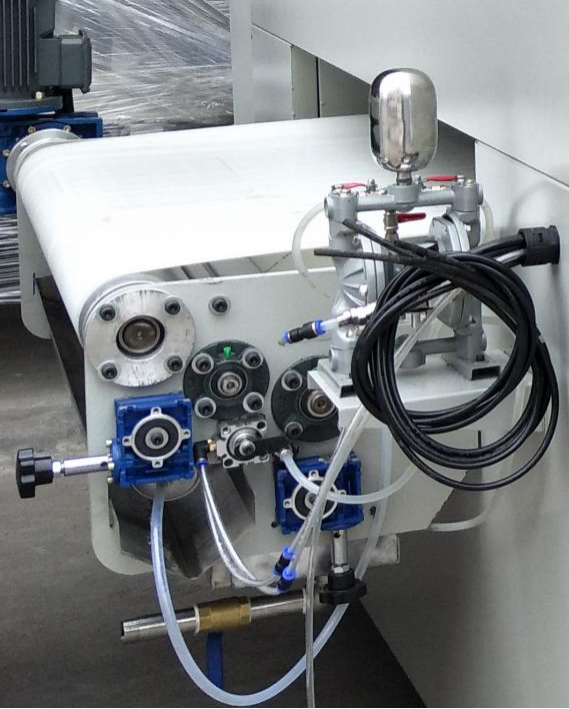
What are the effects of improper spray path settings?
In a CNC automatic spraying machine, the spray path is programmed. Excessive path spacing or improper overlap will directly lead to uneven paint film thickness.
• Excessive spacing: Insufficient spray coverage, resulting in localized thin layers.
• Excessive overlap: Overlapping paint leads to paint film buildup, resulting in thick layers or even runs.
Therefore, during the programming phase, the spacing and overlap ratio of the spray paths should be calculated reasonably based on the spray gun width, atomization angle, and spraying distance. Generally, the overlap rate should be maintained between 30% and 50% to ensure uniform coverage.
On CNC automatic spraying machines with multiple spray guns working in tandem, attention must also be paid to the synchronization and overlap range between the spray guns to avoid obvious boundary lines between spray areas or repeated spraying.
Does the spraying angle affect the paint film thickness?
The answer is yes. The spraying angle is an extremely important variable in CNC automatic spraying machines. When the spray gun is perpendicular to the workpiece surface, the paint mist deposition is most uniform; however, if the angle deviates too much, the paint mist coverage will decrease significantly, resulting in a phenomenon where one side is thicker than the other.
Common angle issues include:
• Spray gun angle deviation: The installation angle deviates from the program setting, causing paint to concentrate on one side;
• Workpiece surface curvature variation: Lack of angle compensation for curved or uneven surfaces results in uneven paint thickness;
• Unstable spray gun movement: Insufficient robotic arm control precision causes angle fluctuations.
The key to optimizing the spraying angle lies in precisely adjusting the robotic arm's movement trajectory to maintain a constant relative angle between the spray gun and the workpiece surface. For curved workpieces, an angle compensation algorithm can be used to allow the CNC automatic spraying machine to automatically adjust the spraying posture.
Is uneven spraying speed the main cause of thickness differences?
Spraying speed is one of the important parameters for controlling paint film thickness. Higher speeds result in thinner paint films, while slower speeds result in thicker paint films. The speed of the CNC automatic spraying machine is controlled by a servo motor. If mechanical vibration, transmission errors, or program execution delays occur, it will lead to localized changes in spraying speed, resulting in uneven thickness.
Furthermore, using different speed settings for different spraying paths (e.g., edge deceleration, center acceleration) can also cause differences in layer thickness. Therefore, maintaining stable spraying trajectory speed is crucial for achieving high-uniformity spraying.
Optimization can be achieved through the following methods:
• Calibrate servo motor parameters;
• Check for wear on drive belts or guide rails;
• Set smooth acceleration/deceleration curves in the program to avoid sudden stops or starts;
• Ensure consistent speed for each spraying path.
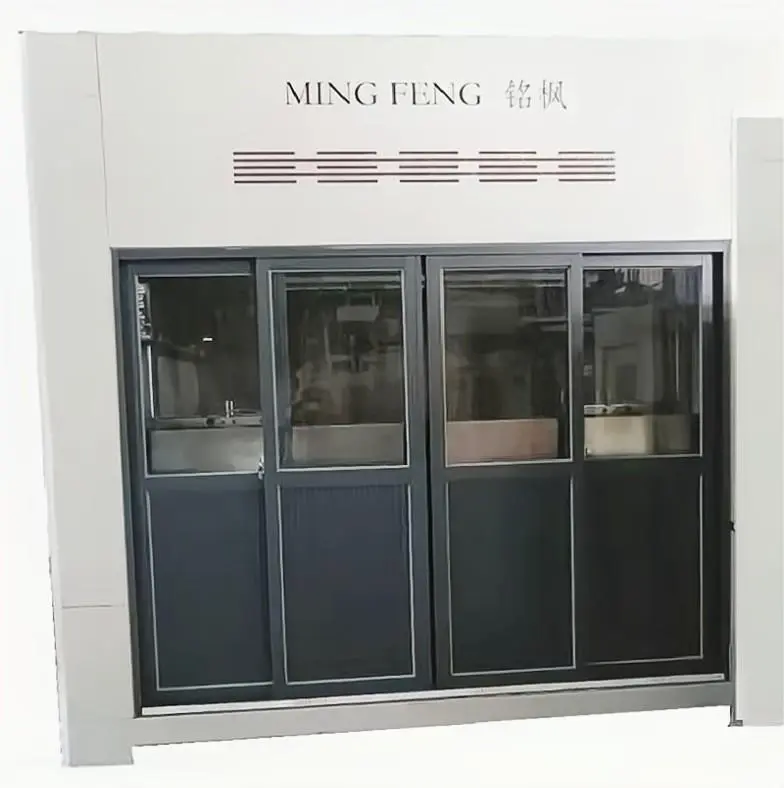
Why does poor paint atomization lead to uneven paint film?
CNC automatic spraying machines rely on airflow or electrostatic principles to atomize paint into fine particles. If atomization is insufficient, the paint particles will be of varying sizes, resulting in a coating of uneven thickness on the surface.
Poor atomization is usually caused by the following reasons:
• Insufficient nozzle air pressure;
• Paint viscosity is too high;
• Unsuitable air humidity or temperature;
• Water or impurities in the paint pipeline.
To ensure uniform atomization, the air pressure should be maintained within the recommended range for the spray gun, the paint dilution ratio adjusted, and the ambient temperature and humidity controlled within a reasonable range (typically 20-25℃, relative humidity 40%-60%).
Atomization quality directly affects paint adhesion and thickness consistency, and is a key indicator for quality control in CNC automatic spraying machines.
Do environmental factors also affect the coating thickness of a CNC automatic spraying machine?
Many users easily overlook the impact of the spraying environment on thickness. Airflow, temperature and humidity changes, and dust particles in the spraying environment can all lead to uneven paint mist distribution or premature drying, thus affecting film thickness.
Especially when operating a CNC automatic spraying machine under conditions without constant temperature and humidity, the following problems are likely to occur:
• High temperature causes excessively rapid solvent evaporation;
• High humidity causes decreased paint mist adhesion;
• Turbulent airflow causes paint misalignment;
• High dust content in the air leads to uneven surface.
Therefore, a relatively stable environmental condition should be maintained in the painting workshop, and an air purification and temperature/humidity control system should be installed to ensure the painting stability of the CNC automatic spraying machine.
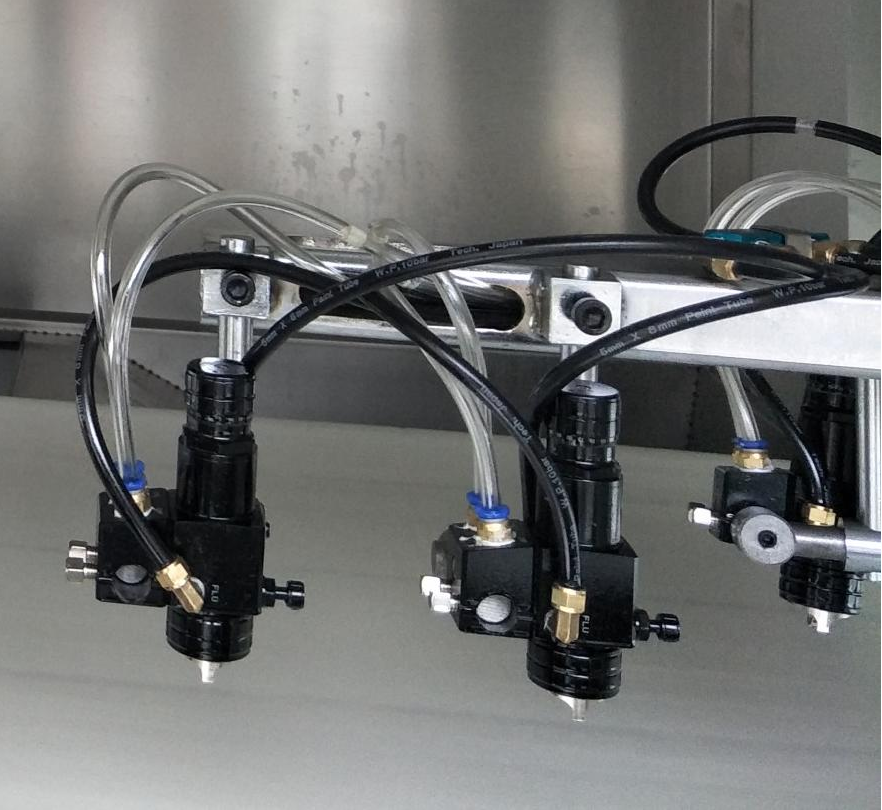
How to prevent uneven paint thickness through daily maintenance?
To maintain consistent paint thickness over the long term, daily maintenance and inspection are essential. CNC automatic spraying machines are precision equipment; neglecting maintenance, even with correct programming and operation, will inevitably lead to quality fluctuations.
Key points of daily maintenance include:
• Regularly clean the spray guns and nozzles to prevent paint buildup and clogging;
• Check the air compression system and maintain stable air pressure;
• Calibrate the spray gun angle and path program;
• Check the spraying speed and stroke accuracy;
• Keep the painting environment clean and dry;
• Check the filters and oil-water separator to ensure paint purity.
Through systematic equipment maintenance management, the problem of uneven paint thickness in CNC automatic spraying machines can be greatly reduced, improving spraying consistency and finished product yield.
What makes XMF Machinery’s roller coating machines high quality?
XMF Machinery’s roller coating machines are designed and manufactured with strict quality standards and practical production experience. As a professional manufacturer and supplier, we use reliable components, precise machining, and stable transmission systems to ensure uniform coating thickness and smooth surface effects.
Our roller coating machines are suitable for flat panels and special-shaped materials, supporting various paint types. Customers can purchase machines with customized roller sizes, speeds, and coating systems according to their production needs.