

In modern furniture manufacturing, UV Roller Coating Machines have become an indispensable key piece of equipment in the coating process. Whether it's panel furniture, solid wood furniture, or flooring, the UV coating process determines the surface texture, gloss, and wear resistance of the product.
The most crucial question is: how many rollers are typically used in a UV coating machine for a furniture production line? This not only relates to equipment compatibility but also directly affects production efficiency and coating quality.
This article will provide an in-depth analysis from multiple dimensions, including technical principles, structural types, roller configurations, functional characteristics, and applicable scope, giving you a comprehensive understanding of the selection logic and key technologies for different roller types of UV coating machines in furniture production lines.
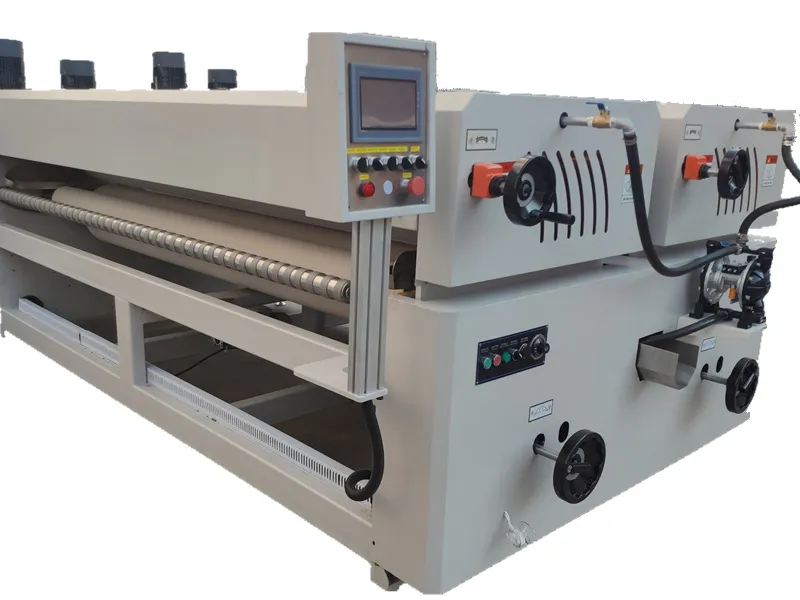
What is a UV Roller Coating Machine?
A UV Roller Coating Machine is a device that uses a multi-roller structure to evenly coat UV-cured coatings (such as UV primers and topcoats) onto the surface of furniture panels. Unlike traditional spraying methods, UV roller coating utilizes a mechanical roller pressing principle to achieve high-precision coating control.
Its core advantages are:
• Uniform coating with controllable thickness;
• High material utilization and minimal paint waste;
• Suitable for continuous, high-volume production;
• Enables high-speed curing when used with UV curing lines.
UV Roller Coating Machines are widely used in furniture production lines for surface coating of MDF, particleboard, solid wood veneer, and plastic boards. They are essential equipment for achieving various visual effects such as high gloss, matte, and openwork finishes.
Why do furniture production lines commonly use multi-roller structures?
Furniture coating requires high precision and consistency. Single-roller or double-roller structures often cannot meet the complex process requirements; therefore, most furniture factories choose multi-roller UV Roller Coating Machines.
The advantages of multi-roller structures include:
• Refined control of coating layers: By dividing the work among multiple rollers (paint supply roller, metering roller, transfer roller, coating roller, etc.), different coating thicknesses can be controlled.
• Adaptable to various coating properties: Different UV paints (high gloss, matte, primer, topcoat) have different viscosities, and the multi-roller design allows for flexible matching.
• Improved coating stability: Multiple rollers stabilize flow rate and pressure, avoiding coating defects such as bubbles and sagging.
• Optimized surface smoothness: Multiple rolling passes achieve a smooth and flat surface, suitable for high-end furniture coating requirements.
Therefore, in furniture production lines, common UV Roller Coating Machines are often three-roller, four-roller, or five-roller structures.
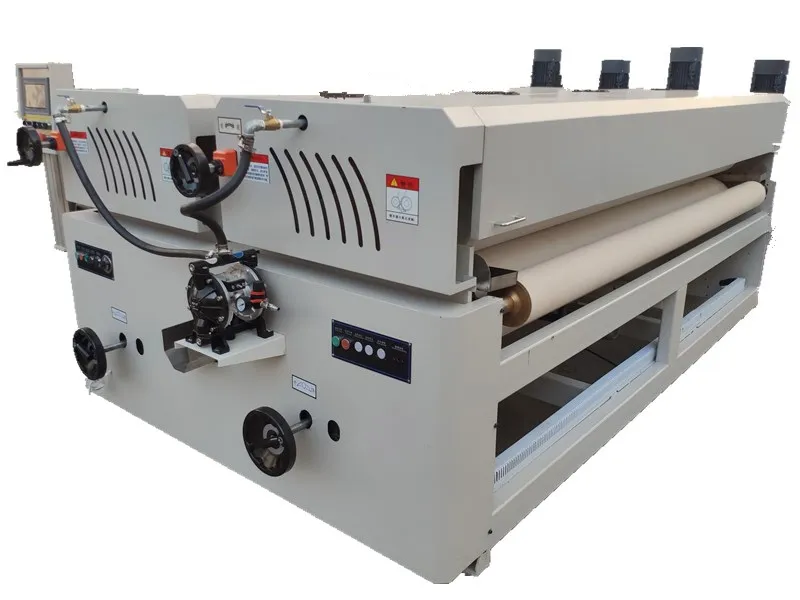
How many roller types are commonly used in furniture production lines for UV coating?
Depending on different process requirements, coating types, and production cycles, the commonly used roller types of UV Roller Coating Machines in the furniture industry mainly include the following:
1. Two-roller UV Roller Coating Machine
The two-roller structure is the most basic form of UV coating, typically consisting of a paint supply roller and a coating roller.
Features include:
• Simple structure and easy operation;
• Suitable for low-viscosity coatings or primer processes;
• Coating thickness is more difficult to precisely control;
• Coating uniformity is slightly lower, suitable for rough finishing or initial coating.
This type of UV Roller Coating Machine is commonly used in the priming or sealing primer processes of furniture production lines, and is a relatively economical configuration.
2. Three-Roller UV Roller Coating Machine
Three-roller UV Roller Coating Machines are widely used in the furniture industry. Their typical structure includes: a paint supply roller, a metering roller, and a coating roller.
Their main advantages are:
• Wider range of coating thickness adjustment;
• Adaptable to medium- and high-viscosity UV coatings;
• Good coating stability;
• Smooth and even coating with excellent leveling properties.
On furniture production lines, three-roller machines are often used in the intermediate or topcoat coating stages. For example, for medium-density fiberboard (MDF), sealing primers, PU primers, and UV high-gloss paints.
It is the most balanced design among UV Roller Coating Machines, balancing coating quality and equipment cost.
3. Four-Roller UV Roller Coating Machine
The four-roller structure adds a metering roller or back pressure roller to the three-roller design for more precise control of the coating film thickness.
Features include:
• Precisely adjustable coating thickness with minimal error;
• Suitable for high-requirement UV primers, topcoats, or high-gloss coatings;
• Excellent coating uniformity with a smooth, ripple-free surface;
• Capable of continuous high-speed operation with high stability.
In furniture production lines, four-roller UV Roller Coating Machines are commonly used in sections requiring high-gloss or mirror-like finishes and are a popular choice for high-end furniture manufacturers.
Its precision roller system can control coating variations at the micrometer level, making it suitable for coating high-standard boards.
4. Five-Roller UV Roller Coating Machine
The five-roller UV Roller Coating Machine is one of the most precise and automated models currently used in furniture production lines. The typical structure includes:
• 1 supply roller;
• 2 metering rollers;
• 1 transfer roller;
• 1 coating roller.
Its main advantages include:
• Extremely uniform coating, meeting ultra-high gloss requirements;
• Suitable for multi-layer composite coatings or multiple UV processes;
• Supports higher line speeds and automated production;
• High requirements for paint rheological properties, but yields the best finished product.
The five-roller structure is the most precise form of UV Roller Coating Machine, often used for high-gloss coating of high-end furniture surfaces, piano lacquer panels, decorative panels, and flooring surfaces.
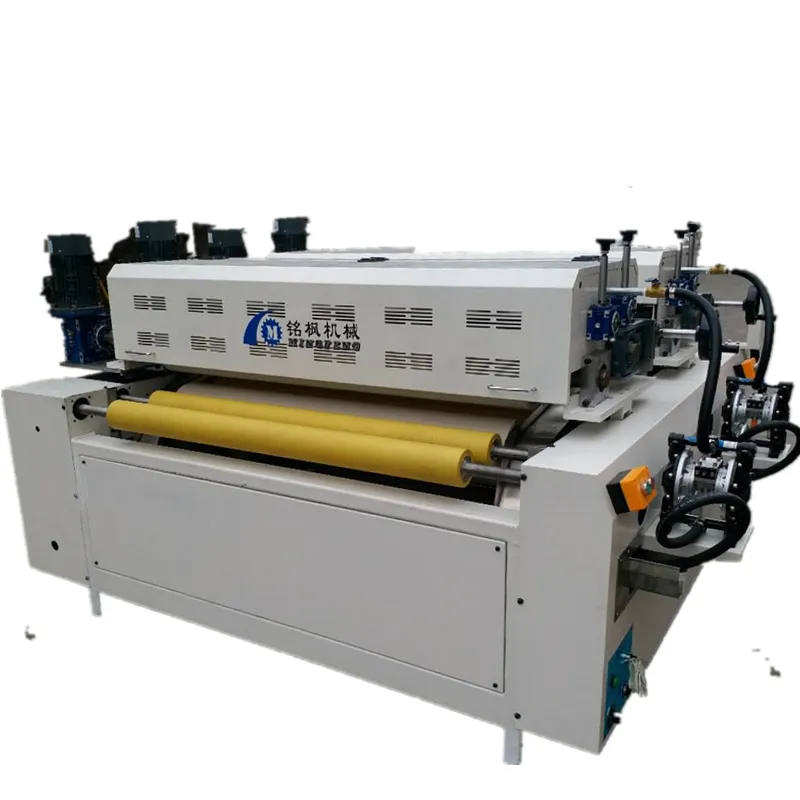
How to choose the right number of rollers for a UV Roller Coating Machine?
When choosing a UV Roller Coating Machine, you should not only focus on the number of rollers, but also consider the following key factors:
• Paint characteristics: High-viscosity UV paints require more metering rollers for precise control.
• Product Type: Flat panel furniture surfaces are suitable for three- or four-roller machines; textured panels or irregularly shaped parts require specialized models.
• Production Cycle and Efficiency: For fast production and uniform workpiece specifications, multi-roller high-speed machines can be selected.
• Coating Thickness Requirements: For high-gloss mirror coatings, four- or five-roller structures should be selected; for primer sealing layers, two- or three-roller machines can be selected.
• Equipment Maintenance and Cost: Although multi-roller structures offer superior performance, they are more complex to maintain and more expensive; a comprehensive consideration is necessary.
Therefore, when configuring UV Roller Coating Machines for furniture production lines, a comprehensive selection should be made based on actual production needs to meet process requirements while controlling investment costs.
What are the differences in application between different types of UV Roller Coating Machines in the process?
On furniture coating lines, different roller structures are typically arranged in different process sections. For example:
• Two-roller UV Roller Coating Machine: Used for sealing primers and isolating coatings;
• Three-roller UV Roller Coating Machine: Used for intermediate coatings and surface smoothing;
• Four-roller UV Roller Coating Machine: Used for varnishing or high-gloss coatings;
• Five-roller UV Roller Coating Machine: Used for precision coating and high-end finishes.
Through this segmented approach, furniture production lines can form a complete coating-curing-sanding-recoating system, achieving continuous, streamlined operation.
What are the common technical parameters of UV Roller Coating Machines?
Understanding the equipment's technical parameters is crucial during selection and operation. Typical technical parameters of a UV Roller Coating Machine include:
• Coating width: 800–1300 mm
• Coating thickness: 2–80 μm (adjustable)
• Linear speed: 5–30 m/min
• Roller speed ratio: 1:1–1:3 (adjustable)
• Applicable coatings: UV-curable coatings, PU primers, acrylic paints, etc.
• Roller materials: Wear-resistant rubber rollers, stainless steel rollers, silicone rollers, etc.
• Control system: Variable frequency speed control or servo control
These parameters directly determine the applicability and coating quality of the UV Roller Coating Machine.
Is more rollers always better?
A common misconception is that more rollers mean better results.
In reality, while more rollers do result in higher coating precision, they are not necessarily suitable for all furniture manufacturing processes.
• For ordinary boards, a three-roller system is sufficient.
• For high-end mirror panels, a four- or five-roller system is more suitable.
• If the production line prioritizes speed and stability, the coordination between automation and roller configuration should be prioritized, rather than simply focusing on the number of rollers.
The correct approach is to match the most suitable roller structure based on the coating type, board material, and process objectives.
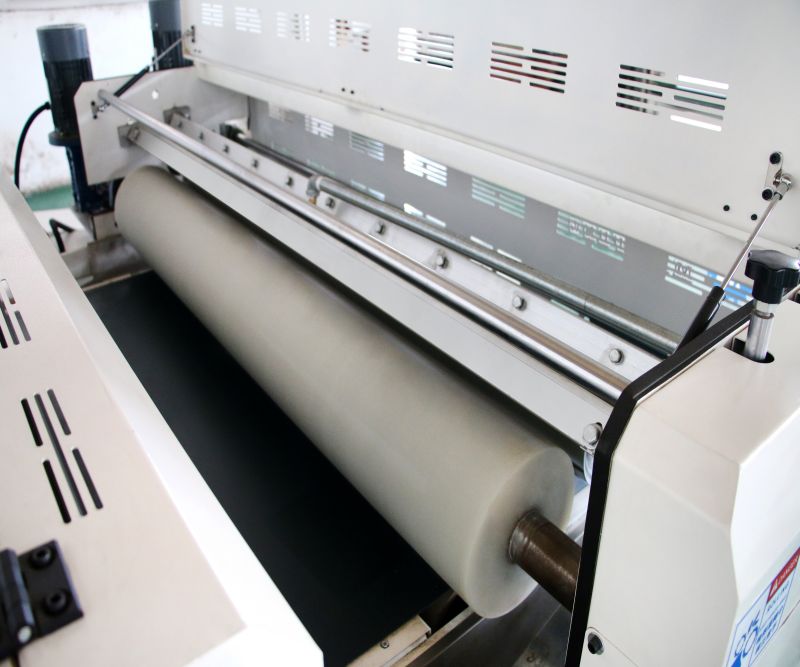
What number of rollers are commonly used in furniture production lines for UV coating?
In summary, the most common and practical roller structures in furniture production lines are:
• Three-roller UV Roller Coating Machine: The most versatile, widely used in primer, intermediate coat, and topcoat stages;
• Four-roller UV Roller Coating Machine: Suitable for coatings requiring high gloss and high smoothness;
• Five-roller UV Roller Coating Machine: Suitable for ultra-high-end finishes and high-precision coating.
Two-roller systems are mainly used in low-cost or initial sealing primer stages.
Therefore, from the perspective of application frequency and practicality, three-roller and four-roller UV Roller Coating Machines are the most widely used and most stable configurations in furniture production lines.