

In the field of modern wood products, furniture, flooring, and decorative panels surface treatment, the UV roller coating machine has become one of the core pieces of equipment for high-efficiency, high-precision coating. It uses a precision roller system to evenly apply UV paint to a smooth substrate surface, and works in conjunction with UV curing equipment for rapid curing, significantly improving production efficiency and coating quality.
However, many companies often have questions during the selection or use process: "Which UV paints are suitable for a UV roller coating machine?", "What are the requirements for roller coating equipment for different UV paints?", and "How to select the matching UV paint system according to product type?"
This article will analyze the matching relationship between UV roller coating machines and UV paints in depth, comprehensively explaining their applicable types, technical characteristics, and precautions, helping you scientifically select the best UV paint system to achieve high-quality, low-cost surface coating.
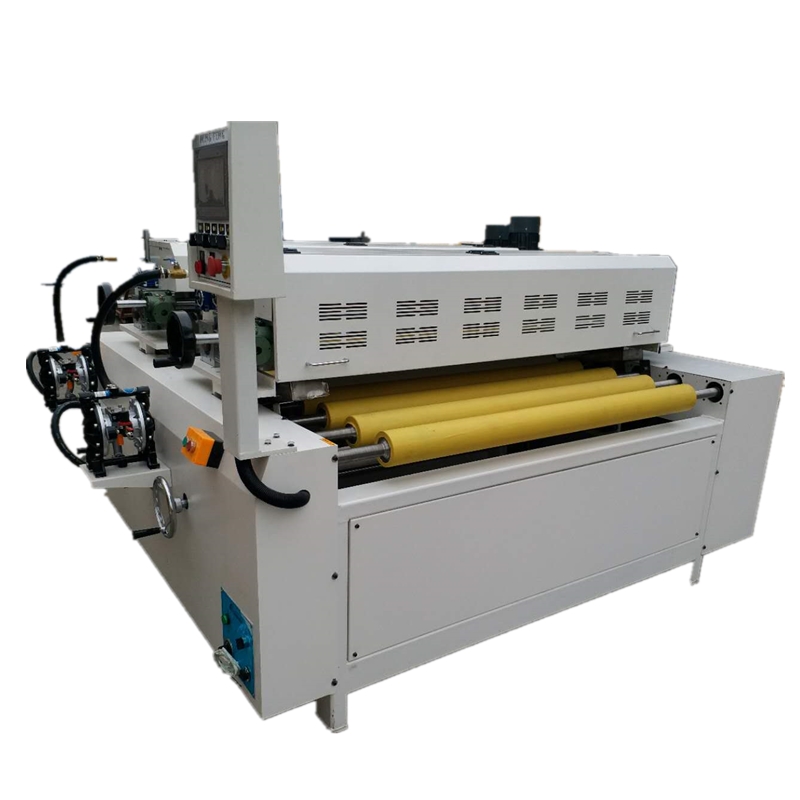
Why does a UV roller coating machine need to be matched with dedicated UV paints?
Before understanding which UV paints are suitable for a UV roller coating machine, it is first necessary to understand why different coating methods require different coating systems.
A UV roller coating machine is a device that uses a mechanical roller as the coating medium. It relies on the coordinated action of a paint supply roller, a coating roller, and a transfer roller to uniformly transfer liquid paint to the workpiece surface at a specific thickness.
This process requires the coating to possess:
• Appropriate viscosity and flowability—the ability to form a continuous film without sagging or piling;
• Excellent leveling properties—the ability to spread naturally within a short time, forming a smooth coating film;
• Good adhesion and curing performance—the ability to bond tightly to wood, PVC, MDF, or other substrates and to cure rapidly under UV light.
If the paint formulation is mismatched, for example, if the flowability is too high, the reaction speed is too slow, or the curing depth is insufficient, even the most advanced UV roller coating machine cannot achieve the desired coating effect.
What are the common types of UV paints used in UV roller coating machines?
UV paints can be divided into several types based on their function and application characteristics. Not all types are suitable for roller coating equipment, so understanding their differences is crucial.
1. UV Primer
UV primers are typically used to enhance adhesion, fill substrate pores, and level the surface. It has moderate viscosity and good flowability, making it ideal for UV roller coating machine application.
Features include:
• Fast leveling and strong hiding power;
• Minimal sagging after roller coating;
• Strong adhesion to substrates such as wood and MDF.
Common applications: Undercoating for wooden doors, floors, and cabinet panels.
2. UV Top Coat
The UV top coat determines the final appearance and surface properties (gloss, hardness, abrasion resistance, etc.).
UV top coats suitable for UV roller coating machines are typically low-viscosity systems, requiring good leveling and fast surface drying.
Classification:
• High-gloss top coat (gloss ≥ 90°);
• Matte top coat (gloss ≤ 25°);
• Medium-gloss top coat.
Different top coats require different roller hardness and coating speeds to avoid orange peel or run marks.
3. UV Sealer
UV sealer isolates the substrate from the topcoat layer, preventing bleeding or absorption. These sealers typically have low viscosity and high reactivity, making them ideal for high-speed application with a UV roller coating machine.
Features:
• Thin coating, fast leveling, and easy curing;
• Excellent sealing effect on MDF, solid wood, and veneer panels.
4. UV Tinting Paint and UV Coloring Primer
These paints are primarily used to control wood grain or achieve decorative surface effects. Compared to spray systems, roller coating requires careful control of film thickness and pigment dispersion.
Suitable tinting paints for UV roller coating machines should possess the following characteristics:
• High transparency;
• Uniform flow;
• Minimal color variation.
5. Special Functional UV Paints
These include special UV systems with scratch resistance, fingerprint resistance, soft touch, and chemical resistance.
Whether they can be used with a UV roller coating machine depends on the rheological properties of the resin in the formulation and the curing reaction rate. Generally, soft-touch or matte UV systems are better suited for low-speed roller coating to avoid flow marks.
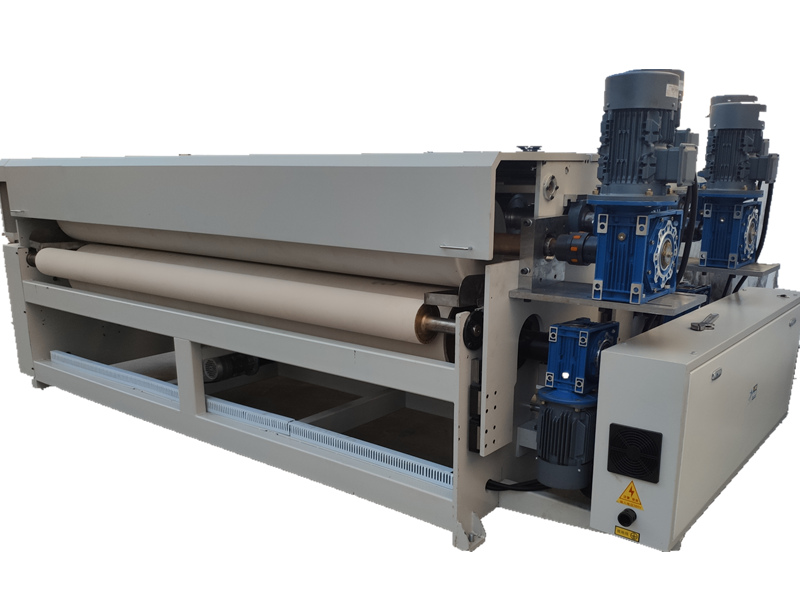
Which specific types of UV paints are suitable for UV roller coating machines?
Based on practical applications, the following types of UV paints have the highest compatibility with UV roller coating machines:
1. Low-viscosity UV acrylic paints
This type of paint is the most commonly used formulation for UV roller coating machines. Acrylic systems have excellent flowability and adjustable reaction rates, adapting to different roller speeds and coating thicknesses.
Advantages:
• Wide controllable viscosity range (200~800 cps);
• Strong compatibility with various substrates;
• High application stability, less prone to sagging.
2. UV clear topcoats with balanced photoinitiator content
Clear UV paints require high transparency and smoothness under high-speed curing. UV roller coating machines can achieve a mirror effect through thin, uniform coating.
Key compatibility factors are:
• Uniform photoinitiator reaction;
• Appropriate leveling agent ratio;
• Less prone to yellowing after reaction.
3. Matte UV Paints
Matte systems often incorporate matting agents (such as silica powder or wax particles). The stable output of the roller coating machine ensures a uniform particle distribution on the surface, minimizing uneven gloss.
Especially suitable for products requiring a soft texture, such as furniture, wooden doors, and office panels.
4. Sealing Primer and Intermediate UV System
Used as an intermediate layer in multi-layer coatings. A UV roller coating machine can precisely control the coating thickness, ensuring sealing and smooth sanding. This type of UV paint has high fluidity, fast reaction speed, and low curing shrinkage, making it an important component of roller coating systems.
5. Water-Based UV Hybrid System Paints
This type of paint combines water-based and UV resins, offering both environmental friendliness and high hardness. Although it requires stricter process parameters, the stable speed and precise gap control of the UV roller coating machine effectively address these requirements.
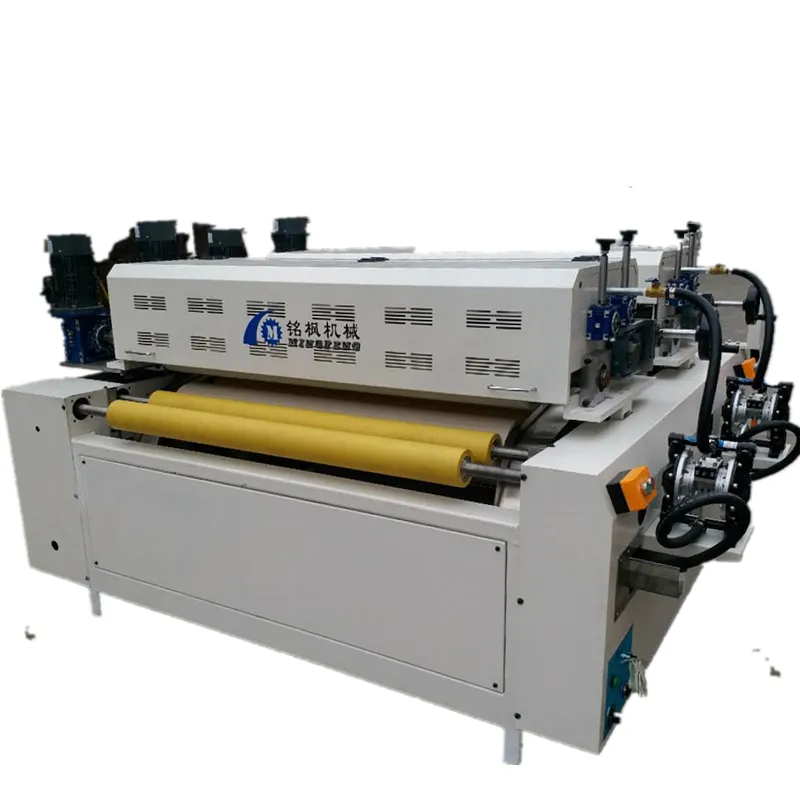
Why are not all UV paints suitable for UV roller coating machines?
Many paint manufacturers offer UV systems designed for spray, curtain, or spray coating equipment, and may not be suitable for roller coating processes. The following types of UV paint are generally not recommended for UV roller coating machines:
• High-viscosity UV putty or thick-coat UV paint – prone to paint piling or sagging;
• Fast-curing UV spray paint – reacts too quickly and is prone to gelling during roller coating;
• UV matte paint containing large-particle fillers – can wear down the roller or cause uneven coating;
• UV systems requiring high-temperature activation – incompatible with room-temperature roller coating equipment.
Therefore, when selecting, clearly indicate on the paint label whether it is "Rolling Type" or "Roll Coating Use Only".
How to determine if a UV paint is suitable for a UV roller coating machine?
Before purchasing or testing, you can assess it from the following aspects:
1. Viscosity and Flowability Testing
Measure the paint viscosity at 25°C (using a DIN 4 cup or Brookfield viscometer). The ideal viscosity is generally controlled between 300 and 700 cps. Too thin and it will sag; too thick and it won't transfer properly.
2. Coating Stability Test
Use a UV roller coating machine to apply a sample and observe whether the paint film is uniform and whether defects such as ripples, bubbles, and pinholes appear.
3. Curing Effect Evaluation
Test the hardness (≥2H), adhesion (0-grade cross-cut adhesion), and abrasion resistance of the cured paint film to ensure it meets process requirements.
4. Gloss and Appearance Inspection
Select a high-gloss or matte system according to requirements and check the surface smoothness and consistency.
What matching parameters should be considered when selecting UV paint?
To achieve optimal performance from a UV roller coating machine, the matching of equipment and paint process parameters must be considered simultaneously:
Parameters | Recommended Range | Notes |
| Paint viscosity | 300–700 cps | Too low a temperature will cause sagging; too high a temperature will make it difficult to transfer |
| Coating amount | 3–10 g/m² | Too thick a coating will hinder curing; too thin a coating will result in poor hiding power |
| Roller speed ratio | 1:1.05–1.15 | Ensure uniform application |
| UV lamp power | 80–120 W/cm² | Guide the surface and the substrate to cure simultaneously |
| Ambient temperature | 20–25℃ | Excessive temperature can reduce viscosity |
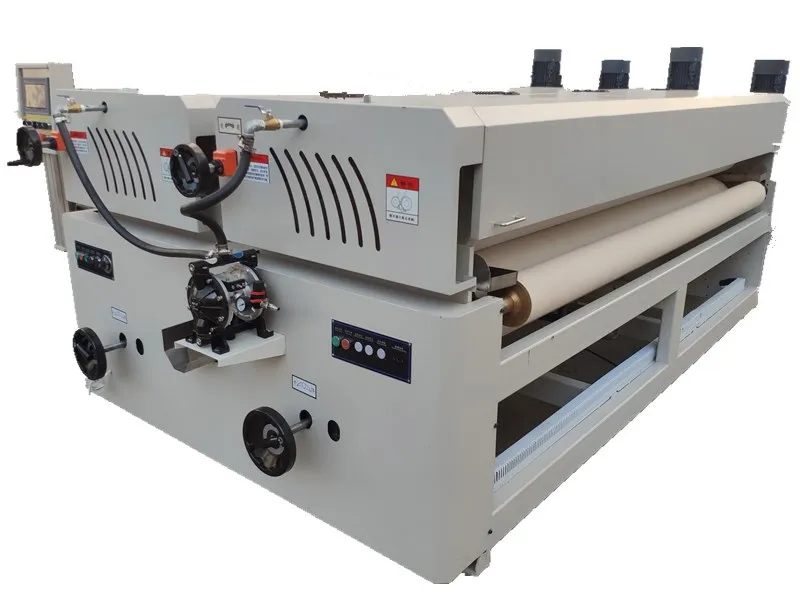
Optimal Matching Principles for UV Roller Coating Machines and UV Paints
In summary, UV paints suitable for UV roller coating machines should possess the following characteristics:
• Moderate viscosity and good leveling properties;
• Fast curing speed and low shrinkage;
• Strong adhesion and minimal sagging;
• Good matching with equipment parameters.
The most common and highly compatible UV paints for roller coating machines include: UV primers, sealers, intermediate coats, high-gloss topcoats, matte topcoats, and clear acrylic systems.
By fully considering equipment characteristics and process conditions when selecting paints, UV roller coating machines can maximize efficiency, output high-quality, smooth coating films, and provide furniture and panel manufacturers with consistently high-quality surfaces.
Does XMF Machinery offer affordable wholesale options for multiple machines?
Absolutely. XMF Machinery provides wholesale purchasing options for roller coating machines, spray machines, UV curing units, embossing machines, and mud coating equipment. Buyers can benefit from low prices, discounts, and factory promotions. Our company ensures that even bulk orders maintain high quality standards and reliable performance.
By buying directly from the manufacturer, customers save costs, receive professional technical support, and can customize machines to meet unique production needs. XMF Machinery is the supplier of choice for both small and large-scale industrial buyers.