
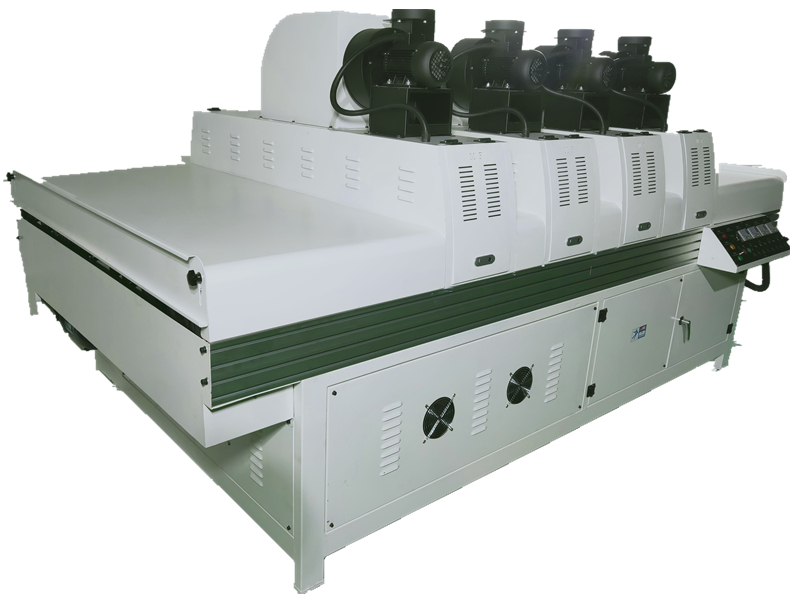
In the furniture manufacturing industry, the stability and efficiency of surface treatment processes directly determine the appearance and quality of the product. Among various coating and curing equipment, UV dryer machines, with their high efficiency, environmental friendliness, and rapid curing capabilities, are gradually becoming the mainstream equipment for curing furniture surface coatings.
UV dryer machines can use ultraviolet light to cause UV coatings or inks to complete a polymerization reaction in a very short time, achieving rapid surface hardening and forming a high-gloss, wear-resistant, and scratch-resistant coating.
However, many manufacturers have a key question before using a UV dryer machine:
Which furniture materials are suitable for UV dryer machines?
Can different furniture surfaces be cured using a UV dryer machine?
What are the parameter differences and precautions when using a UV dryer machine on different materials?
This article will provide in-depth answers to these questions from a professional perspective, systematically analyzing material characteristics, light curing adaptability, and surface energy matching to help you scientifically determine the applicable scope of a UV dryer machine for furniture materials.
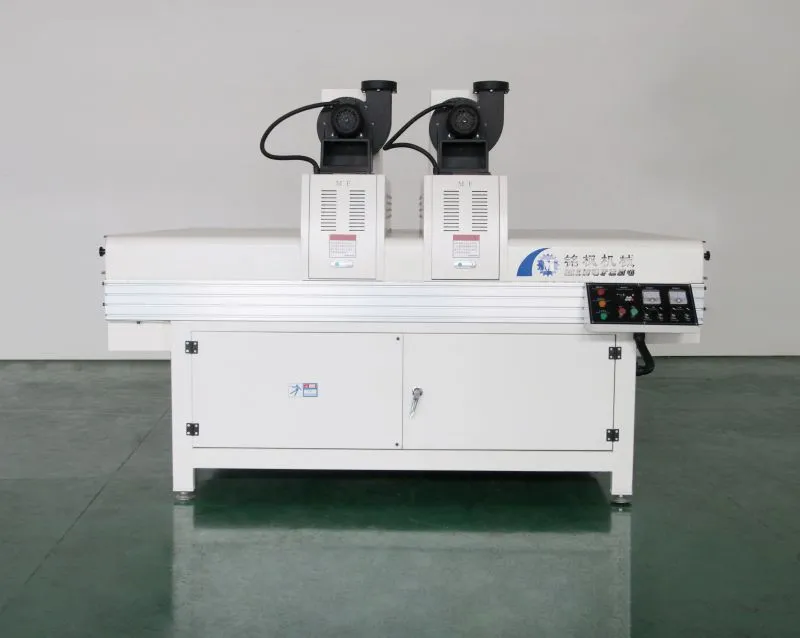
UV Dryer Machine: Why Can It Quickly Cure Furniture Surfaces?
1. The Core Principle of a UV Dryer Machine
A UV dryer machine uses a built-in high-intensity ultraviolet lamp (such as a high-pressure mercury lamp or an LED-UV lamp) to emit ultraviolet light of a specific wavelength (typically 365nm–405nm). This light activates the photoinitiators in the UV coating or ink, causing their molecular chains to polymerize, thus changing the coating from a liquid to a solid state.
The entire process takes only a few seconds, without the need for heating, baking, or prolonged natural drying. This is the fundamental reason for the high efficiency of a UV dryer machine.
2. Material Requirements for UV Dryers
Since ultraviolet light cannot penetrate opaque objects, it can only cure the surface of the coating. Therefore, the furniture material being cured must have good surface smoothness, light reflectivity, and stability to ensure uniform UV irradiation and complete coating curing.
Which Furniture Materials are Suitable for UV Dryers?
Furniture production involves various substrates such as wood, engineered wood, plastics, metals, glass, and stone. Different materials have significantly different adaptability to UV dryers. We will analyze them one by one below.
Is a UV dryer machine suitable for solid wood furniture materials?
Answer: Yes, but surface preparation is crucial.
Solid wood furniture features natural wood grain and high absorbency. Directly applying UV coatings can lead to uneven curing thickness due to uneven absorption.
Therefore, before using a UV dryer, the solid wood surface must be primed to create a smooth base.
Suitable solid wood types include:
• Oak
• Beech
• Maple
• Walnut
Advantages of using a UV dryer on solid wood surfaces:
• Fast curing speed, preventing wood from absorbing moisture and warping;
• Improved hardness and gloss of the finish;
• Effective protection of the wood grain layer, extending its lifespan.
Precautions:
• The priming must be even and comprehensive;
• The UV lamp intensity should be moderate to avoid high temperatures that could cause cracking on the wood surface;
• Ensure the wood's moisture content is below 10%.
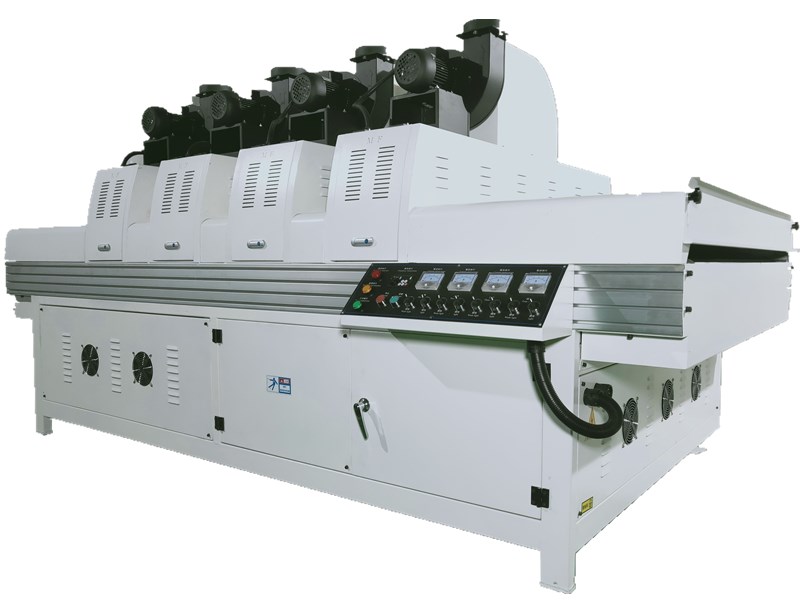
UV dryers Are Most Commonly Used for Engineered Wood Furniture Materials
This is currently the most mainstream application of UV dryers in the furniture industry.
Engineered wood materials include medium-density fiberboard (MDF), particleboard, plywood, fiberboard, UV-coated boards, and melamine boards.
These boards have a dense structure, high flatness, and good dimensional stability, making them ideal for rapid UV curing.
Common engineered wood types suitable for UV dryers:
• MDF (Medium-density Fiberboard)
• UV-coated panels
• Particleboard
• Melamine-coated panels
• Plywood
Application characteristics:
• High surface smoothness and good curing uniformity;
• Achieves various effects such as high gloss, matte, brushed, and embossed finishes;
• Particularly suitable for large-area coating of furniture doors, cabinet panels, and wall panels.
For most furniture companies, the ideal materials for UV dryers are medium-density fiberboard (MDF) and UV-coated panels.
Can UV dryers be used for plastic furniture materials?
Yes, but heat sensitivity must be considered.
Plastic materials (such as PVC, ABS, PET, acrylic, etc.) are widely used in furniture accessories and decorative parts. Their low surface energy makes direct UV coating adhesion difficult.
Solutions:
• Perform plasma surface treatment or primer treatment first to improve adhesion;
• Adjust the UV lamp power to avoid plastic deformation due to concentrated heat;
• Use a low-temperature curing UV dryer (LED-UV dryer).
Advantages:
• Fast curing by UV dryer, maintaining a smooth plastic surface;
• Improved scratch resistance and anti-yellowing properties;
• Particularly suitable for plastic furniture doors, frames, and decorative surfaces.
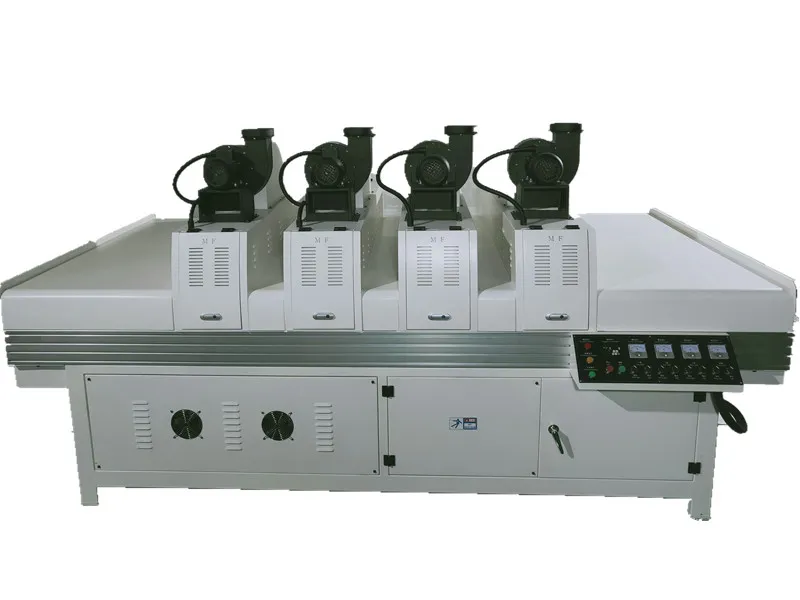
Is a UV dryer suitable for metal furniture materials?
Absolutely.
Metal surfaces have high reflectivity and fast thermal conductivity, making them ideal for UV curing.
In modern furniture, metal is often used for structural components such as frames, supports, and table legs.
A UV dryer can create a strong, rust-resistant coating or a high-gloss finish on these surfaces.
Features:
• Extremely fast curing speed;
• High coating hardness and strong adhesion;
• Excellent wear and chemical resistance.
Precautions:
• The metal surface must be free of oil;
• Coating thickness should be controlled within a reasonable range (10–20μm);
• The curing temperature should not be too high to avoid excessive stress on the coating film.
Can a UV dryer machine be used for glass furniture materials?
Yes, glass and UV dryers are highly compatible.
In furniture decoration, glass is often used for tabletops, cabinet doors, back panels, display shelves, etc.
Due to its smooth, transparent, and high-temperature resistant surface, glass is very suitable for UV dryer curing.
Advantages:
• A UV dryer machine can form a high-gloss, wear-resistant protective layer on the glass surface;
• Stable coating adhesion;
• Light can pass through the glass, ensuring thorough curing.
Precautions:
• Ensure the surface is clean and fingerprint-free;
• Transparent UV coatings or colored UV inks can be used;
• Lamp wattage should be controlled at 60–80% to prevent heat cracking.
Application of UV Dryer Machines in Stone and Composite Materials
In modern furniture, new materials such as stone-plastic composite panels, quartz countertops, and composite decorative panels are becoming increasingly common.
These materials have high hardness and density, making ordinary thermosetting methods inefficient. UV dryer machines perfectly compensate for this deficiency.
Suitable Conditions:
• High surface smoothness;
• Coating is a UV-based resin;
• Material can withstand temperature rises of 40–60℃.
Advantages:
• Fast curing, wear-resistant and stain-resistant;
• Improved surface gloss;
• Suitable for high-end furniture countertops and decorative panels.
Which Furniture Materials Are Unsuitable for UV Dryer Machines?
Although UV dryer machines are highly adaptable, some materials are still not ideal.
Unsuitable Materials:
• Fabrics, Leather
• Unsealed Solid Wood
• Paper Veneers
• Porous Materials (Bamboo, Rattan, etc.)
Why do different furniture materials have different requirements for UV dryers?
1. Different Light Reflection and Absorption Characteristics
Light-colored, highly reflective materials cure more efficiently; dark-colored or highly absorbent materials require higher light intensity.
2. Different Thermal Stability
Some plastics and woods are heat-sensitive and require LED-UV dryers (low heat source).
3. Different Adhesion and Surface Energy
Metals and plastics have low surface energy and require primer or corona treatment to enhance adhesion.
4. Different Surface Smoothness
Higher surface smoothness results in more uniform light exposure and better curing.
How to achieve optimal curing results with a UV dryer on furniture materials?
• Keep the material surface clean and dust-free;
• Adjust lamp power and distance according to the material's light absorption rate;
• Use a UV coating system compatible with the material;
• Ensure the conveyor speed matches the light energy;
• Regularly check lamp intensity to maintain stable light energy;
• Control the ambient temperature (40-55℃) to prevent material heat deformation.
Can all wooden furniture be dried using a UV dryer machine?
→ As long as it has been sealed and leveled, it can. Unsealed wood is not recommended for direct use.
Why does plastic furniture sometimes deform?
→ Due to excessive light or concentrated heat. A low-heat LED-UV dryer machine should be used.
Does a UV dryer machine have requirements for the coating system?
→ UV-curing coatings must be used; otherwise, the polymerization reaction cannot be completed.
Do different colored furniture boards affect the drying speed?
→ Yes. Darker colors absorb more light and cure more slowly; the power should be increased or the conveyor speed decreased appropriately.
Why is XMF Machinery a trusted supplier for coating equipment?
XMF Machinery is a professional manufacturer and supplier of roller coating machines, spray machines, embossing machines, mud coating units, and UV curing equipment. Buyers trust our factory for high quality, durable, and customizable machines at competitive prices. Our company offers wholesale purchasing, promotions, detailed quotes, and professional technical guidance.