

In the furniture manufacturing industry, UV roller coating machines are widely used due to their high efficiency, high gloss, and environmental friendliness. They play a crucial role in furniture surface treatment processes, especially in UV coating applications for boards, doors, flooring, and cabinets.
However, many manufacturers often encounter a troublesome problem when using UV roller coating machines for furniture coating—bubbles appearing on the coating surface. These bubbles not only affect the product's appearance but can also lead to reduced adhesion, paint film cracking, or uneven surfaces.
So, what exactly causes bubbles in furniture roller coating?
How can bubbles be avoided by properly adjusting the UV roller coating machine?
Below, we will analyze this from multiple perspectives, including equipment, process, materials, and environment, and provide systematic solutions.
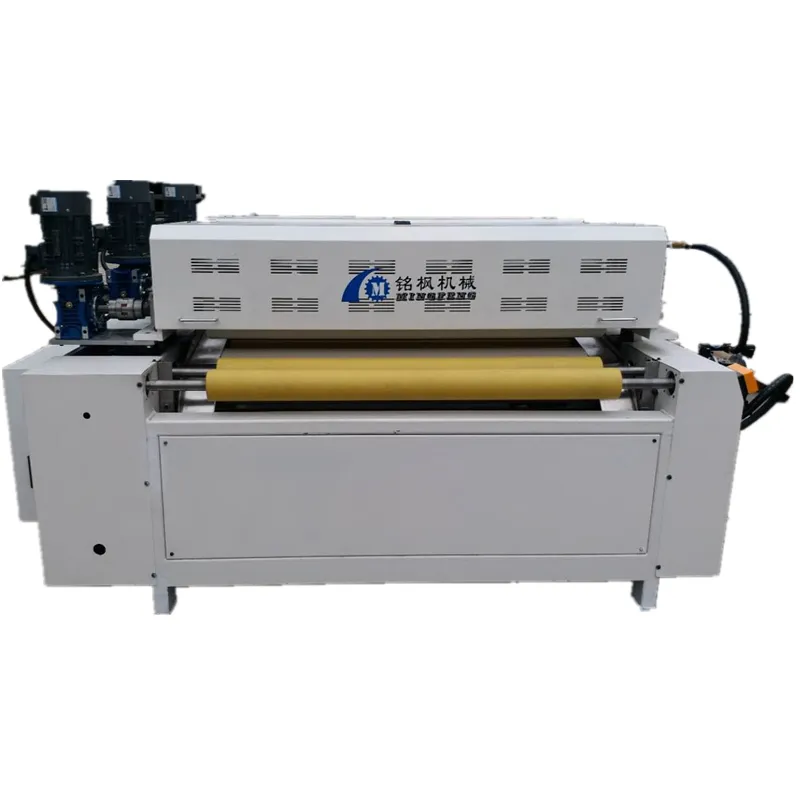
Why do bubbles appear during furniture roller coating?
When using a UV roller coating machine, bubble formation usually stems from both physical and chemical causes. The root causes of air bubbles can be attributed to the following aspects:
1. Air Inclusion in the Coating
Improper operation during the feeding or mixing process of a UV roller coating machine can easily introduce air into the UV coating. Due to the high viscosity of UV coatings, air is difficult to escape, resulting in the formation of tiny air bubbles during roller coating. As the coating cures, these bubbles become trapped within the film, forming visible defects.
2. Air Adsorption on the Substrate Surface
If the surface of furniture substrates (such as MDF, MDF, melamine board, etc.) contains micropores, dust particles, or residual moisture, air will be adsorbed during UV roller coating. Combined with the pressure of the roller, the gas is forced into the paint film, causing surface blistering.
3. Mismatch Between Coating Viscosity and Temperature
The viscosity of UV coatings changes with temperature. When the viscosity is too high, leveling properties deteriorate, preventing air from escaping smoothly; conversely, when the temperature is too low, the coating cures slowly, making it difficult for air bubbles to release, thus forming bubble points.
4. Improper Roller Speed and Gap Adjustment
The speed, pressure, and gap settings of a UV roller coating machine directly affect the flow of the coating. If the roller speed is too fast, air can easily be drawn into the coating; excessive gap or uneven pressure can also lead to unstable coating and cause bubbles.
5. Incorrect UV Curing Conditions
Excessive UV light source power or uneven illumination can cause rapid surface curing without allowing internal gases to escape, resulting in "entirely sealed bubbles." Conversely, insufficient illumination can also cause incomplete curing, resulting in surface roughness and residual bubbles.
What are the common manifestations of bubbles in a UV roller coating machine?
On the production floor, observing the surface morphology of the coating can provide a preliminary assessment of the bubble type and its source. Common bubble manifestations include:
• Microbubbles (pinhole-like): Usually caused by air mixed into the coating. Dense, fine bubble dots are visible on the surface.
• Localized bubbling (area-type): Often caused by air or moisture in the substrate, appearing as sheet-like distributions.
• Linear bubbles (stripe-like): Mostly appear in the direction of roller movement, usually related to roller pressure or scraper angle.
• Pinholes and bubbles: These are small pits or depressions formed when bubbles burst, commonly seen when gas cannot escape properly during coating curing.
Understanding these phenomena helps in quickly locating problems when adjusting UV roller coating machine parameters.
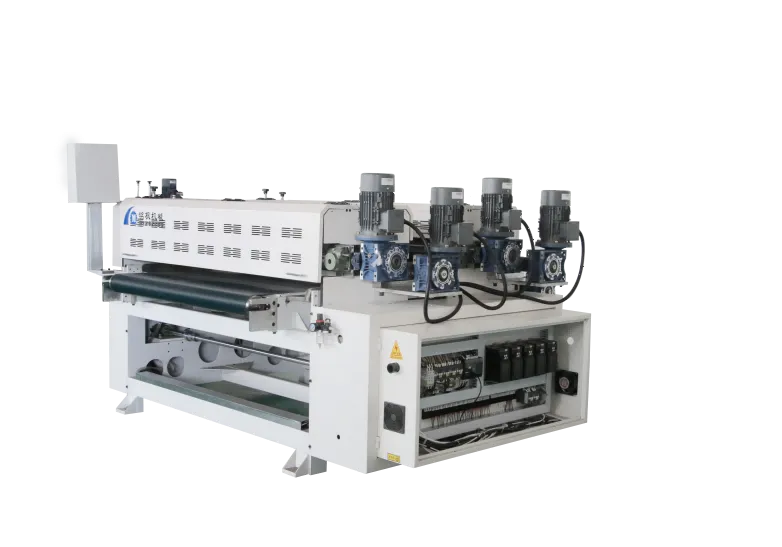
How to solve bubbles caused by the coating itself?
1. Use dedicated UV coatings and strictly control storage conditions
The coatings used in UV roller coating machines should have good leveling and defoaming properties. It is recommended to choose high-quality UV coatings that have undergone defoaming treatment and allow them to stand for 2-3 hours before use to allow the bubbles to dissipate naturally.
During storage, avoid violent vibrations and direct sunlight, and maintain a temperature between 20℃ and 25℃.
2. Control the coating stirring speed and method
During coating preparation, use low-speed stirring (≤300 rpm) with a flat-blade agitator. Excessive stirring will produce a large number of bubbles, while high-speed shearing equipment more easily incorporates air into the coating.
If necessary, vacuum defoaming can be performed after stirring, with significant results.
3. Properly Adjusting Coating Viscosity
UV roller coating machines have high requirements for coating viscosity, typically controlled between 20 and 40 seconds.
If the viscosity is too high, a special thinner can be added appropriately (do not use ordinary solvents) to improve leveling and help expel air bubbles.
What if the UV roller coating machine parameters are improperly adjusted?
1. How does roller speed affect air bubbles?
Roller speed is a crucial factor affecting coating quality. If the speed is too high, air cannot escape in time and is drawn into the coating, leading to an increase in air bubbles.
Solutions:
• During the initial test run, control the main coating roller speed at 5–10 m/min;
• Gradually adjust according to the coating thickness until air bubbles decrease and the coating is smooth.
2. How to Set Roller Gap and Pressure?
If the roller gap is too large, the coating amount will be insufficient and uneven; if it is too small, excessive pressure will be generated, forcing air into the coating.
Generally:
• The gap between the main roller and the substrate should ideally be 0.1–0.3 mm;
• Pressure should be evenly distributed to avoid uneven coating thickness.
3. The Importance of Squeegee Angle and Hardness Adjustment
An excessively large or small squeegee angle will affect coating leveling. It is recommended to maintain an angle of 30°–45° and use a medium-hardness squeegee (Shore A 70–80).
Also, ensure the squeegee edge is clean and undamaged to prevent uneven coating due to residual paint.
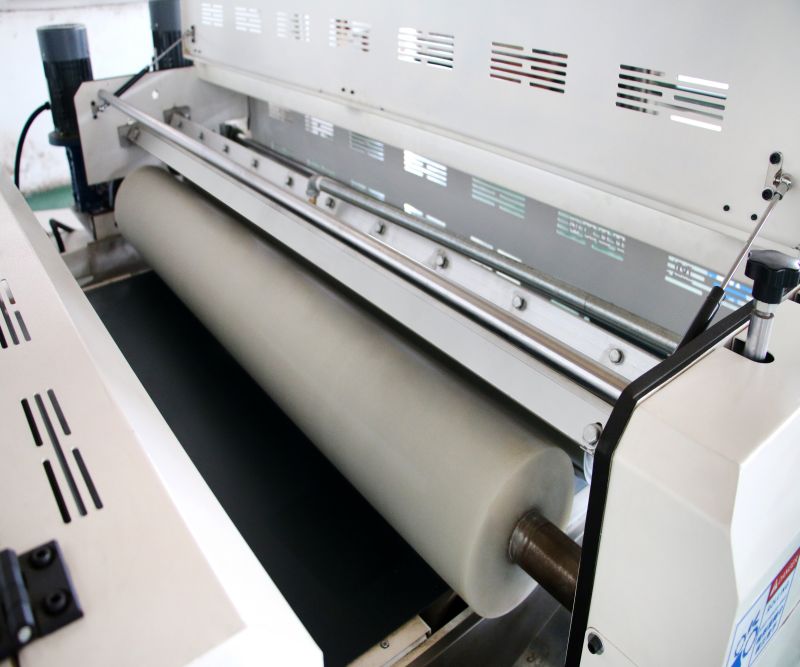
Can substrate issues cause bubbles?
The answer is yes. The coating process of a UV roller coating machine is closely related to the surface condition of the substrate.
1. High Substrate Moisture Content
If the moisture content of a wooden furniture substrate exceeds 12%, it is prone to releasing moisture after roller heating, leading to coating blistering.
The substrate moisture content should be controlled below 8% using a drying device before coating.
2. Surface Dust and Oil Stains Not Removed
Dust, wax, or oil stains can hinder coating adhesion, causing air bubbles to form at the contact interface.
Solutions:
• Clean the surface using an electrostatic dust removal device;
• For oily substrates, apply a UV primer followed by light sanding to improve adhesion.
3. Insufficient Sealing Primer
If the sealing primer on porous substrates (such as MDF) does not fully penetrate, it will release gas during subsequent UV roller coating, leading to bubbles.
It is recommended to use a high-solids sealing primer and ensure it is fully cured.
Can environmental and operating conditions also cause bubbles?
1. Ambient Temperature and Humidity Control
The optimal operating temperature for a UV roller coating machine is 20–28℃, and the humidity is 40%–60%.
If the humidity is too high, moisture in the air will form microbubbles in the coating; if the temperature is too low, the coating's fluidity decreases, which can also easily seal in bubbles.
2. Workshop Airflow Velocity
Excessive airflow can cause the coating surface to dry too quickly, curing air bubbles before they can escape.
It is recommended to maintain an airflow velocity below 0.3 m/s and use an air filtration system to reduce dust.
3. Operator Standards
Operators should avoid frequently adjusting rollers or adding paint while the machine is running. Any sudden operation will disrupt coating flow and increase the risk of air bubbles.
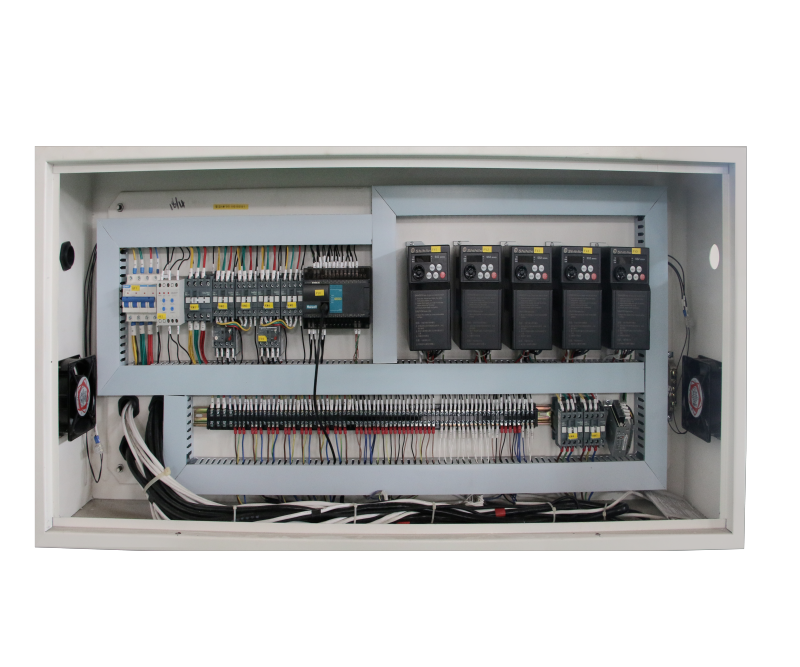
How to Avoid "Inner Sealed Bubbles" in UV Curing Processes?
1. Adjusting UV Lamp Power and Curing Distance
Excessive UV lamp power will cause the coating surface to harden rapidly, preventing internal air bubbles from escaping.
Recommendation:
Reduce UV lamp power by 10%–20% when air bubbles are severe;
Or increase the curing distance by 5–10 cm to allow more time for air venting.
2. Staged Curing Method
A two-stage UV curing method can be used: "low-energy pre-curing + high-energy complete curing": First, pre-cur with a low-power lamp to form a thin film on the surface; then, use a high-power lamp to thoroughly cure the internal coating. This effectively reduces closed bubbles. 3. Regularly Clean UV Lamps and Reflectors
Dust accumulation on the UV lamp surface can cause uneven illumination, leading to localized bubbles or inconsistent coating thickness. Clean the lamps weekly and replace them periodically.
Can routine maintenance of a UV roller coating machine prevent bubbles?
The answer is—yes, and very importantly.
Good maintenance not only extends equipment lifespan but also fundamentally reduces bubble problems.
1. Regular Cleaning and Inspection of the Roller Surface
After each shift, thoroughly clean the roller surface with a dedicated cleaning agent to prevent residual paint from drying. Even tiny pits on the roller surface can cause bubble accumulation.
2. Paint Circulation System Inspection
The paint pump and piping of the UV roller coating machine should be cleaned regularly to prevent air ingress or residue buildup. It is recommended to clean the circulation piping weekly to prevent bubble formation.
3. Regularly Calibrate the Coating Gap
After long-term operation, the roller may undergo slight deformation, affecting the coating gap. The gap should be calibrated monthly to ensure uniform coating.
Are XMF Machinery’s machines compatible with various coating materials?
Yes, XMF Machinery’s roller coating machines, spray machines, UV curing units, and mud coating machines are compatible with multiple coating materials such as lacquer, UV paint, PVC, and water-based coatings. Buyers can purchase machines at low prices, request customized solutions, and enjoy wholesale discounts. Our company ensures high quality equipment, professional technical support, and long-term reliability.