
In coating production lines for furniture, door panels, appliance panels, and decorative panels, reciprocating automatic spraying machines are among the most common and crucial automated spraying equipment.
They automatically identify the size and position of the workpiece, enabling the spray gun to reciprocate, thus ensuring uniform coating, precise paint volume control, and stable surface quality.
However, when purchasing or using a reciprocating automatic painting machine, many people ask a key question: What is the effective working width of a reciprocating automatic painting machine? How does this parameter determine the spraying effect?
This may seem like a simple equipment specification question, but it is actually closely related to spraying efficiency, coating uniformity, workpiece compatibility, and production layout.
This article will systematically answer this question from the perspectives of technical principles, parameter definitions, influencing factors, and selection criteria, helping you fully understand the true meaning and application value of the "effective working width" of a reciprocating automatic spraying machine.
What is a reciprocating automatic painting machine?
Why is effective working width important?
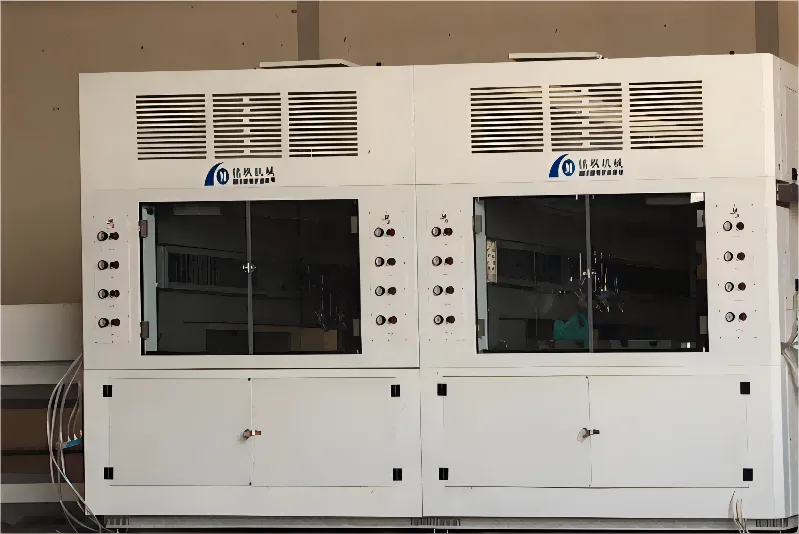
A reciprocating automatic spraying machine is an automated surface coating device. A conveyor belt feeds the workpiece into the coating area, and the spray gun reciprocates laterally, achieving continuous and uniform coating.
Its main components include:
• A reciprocating coating mechanism (spray gun holder, servo drive system);
• A workpiece detection system (photoelectric sensing or vision recognition);
• A paint mist recovery and filtration system;
• A control system and spray gun airflow adjustment module;
• An interface between the conveyor line and the drying equipment.
The effective working width is one of the most critical parameters in equipment selection and process settings.
It determines:
• The maximum workpiece width that the spray gun can cover;
• The stroke range of each reciprocating motion;
• Coating uniformity and paint utilization rate;
• The range of workpiece sizes that the production line can accommodate.
In other words, the effective working width directly defines the equipment's operational capacity and applicable range, and is a crucial indicator for evaluating the performance of a reciprocating automatic spraying machine.
What is "effective working width"? How does it differ from the machine's width?
Many users easily confuse the concepts of "effective working width" and "device outline width." In fact, there is a clear difference between the two.
• Device Outline Width: This refers to the overall external structural dimensions of the machine, including the frame, protective cover, tracks, etc., and is usually larger than the effective spraying area.
• Effective Working Width: This refers to the actual width range that the spray gun can stably cover during spraying; it is the effective spraying area of the equipment.
For example, a machine's overall width might reach 3500mm, but its effective working width might only be 1300mm or 1600mm.
This is because the spray gun needs acceleration and deceleration buffer zones at both ends, and the spray distribution attenuates at the edges.
Therefore, the effective working width is not the limit of the spray gun's stroke, but rather a safe spraying width that ensures coating uniformity.
What is the typical effective working width of a reciprocating automatic painting machine?
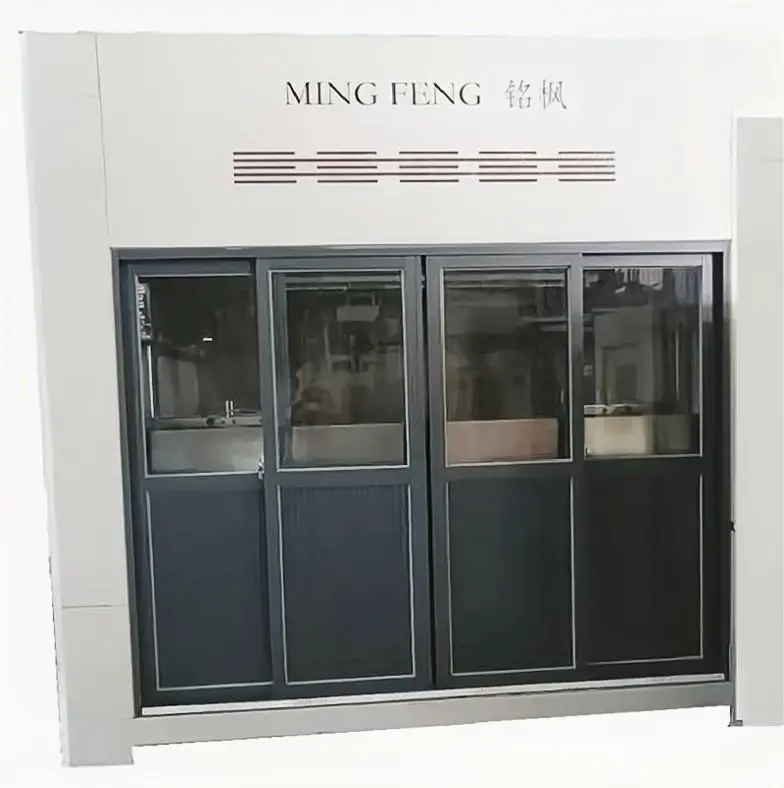
Based on mainstream product parameters, the effective working width of a reciprocating automatic painting machine generally falls within the following ranges:
Equipment Types | Effective Working Width (mm) | Scope of Application |
| Small Reciprocating Automatic Painting Machine | 600–800 | Small furniture pieces, trim strips, door frames, louvers |
| Medium Reciprocating Automatic Painting Machine | 1000–1300 | Furniture panels, cabinet doors, decorative panels |
| Large Reciprocating Automatic Painting Machine | 1600–2000 | Wide door panels, wardrobe panels |
| Extra-Large Reciprocating Spray Painting Machine | 2200–2500 and above | Specific industrial materials, large-size decorative panels |
In the furniture industry, the most common configuration is an effective working width of 1300mm or 1600mm.
These two specifications can cover most furniture board sizes (such as standard 1220mm wide engineered wood panels), ensuring coating integrity while maintaining equipment size and economy.
How is the effective working width of a reciprocating automatic painting machine determined?
The effective working width of the equipment is not arbitrarily set but is determined by multiple structural and control factors.
1. Spray Gun Movement Range
The spray gun is driven by a servo motor or stepper motor to reciprocate laterally.
To ensure uniform coating, the spray gun has an acceleration/deceleration zone of approximately 100–150mm at both ends, so the usable area is slightly smaller than the total stroke.
2. Spray Cone Angle and Overlap Rate
The spray angle of each spray gun determines the width that can be covered per unit stroke. To avoid spray gaps, a 10-20% overlap is required between spray zones, which also reduces the effective working width.
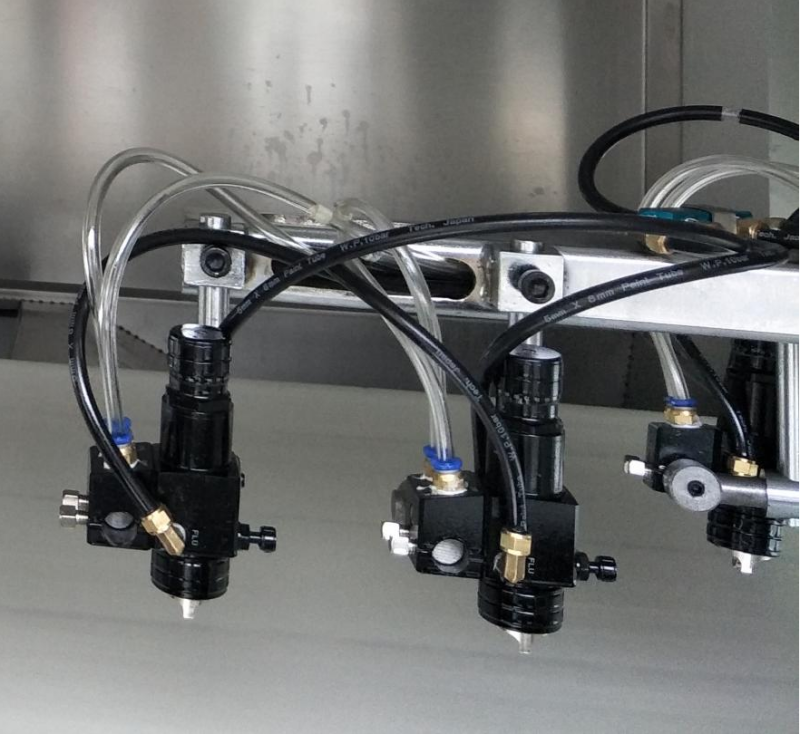
3. Number and Layout of Spray Guns
A single spray gun design has a limited effective width; a parallel layout of multiple spray guns can expand the effective spray width, for example, an array of 2 or 4 spray guns can achieve wider coverage.
4. Spray Chamber Width and Conveyor Belt Width
The structure of the spray chamber determines the maximum permissible workpiece width. Generally, the spray chamber width is 200-300mm wider than the effective working width to prevent paint mist overflow at the edges.
5. Detection System Recognition Range
If the equipment uses photoelectric or camera detection to detect the workpiece width, the limit of the detection range also defines the sprayable area.
In summary, effective working width = controllable movement area of the spray gun × spray overlap correction factor × spray chamber structure limitation factor.
Does the effective working width of a reciprocating automatic spraying machine affect the spraying effect?
The answer is yes.
The selection and setting of the effective working width directly affects coating uniformity, edge coverage, spraying loss, and painting efficiency.
1. Insufficient width leads to missed edges
If the workpiece width is close to the equipment's limit, blind spots may appear at the edges, resulting in thinner paint films or even exposed substrate on the sides.
2. Excessive width wastes paint
If the equipment width is significantly larger than the workpiece size, the excess spray will directly enter the exhaust gas filtration area, causing paint waste.
3. Mismatched spray width leads to recoating or missed areas
Improperly setting the effective width can also lead to uneven spray overlap, resulting in thick paint in the middle or thin paint on the sides.
4. Affects the spray gun's movement rhythm and production pace
A larger working width results in a longer spray gun travel distance, increasing the single spraying time and thus affecting overall production capacity.
Therefore, in production settings, the effective working width of the equipment must be matched with the workpiece size to achieve uniform paint film and energy-efficient spraying results.
How to choose the appropriate effective working width?
When selecting a reciprocating automatic painting machine, a scientific match must be made based on production needs and workpiece dimensions. Here are some practical principles:
1. Maximum workpiece width + 100mm allowance principle
For example, if the maximum workpiece width is 1200mm, it is recommended to choose a reciprocating automatic spraying machine with an effective working width ≥1300mm.
This ensures sufficient edge coverage while allowing space for conveyor belt misalignment.
2. Avoid selecting excessively wide machines
If the main production area is narrow workpieces (such as 600mm door frames), using a 2000mm wide machine will result in:
• Decreased painting efficiency;
• Increased paint mist loss;
• Increased energy consumption;
• Increased cleaning and maintenance difficulty.
3. Flexible configuration of the number of spray guns based on the painting object
For wide-width painting, a dual-spray-gun or multi-spray-gun system can be selected to achieve full coverage and save on reciprocating strokes.
4. Confirm Equipment Conveyor Width Match
The effective working width must be coordinated with the conveyor belt width; otherwise, workpiece misalignment or failure to fully enter the spraying area may occur.
What factors affect the utilization rate of the effective working width?
Even if the equipment's nominal effective working width is 1300mm, it may not be fully utilized in actual production. The main reasons include:
1. Workpiece Positioning Deviation
If the workpiece is not centered during transport, one side may not be sprayed.
Automatic positioning or guiding systems should be used to ensure the workpiece is centered.
2. Spray Diffusion and Edge Paint Mist Backflow
Edge areas are easily affected by airflow or exhaust, causing spray pattern deformation and reducing the actual effective area.
3. Spray Gun Angle Variation
When the spray gun angle is adjusted to tilt spray, the projected spray pattern width decreases, shortening the actual effective working width.
4. Cleaning and Maintenance Blank Space
To prevent paint buildup, some manufacturers leave unsprayed areas at the edges, resulting in an actual sprayable width slightly smaller than the nominal value.
Is the effective working width of a reciprocating automatic painting machine adjustable?
In modern equipment, the effective working width of a reciprocating automatic painting machine is adjustable, primarily achieved through the following methods:
1. Adjustable spray gun travel
The control system allows users to set the left and right limit points of the spray gun to accommodate different workpiece widths.
2. Automatic workpiece width recognition function
Some intelligent reciprocating automatic painting machines are equipped with infrared or camera detection systems that can identify the workpiece width in real time and automatically adjust the spray gun travel range.
3. Zoned spraying control
High-end models employ a multi-zone spraying control mode, activating the spray gun only when a workpiece area is detected, achieving on-demand spraying.
This method not only controls the effective working width but also significantly saves paint.
Therefore, modern reciprocating automatic painting machines can flexibly adapt to different workpiece widths without mechanically fixing the working range.
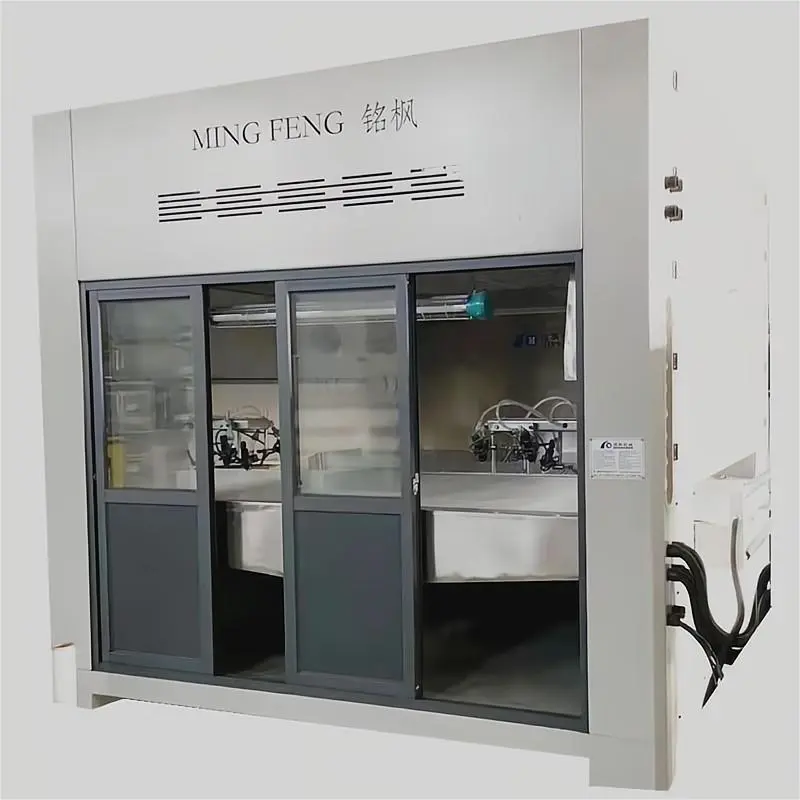
Differences in Effective Working Width Requirements Across Different Painting Industries
While reciprocating automatic painting machines are widely used in furniture, door panels, and automotive interiors, the specific effective working width requirements vary across industries.
Industry Types | Common Workpiece Widths (mm) | Recommended Effective Working Width (mm) |
| Furniture panels, cabinet doors | 800–1220 | 1300 |
| Solid wood doors, composite doors | 1000–1600 | 1600 |
| Decorative wall panels, thermoformed panels | 1200–1800 | 1800 |
| Plastic appliance casings | 400–800 | 800 |
| Metal sheet coating | 1000–2000 | 2000 |
It can be seen that 1300mm and 1600mm reciprocating automatic painting machines are the most versatile models, accommodating most workpiece sizes while offering stability and economy.
How to Determine if the Effective Working Width of the Equipment Meets Production Needs?
Before purchasing a reciprocating automatic spraying machine, the following dimensions should be considered to determine if the machine's width is appropriate:
• Check the technical parameter table to confirm that it specifies "effective painting width," not the overall width;
• Verify the maximum workpiece width against the machine specifications, ensuring at least 100mm of margin is allowed;
• Check if the spray gun's movement trajectory covers the entire workpiece width;
• Confirm whether the spray chamber width and airflow direction will cause insufficient edge atomization;
• Test the uniformity of the spray pattern to ensure the edge coating thickness is consistent with the center.
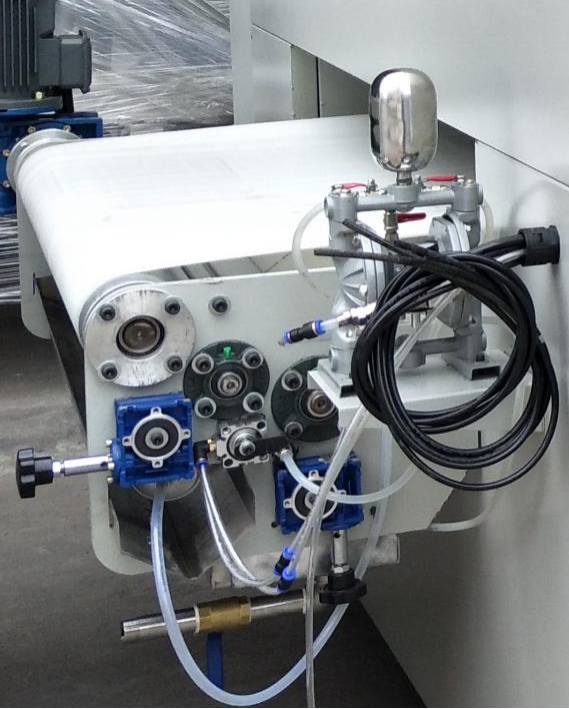
What is the effective working width of a reciprocating automatic painting machine?
Comprehensive analysis leads to the conclusion that the effective working width of reciprocating automatic painting machines typically ranges from 600mm to 2500mm, with 1300mm and 1600mm being the most common.
The specific width is determined based on the following factors:
• Workpiece size range;
• Spray gun angle and number;
• Spray chamber structure and conveyor belt width;
• Process cycle time and energy-saving requirements for spraying.
In short, a larger effective working width means a wider range of equipment applications; however, larger is not always better. The key is to match it with the actual workpiece width.
How does XMF Machinery support environmentally friendly production?
XMF Machinery’s coating machines, including roller coating machines, UV curing units, and spray machines, are designed for energy efficiency and reduced waste. Buyers can purchase eco-friendly equipment directly from our factory at competitive prices. Our company offers customized solutions, wholesale promotions, and professional quotes. With a focus on sustainability, high quality, and long-term performance, XMF Machinery helps manufacturers reduce environmental impact while maintaining cost-effective and efficient production lines.