

In modern furniture, wooden door, cabinet, handicraft, and metal parts painting production, CNC automated painting machines have become key equipment for high-efficiency, high-precision painting.
Through CNC (Computer Numerical Control) technology, they achieve path planning and motion control of the spray gun, significantly improving painting consistency and production efficiency.
However, one of the most concerning questions in actual production management and equipment selection is: "What is the painting speed of a CNC automated painting machine per square meter per hour?"
This not only relates to production line capacity planning but also affects the return on investment of equipment and the assessment of labor efficiency.
This article will systematically analyze the painting speed range and determining factors of CNC automated painting machines from multiple dimensions, including principles, influencing factors, speed calculation methods, and performance differences between different configurations, helping you fully understand the true meaning of "efficiency."
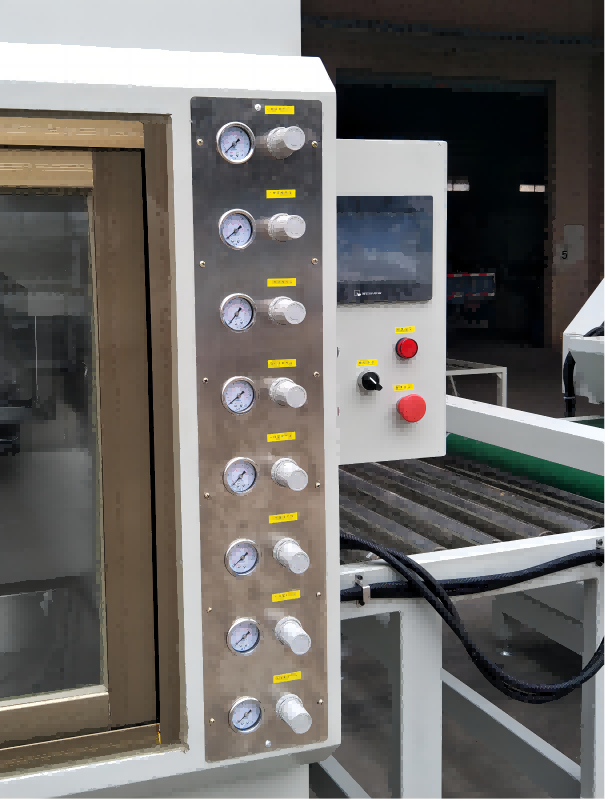
What is a CNC automated painting machine?
Why is its painting speed a key indicator?
A CNC automated painting machine is an automated device that uses a computer numerical control system to control the spray gun trajectory and spraying parameters.
Compared to traditional manual painting or reciprocating spray painting machines, its biggest advantages are:
• Programmable motion path control;
• Precise setting of spray gun angle, distance, and speed;
• Ability to uniformly coat complex-shaped workpieces;
• Highly stable production cycle time.
Painting speed (measured in square meters per hour) is a crucial indicator of the production efficiency of a CNC automated painting machine, directly affecting:
• The area that can be painted per hour;
• Single-shift output capacity;
• Paint consumption and energy consumption;
• Equipment uptime and process cycle time.
Therefore, understanding and mastering the painting speed of a CNC automated painting machine is not only helpful for equipment selection but also a core basis for capacity planning.
How is the painting speed of a CNC automated painting machine defined?
In the painting industry, painting speed (square meters per hour) refers to the area that the equipment can paint per unit of time.
The formula is as follows:
• Spraying speed (㎡/h) = Effective spray width (m) × Conveyor speed (m/min) × 60 (min/h) × Spray coverage coefficient
Where:
• Effective spray width: The maximum workpiece width that the spray gun can cover;
• Conveyor speed: The linear speed at which the spray gun or workpiece moves within the spraying area;
• Spray coverage coefficient: A correction parameter considering spray overlap, return stroke, edge waste, etc. (typically 0.8–0.9).
This parameter is usually measured by the equipment manufacturer under standard test conditions, but it is affected by various factors in actual production.
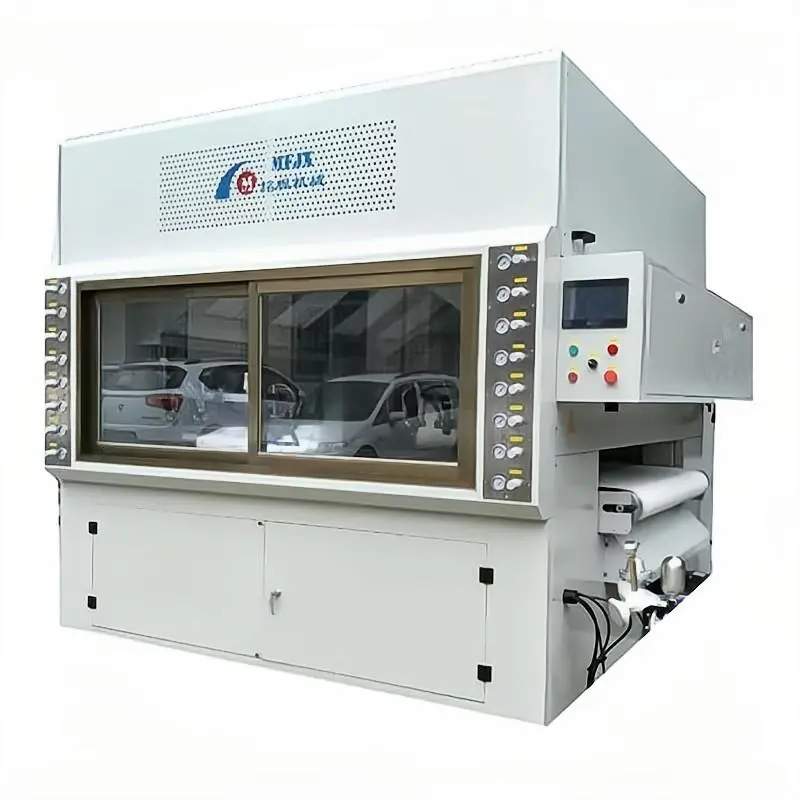
What is the typical spraying speed of a CNC automated painting machine (square meters/hour)?
Under standard operating conditions (uniform spray width, optimized reciprocating path, continuous workpiece conveying), the spraying speed of a CNC automated painting machine is typically 200–600 square meters/hour.
High-end multi-spray gun models, combined with intelligent path planning algorithms, can even exceed 800 square meters/hour.
Why is there such a large difference in painting speed among different CNC automated painting machines?
Painting speed is not a fixed value, but is determined by multiple factors. The main influencing variables are as follows:
1. Number and Layout of Spray Guns
The more spray guns, the larger the area that can be covered per unit time.
For example, a four-spray gun model can be 2.5 to 3 times faster than a single-spray gun model.
2. Spray Gun Movement Trajectory
The CNC system can adjust the path according to the shape of the workpiece.
Efficiency is highest when the trajectory is equidistant and parallel;
Slower speeds are achieved when complex contours need to be touched up.
3. Spray Width and Spray Distance
A wider spray width theoretically results in a larger painted area;
However, if the spray distance is too short, multiple passes are required to ensure uniformity, reducing speed.
4. Paint Type and Paint Thickness
High-viscosity or high-solids paints require lower spray speeds to avoid sagging;
Low-viscosity paints can be sprayed at high speeds to improve area efficiency.
5. Conveyor Belt Speed
The conveyor speed determines the time it takes for the workpiece to pass through the spraying zone. Too high a speed will result in uneven coating, while too low a speed will reduce production capacity.
6. Spray Gun Switching Logic and Cycle Control
CNC automated painting machines generally have area recognition spraying capabilities, activating the spray gun only in the workpiece area, thereby reducing idle spraying time and improving overall efficiency.
In summary, the painting speed of a CNC automated painting machine is a comprehensive indicator determined by the mechanical structure, spraying algorithm, and process settings.
How is the painting speed of a CNC automated painting machine calculated or tested?
Painting speed can be calculated or verified in the following ways:
1. Theoretical Calculation Method
Calculated using the formula:
Painting Speed = Effective Spray Width × Moving Speed × 60 × Coverage Coefficient
Example: Spray width 1.2m, moving speed 5m/min, coverage coefficient 0.85
Then the painting speed = 1.2 × 5 × 60 × 0.85 ≈ 306㎡/h
2. Actual Measurement Method
In stable production, the actual painting speed can be obtained by statistically analyzing the total area of workpieces painted per unit time (e.g., number of door panels × area per piece).
3. Instrument Testing Method
Some high-end CNC automated painting machines are equipped with a capacity monitoring system that can display the painting speed and painting coverage area in real time, achieving digital management.
What is the relationship between painting speed and painting quality in a CNC automated painting machine?
High speed does not necessarily mean high quality.
In painting operations, painting speed and painting quality are inversely correlated; a balance must be struck between efficiency and quality.
1. Consequences of Excessive Spray Speed
• Insufficient coating thickness;
• Uneven coverage;
• Loss of gloss or strong graininess;
• Incomplete paint atomization.
2. Consequences of Excessive Spray Speed
• Waste of paint;
• Excessive coating thickness leading to sagging;
• Extended drying time;
• Increased energy consumption.
Therefore, the ideal spraying speed should:
Ensure uniform coating and good adhesion while maintaining a high-efficiency production pace.
In actual setups, the spraying path speed of a CNC automated painting machine is typically controlled between 0.5 and 2.5 meters per second to accommodate different paint types and workpieces.
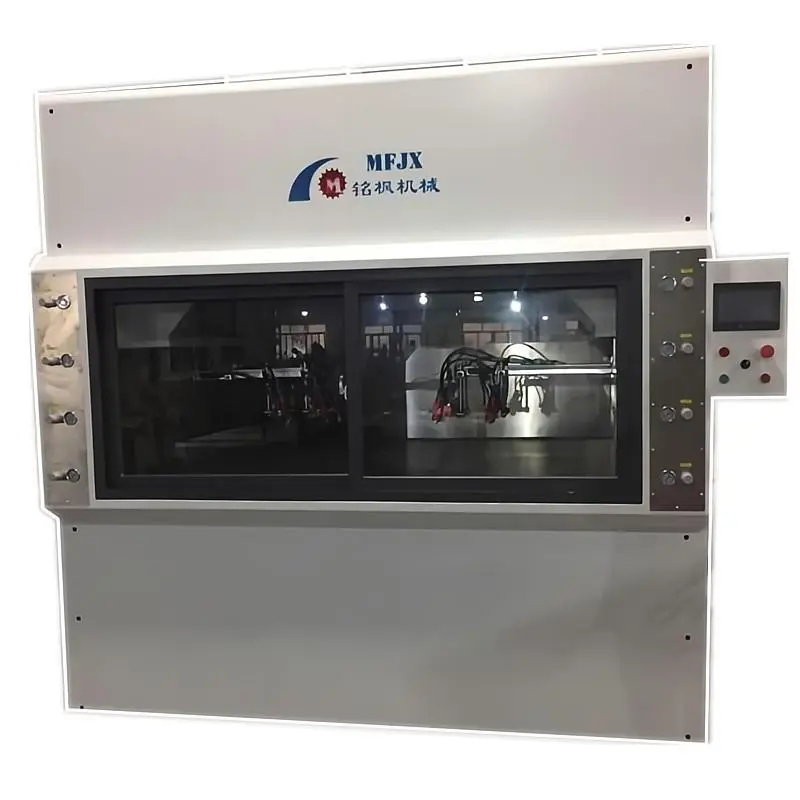
What are some methods for optimizing the spraying speed of a CNC automated painting machine?
To increase spraying speed without affecting coating quality, the following aspects can be considered:
1. Optimize CNC path planning
Reducing idle strokes and avoiding repeated spraying through software algorithms can improve efficiency by 10–30%.
2. Adjust Spray Gun Width and Angle
Properly setting the spray angle (e.g., 60°–80°) and spray distance (200–300mm) can increase the width of a single spray.
3. Use Multi-Spray Gun Coordinated Control
Parallel spraying with multiple spray guns can significantly improve spray coverage efficiency, especially suitable for wide panels or large workpieces.
4. Optimize Conveyor Speed
Using a PLC control system, the time it takes for the workpiece to pass through the spraying area is synchronized with the spray gun stroke, avoiding stagnation or overshoot.
5. Maintain Clean Spray Gun Nozzles and Stable Air Pressure
Clogging or air pressure fluctuations can lead to uneven spray diffusion, affecting the effective spray width and speed.
6. Area Sensing Activation System
Using photoelectric sensors or camera recognition technology, the spray gun is activated only when a workpiece is detected, saving time and paint volume.
After optimization, the painting speed of a CNC automated painting machine can be increased by more than 30% while maintaining ideal spray uniformity.
Do different materials and spraying objects have different speed requirements?
Different materials and paint types do indeed have significantly different requirements for spraying speed.
Objects to be coated | Recommended painting speed (㎡/h) | Coating Characteristics |
| Furniture panels (UV paint) | 250–450 | Thick, uniform film, high gloss |
| Wooden doors (PU paint) | 150–300 | Requires multiple coats |
| Plastic parts (acrylic paint) | 300–500 | Thin film, fast drying |
| Metal parts (epoxy paint) | 200–350 | High adhesion requirements |
| Musical instruments and handicrafts (NC paint) | 100–200 | Fine surfaces, slow spraying |
Therefore, the spraying speed of a CNC automated painting machine must be set in conjunction with the characteristics of the paint and product quality standards to achieve optimal results.
What are the methods for adjusting the spraying speed of a CNC automated painting machine?
Modern CNC automated painting machines generally feature multi-parameter adjustable capabilities.
Users can flexibly adjust the speed in the following ways:
• Adjusting the spray gun movement speed (controlled by a servo motor);
• Modifying the spray gun switching frequency and cycle interval;
• Setting spraying speed curves for different workpiece programs;
• Adjusting the conveyor belt speed and cycle synchronization;
• Saving multiple sets of speed parameters in the control system and switching between them with a single click for different products.
This flexible speed control allows the CNC automated painting machine to freely switch between high-speed efficiency and high-precision spraying.
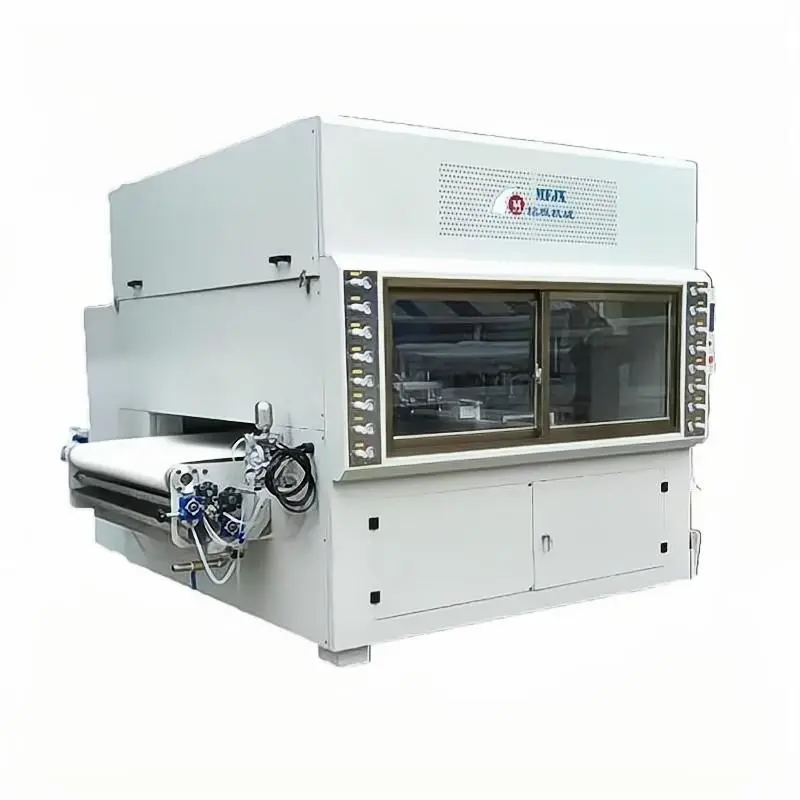
What is the actual spraying speed of a CNC automated painting machine?
Based on the above technical and process analysis, the following conclusions can be drawn:
• The painting speed of a CNC automated painting machine is generally 200–600 m²/hour;
• Small single-sprayer models achieve approximately 100 m²/hour, while medium and large multi-sprayer models can reach over 800 m²/hour;
• Speed is affected by multiple factors, including the number of spray guns, path planning, conveyor speed, and paint type;
• Under proper adjustment and maintenance, a CNC automated painting machine can maintain stable painting efficiency over a long period;
• The optimal production plan should strike a balance between speed, paint film quality, and energy consumption.
Therefore, when we ask:
“What is the painting speed of a CNC automated painting machine in square meters per hour?”
The most accurate answer should be:
"Approximately 200–600 square meters per hour under standard configuration, with the specific figure depending on the equipment structure, spray gun configuration, and process parameters."
Does XMF Machinery provide customized coating solutions?
Yes, XMF Machinery is a manufacturer that specializes in providing customized coating solutions based on customer requirements. Our engineering team designs scientific and rigorous overall coating systems according to different substrates, coating materials, and production processes. Whether customers need to buy a single roller coating machine or purchase a complete automatic coating production line, we can tailor equipment configurations to match output, quality standards, and budget.