

In modern manufacturing, CNC automatic spraying machines, with their precise control systems, stable spraying performance, and consistent coating results, are gradually replacing traditional manual painting methods.
For many professionals in industries such as furniture manufacturing, metal processing, plastic products, automotive parts, and electronics, the question, "What is the coating precision achievable by a CNC automatic spraying machine?" is crucial.
This article will analyze the coating precision level of CNC automatic spraying machines from multiple dimensions, including the definition of coating precision, influencing factors, technical principles, system control methods, and practical application performance.
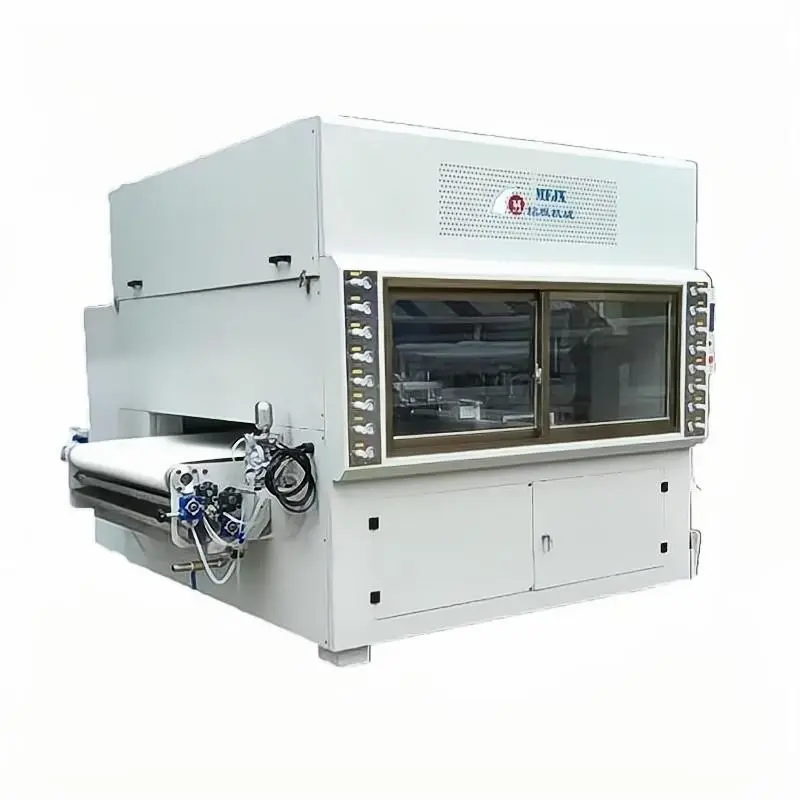
What does coating precision mean for a CNC automatic spraying machine?
The coating precision of a CNC automatic spraying machine generally refers to the accuracy of the position, thickness uniformity, edge sharpness, and repeatability stability of the coating coverage in three-dimensional space under the control of a preset program.
Precision is not merely about the accuracy of mechanical movements; it also includes several key aspects:
• Trajectory control precision: The degree of deviation of the spray gun from the programmed path, usually measured in millimeters (mm).
• Coating thickness consistency: Under the same parameters, the error range of the paint film thickness is generally required to be controlled within ±5%.
• Paint mist coverage uniformity: Refers to the consistency of the surface paint film's color, brightness, and density.
• Repeated spraying stability: The degree of difference in spraying effect when spraying the same product multiple times.
In high-end applications, such as piano lacquer panels, automotive parts, or high-gloss furniture, the spraying precision of CNC automatic spraying machines can reach within ±0.1mm, while the coating thickness control error can typically be controlled within the range of ±3 to 5μm. This level far exceeds the capabilities of manual painting.
Why can CNC automatic spraying machines achieve such high spraying precision?
1. High-precision trajectory control of the CNC system
The core of a CNC automatic spraying machine lies in its Computer Numerical Control (CNC) system. This system uses digital path planning to precisely control the spray gun's movement trajectory down to each coordinate point, achieving high-speed and stable spraying.
Modern CNC control systems typically possess the following technical characteristics:
• Three-axis or multi-axis linkage control (X/Y/Z, even up to five axes);
• Servo motor and encoder feedback system for real-time deviation correction;
• Trajectory interpolation algorithms ensure smooth spray gun movement without jitter or overshoot;
• Synchronous adjustment of parameters such as spray gun start/stop, flow control, and atomization pressure.
The combined effect of these technologies enables the CNC automatic spraying machine to maintain a stable paint film thickness and uniform coating effect in every spray.
2. Coordinated Control of Precision Spray Gun and Air Pressure System
The spray gun system directly determines the atomization quality and coverage accuracy of the paint. CNC automatic spraying machines typically employ high-precision spray guns paired with electronic proportional valve control systems, enabling:
• Controllable spray width (adjustable from 1mm to 300mm);
• Precise fluid flow control (±1%);
• Stable atomization pressure (fluctuation not exceeding 0.02MPa).
The high-precision spray gun combined with a constant pressure system ensures uniform distribution of paint mist particles, avoiding problems such as sagging, paint accumulation, or spraying dead zones, thereby effectively improving overall spraying accuracy.
3. Atomization and Aerodynamic Optimization Design
The size and distribution of paint mist particles are among the most important factors affecting spraying accuracy. The atomization technologies used in CNC automatic spraying machines typically include:
• Air atomization;
• Electrostatic atomization;
• Airless spray.
By adjusting nozzle design and aerodynamic parameters, spraying machines can control paint mist particles between 10 and 30 micrometers, ensuring uniform adhesion to the workpiece surface and guaranteeing a smooth and consistent paint layer. For extremely demanding surface treatments, such as mirror-finish piano lacquer, CNC automatic spraying machines can control paint mist particle size to below 10 micrometers.
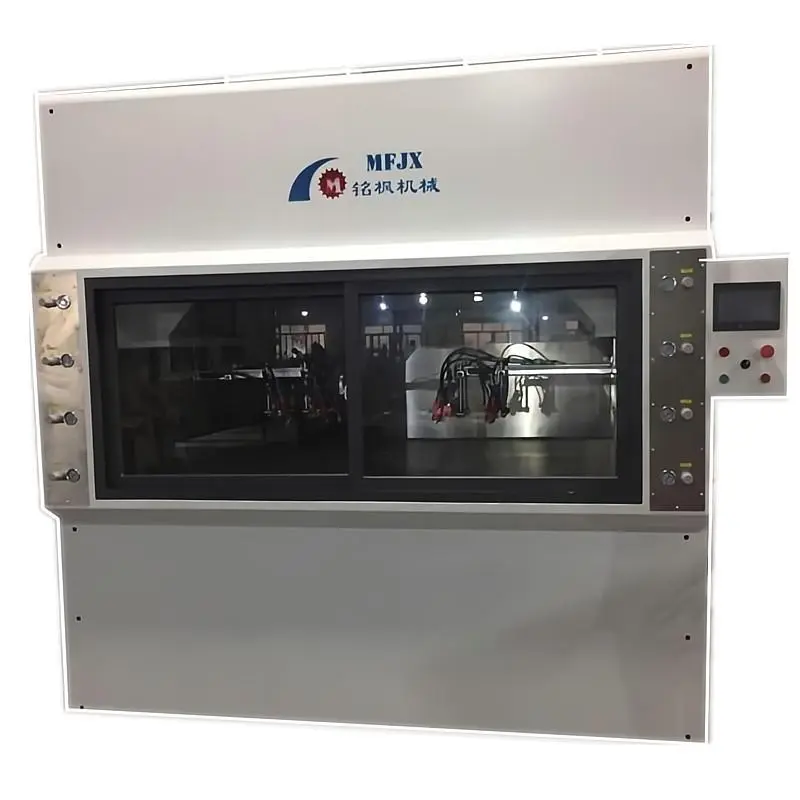
What factors affect the spraying accuracy of a CNC automatic spraying machine?
Although CNC automatic spraying machines possess extremely high mechanical and control precision, the spraying effect is still affected by various environmental and process conditions. Common factors include:
1. Spraying Environment Conditions
Temperature, humidity, and air cleanliness directly affect paint film formation.
• Ideal temperature is generally maintained between 20 and 25°C;
• Humidity should be controlled between 50% and 70% RH;
• The spray booth must be equipped with a dust-free filtration system to prevent particles from interfering with accuracy.
2. Workpiece Positioning and Fixture Design
If the workpiece is not securely clamped or has a large positioning error, it will directly lead to trajectory deviation. CNC automatic spraying machines are typically equipped with high-precision fixture systems or rotating platforms to ensure consistent spraying positions each time.
3. Coating Rheological Properties
The viscosity, solids content, and drying speed of different coatings all affect the uniformity of spraying. High-precision spraying usually requires the coating viscosity to be controlled within a certain range (generally 15-25 seconds/Coat 4 cup).
4. Programming and Path Optimization
The path planning of the CNC program has a significant impact on accuracy. A reasonable trajectory can avoid overspraying or overlapping.
Professional operators use CAD/CAM software for simulation to ensure that the spray gun trajectory closely matches the workpiece shape.
What specific spraying accuracy can a CNC automatic spraying machine achieve?
Depending on the machine model and application requirements, the spraying accuracy of CNC automatic spraying machines is generally divided into the following levels:
Application Scenarios | Position Accuracy | Thickness Control Error | Repeatability | Notes |
General wooden furniture coating | ±0.3mm | ±10μm | ±0.2mm | Suitable for ordinary wooden doors and boards |
| High-gloss furniture or piano lacquer finish | ±0.1mm | ±5μm | ±0.05mm | Smooth coating, no drips |
| Metal or plastic parts coating | ±0.05mm | ±3μm | ±0.02mm | Suitable for automotive parts and appliance housings |
| Precision electronic component coating | ±0.01mm | ±1μm | ±0.01mm | Extremely thin coating, requires extremely high precision |
Therefore, it can be seen that CNC automatic spraying machines can easily achieve micron-level thickness control and extremely low error range in high-precision spraying applications. Such a level of accuracy is unattainable by any manual spraying.
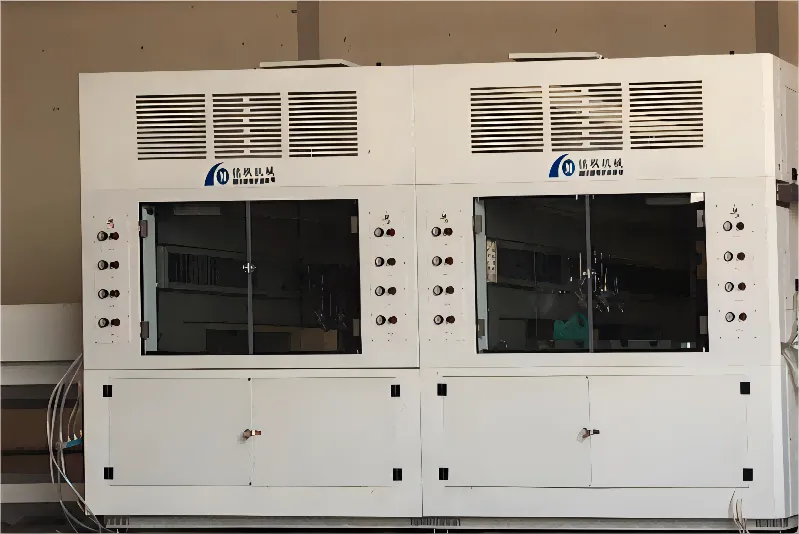
How does a CNC automatic spraying machine maintain long-term precision stability?
1. Mechanical Structure Stability
The machine body is constructed from high-strength aluminum alloy or steel, and undergoes precision machining and dynamic balancing to ensure no vibration occurs during high-speed operation.
2. Regular Calibration and Maintenance
Through an automatic calibration program, the system regularly checks the spray gun position, flow rate, and air pressure to eliminate accumulated errors.
3. Control System Feedback Mechanism
CNC automatic spraying machines are typically equipped with a closed-loop feedback system that adjusts the spraying path and parameters in real time based on sensor feedback signals, ensuring that precision does not decrease over time.
Why is the precision of a CNC automatic spraying machine superior to manual painting?
Manual painting relies on operator experience and is affected by factors such as fatigue, angle, hand speed, and air pressure, resulting in paint film thickness variations of over 20%. CNC automatic spraying machines, through programmed control, achieve:
• Complete consistency of motion trajectory;
• Stable output of spray gun flow rate;
• Uniform paint film coverage;
• Consistent results in repetitive production.
This means that whether coating 100 or 1000 products, a CNC automatic spraying machine can guarantee a consistent surface finish, stable precision, and uniform quality for each workpiece.
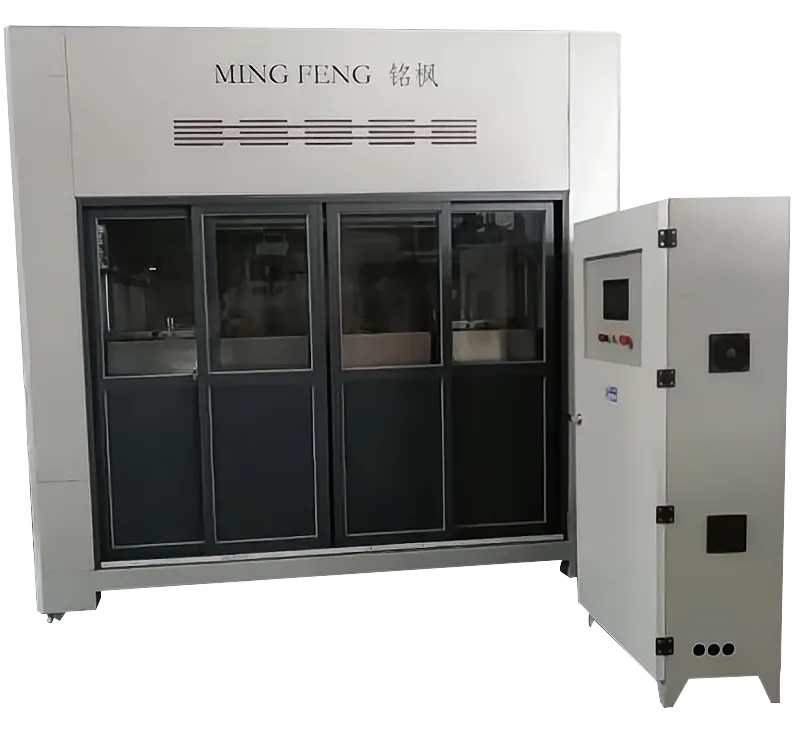
Analysis of the Coating Precision Level of a CNC Automatic Spraying Machine
In summary, the coating precision of a CNC automatic spraying machine depends on the synergy of multiple technologies.
Under current industrial standards, common CNC automatic spraying machines can achieve the following indicators:
• Positional accuracy: ±0.05~0.3mm;
• Repeatability: ±0.02~0.2mm;
• Film thickness error: ±3~10μm;
• Coating uniformity error rate: ≤5%.
This level of precision is sufficient to meet the needs of most high-end coating applications and is widely used in furniture, metal products, plastic parts, automotive parts, electronic device housings, and other fields.
With its high efficiency, high stability, and high precision, the CNC automatic spraying machine has become an indispensable core piece of equipment in modern surface treatment production lines.
How can XMF Machinery help reduce production costs?
By purchasing roller coating machines, spray machines, UV curing units, and embossing machines directly from XMF Machinery, buyers can save on middleman costs and benefit from low factory prices. Our company offers wholesale promotions, discounts, and customizable solutions that increase production efficiency and reduce material waste. High quality machines, durable design, and professional technical support ensure long-term savings. XMF Machinery provides cost-effective solutions for companies seeking affordable, reliable, and high-performance coating equipment.