

Roller coating production lines are widely used automated coating systems in the industrial coating processes of furniture panels, decorative panels, flooring, and various flat materials.
Compared to traditional spraying methods, roller coating technology achieves stable, uniform, and highly efficient paint transfer, and is therefore widely used in panel surface coating processes.
Many companies raise a fundamental but crucial question when planning their coating equipment: What equipment does a complete roller coating production line actually include?
In fact, a standard roller coating production line is not a single piece of equipment, but an automated system composed of various mechanical devices. Different devices perform different processes, such as cleaning the panel surface, applying primer, curing the paint film, and sanding the surface. Only through the proper combination of these devices can a stable and efficient roller coating production process be formed.
This article will introduce the main types of equipment included in a roller coating production line, the functions of each piece of equipment, and the process connections between the equipment, helping readers to fully understand the equipment composition of a roller coating production line.
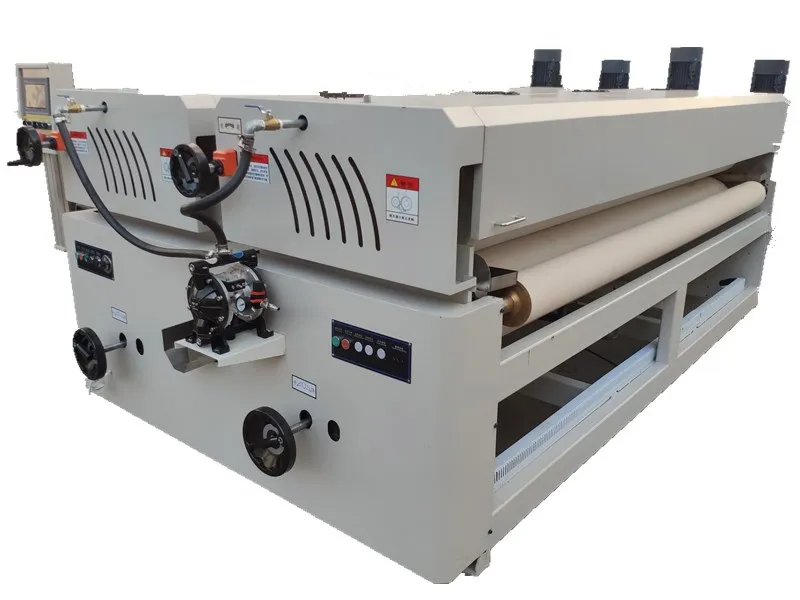
What is a roller coating production line?
A roller coating production line is an automated coating equipment system that uses rotating rollers to evenly transfer paint onto the surface of sheet materials. The sheets continuously pass through various process devices on a conveyor belt, sequentially completing cleaning, coating, drying, and sanding processes to form a complete surface coating.
Compared to other coating methods, roller coating production lines have the following characteristics:
• High paint utilization rate
• Stable paint film thickness
• High production efficiency
• High degree of automation
• Suitable for large-volume sheet production
Because of these advantages, roller coating production lines are widely used in industries such as furniture manufacturing, wooden door production, and decorative panel processing.
What are the core equipment components of a complete roller coating production line?
From an overall structural perspective, a standard roller coating production line typically consists of the following types of equipment:
1. Conveying equipment
2. Dust removal equipment
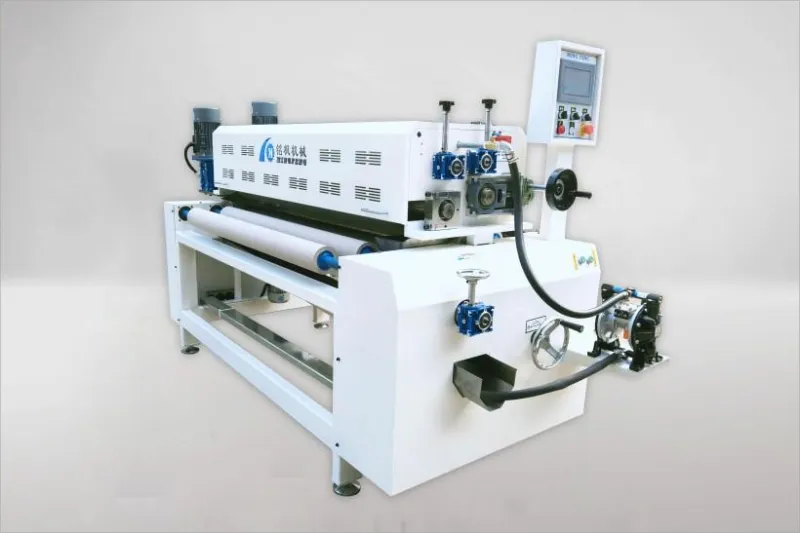
3. Roller coating machine (roller coater)
4. Drying equipment
5. Sanding equipment
6. Cooling equipment
7. Sheet turning equipment
8. Control system
These devices are arranged in process sequence to form a continuous automated production process.
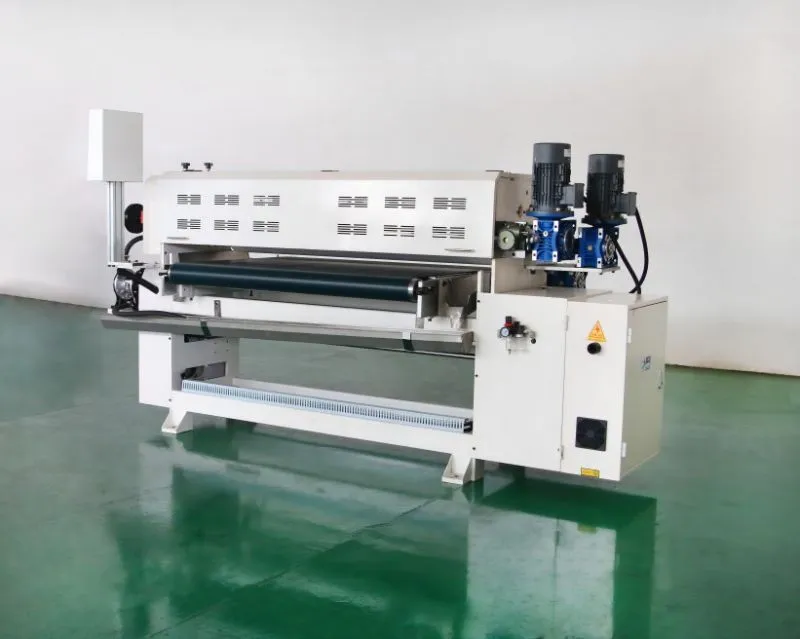
Why is a conveyor system needed in a roll coating production line?
Among all equipment, the conveyor system is the fundamental structure of a roll coating production line.
1. Main Functions of Conveying Equipment
The conveyor equipment is responsible for transporting the sheet metal from the production line entrance to each processing stage, enabling continuous movement of the sheet metal between processing points.
Common conveyor equipment includes:
• Belt conveyor
• Roller conveyor
• Chain conveyor
2. Importance of the Conveying System
Without a stable conveyor system, continuous production in a roll coating production line is impossible. The conveyor equipment must not only ensure stable movement of the sheet metal but also maintain a conveying speed consistent with the cycle time of the coating and drying equipment.
The stability of the conveyor system directly affects the overall production efficiency of the roll coating production line.
Why is dust removal equipment needed in a roll coating production line?
During the sheet metal coating process, dust is a significant factor affecting coating quality. Therefore, dust removal equipment is typically installed before the roll coating equipment.
1. Common Dust Removal Equipment Types
Common dust removal equipment in roller coating production lines includes:
• Brush dust collector
• Electrostatic precipitator
• Air knife dust collector
These devices remove dust from the surface of the sheet material through brushing, electrostatic adsorption, or high-speed airflow.
2. The Role of Dust Removal Equipment
If dust or particles are present on the surface of the sheet material, these impurities will be encapsulated by the paint film during the roller coating process, resulting in surface defects. Therefore, dust removal equipment is a crucial link in ensuring the coating quality of the roller coating production line.
What is the core equipment in a roller coating production line?
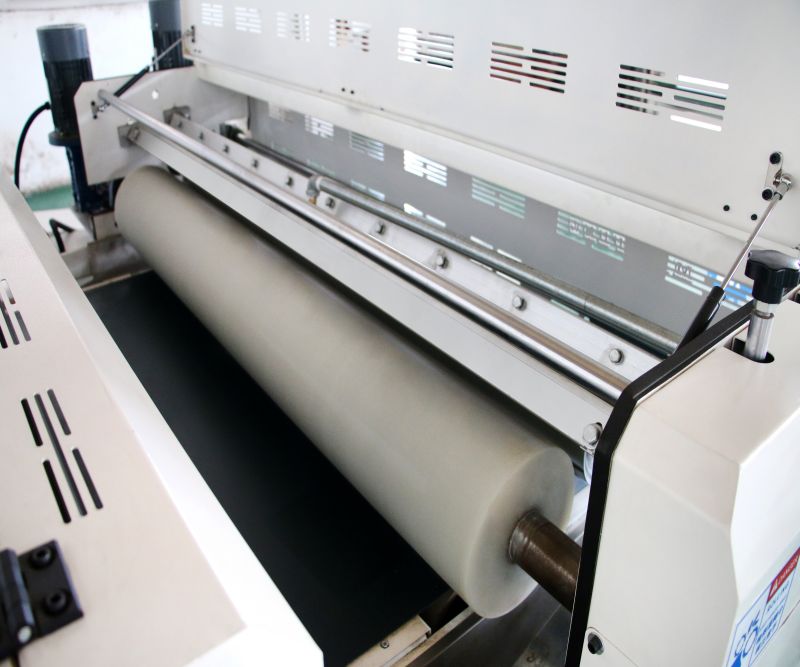
The most crucial piece of equipment in the entire roller coating production line is the roller coater (roller coating machine).
1. Basic Structure of a Roller Coator
A roller coater typically consists of the following parts:
• Paint roller
• Metering roller
• Conveyor roller
• Paint tank
• Pressure roller system
Through the rotation of multiple rollers, the paint is evenly transferred to the surface of the sheet material.
2. Main Functions of Roller Coating Machines
The main function of a roller coating machine in a roller coating production line is to evenly apply liquid coating to the surface of the substrate, thereby forming a stable coating.
Depending on process requirements, roller coating machines can be used to coat:
• Primer
• Topcoat
• Clear coat
• UV coating
A complete roller coating production line typically uses multiple roller coating machines to complete multi-layer coating processes.
Why are drying equipment needed in roller coating production lines?
After the coating is applied, it must undergo drying or curing treatment; therefore, drying equipment is an indispensable part of a roller coating production line.
1. Common Types of Drying Equipment
The main types of drying equipment in roller coating production lines include:
• UV dryer
• Infrared dryer
• Hot air dryer
Different drying equipment is suitable for different types of coatings.
For example:
• UV coatings typically use UV dryers.
• Water-based coatings often use hot air dryers.
• Some processes involve infrared pre-drying.
2. The Role of Drying Equipment
Drying equipment enables coatings to cure quickly, forming a stable film structure. The drying process not only affects production efficiency but also directly impacts film hardness and adhesion.
Therefore, drying equipment usually occupies a significant amount of space in roller coating production line design.
Why is sanding equipment needed in roller coating production lines?
In multi-layer coating processes, sanding equipment is also an important component of the roller coating production line.
1. Main Functions of Sanding Equipment
Sanding equipment is mainly used for:
• Sanding the primer surface
• Removing coating particles
• Improving paint layer smoothness
• Enhancing interlayer adhesion
Common equipment includes:
• Wide belt sander
• Fine sander
• Polishing machine
Through sanding, the surface of the substrate becomes smoother, providing a good foundation for the next roller coating process.
Does a roller coating production line need a flipping device?
In some sheet metal processing steps, both sides of the sheet need to be coated. Therefore, a flipping device is also installed in the roll coating production line.
1. The Role of the Flipping Device
The flipping device automatically flips the sheet, allowing the other side to enter the roll coating process.
The flipping device is typically located in the following positions:
• After the first side is coated
• Before the second side is coated
By using the flipping device, the roll coating production line can achieve double-sided coating, improving production efficiency.
Does a Roll Coating Production Line Require Cooling Equipment?
After the coating has cured, the sheet surface usually retains a certain temperature. Therefore, cooling equipment is often installed in roll coating production lines.
The cooling equipment lowers the sheet temperature through air circulation or a cold air system, bringing it to a suitable state for handling or packaging.
The cooling equipment also prevents the sheets from sticking or deforming during stacking.
What does the control system of a roll coating production line include?
Modern roll coating production lines are typically equipped with an automatic control system to manage the operation of the entire production line.
The control system mainly includes:
• PLC control system
• Touch screen operating interface
• Speed control system
• Safety protection system
Through the control system, operators can adjust the roller coating speed, drying temperature, and equipment operating status, thereby ensuring the stable operation of the roller coating production line.
What is the typical equipment arrangement of a roller coating production line?
A common roller coating production line equipment arrangement is usually as follows:
Feed conveyor
→ Dust removal equipment
→ Roller coater
→ Drying equipment
→ Sanding equipment
→ Roller coater
→ Drying equipment
→ Cooling equipment
→ Discharge conveyor
The number and arrangement of equipment may vary depending on the process requirements of different products, but the basic structure is generally similar.
What factors determine the number of equipment in a roller coating production line?
The number of equipment required for a roller coating production line usually depends on the following factors:
1. Type of product being produced: Different products have different coating processes, therefore the number of equipment will vary.
2. Coating structure: If the product requires multiple layers of coating, multiple roller coaters and drying equipment are needed.
3. Production Efficiency Requirements: Higher production efficiency typically requires more complex equipment configuration for the roller coating production line.
4. Sheet Size: Sheet width and thickness also affect equipment specifications.
How does XMF Machinery support customized branding requirements?
XMF Machinery supports customized branding and process requirements by offering flexible equipment configurations. As a manufacturer with strong engineering capability, we adjust machine size, speed, coating systems, and control options based on customer needs. Whether customers purchase printing machines for decorative patterns or embossing machines for surface texture, we ensure stable and repeatable results.