

In modern industrial coating production lines, UV dryer machines have become indispensable core equipment. They utilize ultraviolet light to instantly cure UV coatings or inks, achieving rapid drying, low energy consumption, and high efficiency in surface treatment. Their applications are extremely widespread, ranging from furniture manufacturing and floor coating to packaging printing and electronic component coating.
However, many users encounter a common problem during production—uneven drying by the UV dryer. That is, some areas of the product surface are fully cured, while others remain sticky or have uneven gloss.
This not only affects the product's appearance but can also lead to a series of quality problems such as insufficient adhesion, surface discoloration, and unstable gloss.
So, what exactly causes uneven drying in UV dryer machines?
What factors lead to inconsistent UV curing strength distribution?
And how can this be improved from the perspectives of equipment, process, and environment?
This article will systematically analyze the underlying causes of uneven drying in UV dryers from the perspectives of principles, structure, process, and maintenance, and provide professional solutions.
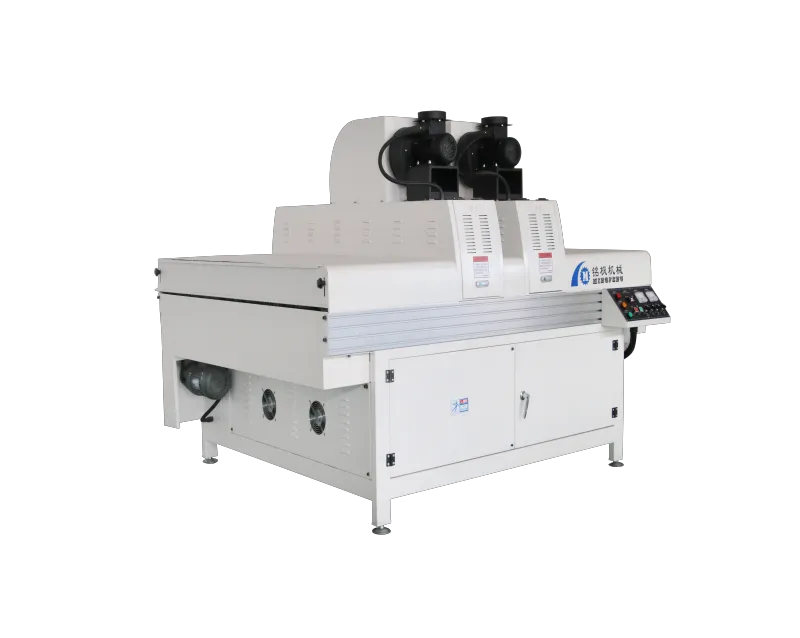
What is the working principle of a UV dryer?
To understand why uneven drying occurs in UV dryers, we first need to understand its working principle.
1. Basic Components of a UV Dryer
A standard UV dryer typically includes the following core components:
• UV lamp system (main light source): Usually a high-pressure mercury lamp or LED-UV lamp, used to emit ultraviolet light;
• Reflector system: Used to reflect and concentrate ultraviolet light, improving light energy utilization;
• Conveyor system: Transports the coated product through the illuminated area via a belt;
• Cooling system: Prevents excessive temperature from affecting the material;
• Electrical control system: Adjusts parameters such as lamp power, conveyor speed, and start-up sequence.
2. Curing Principle of UV Dryer Machines
UV dryer machines emit ultraviolet light of a specific wavelength (typically 365nm–405nm). This causes the photoinitiator in the UV coating or ink to absorb the energy and undergo a chemical reaction, instantly polymerizing the liquid coating into a solid film.
Uniform drying depends on:
• The uniformity of the ultraviolet light intensity distribution;
• Whether the product surface is fully exposed to the light;
• The matching of factors such as conveyor speed, lamp height, reflector shape, and cooling system.
An imbalance in any of these factors will result in uneven drying by the UV dryer machine.
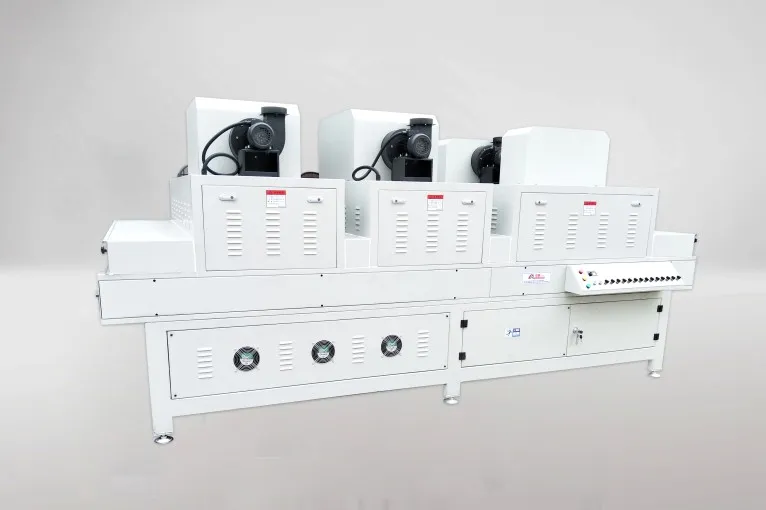
What are the common manifestations of uneven drying by UV dryer machines?
In daily use, uneven drying by UV dryer machines typically manifests in the following ways:
• Some areas are fully cured, while others remain sticky;
• Inconsistent surface gloss, with some areas being bright and others appearing hazy;
• Insufficient drying at the edges, while the central areas are normal;
• Unstable adhesion of the cured film;
• Differences in drying and significant color deviations within the same batch of products. These are all typical signs of an uneven UV drying machine.
Next, we will break down its root causes.
What are the main reasons for uneven drying in a UV dryer machine?
1. Aging or Uneven Light Intensity of UV Lamps
The UV lamp is the "heart" of the UV dryer machine.
If the lamp is aging, its intensity decreases, or the brightness is inconsistent between the left and right ends, it will lead to uneven energy distribution.
Common problems include:
• Lamps exceeding their lifespan (significant degradation generally occurs after 1000-1500 hours);
• Oxidation and dust accumulation on the reflector surface inside the lamp housing;
• Misaligned lamp installation position, resulting in inconsistent light angles;
• Unstable lamp current or aging ballast, affecting light output.
Conclusion:
• Uneven light intensity is the primary cause of uneven drying in a UV dryer machine.
• UV intensity should be measured regularly to maintain consistent energy output from each lamp.
2. Reflector Contamination or Incorrect Angle
The main function of the reflector is to reflect and concentrate UV light, improving irradiation intensity and uniformity.
If the reflector surface is contaminated with dust, oil, or an oxide layer, its reflection efficiency will be significantly reduced.
Affected Performance:
• High illuminance in the center of the substrate, while low illuminance at the edges;
• Asymmetrical light spots, resulting in inconsistent drying.
Solutions:
• Clean the reflector regularly to maintain mirror brightness; ensure the reflection angle is parallel to and centered with the lamp tube during installation.
3. Improper Conveyor Speed Setting
The conveyor speed of the UV Dryer Machine directly determines the amount of time the substrate receives light.
If the conveyor is too fast, the curing time will be insufficient; if it is too slow, it may over-cur or yellow.
Examples:
• For the same batch of products, a speed variation of ±10% may result in significant differences in curing effects;
• Coatings of different thicknesses will dry unevenly if the same speed is used.
Recommendations:
• Establish a light energy curve table for different coatings, thicknesses, and light intensities to scientifically match speed and lamp intensity.
4. Differences in Product Surface Height or Position
UV Dryer Machines are highly sensitive to irradiation distance.
Generally, the optimal distance between the lamp and the product surface is 80mm–150mm.
If the product surface has unevenness or varying thickness, some areas may be further away from the light source, resulting in insufficient irradiation.
Typical Situations:
• Uneven drying of three-dimensional decorative panels and grooved panels;
• Variations in distance caused by warped panel edges or uneven conveyor belts.
Remedies:
• Maintain smooth conveying, control consistent height, and, if necessary, use multi-lamp combinations or adjustable lamp height designs.
5. Uneven Coating Thickness Leading to Differences in Light Absorption
The thicker the UV coating layer, the more difficult it is for ultraviolet light to penetrate.
If the coating thickness is uneven, some areas will not absorb enough ultraviolet light, resulting in uneven curing.
Solutions:
• Add an automatic metering roller control before the UV Dryer Machine to maintain uniform coating thickness; simultaneously check whether the UV lamp energy can penetrate the current film thickness.
6. Interference from Ambient Temperature and Air Flow
If the operating environment of the UV Dryer Machine is too hot or poorly ventilated, hot air will stagnate in the irradiation area, causing localized light intensity attenuation or premature material temperature rise and instability.
Especially in multi-lamp UV Dryer Machines, heat accumulation is prone to occur in the rear lamp area.
Recommendations:
• Maintain good ventilation;
• Check the cooling fan and exhaust system;
• Ensure uniform temperature within the dryer chamber (generally controlled between 40℃ and 55℃).
7. Power Fluctuations or Unstable Control System
The ballast and power module of the UV Dryer Machine are crucial to the lamp output current.
Voltage fluctuations or abnormal control signals can cause periodic changes in lamp intensity, resulting in uneven illumination.
Possible solutions include:
• Regulated power supply;
• Regular calibration of the electrical control system;
• Checking if the lamp starting current and operating current are consistent.
8. Differences in material absorbance
Different substrates (e.g., wood, plastic, metal) reflect and absorb ultraviolet light differently.
If the surface of the substrate is oily or has high moisture content, it will absorb some ultraviolet energy, locally weakening the drying effect.
A dust removal and degreasing system should be used before the substrate enters the UV Dryer Machine to keep the surface clean and dry.
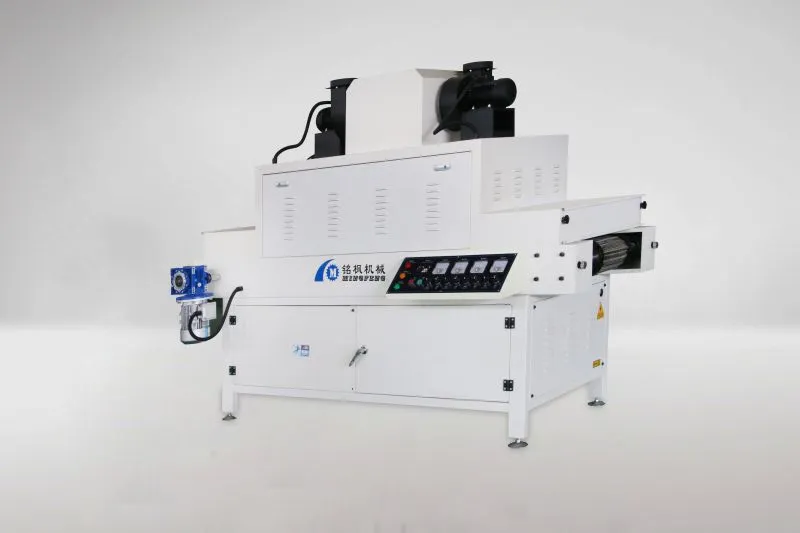
How to determine the real reason for uneven drying in a UV Dryer Machine?
1. Use a UV energy meter to detect light intensity distribution
Place an energy meter on the conveyor belt and measure the light energy values at different locations to determine if the light intensity is uniform on the left and right sides or in the middle.
2. Test the adhesion and hardness of the cured film layer
If the adhesion is poor at the edges but normal in the middle, it is mostly due to insufficient light exposure.
3. Observe the brightness and temperature distribution of the lamp surface
Use an infrared thermometer to detect the temperature difference on the lamp surface. If it exceeds 10℃, it indicates localized aging or abnormal current.
System optimization methods for uneven drying in a UV Dryer Machine
1. Calibrate the light source system
• Replace aging lamps regularly;
• Clean the reflector;
• Adjust the lamp position and angle;
• Balance the lamp spacing and output power.
2. Optimize conveyor speed and height
• Set a reasonable speed according to the coating thickness and material type;
• Ensure a constant distance between the lamp and the workpiece; use a lifting platform if necessary.
3. Adjust the air cooling system
• Avoid direct airflow to the light source, which can cause uneven cooling;
• Ensure stable overall machine temperature.
4. Check the power supply system
• Ensure the ballast, trigger, and voltage are stable;
• Avoid UV lamp flickering or brightness fluctuations.
5. Control environmental conditions
• Keep the drying area clean and dust-free;
• Maintain a moderate temperature and smooth air circulation.
How to avoid uneven drying in a UV dryer machine in the long term?
1. Develop a regular maintenance plan
Check lamp intensity weekly, clean the reflector monthly, and replace aging lamps quarterly.
2. Establish a standard process parameter table
Record key data such as lamp power, conveyor speed, and coating thickness to create a baseline for curing energy.
3. Maintain production consistency
Use the same settings parameters for the same product. Do not arbitrarily change speed or height.
4. Train operators
Make operators understand the working principle of the UV dryer machine and the factors affecting energy.
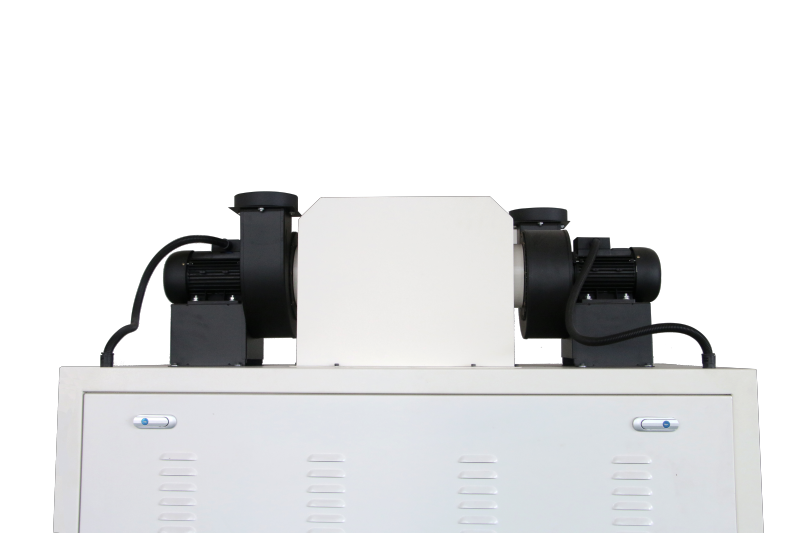
Why does my UV dryer machine dry faster in the center and slower on the sides?
→ This is usually caused by uneven lamp intensity distribution or reflector contamination. Cleaning or adjusting the reflector can improve this.
Can increasing the lamp power solve uneven drying?
→ No, it cannot fundamentally solve the problem. Excessive power may cause localized over-curing. The light angle and distance should be corrected first.
Does coating thickness affect UV drying uniformity?
→ Yes. The thicker the layer, the more difficult it is for light to penetrate, easily causing a false-drying phenomenon where the surface is cured while the underlying layer remains uncured.
Can this be solved by increasing the number of lights?
→ This is only effective when there is insufficient light coverage; if the original system has light reflection or distance issues, increasing the number of lights will have limited effect.