

In the coating industries of furniture manufacturing, flooring production, and decorative panel processing, UV Roller Coating Machines are among the most critical automated coating equipment. They use rollers to evenly apply UV-cured coatings to the substrate surface, achieving a smooth, glossy, or high-gloss finish.
However, in actual production, even with excellent equipment performance, a common surface defect—coating sagging—can occur. Sagging not only affects the gloss level but also leads to uneven film thickness and incomplete curing, thus reducing product quality.
So, what causes coating sagging in UV Roller Coating Machines? This article will analyze this issue from multiple perspectives, including equipment principles, coating characteristics, process parameters, and environmental factors, and propose targeted technical solutions.
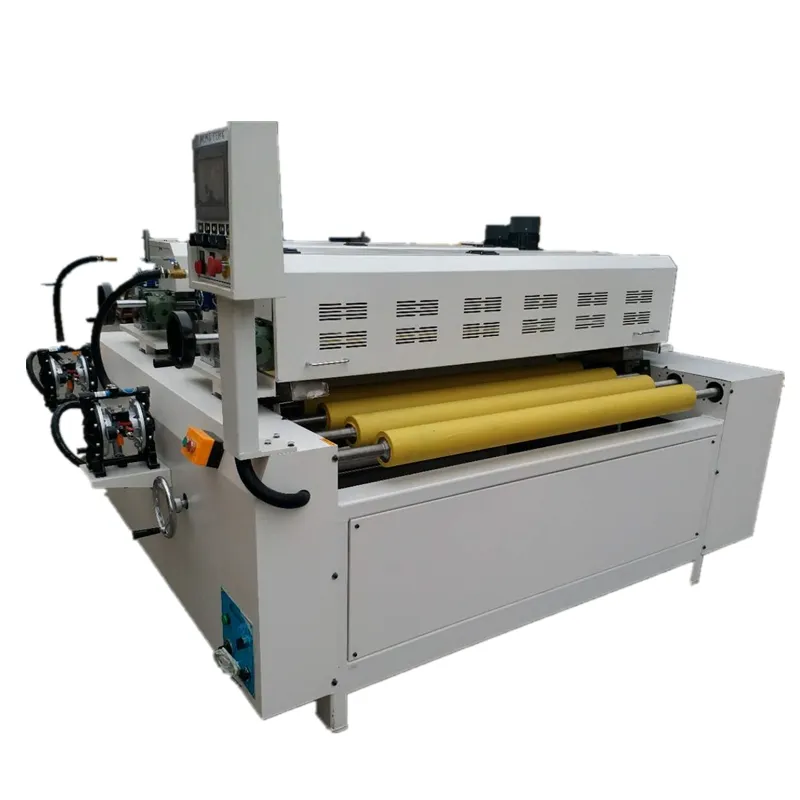
What is the coating sagging phenomenon in UV Roller Coating Machines?
"Paint sagging" refers to the phenomenon where, during UV roller coating machine application, the coating flows, sags, or accumulates on the substrate surface before it is fully cured, resulting in streaks, ripples, or uneven thickness.
This phenomenon not only affects visual appearance but can also lead to uneven curing, thus weakening the coating's adhesion and abrasion resistance.
In the production process of a UV roller coating machine, paint sagging generally occurs at the following stages:
• Improper adjustment of the gap between the coating roller and the paint supply roller;
• Inappropriate control of paint viscosity and solids content;
• Mismatch between coating speed and roller speed ratio;
• Abnormal paint performance due to environmental temperature and humidity.
Because UV paints cure quickly, once sagging occurs, it is usually difficult to correct through subsequent curing; therefore, it must be controlled at the source.
Why is sagging prone to occur with UV roller coating machines?
Although the roller coating method of a UV roller coating machine is inherently easier to control coating thickness than spraying or curtain coating, sagging can still occur if process parameters or paint characteristics are mismatched. The main reasons include the following:
• Inappropriate paint viscosity: If the viscosity is too low, the paint will be too fluid and prone to sagging;
• Improper roller speed ratio: Too large or too small a speed difference between the coating roller and the metering roller will cause paint accumulation;
• Incorrect roller gap setting: Too large a gap results in too much paint; too small a gap results in uneven coating;
• Poor surface treatment of the substrate: Differences in surface energy lead to inconsistent paint wetting properties;
• Excessive waiting time before curing: Delayed UV lamp activation or too slow conveyor speed;
• Fluctuations in ambient temperature and humidity: High temperature and high humidity increase paint fluidity.
In general, paint sagging is the result of a combination of equipment parameters, material properties, and operating habits.
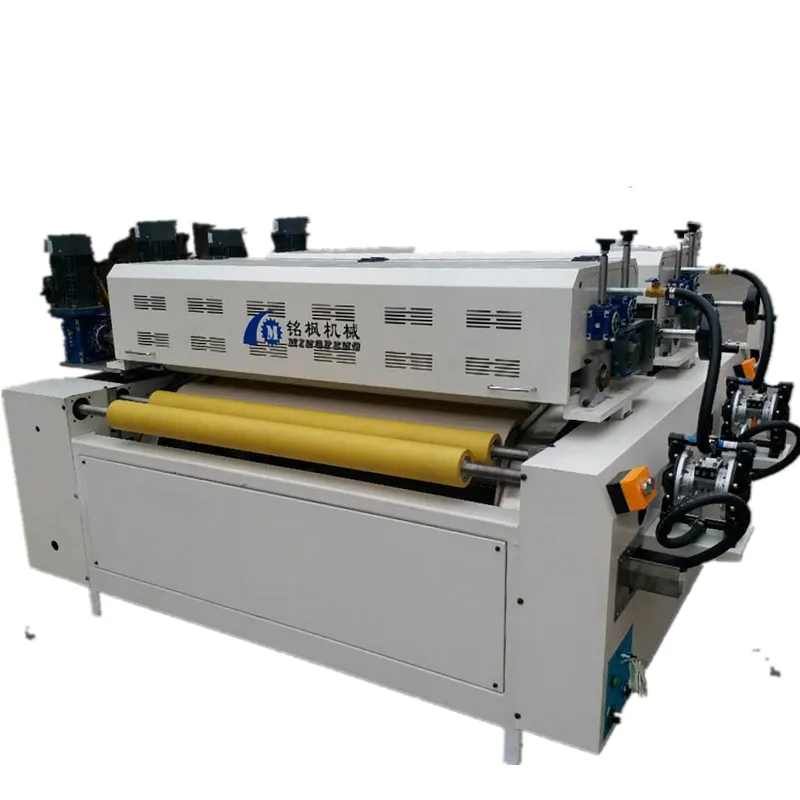
What factors in a UV Roller Coating Machine are most likely to cause sagging?
1. Improper paint viscosity control
Viscosity is the primary parameter affecting coating quality. UV Roller Coating Machines typically require paint viscosity within a certain range (e.g., 25–60 seconds/Ford-4 cup). If the viscosity is too low, the coating cannot form a stable film on the roller surface, and it tends to spread too quickly on the board, causing it to sag due to gravity.
Conversely, if the viscosity is too high, problems such as orange peel and roller marks may occur. Therefore, it is necessary to maintain suitable rheological properties through precise mixing and temperature control.
2. Incorrect Roller Speed Ratio Setting
In a UV roller coating system, the speed difference between the metering roller and the coating roller determines the coating thickness. If the speed ratio is set incorrectly, for example:
• Metering roller speed too low → Coating buildup → Uneven thickness → Sagging;
• Coating roller speed too high → Uneven coating application → Surface ripples.
Therefore, when adjusting the machine, it is essential to ensure that the speed difference matches the flow characteristics of the coating to avoid excessive buildup.
3. Mismatch between Roller Gap and Pressure
The roller gap of a UV Roller Coating Machine is generally between 0.05–0.3 mm. If the gap is not set accurately, it can easily cause coating buildup or paint breaks.
• Excessive gaps → Over-coating → Sagging and dripping;
• Insufficient gaps → Coating cracking or streaking.
Rolling pressure is equally important; excessive pressure can cause paint to be squeezed out, resulting in an uneven coating.
4. Poor Surface Condition of the Substrate
If the substrate surface has dust, oil, polishing powder, or differences in surface energy, the paint's wetting properties will be poor, leading to localized buildup.
UV Roller Coating Machines require a flat, clean, and dry surface; otherwise, paint adhesion will decrease, and the paint will easily flow to lower areas during leveling, forming drips.
5. Delayed UV Curing
The time window between paint leveling and curing is very short. If the conveyor speed is too slow, or the UV lamp start-up is delayed, the free flow time of the paint before curing increases, easily leading to drips.
The correct approach is to immediately move the coating to the curing zone after application at the end of the UV Roller Coating Machine to ensure the coating does not flow or deform before curing.
6. Unstable Ambient Temperature and Humidity
When the ambient temperature exceeds 30℃ or the humidity exceeds 70%, the coating's fluidity increases, while the curing speed may decrease, thus inducing sagging. The workshop should be kept at a constant temperature and humidity. Generally recommended settings are:
• Temperature: 20–25℃;
• Relative Humidity: 50±5%.
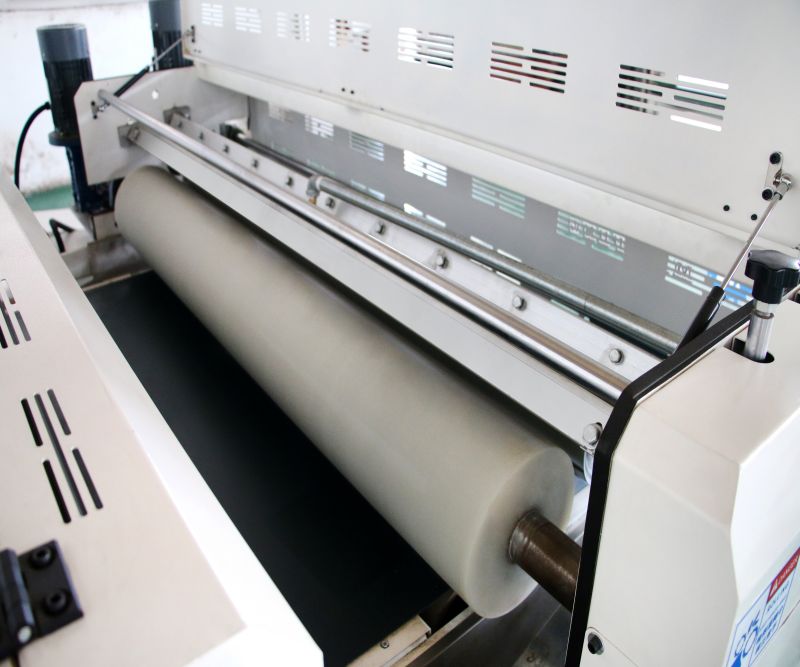
How to Determine the Type of Sagging on a UV Roller Coating Machine?
Different sagging patterns have different causes. Common sagging types include:
Types of Sagging | Characteristic Features | Main Causes |
Roller printing sagging | Roller marks show accumulation and obvious streaks | Improper roller speed ratio, excessive gap |
| Edge sagging | Thick paint at the edges, severe sagging | Excessive paint supply, uneven rotation speed |
Surface sagging | Large-area paint slippage, uneven thickness | Low paint viscosity, delayed curing |
| Local sagging | Localized shine or thick patches | Surface contamination, uneven surface tension |
Familiarity with these phenomena helps operators quickly locate problems during machine setup.
Why Does Viscosity Have the Greatest Impact on Sagging on a UV Roller Coating Machine?
Viscosity is the coating's ability to resist flow, directly determining its stability under gravity.
In a UV Roller Coating Machine, viscosity affects three key aspects:
1. Spreading Performance of the Coating on the Roller
When the viscosity is too low, the coating spreads quickly but unstable; when it is too high, it spreads insufficiently.
2. Roller Transfer Efficiency
The formation of the paint film between rollers depends on viscous adhesion. Abnormal viscosity can lead to paint film breakage or excessive buildup.
3. Surface Leveling Stage
The paint needs a short time to self-level on the substrate surface. If the viscosity is too low, it will sag before curing.
Therefore, in actual production, viscosity cup testing should be performed regularly, and paint flowability should be controlled in conjunction with temperature.
What are the key points for controlling paint sagging in UV Roller Coating Machines?
The following are highly targeted anti-sagging operation points:
1. Precisely Control Paint Viscosity
• Use a temperature-controlled paint storage tank;
• Maintain paint temperature at 20–25℃;
• Control viscosity within the recommended range;
• Stir regularly to prevent sedimentation.
2. Adjust Roller Speed and Gap
Set the following appropriately according to paint characteristics and workpiece type:
• Speed difference between metering roller and coating roller: 10–30%;
• Gap: 0.1–0.25mm;
• Confirm coating thickness using a test plate.
3. Enhance Panel Pre-treatment
Ensure the panel surface is:
• Clean and dust-free;
• Smooth and free of pits;
• Uniform surface finish (can be achieved through corona or plasma pre-treatment).
4. Shorten Curing Time
• Ensure immediate entry into the UV lamp zone after coating;
• Smooth conveyor belt operation;
• Sufficient UV lamp energy.
5. Maintain Constant Temperature and Humidity in the Workshop
Employ an automatic temperature and humidity control system to avoid fluctuations in coating flowability due to environmental changes.
6. Standardize Operating Procedures
Establish Standard Operating Procedures (SOPs) to ensure consistent operating parameters for each shift, including roller speed, gap, viscosity, and UV energy.
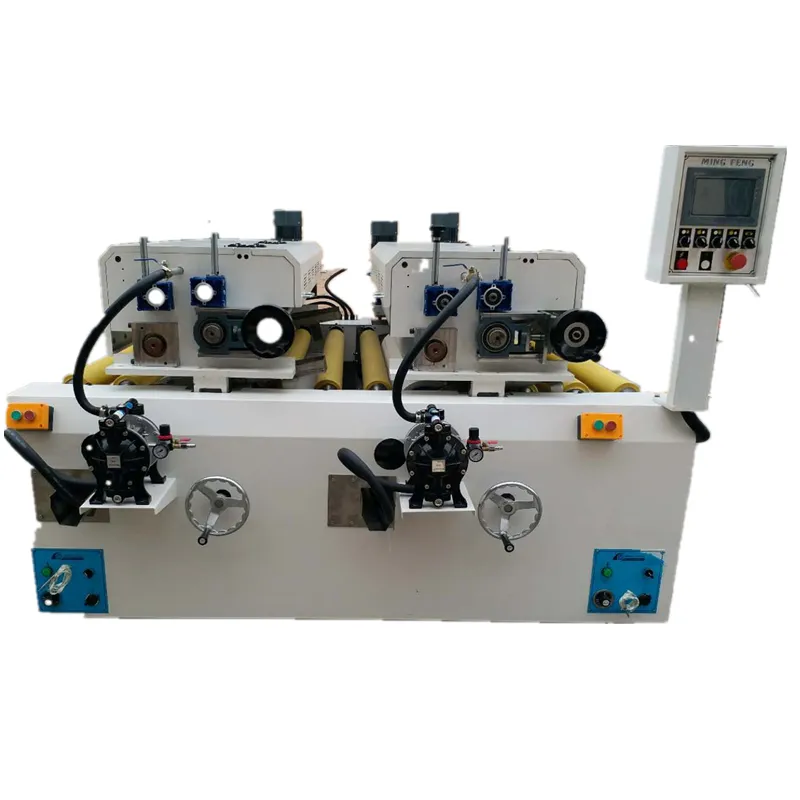
Can equipment factors in a UV Roller Coating Machine cause sagging?
Yes. Besides process factors, the condition of the equipment itself is also a significant cause of sagging. This mainly includes:
1. Roller surface wear or contamination
Rough roller surfaces or residual coating can easily lead to localized buildup.
2. Uneven Paint Supply System Pressure
Fluctuations in the paint supply pump flow rate lead to uneven paint distribution and paint buildup at the edges.
3. Vibration in the Transmission System
Mechanical vibration disrupts the continuity of the paint film, causing uneven coating thickness in certain areas.
4. Incorrect Angle of the Squeegee or Paint Baffle
If the squeegee angle is too small or severely worn, the paint supply cannot be accurately controlled.
Therefore, routine maintenance should include regularly cleaning the rollers, checking the squeegee, and calibrating the paint supply system pressure to maintain stable operation of the UV Roller Coating Machine.
How to Prevent Sagging During UV Roller Coating Machine Operation?
Prevention is better than cure. To completely avoid sagging, consider the following aspects:
• Equipment Level: Ensure roller system accuracy, proper lubrication, and stable paint supply;
• Process Level: Control paint ratio and coating thickness;
• Environmental Level: Maintain a constant temperature and dust-free environment;
• Management Level: Standardize operating procedures and establish quality inspection processes.
In addition, establishing a "parameter record sheet" to record data such as roller speed, gap, viscosity, and UV energy for each batch of production can provide a basis for subsequent analysis.
How to determine whether the problem is with the paint or the equipment?
If sagging occurs uniformly across the entire board surface, it's mostly a paint viscosity issue; if sagging is localized or in strips, it may be due to roller speed, gap, or uneven paint supply.
Can sagging be corrected with UV curing?
No. Once sagging forms, it becomes permanent after curing and can only be repaired by sanding and recoating.
Can adding thinner to the paint solve sagging?
No. Thinner will further reduce viscosity, actually exacerbating sagging. It should be improved by adjusting the temperature or adding a leveling agent.
Can increasing the roller speed prevent sagging?
Increasing the roller speed can indeed reduce paint buildup, but if it's too fast, it will cause paint splashing and bubbles; it should be adjusted appropriately.
The root causes of coating sagging in UV Roller Coating Machines
The main causes of coating sagging in UV Roller Coating Machines include the following:
1. Inappropriate coating viscosity;
2. Incorrect roller speed ratio and gap adjustment;
3. Unclean board surface or poor surface energy;
4. Delayed UV curing or insufficient energy;
5. Unstable ambient temperature and humidity;
6. Inadequate equipment maintenance.
By strictly controlling process parameters during production, maintaining good equipment condition, and establishing standardized operating procedures, coating sagging can be effectively avoided, ensuring stable, smooth, and uniform coating quality from the UV Roller Coating Machine.