

In modern surface treatment processes for wood products, furniture, flooring, plastic sheets, and metal sheets, the UV roller coating machine has become an indispensable piece of equipment. With its high efficiency, high smoothness, and high gloss, it provides an ideal automated solution for surface coating.
However, in actual production, many companies encounter the problem of particles or impurities appearing on the surface of the sheets after roller coating.
So, what causes particles to appear on the sheets after UV roller coating? Where do these particles come from? And how can they be solved and prevented?
This article will provide a comprehensive analysis from four perspectives: equipment, process, raw materials, and environment, helping you thoroughly understand the root cause of the problem and optimize production quality.
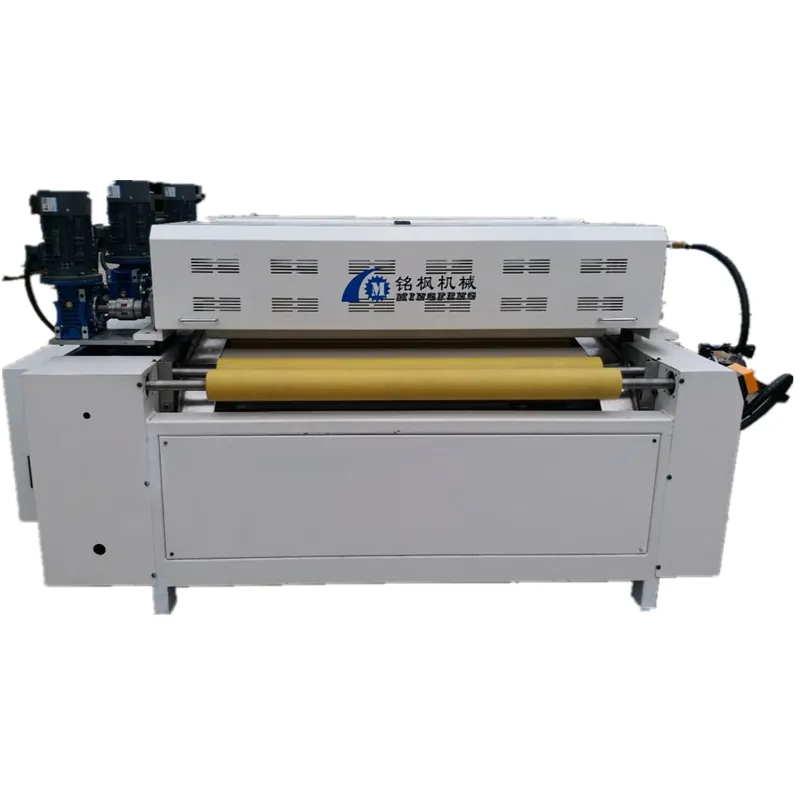
Why do particles appear on the surface after using a UV roller coating machine?
Under normal circumstances, a UV roller coating machine can evenly coat the surface of the sheet, forming a smooth and dense paint film. However, when particles appear on the surface of the sheet, it indicates an abnormality in any of the coating, leveling, or curing stages.
Particle defects often manifest in the following ways:
• Obvious protrusions or a gritty feel on the surface;
• Tiny reflective particles in a glossy paint film;
• Uneven paint film in localized areas, with a rough feel;
• Small particles or dust spots visible under strong light.
These particles may originate from a combination of factors, including the paint itself, ambient air, the equipment roller, the substrate surface, or improper process parameters.
Does the paint itself cause the particle problem?
During the use of a UV roller coating machine, the quality and condition of the paint are key factors determining the final coating effect.
1. Incomplete Paint Filtration
If UV paint is not finely filtered (generally using a 200-400 mesh filter) during production and transfer, it can easily trap tiny impurities, cured particles, or polymer clumps. These particles are carried into the coating during roller application, forming surface particles.
2. Excessive Paint Storage Time or Uneven Stirring
UV paint stored for extended periods may experience sedimentation, clumping, or partial curing, especially noticeable under high-temperature conditions. If the coating is not thoroughly stirred before using a UV roller coating machine, these sedimented particles will adhere directly to the substrate surface.
3. Abnormal Coating Viscosity or Leveling Properties
Excessively high viscosity will lead to uneven coating thickness. The coating cannot spread completely during leveling, resulting in "paint pile-up" particles in some areas.
Furthermore, impurities or reaction byproducts in the coating formulation may also form granular protrusions after UV curing.
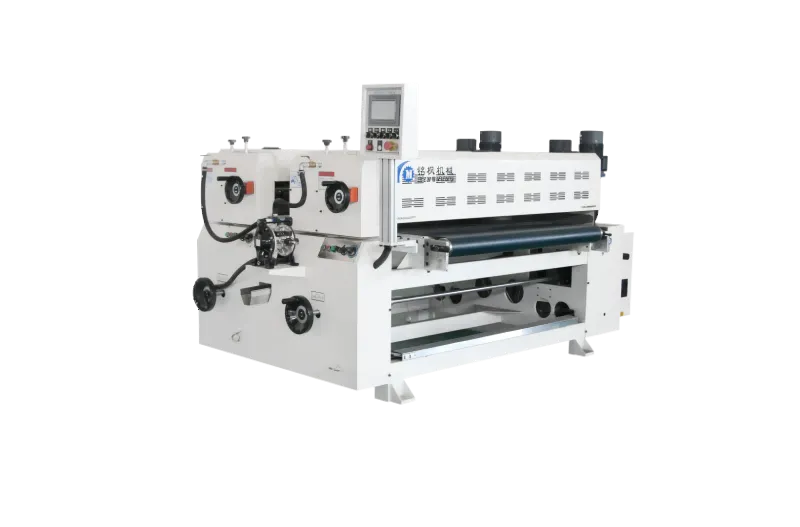
Can the UV roller coating machine itself cause particles?
The answer is yes. Even with a high-quality UV roller coating machine, improper equipment maintenance or incorrect parameter settings can be a direct source of particles.
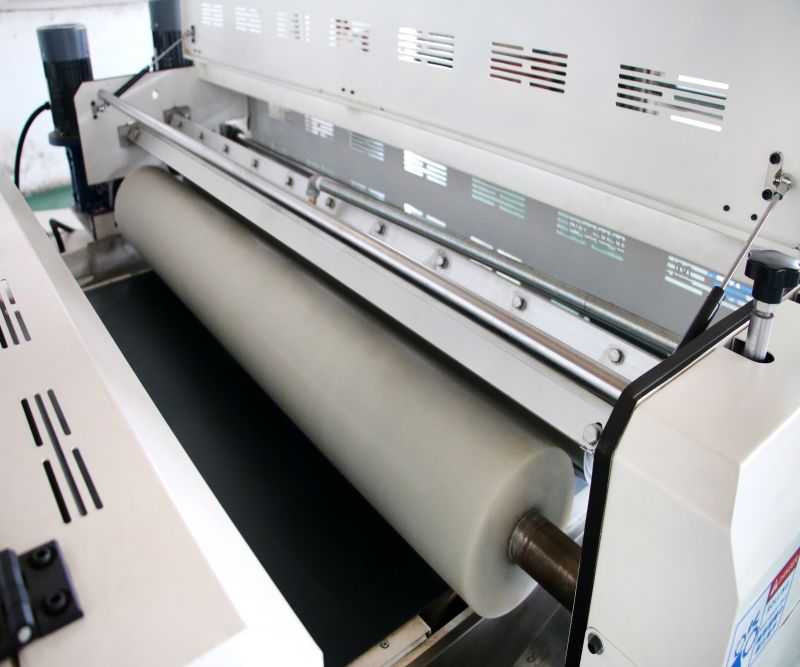
1. Unclean or Damaged Roller Surfaces
If the coating rollers, transfer rollers, and leveling rollers of the coating machine are not cleaned for a long time, they will absorb dust, paint residue, or oil. These tiny impurities will be transferred to the substrate surface with the coating, forming visible particles.
In addition, aging, peeling, or scratches on the roller surface can easily embed coatings, forming irregular particles.
2. Improper Scraper Adjustment
Uneven scraper gap control or worn scraper edges can lead to inconsistent coating thickness, paint buildup in some areas, and particle formation after curing.
3. Contamination of the Equipment's Internal Circulation System
Some UV roller coating machines are equipped with circulation pumps, filters, and recirculation systems. If the filter is clogged or there are paint clumps in the circulation lines, contaminants will enter the roller coating stage with the paint.
4. Contamination in the UV Lamp Curing Area
Dust accumulation, lamp cover stains, and aging reflectors in the curing section can cause uneven heating of the paint film during curing, resulting in localized particles or bumps.
Will Inadequate Substrate Surface Cleaning Cause Particles?
This is a crucial aspect that many manufacturers easily overlook.
Before entering the UV roller coating machine, the substrate surface must undergo thorough dust removal and electrostatic treatment. Any tiny dust particles, lint, oil stains, or sand particles will form noticeable particles after coating.
1. Electrostatic Dust Adsorption
In a dry environment, friction between the substrate generates static electricity, attracting airborne dust particles. Even if imperceptible to the naked eye, these particles are "sealed" within the paint film after the coating cures, forming granular defects.
2. Incomplete cleaning of sanding dust
If dust removal is not thorough after sanding or grinding, residual powder will adhere to the paint film during the coating process.
3. Surface oil or fingerprints
Operators directly contact the substrate; the oil on their hands can affect the wetting and adhesion of the paint, causing uneven surface and particle aggregation.
Can environmental factors cause particles in UV roller coating machines?
In the coating industry, environmental cleanliness is a decisive factor affecting coating quality. Even with high-end UV roller coating machines, particle problems cannot be avoided if the production environment does not meet standards.
1. High airborne dust content
Suspended particles, dust, fibers, etc., in the air easily settle on the uncured coating, forming impurities.
Solutions:
• Maintain a cleanliness level of 100,000 or higher in the coating room;
• Install a high-efficiency particulate air (HEPA) filtration system;
• Maintain positive pressure ventilation to prevent external dust from entering.
2. Low Humidity
Low humidity exacerbates electrostatic adsorption, making dust more likely to settle on the substrate. It is recommended to control humidity between 50% and 65%.
3. Personnel and Operating Procedures
Personnel should wear dust-proof clothing and anti-static shoes when entering the coating area to prevent hair, fibers, or clothing from contaminating the coating.
Can Improper Operating Parameter Settings Cause Particles?
The parameter settings of the UV roller coating machine directly affect the film quality. Any improper adjustment of speed, pressure, or coating amount can indirectly cause particle problems.
1. Mismatch between Roller Coating Speed and Rotation Speed
A mismatch between the coating roller speed and the conveyor speed can easily lead to coating accumulation or unevenness, resulting in a "particle-like" appearance during leveling.
2. Excessive Coating Pressure
Excessive pressure forces the coating into the micropores of the substrate surface, carrying out tiny dust particles or air bubbles that form protrusions after curing.
3. Improper Coating Amount Control
When the coating amount is too high, the leveling time of the coating is prolonged, making it easier to attract suspended particles from the air.
How to Detect and Analyze the Source of Particles?
When facing particle problems, do not blindly adjust the equipment; you should first determine the source of the particles using scientific methods.
1. Observe Particle Morphology
• If the particles are hard and embedded in the paint film, they are mostly paint or dust impurities;
• If the particles are soft protrusions, they may be air bubbles or poor leveling;
• If the particles are concentrated in a specific direction, it is often related to the roller or doctor blade.
2. Microscopic Analysis
Observing the particle morphology using a microscope or electronic magnifying glass can determine whether it is a foreign impurity or an abnormal curing process.
3. Step-by-Step Troubleshooting
The following can be addressed sequentially:
• Paint batch;
• Roller cleaning condition;
• Substrate cleanliness;
• Ambient air filtration device.
By eliminating these issues step by step, the problem area can be identified.
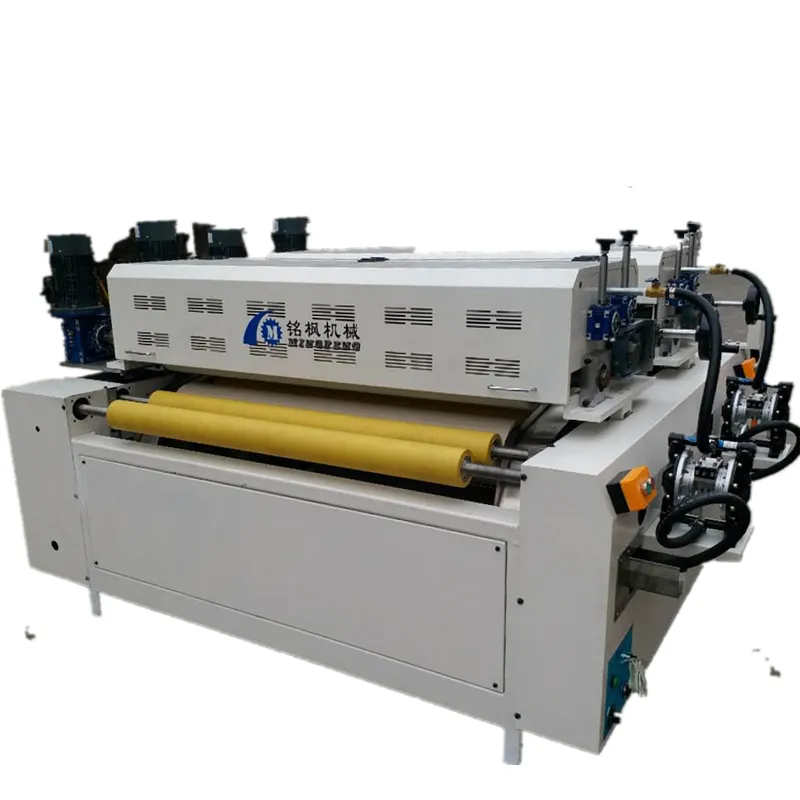
How to effectively prevent particles after UV roller coating?
The key to preventing particle problems lies in system management. The following are comprehensive preventative measures for UV roller coating machine production lines.
1. Paint Management
• Thoroughly stir and filter before use;
• Strictly control storage temperature and humidity;
• Clean the feeding system regularly.
2. Equipment Maintenance
• Thoroughly clean rollers, scrapers, and pipelines after each day's production;
• Regularly check the surface finish and coaxiality of the rollers;
• Replace aged seals and filters.
3. Environmental Control
• Maintain constant temperature and humidity in the coating workshop;
• Establish independent dust removal and static electricity elimination systems;
• Strictly enforce personnel dress codes.
4. Process Optimization
• Adjust coating speed and pressure;
• Ensure uniform coating thickness;
• Appropriately extend leveling time before UV curing.
How to repair particle problems if they have already occurred?
While prevention is fundamental, if particles have appeared on the substrate after UV roller coating, remedial measures can be taken:
• Mild particles: Polish and sand, then apply a thin coat of paint;
• Moderate particles: Sand until smooth, then perform a complete roller coating;
• Severe particles: Thoroughly sand down to the substrate layer, then recoat.
The Core of Particle Problems Lies in System Control
In summary, the appearance of particles on substrates after UV roller coating is not caused by a single reason, but rather is the result of an error in any of the four major systems: coating, equipment, environment, and process.
By establishing a comprehensive control system in the following areas:
1. Standardization of paint filtration and storage;
2. Systematization of equipment cleaning and maintenance;
3. Routine management of clean production environment and anti-static measures;
4. Monitoring and digitization of process parameters; the occurrence rate of particle defects can be significantly reduced, ensuring optimal coating quality from UV roller coating machines.
Particle problems may seem minor, but they directly impact product appearance and customer trust. Through scientific management and standardized operation, you can achieve efficient, stable, and flawless coating results on your UV roller coating machine production line.
How does XMF Machinery ensure stable machine performance?
XMF Machinery ensures stable performance through strict manufacturing control, continuous testing, and customer feedback optimization. As an experienced supplier and manufacturer, we design machines based on real production needs and long-term usage data. Key components are carefully selected to ensure durability and reliability. Before delivery, each machine undergoes testing to confirm coating uniformity, drying efficiency, and operational stability.