
In modern industrial production, drying is a crucial step determining product quality and production efficiency. Both UV dryer machines and infrared dryers are widely used in the furniture, electronics, plastics, printing, and coating industries.
While both are used for curing, drying, or hardening coatings on material surfaces, they differ significantly in their working principles, applicable ranges, energy consumption methods, and final results.
This article will delve into the differences between UV dryer machines and infrared dryers, helping you understand these two types of equipment and their practical significance in different processes from a professional perspective.
How Does a UV Dryer Machine Work?
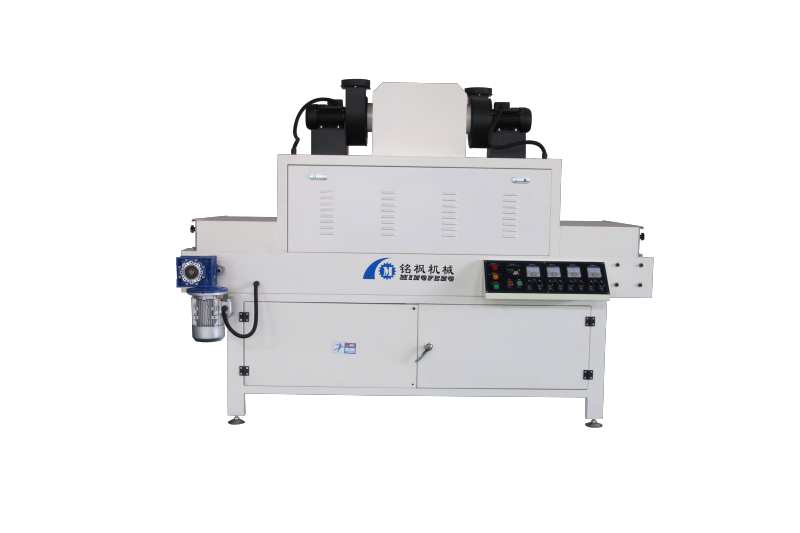
A UV dryer machine is a device that uses ultraviolet light (UV) irradiation to cause a photochemical reaction in materials such as coatings, inks, and adhesives, rapidly curing them. Its core technology is UV curing.
When a material surface is coated with a UV coating containing a photoinitiator, it is then irradiated with a UV lamp. The photoinitiator absorbs ultraviolet energy of a specific wavelength, triggering a molecular chain cross-linking reaction, transforming the liquid coating into a solid film in a very short time. This process is almost temperature-independent, making UV dryers particularly suitable for treating heat-sensitive materials such as plastics, PVC, and wood veneer panels.
Key features of UV dryers include:
• Extremely fast curing speed – almost instantaneous curing;
• Low energy consumption – energy concentrated in the ultraviolet band;
• No high-temperature baking – suitable for heat-sensitive materials;
• High coating hardness – dense film formation, scratch and wear resistant;
• Environmentally friendly – no solvent evaporation, low VOC emissions.
What is the working principle of an infrared dryer?
Unlike UV dryers, which rely on photochemical reactions, infrared dryers primarily dry materials through thermal radiation. Infrared radiation is a long-wavelength electromagnetic wave. When it shines on a surface, the molecules in the substance absorb energy and begin to vibrate and rub against each other, generating heat and causing moisture or solvents to evaporate.
The main characteristics of an infrared dryer include:
• Uniform heating and controllable temperature;
• Effective evaporation of moisture or solvents;
• Suitable for thermosetting coatings or paints;
• Shallow heating depth, primarily affecting the surface layer;
• Relatively slow drying speed, but can achieve drying over a large area.
Infrared drying is suitable for heat-driven evaporation and curing processes, rather than chemical reactions. Therefore, it is more commonly used in traditional high-temperature applications such as wood coating, plastic parts drying, and powder coating curing.
What is the fundamental difference in principle between a UV dryer machine and an infrared dryer?
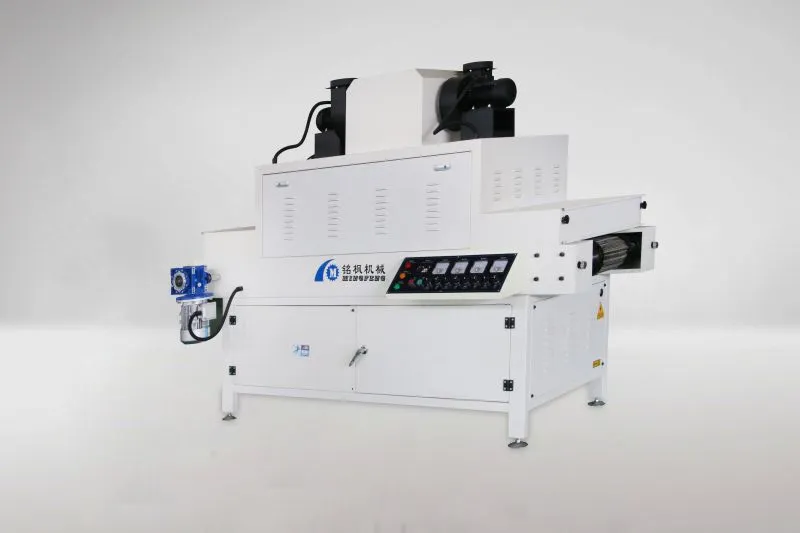
The essential difference between a UV dryer machine and an infrared dryer lies in their energy action mechanisms.
A UV dryer machine is a "cold light curing device" that does not rely on high temperatures; while an infrared dryer is a "thermal energy drying device" that relies on temperature transfer. This difference determines their different positioning in the process.
Is there a significant difference in energy consumption between UV dryers and infrared dryers?
Yes, the energy consumption difference between UV dryers and infrared dryers is quite significant.
The energy consumption of a UV dryer primarily comes from the lamps and power supply system. Energy is concentrated in the ultraviolet region with wavelengths of 200–400 nm, resulting in high energy utilization and low loss. A standard UV dryer can complete curing in just a few seconds, with low overall energy consumption and limited heat transfer, preventing material deformation due to high temperatures.
Infrared dryers, on the other hand, require continuous heating to maintain the drying temperature, with a large amount of heat consumed in air heating and radiation losses. This energy waste is particularly pronounced when processing large areas of material.
Therefore, from an energy efficiency perspective, UV dryers are more energy-efficient and environmentally friendly, making them especially suitable for modern production lines requiring rapid curing and low-temperature processing.
Why is the curing effect of a UV dryer more uniform?
UV dryers achieve full cross-linking of the coating's molecular chains through uniform irradiation with ultraviolet light, forming a dense and smooth cured layer. This method avoids the "surface dry, interior wet" problem common in heat drying, and also prevents discoloration or cracking caused by high temperatures.
In contrast, infrared dryers are prone to excessively high surface temperatures and uncooked interiors when drying thick coatings. Uneven heat conduction can also lead to material warping or loss of gloss in the coating. Therefore, in applications requiring high surface quality (such as UV wood coating, plastic printing, and metal finishes), UV dryer machines offer greater stability and uniformity.
What are the application areas for UV dryer machines and infrared dryers respectively?
1. Application Areas of UV Dryer Machines
• Furniture Coating Industry: UV curing of wood panels, cabinet doors, and flooring;
• Printing and Packaging Industry: UV inks, varnishes, and label printing;
• Plastics Industry: UV spray coating surface curing;
• Electronics Industry: UV adhesive encapsulation and circuit board protective layers;
• Optics and Automotive Parts: Curing of lenses and reflectors.
2. Applications of Infrared Dryers
• Drying of wood varnish and floor paint;
• Drying of metal workpieces after spray coating;
• Curing of inks after printing on glass and ceramics;
• Preheating of surface coatings on plastic parts;
• Heating and curing of powder coatings.
It can be seen that UV dryers are more suitable for rapid curing and high-gloss surface applications, while infrared dryers are more suitable for traditional drying processes that require high temperatures.
Which has the advantage in terms of safety and environmental protection?
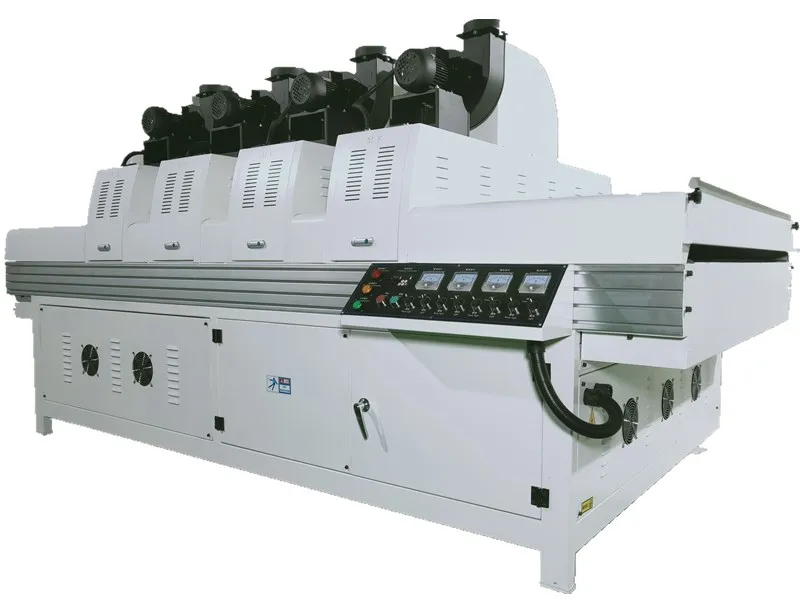
UV dryers typically operate in a closed chamber, with ultraviolet light acting directly on the material surface. They do not produce high-temperature exhaust gases and have almost no VOC emissions. Modern UV lamp systems are also equipped with radiation protection and ozone treatment devices to ensure safe operation.
Infrared dryers, due to the involvement of heat and solvent evaporation, often produce a certain amount of exhaust gas and odor, requiring additional ventilation and purification systems. Furthermore, high-temperature operation increases equipment maintenance and safety risks.
Therefore, from the perspective of environmental protection and operational safety, UV dryers better meet the requirements of modern environmentally friendly production.
What are the differences in maintenance costs between UV dryers and infrared dryers?
1. Key Maintenance Points for UV Dryers
The focus is on the lamps and reflectors. UV lamps typically have a lifespan of 800–1200 hours; regular replacement is sufficient to maintain stable light intensity. Other components, such as conveyor belts and cooling systems, are relatively simple to maintain.
2. Key Maintenance Points for Infrared Dryers
The focus is on the heating elements and temperature control system. Due to prolonged high-temperature operation, infrared elements are prone to aging and cracking, requiring regular inspection and replacement. Poorly designed thermal circulation systems can also lead to energy loss.
In summary, UV dryers require less maintenance and have more controllable operating costs.
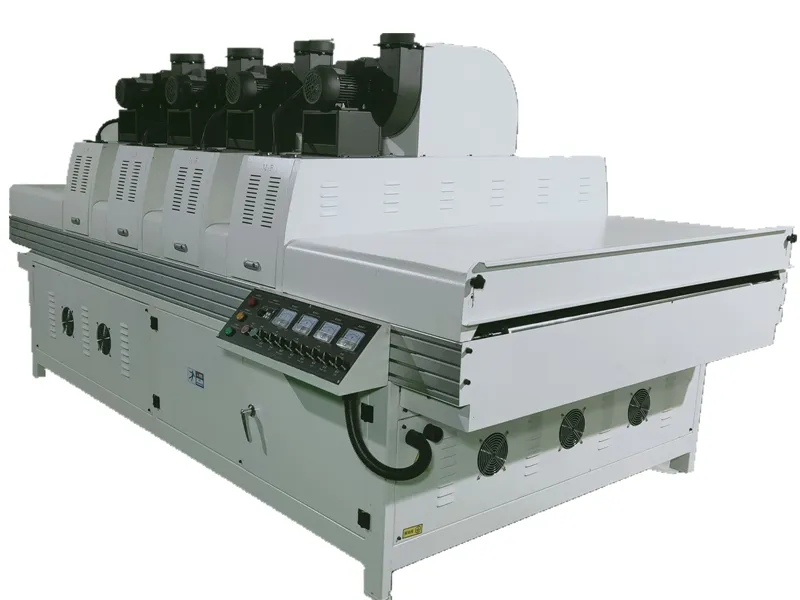
Can UV dryers completely replace infrared dryers?
The answer is no. While UV dryers offer advantages such as energy saving, high efficiency, and environmental friendliness, their applications are limited by material properties.
UV dryers can only process coatings or inks that can be cured by ultraviolet light; they are not suitable for traditional thermosetting or solvent-based materials.
Infrared dryers remain irreplaceable in processes requiring heat to accelerate reactions or evaporation.
Therefore, in actual industrial production, the two types of equipment are often complementary:
• For scenarios requiring photocuring and rapid production, a UV dryer is chosen;
• For drying thermosetting materials or thick films, an infrared dryer is used.
Sometimes, both are even used in combination on the same production line to achieve optimal drying results.