
In the field of industrial manufacturing, surface coating is a crucial step in ensuring product quality and appearance. Spray painting technology is ubiquitous across the manufacturing sector, spanning industries from furniture making and metal processing to the production of automotive parts and machinery. With the advancement of automation technology, an increasing number of enterprises are adopting spray painting production lines to replace traditional manual spray painting methods.
However, when upgrading equipment or planning production lines, many companies face a common question: what exactly distinguishes a spray painting production line from traditional manual spray painting? There are significant differences between the two regarding production efficiency, coating quality, cost control, and the working environment.
This article systematically analyzes the differences between spray painting production lines and traditional manual spray painting from various perspectives, helping readers gain a clearer understanding of the advantages and characteristics of automated spray painting production lines in modern industrial manufacturing.
What is a spray painting production line?
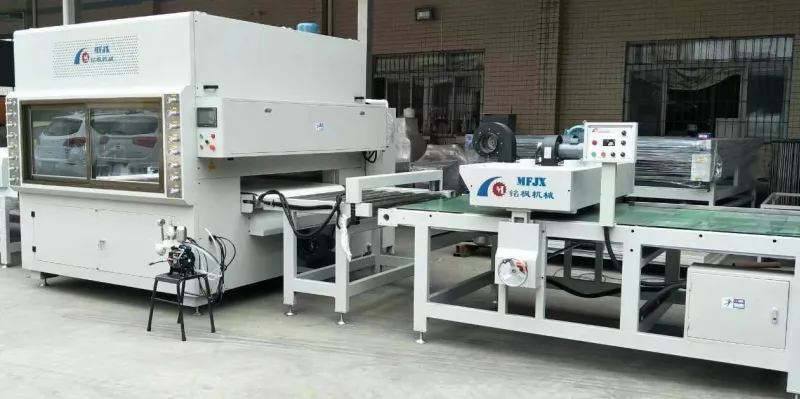
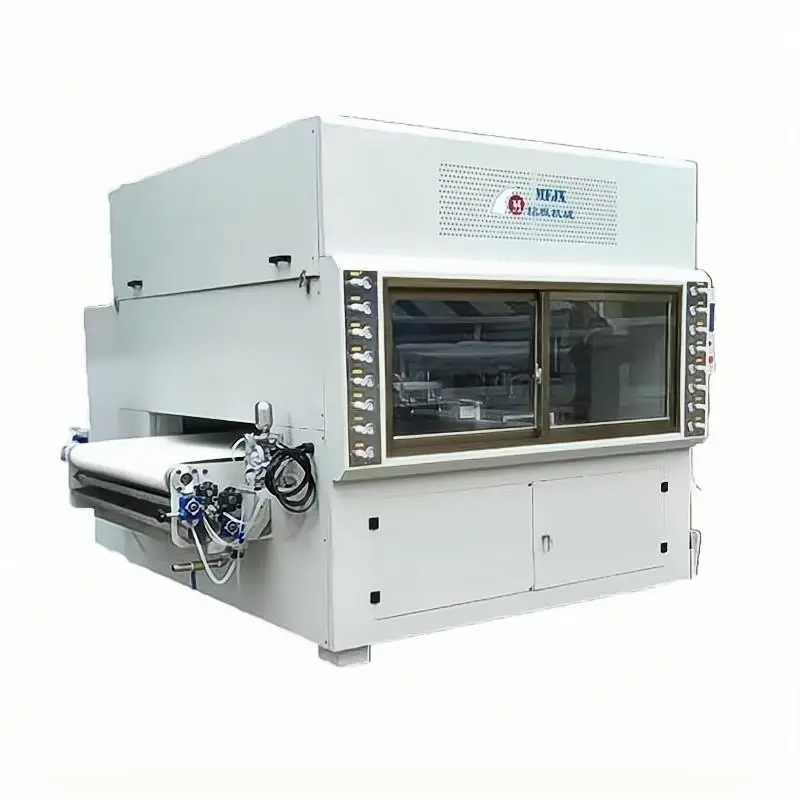
A spray painting production line is an automated coating system composed of various pieces of equipment. It typically utilizes a conveyor system to transport products sequentially through spraying, drying, and cooling zones, thereby completing the entire spray painting process.
A complete spray painting production line generally comprises the following main components:
•Automatic conveyor system
•Spray booth or spraying chamber
•Automatic spray guns or spraying robots
•Paint supply system
•Drying or curing system
•Cooling system
During production, products enter the spray painting line via the conveyor system; spray guns apply the coating evenly according to preset parameters, and drying equipment subsequently cures the coating.
Because the entire process allows for automated control, automated spray painting production lines are widely used in modern manufacturing.
What is traditional manual spray painting?
Traditional manual spray painting is a coating method in which an operator holds and operates a spray gun by hand. In this process, the quality of the spray painting relies heavily on the operator's experience and skill.
Manual spray painting typically involves the following steps:
•Product positioning
•Manual spray gun application
•Natural leveling
•Manual transfer to drying equipment
Compared to automated spray painting lines, traditional manual spraying relies more heavily on human operation; consequently, there are often differences in production efficiency and coating consistency.
How do spray painting lines and manual spraying differ in terms of production efficiency?
Production efficiency is one of the most critical factors for enterprises when selecting a coating method.
1. Automated continuous production
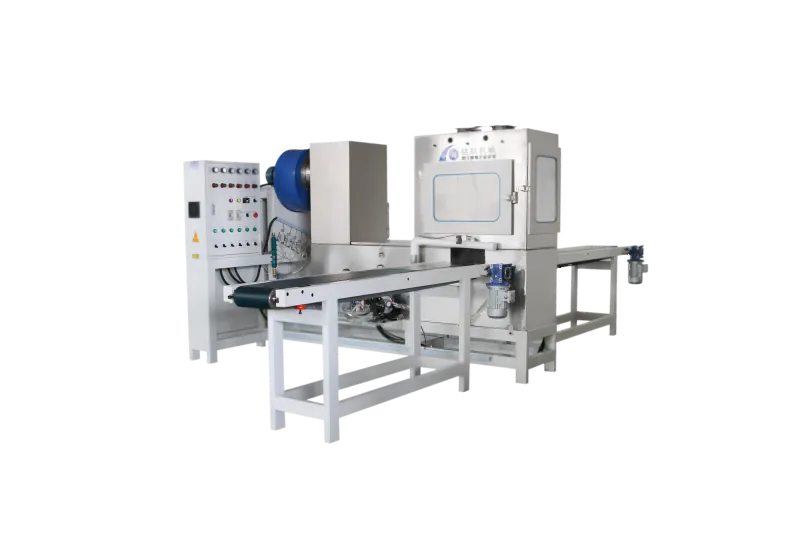
A key feature of spray painting lines is their ability to facilitate continuous production. Products move continuously into the spraying zone via a conveyor system, requiring minimal human intervention throughout the process.
This continuous production method allows spray painting lines to process a higher volume of products within a given timeframe, thereby significantly boosting efficiency.
2. Manual spraying involves intermittent production
In contrast, traditional manual spraying is typically an intermittent process. Operators spray products one by one, moving to the next item only after completing the current one.
This method is not only less efficient but also susceptible to variations in pace caused by human factors.
Therefore, in high-volume production environments, spray painting lines generally offer higher efficiency than manual spraying.
What advantages do spray painting lines offer regarding coating quality?
Coating quality is a crucial benchmark for evaluating coating processes. There are distinct differences between spray painting lines and manual spraying in this regard.
1. Superior coating uniformity
On a spray painting line, spraying parameters—such as the following—are pre-set:
•Spraying distance
•Spraying angle
•Spraying speed
•Paint flow rate
These parameters remain stable, ensuring consistent coating results across every product.
With manual spraying, however, variations in operator technique make it difficult to guarantee identical results every time.
2. Reduction of surface defects
During manual spraying, improper technique can lead to surface issues such as:
•Excessive coating thickness
•Insufficient coating thickness
•Sagging or runs
•Color inconsistency
Automated control systems in spray painting lines effectively minimize these issues, thereby enhancing the product's visual quality.
Can using a spray painting line reduce paint waste?
Coating costs account for a significant portion of the painting process, making coating utilization a key focus for enterprises.
1. Automatic spray guns control coating usage
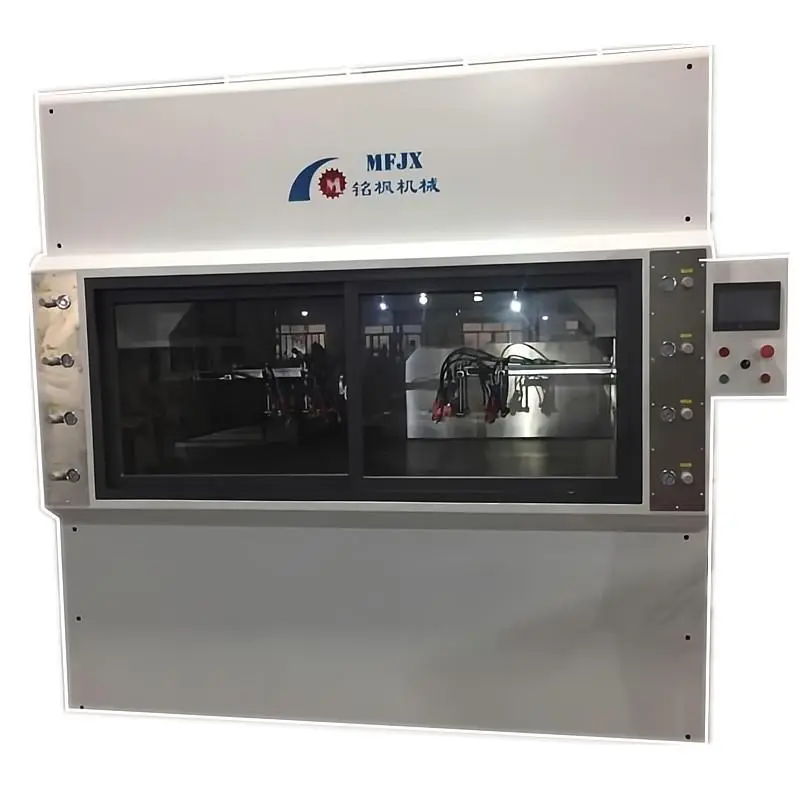
On a painting production line, automatic spray guns can precisely control the volume of coating sprayed, ensuring uniform coverage on the product surface.
This method of control minimizes overspray, thereby reducing coating consumption.
2. Recovery systems reduce waste
Many painting production lines are equipped with coating recovery systems that capture coating not adhering to the product surface, further increasing utilization rates.
In contrast, manual painting often struggles to achieve such recovery results, leading to higher levels of coating waste.
How do painting production lines differ in terms of the working environment?
The working environment is a crucial factor affecting production safety and employee health.
1. Enclosed spraying environment
In modern painting production lines, spraying typically takes place within an enclosed spray booth. These booths are equipped with:
•Air filtration systems
•Exhaust systems
•Waste gas treatment equipment
These systems effectively reduce the atomized particles and gases generated during the painting process, thereby improving the working environment.
2. Manual painting environments are harder to control
In traditional manual painting environments, without comprehensive spray booth equipment, paint mist generated during the process may disperse into the general work area.
This situation not only affects air quality but can also increase cleaning and maintenance costs.
Therefore, from the perspective of the working environment, painting production lines are generally safer and more standardized.
What advantages do painting production lines offer regarding production stability?
Production stability is vital in industrial manufacturing. A stable production process reduces downtime and increases output.
1. Stable production pace
On a painting production line, the conveyor system operates at a set speed, ensuring products enter the spraying zone at a consistent rhythm.
This stable pace helps avoid production fluctuations.
2. Reduced impact of human factors
Manual painting is susceptible to the operator's condition, such as:
•Variations in skill level
•Fatigue
•Differences in operating habits
Painting production lines, however, operate using automated equipment, thereby minimizing the impact of these human factors.
Is it easier to achieve quality control with painting production lines?
In modern manufacturing, product quality must be ensured through rigorous production control.
Automated control systems in painting lines typically monitor various production parameters, such as:
•Spraying pressure
•Paint flow rate
•Conveyor speed
•Curing temperature
By controlling these parameters, operators can more easily maintain consistent coating quality.
In contrast, manual painting relies heavily on operator experience, resulting in relatively lower quality consistency.
Are painting lines suitable for mass production?
In high-volume production environments, equipment capacity is a critical factor.
Thanks to their continuous production capabilities, painting lines are ideally suited for mass manufacturing.
They are widely used in industries such as:
•Metal product processing
•Furniture manufacturing
•Home appliance production
•Machinery manufacturing
These industries often require surface coating for large quantities of products, and painting lines are capable of meeting such high-volume demands.