
Roller coating production lines and curtain coating production lines are two common types of automated coating equipment, widely used in industries such as furniture panels, wooden doors, flooring, glass, metal sheets, and decorative panels.
Although both are automated coating systems, they differ significantly in their working principles, equipment structure, coating methods, applicable materials, and production efficiency. Therefore, understanding the differences between roller coating production lines and curtain coating production lines is crucial when planning or selecting coating equipment.
This article will systematically analyze these two types of equipment from multiple professional perspectives, helping readers to fully understand the structural characteristics, working methods, and application differences of roller coating production lines and curtain coating production lines.
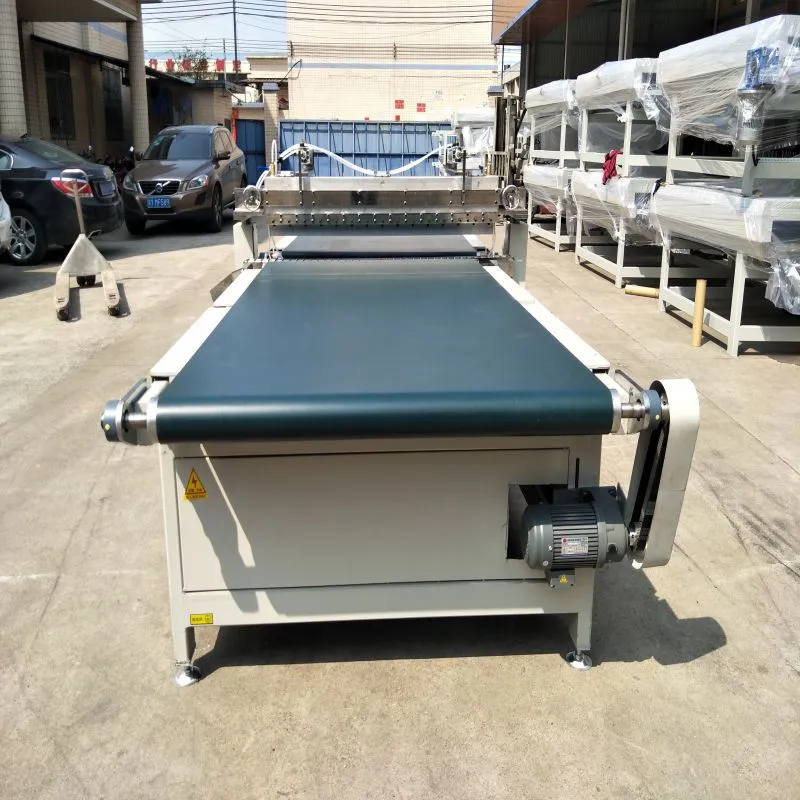
What is a Roller Coating Production Line?
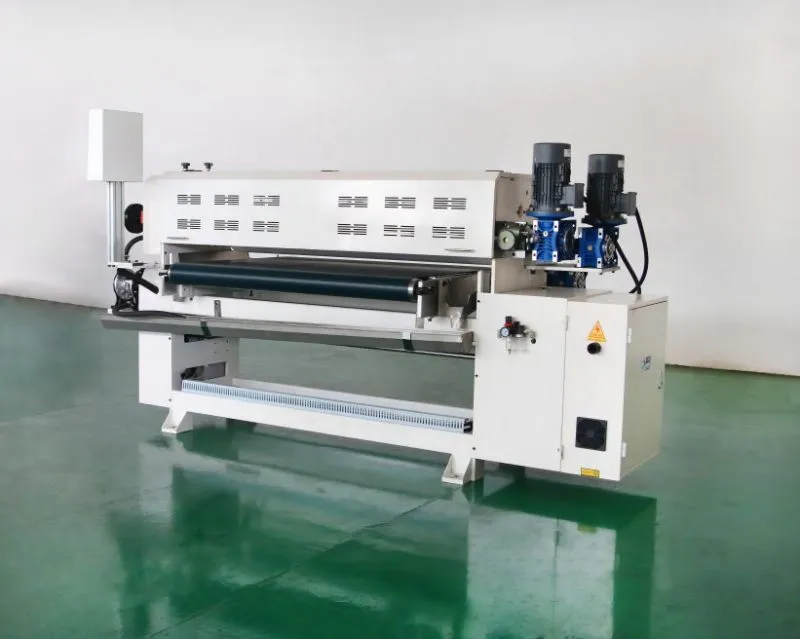
A roller coating production line is an automated coating equipment that uses coating rollers to evenly transfer paint onto the surface of a workpiece. This equipment mainly utilizes the contact and rotation between rollers to evenly distribute and coat the paint onto the surface of the sheet material.
In industrial production, roller coating production lines are commonly used for coating flat panel products, such as:
• Wooden furniture panels
• Flooring panels
• PVC panels
• Metal panels
• Glass decorative panels
Because roller coating allows for precise control of paint thickness, it offers significant advantages in high-precision coating control.
Basic Structure of a Roller Coating Production Line
A complete roller coating production line typically includes the following equipment:
• Conveying system
• Feeding equipment
• Paint supply system
• Roller coater
• Doctor blade system
• Leveling zone
• Drying equipment
• Cooling system
These devices work together to enable continuous, automated production.
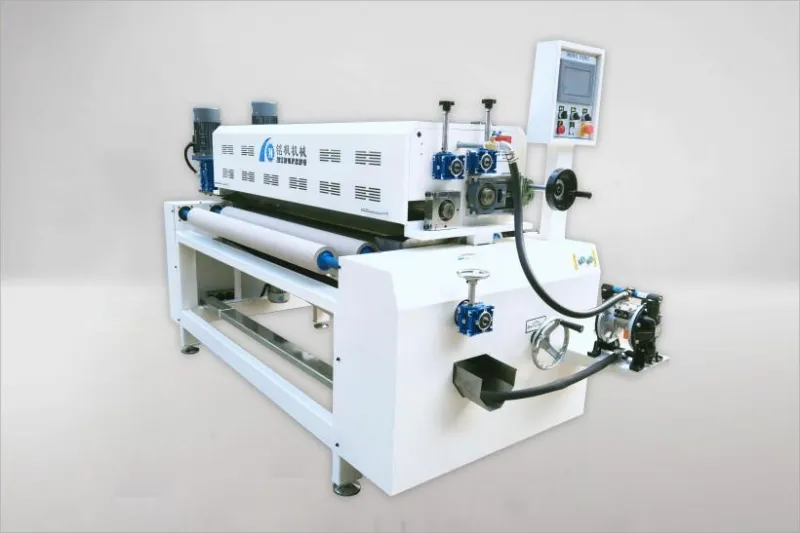
What is a Curtain Coating Production Line?
A curtain coating production line is an automated coating system that uses a continuous "liquid curtain" of paint to cover the surface of a workpiece. Paint flows evenly from the top of the equipment, forming a waterfall-like liquid curtain that evenly coats the surface of the workpiece as it passes through.
This coating method has extremely high coating efficiency, therefore curtain coating production lines are often used for coating large-area flat products.
Basic Structure of a Curtain Coating Production Line
A typical curtain coating production line mainly consists of the following equipment:
• Conveying system
• Feeding equipment
• Curtain coater
• Paint circulation system
• Leveling zone equipment
• Drying equipment
• Cooling system
• Paint recovery system
Through the coordinated operation of these devices, a curtain coating production line can achieve fast, high-coverage coating operations.
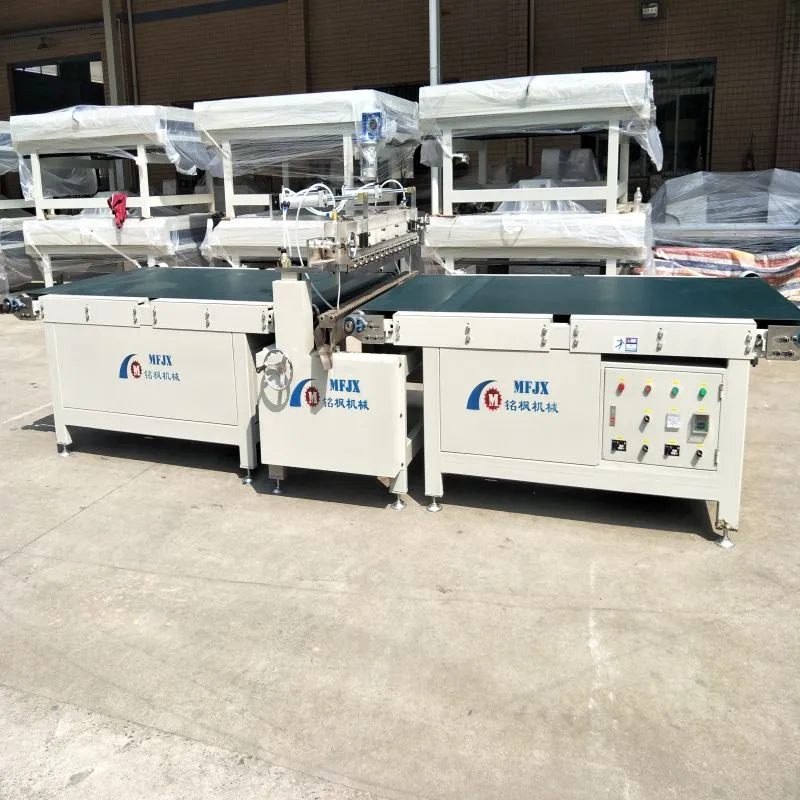
What are the differences in working principles between roller and curtain coating production lines?
Working principle is one of the most crucial factors distinguishing roller coating production lines from curtain coating production lines.
Working Principle of a Roller Coating Production Line
In a roller coating production line, paint is first fed onto the coating roller, and then the rotating roller distributes the paint evenly. Subsequently, the coating roller contacts the workpiece surface, transferring the paint onto the workpiece.
This method has the following characteristics:
• Precise control over coating thickness
• High paint utilization rate
• Stable coating process
• Suitable for high-precision surface treatment
Therefore, roller coating production lines are particularly suitable for sheet metal products requiring uniform coating thickness.
Working Principle of Curtain Coating Production Lines
In curtain coating production lines, paint flows evenly from above the coating equipment, forming a continuous liquid curtain. When the workpiece passes through the curtain, the paint directly covers the workpiece surface.
This method has the following characteristics:
• Fast paint coverage speed
• Larger coating thickness
• High coating efficiency
• Suitable for large-area coating
Therefore, curtain coating production lines are often used in high-efficiency production scenarios.
What are the differences in equipment structure between roller and curtain coating production lines?
Although both roller coating production lines and curtain coating production lines include conveying, coating, and drying processes in their overall structure, their core equipment structures differ significantly.
Core Equipment of Roller Coating Production Lines
The key equipment in a roller coating production line is the roller coater, whose main components include:
• Coating roller
• Metering roller
• Doctor blade system
• Paint supply system
These components work together to ensure that the paint is evenly distributed on the roller surface and accurately coated onto the workpiece surface.
Core Equipment of Curtain Coating Production Lines
The core equipment in a curtain coating production line is the curtain coater, whose main structure includes:
• Paint storage tank
• Curtain opening device
• Paint circulation system
• Recovery system
These devices ensure that the paint can form a stable liquid curtain.
Therefore, from an equipment structure perspective, roller coating production lines rely more on mechanical rollers, while curtain coating production lines rely more on liquid flow systems.
Roller and Curtain Coating Production Lines: What are the differences in coating control capabilities?
In industrial production, coating thickness and uniformity are important indicators for measuring coating quality.
Coating Control Capabilities of Roller Coating Production Lines
Because the rollers can be mechanically adjusted to control pressure and gap, roller coating production lines have higher coating precision.
Its characteristics include:
• Precise coating thickness control
• High coating uniformity
• Good surface smoothness
Therefore, roller coating production lines are typically used for high-quality surface coating.
Coating characteristics of curtain coating production lines
Compared to roller coating production lines, curtain coating production lines generally produce thicker coatings.
Their main characteristics include:
• High coating coverage
• Larger coating thickness
• Good surface leveling effect
Therefore, curtain coating is more suitable for products requiring thicker coatings.
Roller vs. curtain coating production lines: What are the differences in applicable product types?
Different coating equipment is suitable for different types of products.
Applicable products for roller coating production lines
Roller coating production lines are mainly suitable for the following products:
• Wood furniture panels
• Laminate flooring
• PVC decorative panels
• Metal sheets
• Glass sheets
These products typically have smooth surfaces, making them ideal for roller coating processes.
Products Suitable for Curtain Coating Production Lines
Curtain coating production lines are more suitable for:
• Wooden door panels
• Large flat panels
• Furniture decorative panels
• Composite panels
Curtain coating has advantages in mass production because it can quickly cover large surfaces.
What is the difference in paint utilization between roller coating and curtain coating production lines?
Paint utilization is a crucial factor affecting production costs.
Paint Utilization of Roller Coating Production Lines
Roller coating production lines typically have higher paint utilization because the paint is transferred directly to the workpiece surface through rollers.
Advantages include:
• Less paint waste
• Controllable coating process
• More stable costs
Paint Utilization in Curtain Coating Production Lines
In curtain coating production lines, some paint may run off the workpiece surface and needs to be recycled through a recovery system.
While curtain coating is more efficient, in some cases, the complexity of the paint recycling system can increase.
What is the difference in production efficiency between roller coating and curtain coating production lines?
In terms of production efficiency, roller coating lines and curtain coating lines each have their advantages.
Roller coating lines are generally suitable for continuous production with a stable cycle time.
Their advantages include:
• High coating precision
• Strong production stability
• Suitable for multi-layer coating processes
Curtain coating lines, on the other hand, have a higher coating speed, thus being more efficient in large-area coating operations.