
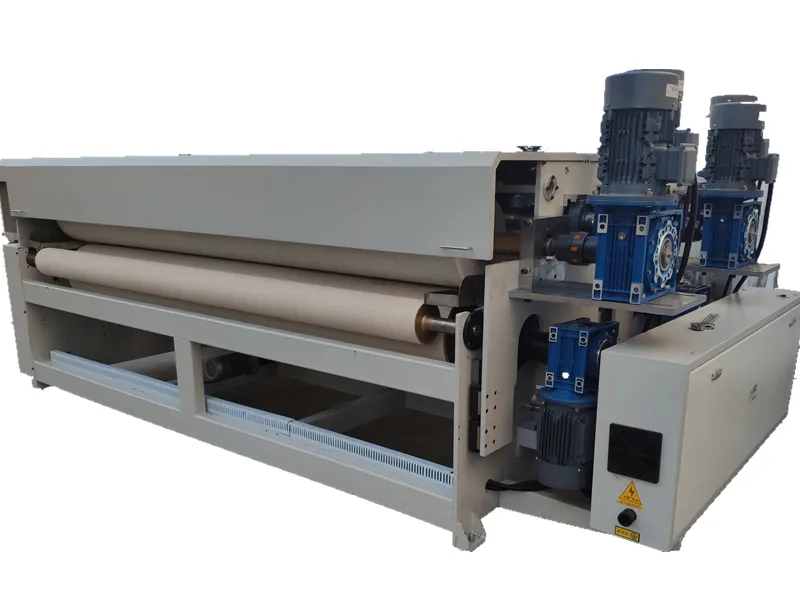
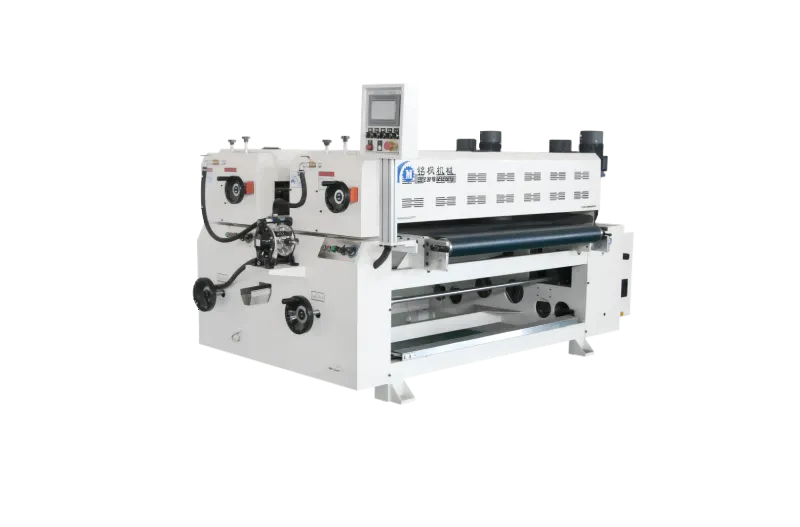
In the field of modern industrial finishing, the Roller Coating Production Line is a widely utilized piece of automated coating equipment. Through the precise coordination of a series of rollers, it applies paint uniformly to material surfaces, achieving highly efficient and consistent coating results.
Due to its stability and high production efficiency, roller coating lines are extensively used for the surface coating of metal sheets, wood panels, glass, plastic sheets, decorative panels, aluminum coils, and various composite materials.
When establishing or operating such facilities, many enterprises are concerned with a core question: What exactly does the roller coating process flow entail? From the moment materials enter the equipment until the coating is applied and cured, the entire process involves multiple precision steps, with each stage directly influencing the quality of the final coating.
This article will provide a systematic explanation of the workflow of a roller coating production line. It will offer detailed insights into the underlying principles, procedural steps, key equipment components, and process control mechanisms, thereby helping readers gain a comprehensive understanding of the complete roller coating process flow.
What is a Roller Coating Production Line?
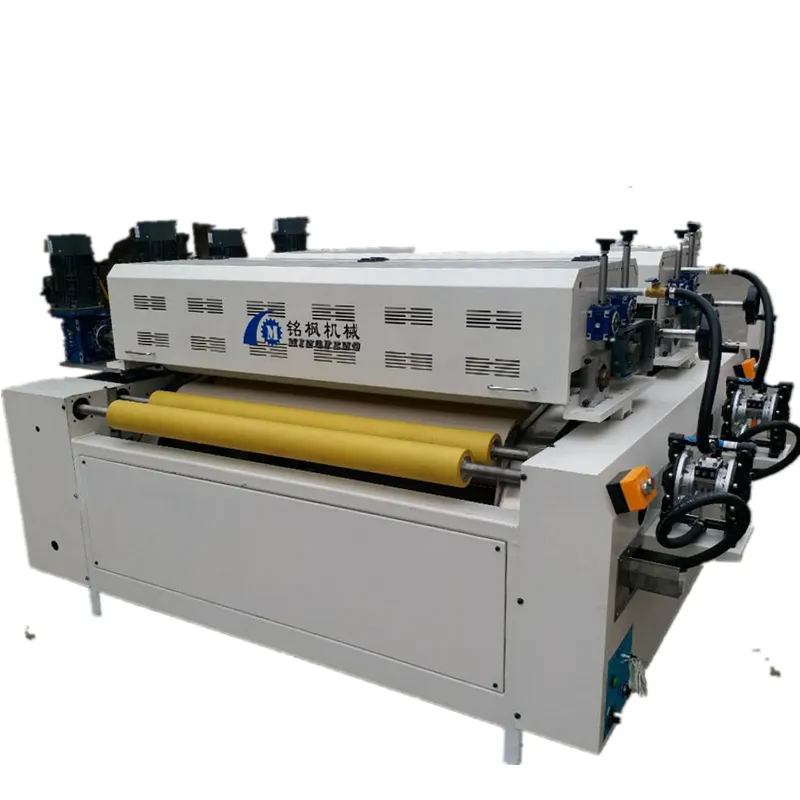
A roller coating production line is an automated finishing system that utilizes rotating rollers to uniformly transfer liquid paint onto the surface of a substrate. Its core principle relies on the coordinated interaction between the paint supply roller, metering roller, applicator roller, and conveyor system to form a stable and uniform paint film.
Compared to traditional spray coating or brush coating methods, roller coating lines offer the following distinct advantages:
•Uniform coating thickness
•High paint utilization efficiency
•High degree of automation
•High production efficiency
•Suitability for continuous production
Consequently, in large-scale industrial manufacturing, an increasing number of enterprises are choosing to adopt roller coating lines to replace manual or semi-automated coating methods.
What are the Basic Components of a Roller Coating Production Line?
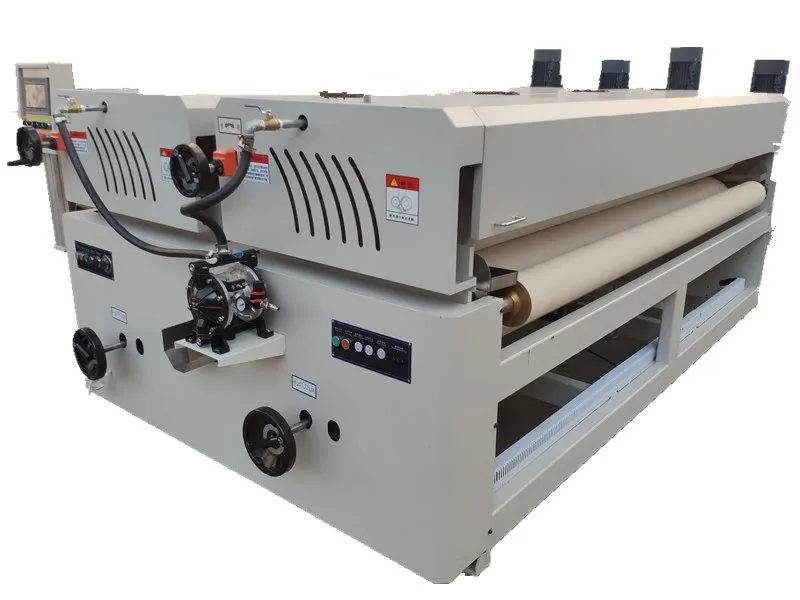
Before delving into the specific process flow of a roller coating line, it is essential to first familiarize oneself with its primary equipment structure. Generally speaking, a complete roller coating production line typically consists of the following components:
1.Loading System
2.Substrate Cleaning System
3.Paint Supply System
4.Roller Coating Unit
5.Leveling Zone
6.Drying and Curing System
7.Cooling System
8.Unloading System
Together, these systems constitute the complete process workflow of a roller coating line, ensuring that every step—from the material's entry into the line to the completion of the coating—remains stable and controllable.
What is the process workflow of a roller coating production line?
Generally, the process workflow of a standard roller coating line can be summarized in the following steps:
Loading → Cleaning → Roller Coating → Leveling → Drying → Cooling → Unloading
Each of these steps will be analyzed in detail below.
What preparations are required before the substrate enters the roller coating line?
Before the actual roller coating process begins, the material must undergo necessary pretreatment; this is a crucial step in ensuring the quality of the final coating.
1 Substrate Loading
First, the material to be coated enters the roller coating line via an automatic loading device.
Common loading methods include:
•Automatic conveyor belt loading
•Coil unwinding systems
•Automatic sheet feeders
At this stage, it is essential to ensure that the material:
•Has a flat surface
•Exhibits no significant warping or bending
•Has a consistent thickness
Failure to meet these criteria will compromise the coating uniformity during the subsequent roller coating process.
2 Surface Cleaning Treatment
Once the material enters the roller coating line, it typically passes through a cleaning system. This is because the presence of any of the following on the material's surface—
•Dust
•Oil stains
•Moisture
•Particulate impurities
—will negatively affect paint adhesion.
Common cleaning methods include:
•Electrostatic dust removal
•Brush cleaning
•Air knife dust removal
•Solvent cleaning
Through these methods, it is ensured that the material enters the roller coating stage in a clean and stable condition.
How does a roller coating line transfer the paint?
Roller coating is the most critical step within the entire workflow of the production line.
1 Paint Supply
First, the paint is transported into the roller coating machine via the paint supply system. Paint supply systems typically include:
•Paint storage tanks
•Paint circulation systems
•Filtration units
•Viscosity control systems
In a roller coating line, the viscosity, temperature, and flow properties of the paint must be kept stable; otherwise, the quality of the coating will be compromised.
2 Metering Rollers Control Coating Thickness
In a roller coating line, the role of the metering roller is critical.
It is primarily used to control:
•The volume of paint transferred
•Coating film thickness
•Coating uniformity
By adjusting the pressure and gap between the rollers, the amount of paint applied can be precisely controlled.
3 Coating Rollers Transfer Paint to the Substrate
Once a stable layer of paint has formed between the rollers, the coating roller uniformly transfers the paint onto the surface of the material.
During this process, the roller coating line must ensure:
•Stable roller rotation speeds
•Uniform pressure
•Stable material conveying speeds
Only in this way can consistent coating thickness be guaranteed.
Why is the leveling process after roller coating important?
After the roller coating is complete, the material enters the leveling zone.
The Function of Leveling
Leveling is one of the critical stages in a roller coating line; its primary functions include:
•Eliminating roller marks
•Eliminating air bubbles
•Improving coating flatness
•Enhancing surface gloss
During the leveling phase, the paint gradually forms a uniform layer under the influence of gravity and surface tension.
Control of Leveling Time
In a roller coating line, the leveling time typically requires strict control.
If the time is too short:
The paint will not be able to level out completely.
If the time is too long:
It may lead to paint sagging or dripping.
Therefore, an appropriate leveling time is crucial for the coating quality of a roller coating line.
How do roller coating lines perform drying and curing?
Once the leveling process is complete, the material enters the drying system.
1 Drying Methods
Depending on the type of paint used, a roller coating line may employ various drying methods, such as:
•Hot air drying
•Infrared heating
•UV curing
•Electric heating/drying
Different processes are suitable for different types of paint systems.
2. The Curing Process
The function of the drying system extends beyond merely evaporating solvents; it also encompasses the completion of the coating's curing reaction.
Within a roller coating production line, the curing process enables the coating to develop:
•High adhesion
•High hardness
•High abrasion resistance
•A stable protective layer
Temperature and time control are critical parameters within the drying system.
What steps are required after the coating application is completed on a roller coating line?
Once the drying process is finished, the material must undergo subsequent post-processing steps.
1. Cooling System
Upon exiting the drying oven, the material is typically at an elevated temperature; therefore, it requires cooling via a dedicated cooling system.
Common cooling methods include:
•Air cooling systems
•Cooling roller systems
Only after the cooling process is complete can the material proceed to the next processing stage or be packaged.
2. Take-up System
Finally, the material completes the production workflow by passing through an automated take-up system.
Depending on the type of material being processed, take-up methods may include:
•Coil winding (for roll stock)
•Sheet stacking (for sheet stock)
•Automated transfer to the next processing stage
At this point, a complete process cycle on the roller coating production line is concluded.
Which parameters require critical control within the roller coating process?
In actual production operations, a roller coating line requires the precise control of multiple key parameters to ensure consistent coating quality.
These primarily include:
1. Coating Viscosity
Coating viscosity directly influences:
•Coating uniformity
•Coating film thickness
Consequently, many roller coating lines are equipped with viscosity monitoring systems.
2. Roller Pressure
The pressure exerted between the rollers determines:
•The volume of coating transferred
•The final coating thickness
Excessive or insufficient pressure will negatively impact coating quality.
3. Conveying Speed
The speed at which the material is conveyed through the roller coating line must be precisely synchronized with the speed of the rollers.
If the conveying speed is unstable, it can easily lead to:
•Uneven coating
•Localized paint accumulation (piling)
•Surface defects
4. Drying Temperature
Temperature control is absolutely critical for the proper curing of the coating.
If the temperature is too low:
The coating will fail to cure completely.
If the temperature is too high:
It may damage the material substrate or result in coating defects.
Why are an increasing number of companies choosing roller coating production lines?
In the field of industrial coating, roller coating lines have gradually emerged as the mainstream equipment. The primary reasons for this include:
1. High Production Efficiency: Continuous production processes enable a substantial increase in output.
2. Stable Coating Quality: Automated equipment minimizes human error.
3. High Paint Utilization Rate: Compared to spray coating methods, roller coating lines generate virtually no paint waste.
4. Suitability for Large-Scale Production: They are particularly well-suited for processing continuous materials, such as sheets and coils.
Consequently, roller coating lines are widely utilized across industries such as metal processing, furniture manufacturing, building materials, and decorative materials.