

In coating processes such as furniture manufacturing, floor processing, and decorative panel surface treatment, the UV Roller Coating Machine is a highly efficient and precise automated equipment.
It uses rollers to evenly apply UV-curable coatings to the substrate surface, and then uses UV lamps for rapid curing, achieving a high-gloss, wear-resistant, and environmentally friendly surface effect.
However, during long-term use, many operators are concerned about a very real problem – is the UV Roller Coating Machine noisy? How many decibels does it produce?
Noise not only affects the comfort of the operating environment but also directly impacts occupational health standards in the production site and the stability of equipment operation.
This article will comprehensively analyze the noise problem of the UV Roller Coating Machine from various aspects, including noise sources, decibel levels, influencing factors, detection standards, and control measures, to help companies more scientifically evaluate and improve the production environment.
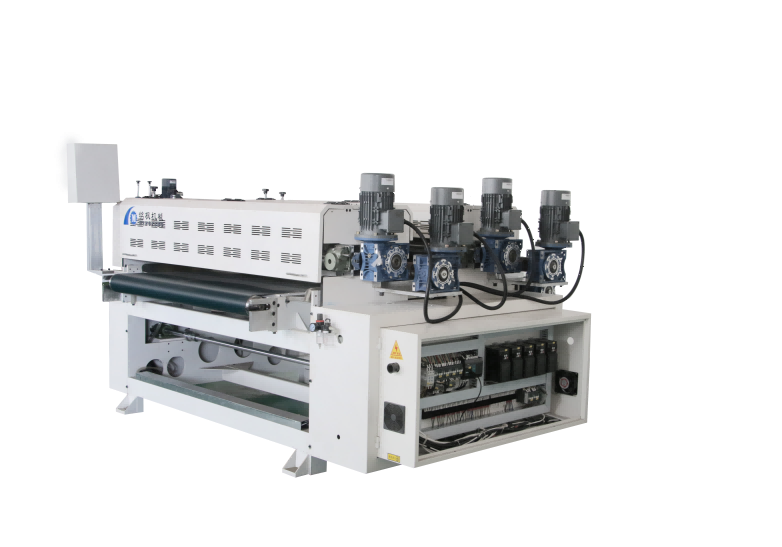
What are the noise sources of the UV Roller Coating Machine?
Although this type of equipment has a compact structure and precise transmission, several mechanical and airflow noise sources still exist during high-speed operation. These mainly include the following aspects:
1. Transmission system noise
• Operating noise from motors, reducers, pulleys, and chains;
• Primarily medium-to-low frequency mechanical noise, which increases with speed.
2. Roller rotation and friction noise
• Contact friction between rollers produces a slight humming sound;
• If the bearings are worn or poorly lubricated, the noise will increase significantly.
3. UV lamp cooling system noise
• Air-cooled UV lamps require fans for heat dissipation; the greater the airflow, the higher the airflow noise;
• This is usually one of the main sources of noise for the entire machine.
4. Conveyor belt and panel friction noise
• "Sliding sound" generated by friction and vibration when the panels are transported on the conveyor belt;
• The sound level will vary slightly depending on the material and speed.
5. Vacuum adsorption and exhaust system noise
• For models that use vacuum adsorption to fix the panels, the noise from the vacuum pump is quite noticeable;
• The sound source is mostly a low-frequency humming sound.
In summary, the noise of the UV Roller Coating Machine is not from a single source, but rather the result of the combined action of various mechanical components and airflow systems.
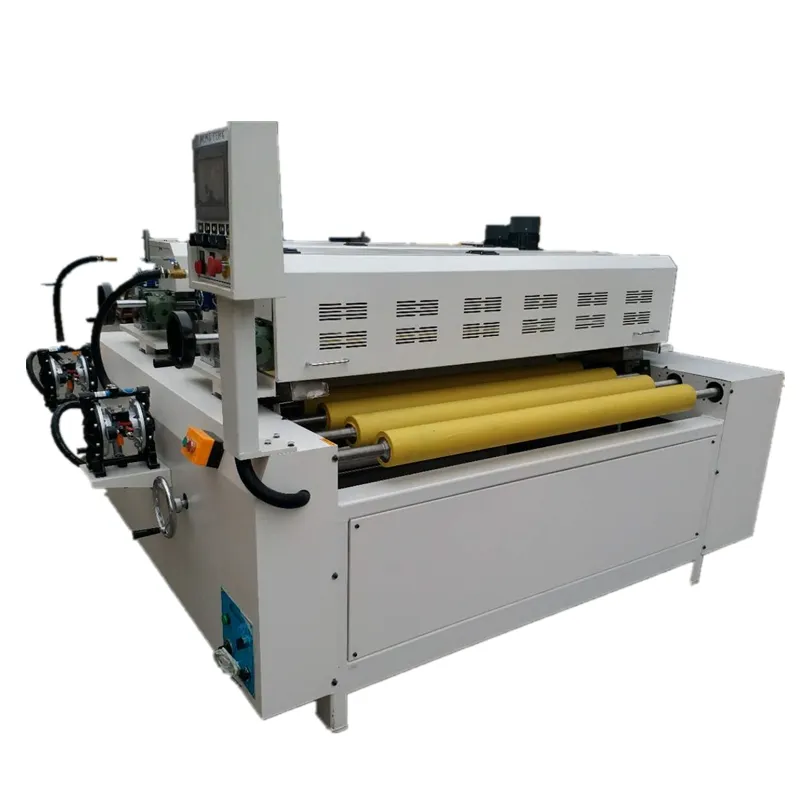
How many decibels does the UV Roller Coating Machine generally produce?
So, how many decibels of noise does a UV Roller Coating Machine produce? Will it affect worker operation?
According to industry testing data and actual measurement experience, the noise range of a standard UV Roller Coating Machine during normal operation is as follows:
Noise Sources | Decibel Range (dB) | Features Description |
| Main drive motor and reduction gear system | 55–65 dB | Characterized by moderate mechanical noise |
| Roller friction and bearing operation | 50–60 dB | Low noise level during steady operation |
UV lamp cooling fan | 70–80 dB | High-speed airflow noise is the most prominent |
| Vacuum pump system (if applicable) | 75–85 dB | Continuous low-frequency humming sound |
| Overall sound pressure level during machine operation | 68–82 dB (average approximately 75 dB) | Falls within the acceptable range of industrial noise |
Note: The decibel values are taken from measurements at 1 meter from the equipment, conforming to the "Industrial Enterprise Noise Measurement Standard" (GBZ/T 189.8-2007).
From the above data, it can be seen that the overall noise level of the UV Roller Coating Machine is approximately 75 decibels.
This falls within the medium range of industrial equipment noise – higher than a typical office environment (approximately 55 dB), but far lower than large woodworking sanders or dust collection systems (which can reach over 90 dB).
Therefore, under conditions that meet national occupational noise standards, the noise of the UV Roller Coating Machine is not considered excessive and is within an acceptable range.
Why does the UV Roller Coating Machine produce 70-80 decibels of noise?
Many users are puzzled: the equipment uses high-precision machining, so why does noise still exist?
To answer this question, we must understand the noise generation mechanism from both mechanical vibration and aerodynamics.
1. Mechanical Vibration Superposition Effect
In the UV Roller Coating Machine, multiple rollers, high-speed motors, and sprockets operate synchronously, and mechanical vibrations are superimposed on each other.
If the equipment foundation is unstable or there is a deviation in the drive shaft center, even a small eccentricity will amplify the vibration, thus causing an increase in noise.
2. Bearing and Gear Meshing Noise
The roller bearings operate at high speeds, producing a continuous "humming" sound. If there is insufficient lubricating oil or the ball bearings are worn, the meshing noise increases.
Similarly, improper gear meshing clearance can also create periodic impact sounds.
3. Fan and Airflow Noise
The cooling fans in the UV lamp system are usually high-power centrifugal fans. When high-speed airflow passes through the air duct and filter, it generates turbulence and pulsating noise.
This type of aerodynamic noise accounts for approximately 40% or more of the total sound level.
4. Plate Vibration and Resonance
Under high-speed conveying, the gaps, friction, and resonance between the plates and the conveyor belt also combine to form continuous noise. In summary, the noise of the UV Roller Coating Machine is mainly caused by the superposition of mechanical vibration and airflow, rather than a single structural problem.
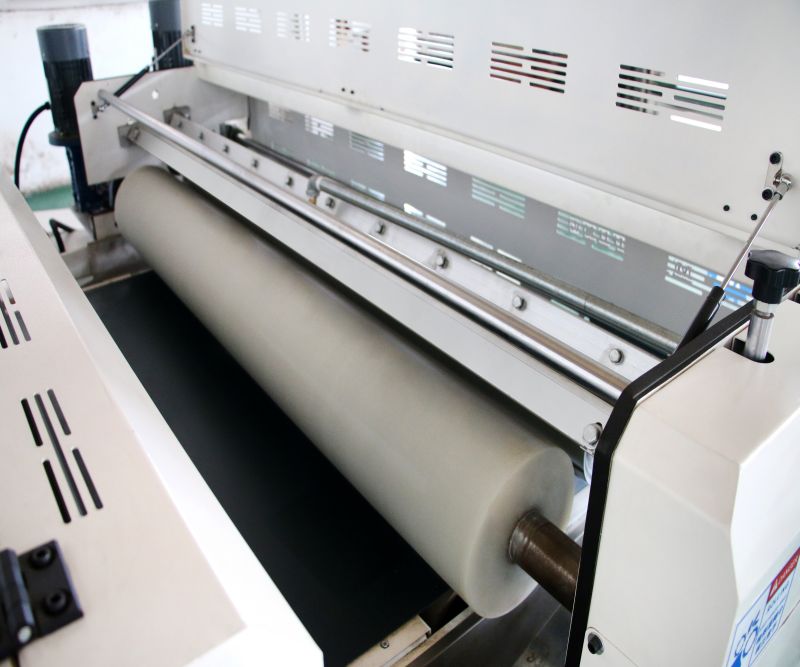
Does the noise of the UV Roller Coating Machine meet safety standards?
From an occupational health perspective, the acceptable level of noise depends on the decibel value and exposure time. According to China's "Hygienic Standards for Industrial Enterprise Design" (GBZ 1-2010) and international occupational safety standards (ISO 1999:2013):
• Below 85 dB: Long-term exposure is acceptable without special protection;
• 85–90 dB: Wearing earplugs is recommended;
• Above 90 dB: Noise reduction measures must be taken.
Based on this standard, the average noise of the UV Roller Coating Machine is 75 dB, which is well within the safe range. As long as the factory layout is reasonable and ventilation and sound insulation are maintained, long-term operation will not cause hearing damage.
What factors can cause increased noise in the UV Roller Coating Machine?
1. Bearing wear or poor lubrication
After long-term operation, bearings will wear out, increasing rolling resistance and significantly increasing noise.
The UV Roller Coating Machine is particularly sensitive under high-speed conditions, and bearings should be regularly lubricated or replaced.
2. Dust accumulation or imbalance in the fan
Dust accumulation on the fan blades disrupts balance, causing increased vibration and airflow noise. The fan impeller and filter should be cleaned regularly.
3. Roller eccentricity or unstable installation
If the rollers are eccentric or the axes are not synchronized, it will cause periodic impact sounds, which should be eliminated through calibration and dynamic balancing.
4. Motor aging or abnormal speed
When the motor bearings or stator are damaged, it will emit a high-frequency "hissing" or whistling sound.
5. Vacuum pump and exhaust pipe resonance
If the exhaust pipe is too long or not securely fixed, the vacuum system will form low-frequency resonance, leading to a low humming sound throughout the machine.
Therefore, increased noise often indicates wear or installation problems in mechanical components, and is an important signal for equipment maintenance.
How to measure the noise level of the UV Roller Coating Machine?
Noise measurement is generally performed using a sound level meter, in accordance with the national standard GB/T 3767—2016 "Acoustics - Guidelines for the Measurement of Mechanical Noise". The measurement steps are as follows:
• Place the sound level meter 1 meter away from the equipment, at the same height as the operating platform;
• Select the "A-weighting" mode (simulating human hearing);
• Measure the noise level under three operating conditions: startup, stable operation, and UV lamp full power operation;
• Take the average of 3 measurements and record the noise level (unit: dB(A));
• If the ambient noise exceeds 60dB, background noise correction should be performed.
Regular noise testing can determine whether the UV Roller Coating Machine is operating stably and provide data for maintenance.
What are the effects of UV Roller Coating Machine noise on production?
Although the noise level of the UV Roller Coating Machine is within safe limits, it may still have an impact in the following aspects:
1. Operator auditory fatigue
Prolonged exposure to environments above 70dB can cause auditory fatigue and decreased attention.
2. Reduced comfort of the production environment
When multiple devices are running simultaneously, the combined sound can reach over 80dB, affecting communication efficiency.
3. Equipment precision affected by vibration
Vibration and noise often occur together. If persistent, it may affect the synchronization accuracy of the rollers.
Therefore, in high-standard factories, noise reduction modifications are often made to UV Roller Coating Machines to optimize the production environment.
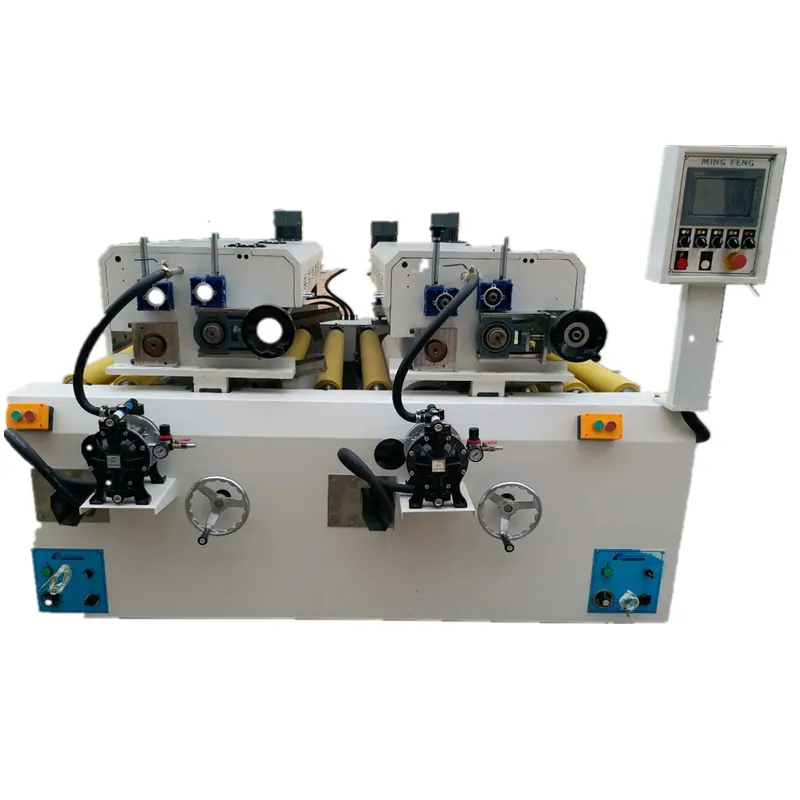
How to reduce the noise of the UV Roller Coating Machine?
1. Equipment maintenance and lubrication
• Regularly lubricate bearings and chains;
• Check the gear meshing clearance of the gearbox;
• Clean the roller surface and transmission components.
2. Install sound insulation covers or soundproof panels
• Install sound insulation covers on the UV lamp fan;
• Install sound-absorbing cotton panels between the operating area and the fan area;
• Choose an exhaust system with a silencer.
3. Optimize fan and ventilation design
• Use low-noise centrifugal fans or variable frequency fans;
• Adjust the cross-section of the air duct to reduce airflow turbulence;
• Regularly clean the filter screen.
4. Vibration reduction and balancing
• Check the base fastening bolts;
• Install rubber vibration damping pads under the machine base;
• Perform dynamic balancing correction on the rollers.
5. Workshop Noise Management
• Optimize equipment layout to avoid resonance superposition;
• Install sound-absorbing ceilings or wall panels;
• Provide earplugs for operators.
Through these measures, the noise of the UV Roller Coating Machine can be effectively reduced by approximately 5–10 decibels, making the workshop environment quieter.
What are the reasonable noise control standards for UV Roller Coating Machines?
According to the "Occupational Noise Exposure Limits for Industrial Enterprises" (GBZ 2.2-2007), the workshop noise limits are as follows:
Job Nature | Permissible noise limits (dB) |
| General mechanical operation | ≤85 |
| Precision assembly or testing | ≤70 |
| Office and control room work | ≤65 |
UV Roller Coating Machines are typically located in production workshops and fall under the category of general mechanical operations.
As long as the on-site noise does not exceed 85 dB, it is considered acceptable; if it is controlled between 75–80 dB, it is considered excellent.
Can XMF Machinery provide fast quotes for bulk orders?
Yes, XMF Machinery offers quick and detailed quotes for all coating machines, including UV curing units, roller coating machines, and spray machines. Buyers can benefit from wholesale pricing, promotional discounts, and customized solutions. Our company ensures transparent communication regarding prices, specifications, and delivery.
Purchasing directly from our factory guarantees high-quality equipment, professional technical support, and affordable costs. XMF Machinery is a trusted manufacturer and supplier for bulk purchasing needs worldwide.