
Among numerous coating technologies, curtain coating machines, with their stable liquid curtain principle, enable high-precision coating control and are widely used in UV coating, wood coating, decorative panel coating, and plastic product surface treatment.
However, many companies considering introducing this equipment often raise a core question: "Is the coating from a curtain coater truly uniform?"
This article will systematically analyze the coating uniformity issue of curtain coating machines from multiple perspectives, including technical principles and influencing factors, helping you fully understand the performance and advantages of this type of equipment in practical applications.
What is a curtain coating machine? How does it form a coating?
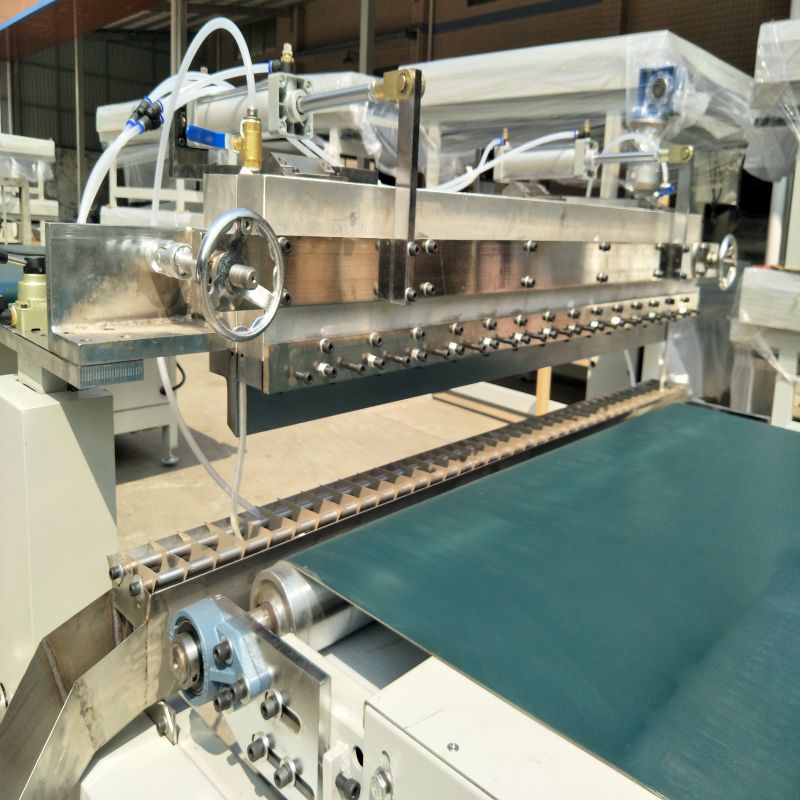
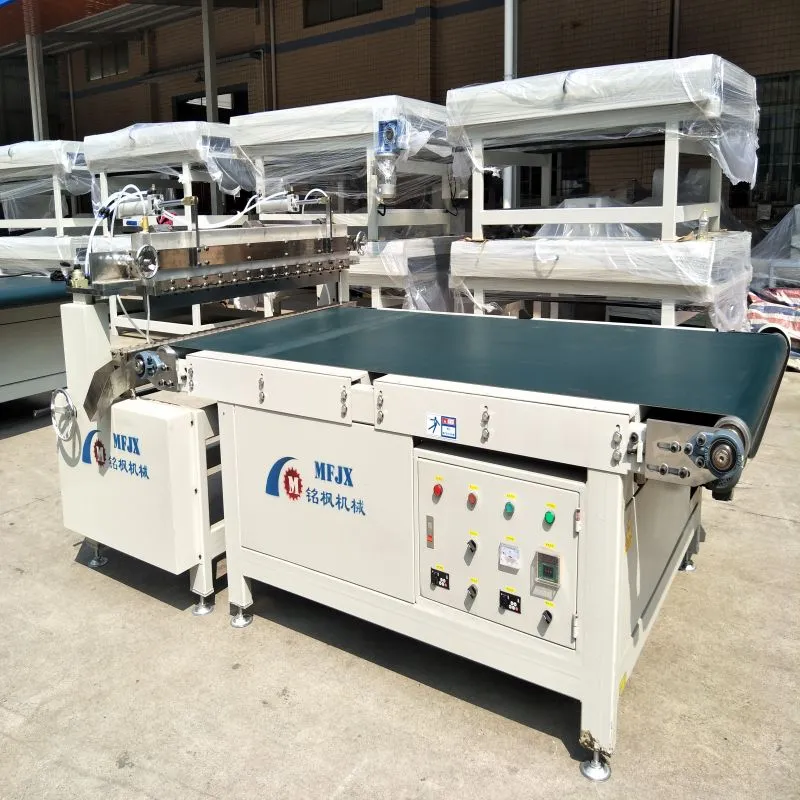
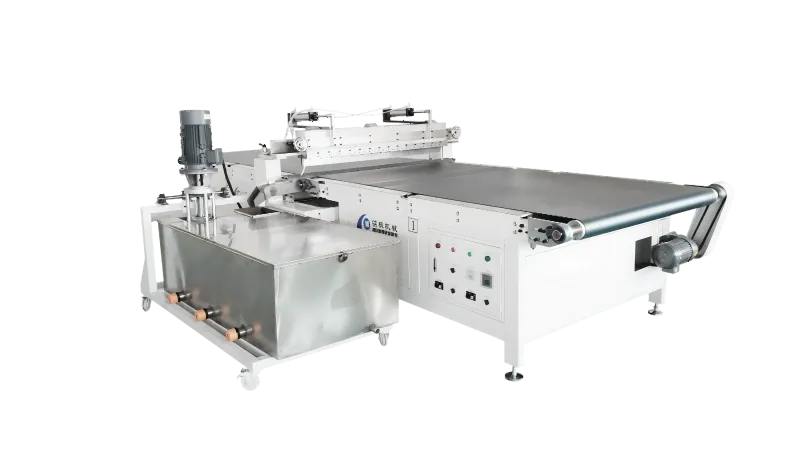
A curtain coating machine is a coating device that uses liquid paint to form a continuous "liquid curtain." The paint flows out from an overflow tank and forms a thin, uniform paint curtain under gravity. When the object being coated (such as wood, metal, or plastic) passes through this curtain at a constant speed, its surface is evenly covered by the paint, thus forming a smooth coating.
The key features of curtain coating technology are:
• Non-contact coating: The workpiece surface does not come into contact with any solid parts, avoiding mechanical marks;
• Continuous film flow: Ensures uniform coating at both macroscopic and microscopic levels;
• Suitable for high-gloss or mirror finishes: Ideal for UV systems requiring extremely high surface smoothness.
Therefore, in principle, curtain coating machines have a natural advantage in coating uniformity.
Why is the coating produced by a curtain coater uniform?
The extremely high uniformity achieved by curtain coating machines is mainly due to the following technical mechanisms:
1. The self-balancing effect of the liquid curtain
When liquid flows out of the overflow port, it forms a continuous liquid curtain under the influence of gravity. The curtain thickness is determined by the liquid's flow rate, viscosity, surface tension, and the groove structure. Due to the natural distribution of the liquid under gravity, the curtain itself has the characteristic of automatically balancing its thickness. When the local flow rate changes slightly, the liquid redistributes itself in a very short time, making the overall thickness tend to be uniform.
2. Non-contact coating, avoiding mechanical interference
Unlike roller coating and scraper coating, curtain coating machines do not use rollers or scrapers to distribute paint. Therefore, they avoid problems such as streaks and tool marks caused by roller pressure, uneven gaps, or surface defects. The entire coating is completed by natural deposition of the flowing liquid, avoiding localized thickness differences caused by mechanical contact.
3. Stable fluid supply system
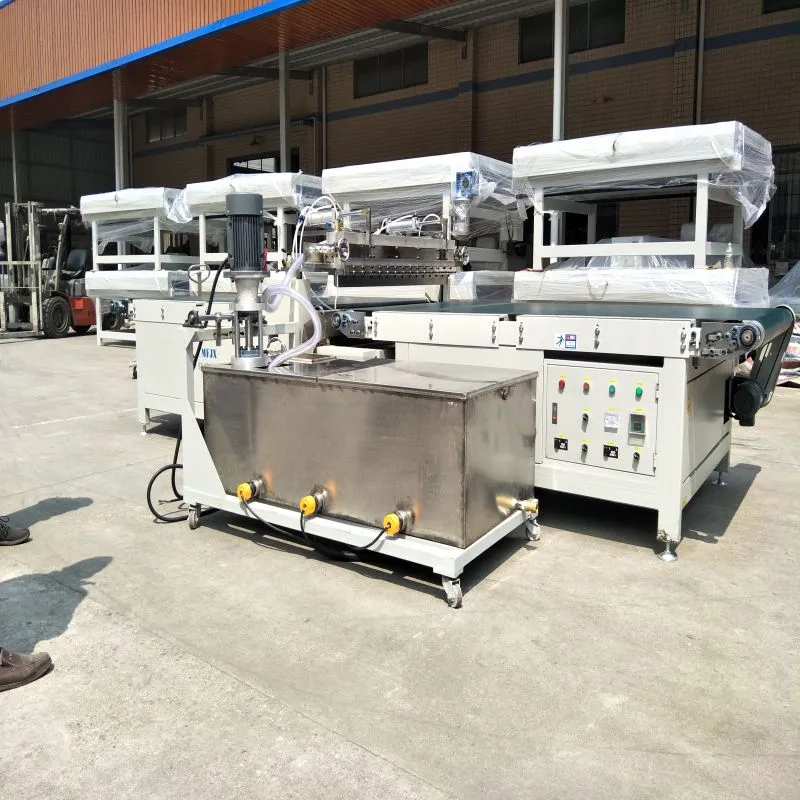
Curtain coating machines employ a constant-pressure pumping system and a closed-loop circulation structure, maintaining a constant flow rate and liquid level, ensuring that the paint curtain thickness does not fluctuate over time. Modern equipment is even equipped with automatic flow control and temperature compensation devices, enabling micron-level thickness control.
4. Constant workpiece throughput speed
The conveyor belt passes through the curtain at a constant speed, ensuring that each position is covered by the liquid for the same amount of time, thus achieving consistent thickness in the longitudinal direction (flow direction).
In summary, from a fluid dynamics perspective, curtain coating machines are designed with high uniformity potential, and their coating thickness can typically be controlled within ±2~3μm.
How uniform is the coating produced by a curtain coater?
Many companies are concerned about a specific question: How uniform can a curtain coater achieve?
Based on industry test results and routine production data:
Coating Method | Coating Thickness Fluctuation Range (μm) | Surface Smoothness Evaluation | Applicable System
Spraying Machine | ±10~15 | Average, with spray marks | Solvent-based, water-based paints
Roller Coating Machine | ±5~8 | Good, with risk of roller marks | PU, UV primers
Curtain Coating Machine | ±2~3 | Excellent, no contact marks | UV paints, water-based coatings
It is evident that curtain coating machines have significant advantages in coating thickness control and uniformity, especially suitable for coating products requiring high gloss and high smoothness.
What factors affect the coating uniformity of a curtain coater?
Although curtain coating machines can theoretically achieve high uniformity, several factors still affect the coating effect in actual use.
The following are the key control points for curtain coating machines:
1. Paint Viscosity and Flowability
Excessively high viscosity can lead to an unstable liquid curtain, forming ripples or curtain breaks; excessively low viscosity may cause sagging.
The paint viscosity should generally be controlled between 20 and 80 seconds (Ford Cup 4, 25°C) to ensure a balance between flowability and coverage.
2. Overflow Channel Structure and Machining Accuracy
Uneven overflow port clearance, edge burrs, or contaminants can all cause inconsistent curtain thickness. A high-precision stainless steel overflow channel (tolerance ±0.01mm) is crucial for achieving a uniform coating.
3. Pumping System Stability
Pump pressure fluctuations directly affect flow rate. A constant pressure pump or frequency converter control system should be used to maintain a stable liquid supply flow rate.
4. Workpiece Surface Smoothness
Uneven surfaces, holes, or oil contamination on the workpiece surface will affect paint spreading, thus disrupting localized uniformity.
5. Matching Coating Speed and Flow Rate
Excessively fast or slow conveying speeds will affect the coating thickness. Adjustments must be made based on the paint viscosity and the overflow port flow rate to achieve a balance between the flow rate and the workpiece throughput.
6. Environmental Conditions (Temperature and Humidity)
Temperature affects paint viscosity, while humidity affects surface tension. It is recommended to maintain an operating environment of 20-25℃ and humidity ≤70% to ensure stable fluid properties.
How to control coating thickness and uniformity on a curtain coater?
To ensure a consistently uniform coating, a system control mechanism is essential to maintain stable parameters. Common control methods include:
1. Constant Flow and Pressure System
Using a variable frequency pump and flow meter, real-time feedback control of the liquid flow rate is achieved, ensuring flow fluctuations are less than ±1%.
2. Overflow Gap Adjustment
Some high-end curtain coating machines are equipped with a fine-tuning mechanism that allows for precise adjustment of the overflow channel gap based on paint characteristics, achieving more accurate curtain thickness control.
3. Automatic Temperature Control System
By heating or cooling the paint, a constant viscosity is maintained, preventing instability in flowability due to temperature changes.
4. Static Mixing and Filtration Device
This prevents air bubbles and particles from entering the curtain area, ensuring continuous and stable liquid flow, thereby improving uniformity.
5. Conveyor System Stability
The servo motor-controlled conveyor belt ensures a constant, vibration-free workpiece passage speed, preventing wavy thickness variations.
These technologies work together to enable the curtain coater to achieve continuous, repeatable, and fine-delay control of coating thickness, thus maintaining overall uniformity.
Frequently Asked Questions (FAQ)
1. Can the coating thickness of the curtain coater be precisely controlled?
Yes. By adjusting the flow rate, viscosity, and conveyor speed, the curtain coater can achieve precise control from 10μm to 300μm.
2. What if the coating is uniform but has wavy surfaces?
This may be caused by excessively high viscosity or insufficient conveyor speed. Reduce the viscosity or increase the conveyor speed to allow the paint to spread quickly.
3. Will air bubbles in the coating affect uniformity?
Yes. Air bubbles can cause localized voids. A defoaming device or filter should be used before supplying the coating.
4. Will a wider coating width result in poorer uniformity?
No, as long as the overflow tank structure is precise and the liquid level is stable, curtain coating machines with a width of 1.3 meters or less can guarantee uniform coverage.
5. How to test coating uniformity?
Common methods include:
• Using an optical thickness gauge to measure thickness distribution;
• Using a gloss meter to test surface reflectivity consistency;
• Calculating the difference in coating amount per unit area using the gravimetric method.
Practical Suggestions for Improving the Uniformity of Curtain Coating Machines
• Keep the equipment clean: Overflow ports and filters need to be cleaned regularly to prevent particle blockage.
• Control the coating viscosity: Adjust in real time according to process requirements and temperature.
• Optimize the delivery speed: Matching speed and flow rate is the core of uniform coating.
• Use high-precision pumps and valves: Reduce pressure fluctuations.
• Regularly calibrate the equipment: The overflow tank level and gap accuracy must be consistent.
• Avoid environmental interference: Airflow, vibration, and temperature fluctuations can all affect the stability of the liquid curtain.
How uniform is the coating of a curtain coater?
The coating of a curtain coater is very uniform.
Its liquid curtain principle enables automatic paint distribution and natural balance, effectively avoiding problems such as streaks, bubbles, and paint buildup commonly found in traditional roller or spray coating.
Under reasonable control parameters and in good equipment condition, a curtain coater can achieve:
• Coating thickness variation less than ±3μm;
• Uniform coating gloss and high smoothness;
• Paint utilization rate exceeding 90%, with minimal waste.
Therefore, for manufacturers seeking high surface quality, high gloss, or mirror-like effects, a curtain coater is one of the most effective devices for ensuring coating uniformity.