
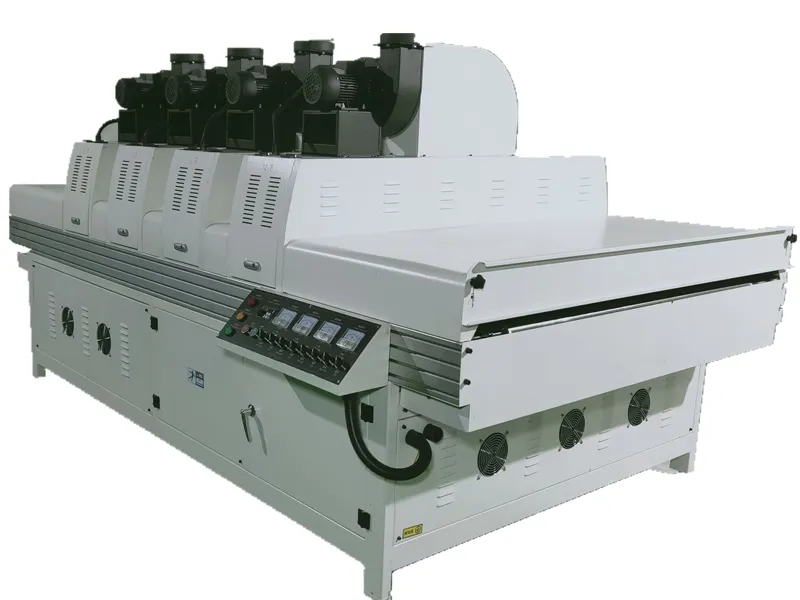
In modern coating processes, the UV dryer machine has become a crucial piece of equipment for enhancing coating curing efficiency and shortening production cycles. Thanks to its advantages—including high efficiency, energy conservation, and environmental friendliness—UV dryer machines are widely utilized across industries such as furniture, electronics, plastics, automotive manufacturing, and decorative materials.
However, a critical question frequently arises among users during operation:
“Is a UV dryer machine suitable for both water-based and oil-based paints?”
To answer this question, one must gain a deep understanding of the UV dryer machine's operating principles, the mechanisms of UV curing, and the chemical properties inherent to different types of coatings.
This article will systematically analyze the compatibility between these elements, providing you with a scientific basis for assessment and practical recommendations for use.
What is a UV Dryer Machine?
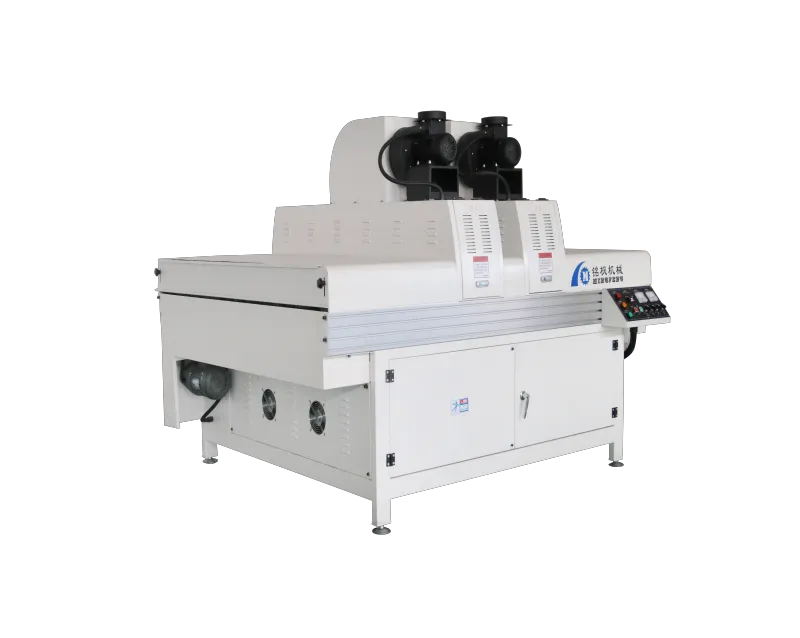
A UV dryer machine is a device that utilizes high-intensity ultraviolet (UV) radiation to trigger photochemical reactions within the photoinitiators contained in paints or inks, thereby inducing the polymerization, cross-linking, and curing of the resin. Unlike traditional thermal drying methods, the UV dryer machine achieves instantaneous curing through UV light energy—a process that typically takes only a few seconds to complete.
The main components of a UV dryer machine include:
• UV Lamp System: The core light source, typically employing high-pressure mercury lamps, metal halide lamps, or LED UV lamps;
• Reflection System: Utilizes reflectors to concentrate light energy and maximize light utilization efficiency;
• Conveying System: Transports coated workpieces via belts or rollers;
• Cooling System: Features air-cooled or water-cooled structures designed to maintain stable temperatures for both the equipment and the lamps;
• Control System: Adjusts parameters such as light intensity, conveyor speed, and curing time to meet the specific curing requirements of various materials and coatings.
The advantages of a UV dryer machine lie in its rapid curing capabilities, energy efficiency, environmental friendliness, and independence from solvent evaporation—all of which contribute to a significant boost in production efficiency. However, not all types of coatings can be effectively cured by UV light; this capability depends entirely on the specific chemical formulation of the coating.
Which Coatings Are Compatible with the UV Dryer Machine's Operating Principles?
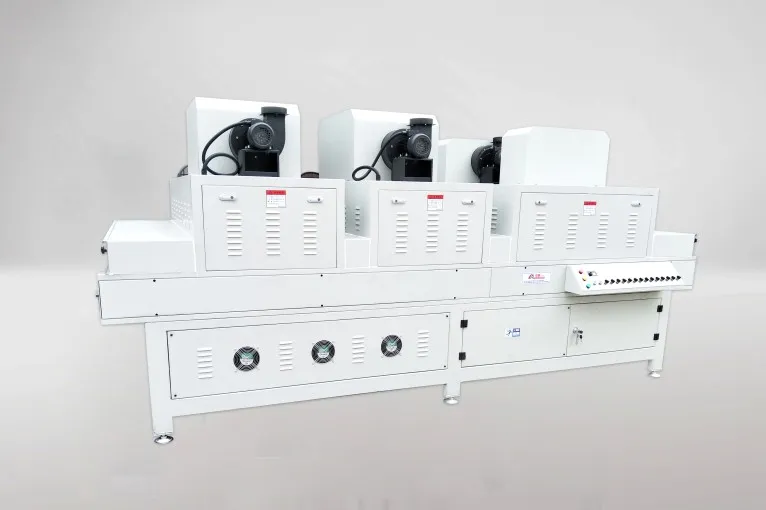
The fundamental curing principle of a UV dryer machine is as follows: when ultraviolet light irradiates a UV-curable coating containing photoinitiators, the initiators absorb the energy and decompose into free radicals or cations. This process triggers a cross-linking reaction among the resin molecular chains, ultimately forming a hard, cured film layer. Therefore, only coatings containing a photo-curable system can be cured within a UV Dryer Machine.
Coatings can generally be categorized into three types:
1. UV-curable coatings (photo-curable coatings);
2. Water-based coatings (using water as the solvent or dispersion medium);
3. Solvent-based coatings (using organic solvents as the carrier).
Among these, the UV Dryer Machine is inherently suited for the first category—UV-curable coatings. However, regarding the second and third categories (water-based paints and solvent-based paints), their compatibility requires specific analysis.
Can a UV Dryer Machine be directly used for water-based paints?
1. Characteristics of Water-based Paints
Water-based paint is an eco-friendly coating that utilizes water as its primary dispersion medium; the drying of the coating relies on water evaporation and chemical cross-linking reactions. Water-based paints contain little to no organic solvents, exhibit low odor and minimal toxicity, and comply with environmental standards.
However, the curing mechanism of water-based paints differs fundamentally from that of UV curing:
• Water-based paints form a dry film by removing water through heating or natural evaporation;
• UV Dryer Machines achieve curing by using light exposure to initiate polymerization reactions.
This implies that standard water-based paints cannot be directly cured using a UV Dryer Machine.
2. Why are standard water-based paints unsuitable for a UV Dryer Machine?
• Water acts as an absorbent medium for ultraviolet light; if the water has not fully evaporated, UV light cannot penetrate into the deeper layers of the paint film;
• Water-based systems typically lack photoinitiators and the requisite resin structures containing double bonds, and thus do not meet the necessary conditions for UV-induced reactions;
• Exposure to UV lamps generates localized heat, causing water to evaporate too rapidly, which can easily lead to the formation of bubbles or cracks on the surface of the coating film.
3. The Exception: Waterborne UV Coatings
Although standard water-based paints are not suitable for use with a UV Dryer Machine, there is a specific type known as "Waterborne UV Coating" that is compatible.
The formulation of this type of coating incorporates photo-polymerizable acrylate resins and photoinitiators; it combines the eco-friendly attributes of a water-based system with the ability to achieve curing through exposure to UV light.
Therefore, a UV Dryer Machine is suitable for "Waterborne UV Coatings," but it is not suitable for traditional water-based paints.
Can a UV Dryer Machine Be Used for Oil-Based Paints?
1. Characteristics of Oil-Based Paints
Oil-based paints use organic solvents as a carrier medium; they primarily form a paint film through solvent evaporation, oxidative cross-linking, or heat-induced reactions. Their drying mechanism relies on oxidative reactions with ambient air or heat curing, rather than photochemical reactions.
2. The Impact of a UV Dryer Machine on Oil-Based Paints
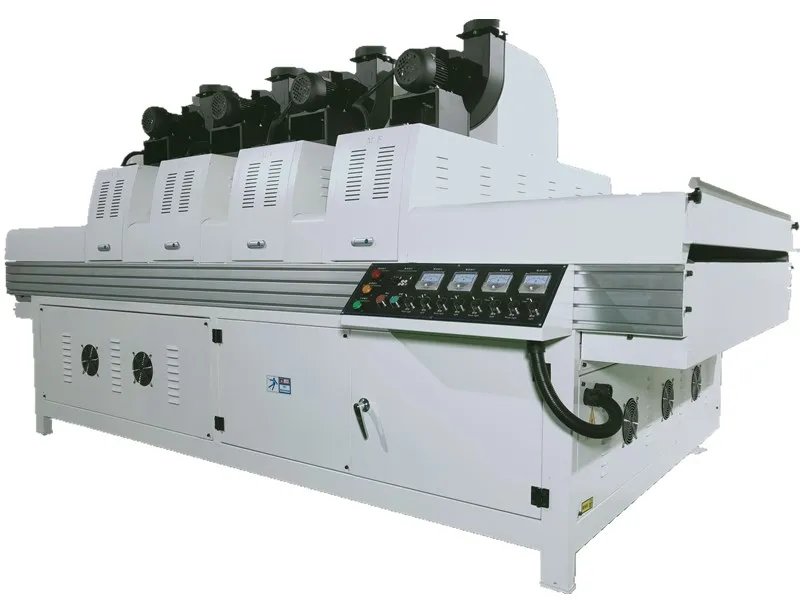
A UV Dryer Machine cannot directly cure oil-based paints.
The reasons are as follows:
• Oil-based paints lack photoinitiators and therefore do not meet the prerequisites for a photopolymerization reaction;
• While an oil-based system will heat up upon absorbing UV energy, it will not undergo chemical cross-linking;
• Excessive UV exposure may cause the surface of the paint film to overheat, yellow, or wrinkle;
• Certain organic solvents, when exposed to high-energy UV radiation, may pose safety risks—such as the ignition of volatile fumes.
Consequently, attempting to "dry" standard oil-based paint directly within a UV Dryer Machine will not only fail to cure the paint but may also damage the coating and potentially compromise the safety of the equipment.
3. Special Cases: UV-Modified Oil-Based Coatings
Currently, there are modified formulations on the market known as "UV oil-based paints" or "UV inks." These products incorporate photoinitiators and reactive double-bond structures into an oil-based system, enabling them to achieve partial or complete curing through exposure to UV light.
For such coatings, a UV Dryer Machine is indeed suitable.
However, this applies only if the product formulation is explicitly designated as a "UV oil-based system"; otherwise, standard oil-based paints remain unsuitable.
Why Does the Suitability of a UV Dryer Machine Depend on the Coating's Chemical Structure?
A UV Dryer Machine is not a "universal dryer."
Its core principle relies on using ultraviolet light to trigger photochemical reactions, rather than relying solely on heat for drying. Therefore, whether a specific coating is suitable depends on whether its molecular structure contains polymerizable functional groups (such as acrylate bonds) and whether it contains photoinitiators.
A UV Dryer Machine is suitable only for water-based or oil-based systems formulated for UV curing, not for all types of coatings.
What Precautions Should Be Taken When Using a UV Dryer Machine with Different Coatings?
1. Verify the Coating Type
Before use, it is essential to consult the coating's technical data sheet or confirm with the supplier whether it is classified as a "UV-curable type."
2. Control Temperature and Light Intensity
For water-based systems, lower-power UV lamps should be used to prevent rapid water evaporation, which can lead to the formation of bubbles.
3. Maintain Good Ventilation
Whether using water-based or solvent-based systems, UV irradiation generates heat; therefore, ensure that the exhaust ventilation system is functioning properly to prevent heat accumulation.
4. Set Conveyor Speed Appropriately
Adjust the conveyor speed based on the coating film thickness and the required curing energy to prevent incomplete curing or overexposure.
5. Avoid Mixing Equipment Usage
If the equipment is used to process both solvent-based and water-based systems, the UV lamp covers and reflectors should be cleaned regularly to prevent contamination from residues.
By implementing the above measures, you can maximize the benefits of the UV Dryer Machine and ensure consistent curing results.
How can one optimize the curing performance of water-based and solvent-based UV paints when using a UV Dryer Machine?
1. Select UV Lamps with the Appropriate Wavelength Range
Metal halide lamps and LED UV lamps elicit different responses from different coating systems. Water-based UV paints are typically more sensitive to longer wavelengths (365–395 nm), while solvent-based UV paints respond more rapidly to medium wavelengths (300–365 nm).
2. Increase the Number of Irradiation Passes
For thick films or high-opacity coatings, a multi-pass, step-by-step curing method can be employed to ensure that the inner layers are thoroughly cured.
3. Incorporate Hot Air Pre-drying
For water-based UV systems containing a certain amount of moisture, a hot air blower can be used to pre-evaporate the water before the material enters the UV Dryer Machine for light curing.
4. Monitor Light Intensity Regularly
Insufficient light intensity can lead to incomplete curing; therefore, the UV intensity should be measured and checked every 500 hours of operation.
5. Maintain Equipment Cleanliness and Reflectivity
The surfaces of the lamp covers and reflectors must be kept clean to ensure that UV energy is effectively transmitted to the surface of the coating film.
Is the UV Dryer Machine suitable for both water-based and solvent-based paints?
The conclusion is as follows:
• Standard Water-based Paints and Standard Solvent-based Paints: Not suitable for use with a UV Dryer Machine, as they do not possess the necessary properties for UV light-initiated curing reactions.
• Water-based UV Paints and Solvent-based UV Paints: Suitable for use with a UV Dryer Machine, offering rapid curing and excellent results.
• Criteria for Determination: Check whether the coating contains photoinitiators and reactive functional groups.
In other words, a UV Dryer Machine is suitable for "water-based or solvent-based systems capable of being cured by UV light"—not for all water-based or solvent-based paints.
Only by correctly selecting compatible coatings, adjusting process parameters, and ensuring stable equipment performance can the high-efficiency curing advantages of the UV Dryer Machine be fully realized.