

In modern furniture, flooring, cabinet, and decorative panel production, UV roller coating machines, with their high efficiency, high smoothness, and low energy consumption, have become essential equipment for companies to improve coating quality.
However, in practice, many technicians encounter the same question: Is a primer necessary before using a UV roller coating machine to coat boards?
This article will systematically answer this crucial question from the perspectives of coating principles, the role of primer, board characteristics, process matching, and strategies for different materials. The article is rigorous, logically sound, and incorporates the keyword "UV roller coating machine" multiple times to meet Google SEO optimization requirements.
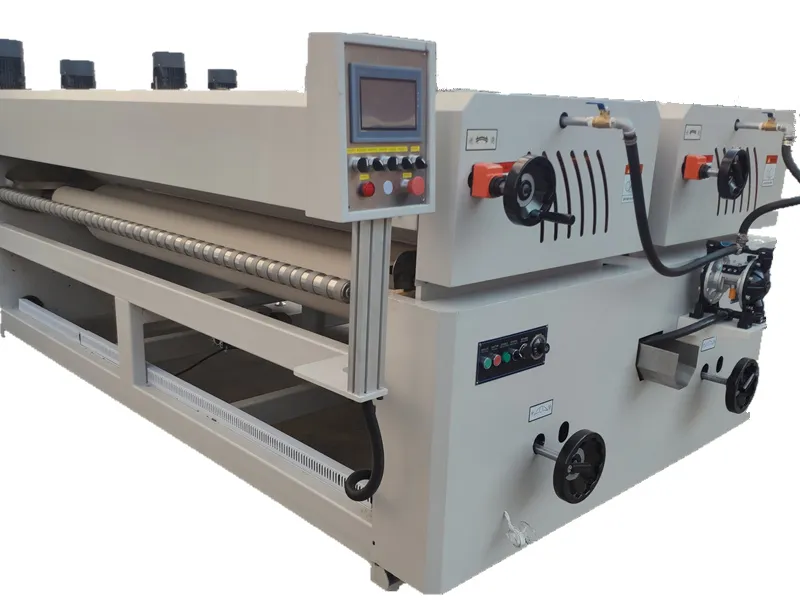
Why discuss "whether a primer is needed"?
In the coating process, "primer" is a critical step.
Especially in UV roller coating machine applications, the presence or absence of primer directly affects film adhesion, surface smoothness, coating thickness control, and the final visual effect of the finished product.
Some companies hope to improve production efficiency by reducing processes, thus raising the question:
"Since UV roller coating machines have such good coating effects, can we directly apply the topcoat to the board without a primer?"
To answer this question, we first need to clarify: what is the purpose of the primer, and what are the coating characteristics of a UV roller coating machine?
What are the coating characteristics of a UV roller coating machine?
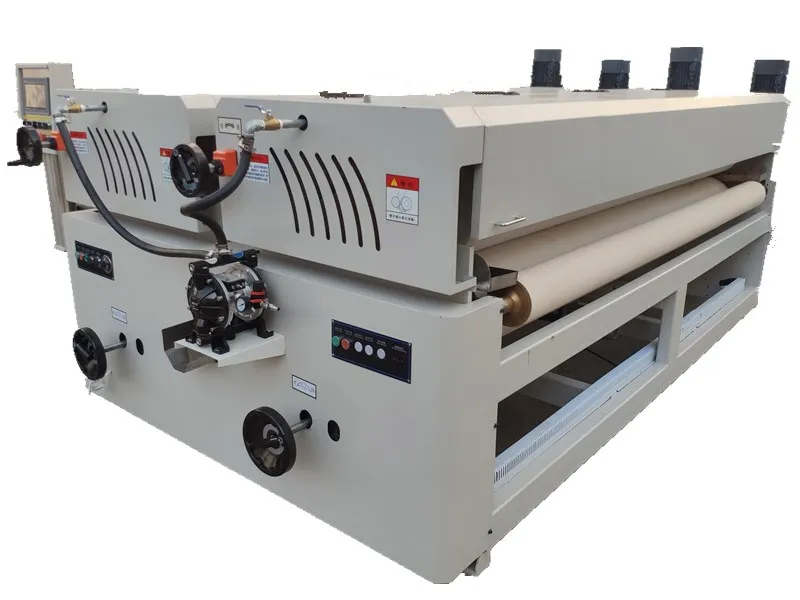
A UV roller coating machine is a device that uses roller contact to evenly coat the surface of a board with UV coating. It relies on a precision mechanical structure to achieve high-precision control and is suitable for various materials such as wood-based panels, MDF, MDF, and PVC boards.
1. Coating Method Characteristics
• The coating is transferred from the glue roller to the coating roller, and then evenly coated onto the board surface;
• The coating thickness is controllable, generally ranging from 2–60 μm;
• The coating speed is fast, reaching 10–60 meters per minute;
• The coating surface is smooth, suitable for a mirror-like gloss effect.
2. High Dependence on Board Surface
Since roller coating is a "physical contact coating," the surface smoothness, absorbency, and gloss directly affect the coating effect.
This means:
If the board surface has rough fibers, pores, or excessive oil absorption, the topcoat layer may not be evenly distributed or adhere firmly.
3. The Unique Curing Mechanism of UV Coatings
UV coatings are light-curing resins that form a dense film through photo-initiated polymerization under ultraviolet light. They contain almost no volatile solvents and have limited wetting and penetration capabilities into the substrate.
Therefore, UV topcoats cannot "penetrate" into wood fibers like traditional paints, remaining primarily on the surface.
Thus, in the UV roller coating machine process, if the substrate is not properly treated, it can easily lead to:
• Insufficient adhesion;
• Uneven gloss;
• Bubbling and pinholes in the coating;
• Uneven paint absorption on the surface.
What is the purpose of applying a primer before roller coating the board?
To determine whether a primer is necessary, it's essential to understand its function. A primer isn't simply an additional step; it's a crucial foundation layer in the entire coating system.
1. Improved Adhesion
Primers contain a significant amount of penetrating resin, which penetrates deep into the micropores of the substrate surface, forming a "physical anchoring layer" that provides a strong foundation for topcoat adhesion.
If UV topcoat is applied directly by roller, its large molecular weight and poor penetrability will significantly reduce adhesion.
2. Unified Absorption
Uneven absorption on wood or MDF surfaces can lead to uneven absorption in certain areas without a primer, resulting in uneven topcoat gloss. A primer effectively seals the substrate, creating a consistent absorption layer.
3. Improved Smoothness
The primer layer fills in tiny pits, sand marks, and pores on flat surfaces, making subsequent UV roller coating smoother and enhancing the mirror finish.
4. Increased Coating Durability
Primers have excellent impermeability and sealing properties, preventing air and moisture intrusion and helping to extend the coating's lifespan.
Therefore, from a coating system perspective, "primer is a necessary preparatory step in the UV roller coating machine process," especially when pursuing a high-quality surface finish.
Is a primer necessary before roller coating all types of boards?
The answer is: in most cases, yes, but there are exceptions.
Different types of boards have different levels of dependence on primer.
1. Solid Wood Boards
Solid wood surfaces have many fiber pores and strong absorption. Without a primer to seal them, the UV topcoat will be partially absorbed, resulting in dark areas or uneven paint absorption.
✅ Recommendation: A primer is necessary.
2. MDF (Medium-Density Fiberboard)
MDF surfaces are relatively smooth, but they are highly absorbent and leave a lot of dust residue. Applying UV topcoat directly can easily cause bubbles or pinholes.
✅ Recommendation: Apply a primer first, then apply the topcoat.
3. Melamine board or PVC-coated board
These types of boards have a smooth, sealed surface with extremely low absorbency. Forcing a primer coat will actually worsen adhesion.
✅ Recommendation: Primer can be omitted, but the surface should be lightly sanded or treated with an adhesion enhancer.
4. Particleboard, OSB board
The surface is rough and porous. Directly applying UV paint will result in severe paint absorption and unevenness.
✅ Recommendation: Requires at least two thick primer coats.
In summary, whether or not to apply a primer depends on:
• Surface density of the board;
• Absorbency and smoothness;
• Coating design requirements (e.g., high-gloss or matte finish).
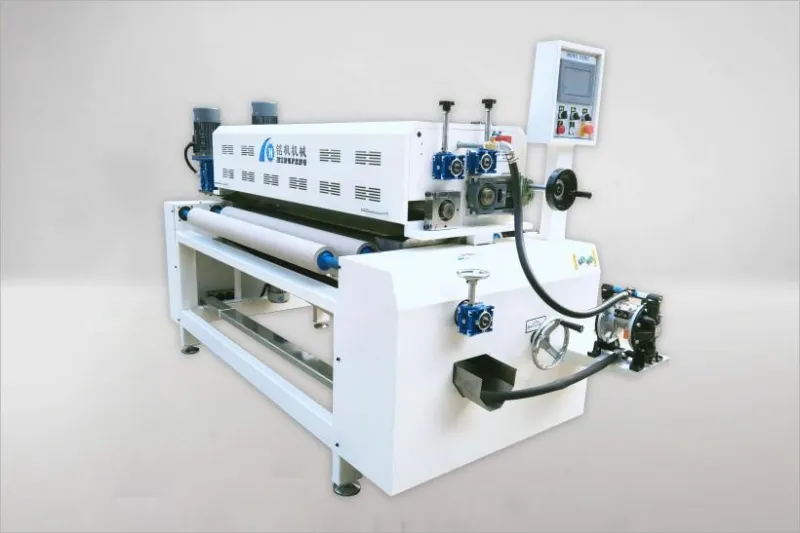
What are the process characteristics of applying primer using a UV roller coating machine?
If you decide to apply a primer before roller coating the board, the primer layer should also use appropriate process parameters and equipment settings. The following is a typical process:
1. Coating Equipment Setup
• Use the same UV roller coating machine or a separate primer roller coating machine;
• Adjust the roller gap, generally controlled at 0.1–0.3 mm;
• Match the roller speed to the conveyor speed to ensure consistent coating thickness;
• Select a lower viscosity UV primer or UV-curable sealing primer.
2. Drying and Curing
• Pre-curing with a UV or IR lamp after coating;
• Ensure the undercoat is completely dry before applying the topcoat;
• If the primer surface is too smooth, lightly sand it to improve adhesion.
3. Thickness Control
The primer layer should not be too thick, generally controlled at 10–20 μm; too thick will lead to uneven curing or surface embrittlement, while too thin will result in insufficient sealing.
With proper process settings, the primer layer provides the best foundation for subsequent UV roller coating.
What problems will occur if a primer is not applied?
In some production scenarios, to save time or costs, operators may directly apply UV topcoat to bare boards using a roller coat.
While theoretically feasible, this practice is highly risky and can lead to the following problems:
Problem | Cause Analysis | Solution
Poor Coating Adhesion | Unsealed board surface, UV paint penetration is difficult | Add a primer layer
Uneven Gloss | Uneven absorption leads to variations in paint volume | Seal the board before roller coating
Coating Bubbles | Air escapes from the board, curing is too fast | Reduce coating speed or use primer to seal pores
Pinholes or Pinholes | Surface dust or roughness | Sand and then apply primer
Whitening | Uneven absorption leads to inconsistent reflection | Primer layer homogenization absorption rate
Therefore, the high efficiency of a UV roller coating machine cannot completely compensate for defects caused by an untreated substrate.
The primer remains a fundamental and indispensable step in ensuring surface finish and adhesion.
The Relationship Between Primer and Topcoat in the UV Roller Coating Machine Process
In the UV roller coating process system, the combination of primer and topcoat is key to achieving a high-quality surface. The two are both independent and closely related:
1. Interlayer Compatibility
The primer must be compatible with the topcoat system; otherwise, problems such as interlayer separation, edge shrinkage, and bubbling will occur.
Generally, homogeneous (UV-UV) coatings are used to avoid mixing dissimilar resins.
2. Coating Sequence
Primer → UV Curing → Sanding → Topcoat → UV Curing.
Intermediate sanding aims to remove micro-dust and improve interlayer adhesion.
3. Coating Thickness Matching
• Primer thickness: 10–20μm;
• Topcoat thickness: 15–30μm;
• Total film thickness: 30–50μm.
This structure balances smoothness and abrasion resistance.
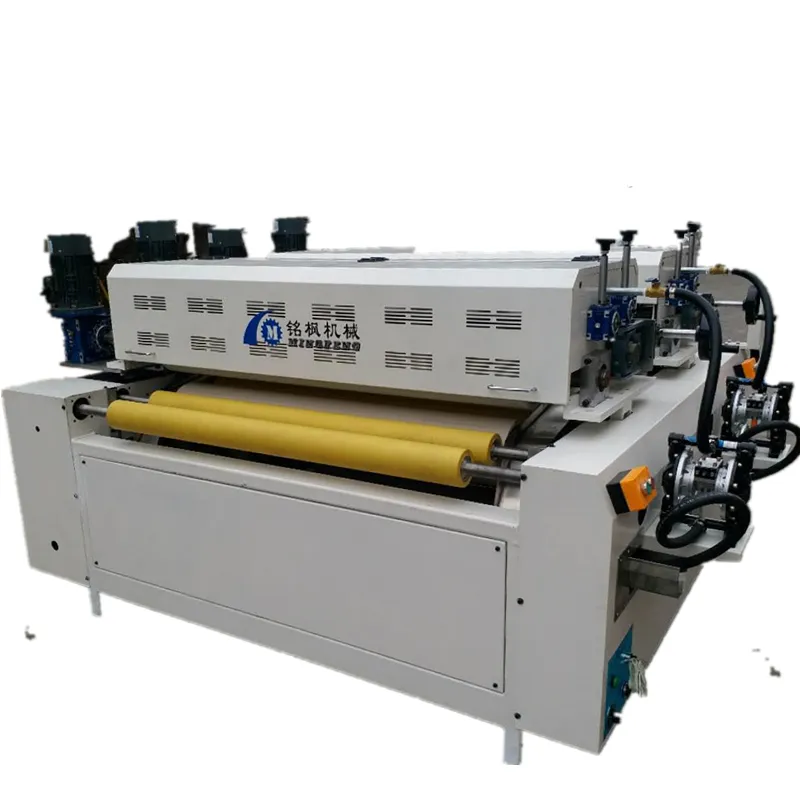
Common Precautions for Applying Primer with a UV Roller Coating Machine
When applying primer using a UV roller coating machine, the following points should be noted:
• Primer viscosity control: Too high a viscosity will result in high roller load and uneven coating; too low a viscosity will easily cause sagging. Typically controlled within 20–25 seconds (Ford-4 cup).
• Temperature and humidity requirements: High ambient humidity can cause the primer surface to whiten; humidity should be maintained at 40–60%, and temperature at 20–25℃.
• Roller cleanliness: Primer residue is difficult to clean after curing; the roller surface should be cleaned immediately after machine shutdown.
• UV curing energy control: Incomplete primer curing will affect topcoat adhesion; UV lamp intensity should be checked using an energy meter.
• Prevention of cross-contamination: Before switching between primers of different colors or systems, the tank and pump must be thoroughly cleaned to prevent color differences in the coating.
Can a sealing primer be used instead of a regular primer?
In some processes, technicians will choose to use a "UV sealing primer," which is a base coat that combines penetration and sealing functions.
This type of coating can reduce a coating step and is highly compatible with UV roller coating machines.
✅ Applicable situations:
• Relatively flat board surface;
• Fast production cycle;
• Thick undercoat not required.
❌ Not Applicable Situations:
• Large porosity in the substrate;
• Requirement of a high-gloss mirror finish;
• High surface hardness requirements.
Therefore, sealing primers are not a panacea and can only replace traditional primer systems in some light industrial coatings.
Is a primer needed before roller coating on the substrate?
Comprehensive analysis leads to the conclusion:
—For most substrates, a primer must be applied before roller coating.
Because a primer significantly improves adhesion, uniformity, and smoothness, it is an important foundation for UV coating systems.
Only for a very few sealed substrate surfaces (such as PVC laminated panels) can the primer be omitted.
However, the surface must be treated by sanding or using an adhesion promoter.
The correct application method for the primer should follow:
• Use a UV primer of appropriate viscosity;
• Apply evenly by roller, with a thickness controlled at 10–20 μm;
• Allow the UV to fully cure before applying the topcoat.
Risks of not applying a primer:
• Poor coating adhesion;
• Surface discoloration;
• Coating peeling;
• Severe contamination of the coating machine roller.
Therefore, applying a primer before roller coating on substrates using a UV roller coating machine should be prioritized. This is crucial for ensuring product surface quality and stable equipment operation.
Is XMF Machinery suitable for small and large manufacturers?
XMF Machinery supplies coating machines suitable for both small workshops and large-scale factories. As a flexible manufacturer and supplier, we offer machines with different capacities, automation levels, and price ranges. Small manufacturers can purchase individual machines for specific processes, while large companies can purchase integrated production lines. Our factory supports customized solutions to balance investment costs and production efficiency.