
In modern industrial production, with the ever-increasing demands for precision and efficiency in fields such as coating, printing, electronics manufacturing, and polymer material processing, UV dryers have become indispensable key equipment.
Their working principle involves using ultraviolet light (UV) to irradiate photoinitiators in curable coatings or inks, triggering a photopolymerization reaction that allows the material surface to cure quickly, forming a coating with high hardness, high gloss, and high adhesion.
Compared to traditional hot air or infrared drying methods, UV dryers offer significant advantages such as faster drying speed, lower energy consumption, smaller footprint, and solvent-free operation.
However, the question arises—in which industries are UV dryers primarily used?
Different fields have different requirements for curing speed, coating thickness, and material matrix, leading to significant differences in the application directions of UV dryers.
This article will systematically and deeply analyze the typical uses, technical requirements, and equipment matching logic of UV dryers in various industries, helping you fully understand their industrial application value.
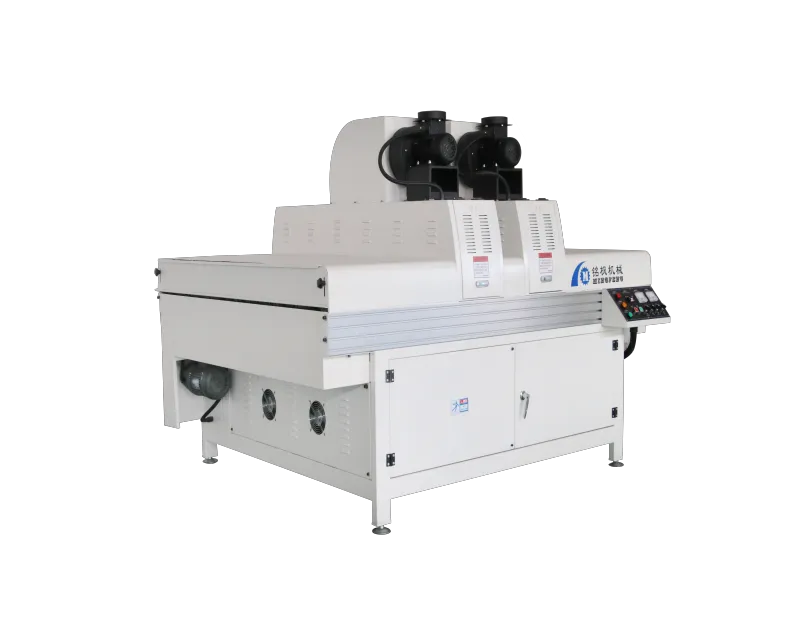
Why are UV dryers widely used in multiple industries?
Before analyzing industry applications, we must first understand why UV dryer machines are so widely adopted.
The core reason lies in their versatility and high efficiency.
1. Extremely Fast Drying Speed
UV dryers use high-intensity ultraviolet light to trigger the polymerization reaction of photoinitiators in the coating within seconds, achieving instant curing.
Compared to heat drying, which takes minutes or even hours, UV dryers significantly shorten production cycles.
2. Environmentally Friendly and Pollution-Free
UV coatings are solvent-free and do not contain VOCs (volatile organic compounds). There are no waste gas emissions during the curing process, complying with environmental regulations.
3. Strong Adaptability
Whether it's metal, plastic, wood, glass, paper, or optical films, UV dryers can effectively cure them; only the wavelength and energy of the light source need to be adjusted.
4. Small Footprint and Low Energy Consumption
UV dryers do not require large drying tunnels; the lamps are ready to use immediately, making them energy-efficient.
For these reasons, UV dryers have become standard equipment in many industries.
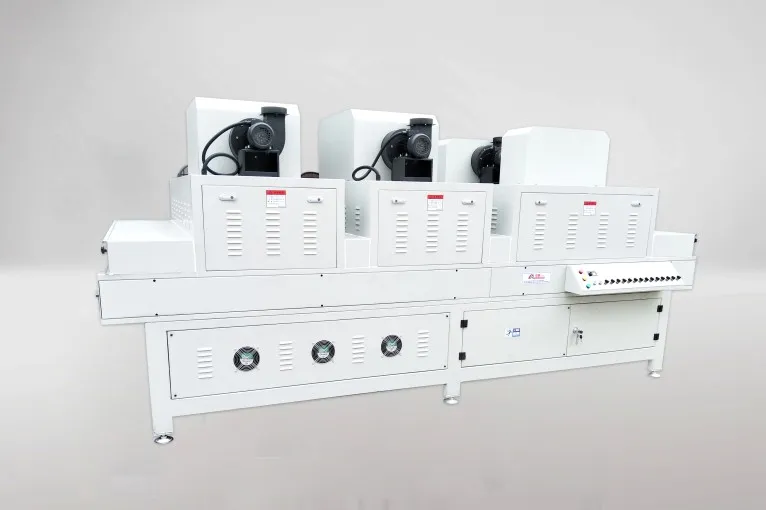
In which industries are UV dryer machines primarily used?
The following will systematically analyze typical application scenarios of UV dryer machines from specific industrial fields.
1. Furniture and Wood Products Industry: Used for surface curing of UV coatings
In furniture manufacturing, especially on production lines for panel furniture, cabinet doors, flooring, and other wood products, UV dryer machines are almost standard equipment.
Application Stages:
• Rapid curing of UV primers, topcoats, and sealers;
• Drying sections are provided for sheet metal roller coating lines, curtain coating lines, and vacuum coating lines;
• Enhanced gloss and scratch resistance of wood veneer layers.
Technical Requirements:
• Uniform illumination to ensure consistent coating curing;
• Lamp power is generally 80–160W/cm;
• Optional metal halide lamps or LED UV lamps for deep curing.
Advantages:
• Fast curing speed, requiring only 2–5 seconds;
• High coating hardness and good gloss;
• Avoids wood board deformation caused by high-temperature baking.
Therefore, the furniture and woodworking industry is one of the most mature application areas for UV dryer machines.
2. Printing and Packaging Industry: Used for ink and varnish curing
In the printing industry, UV dryer machines play a crucial role in paper printing, plastic film printing, and metal packaging printing.
Application Stages:
• Instant curing of UV inks after printing;
• Drying of UV varnish coatings;
• Rapid surface drying after digital printing, screen printing, and offset printing.
Applicable Equipment Types:
• Sheet-fed printing presses;
• Roll-on printing presses;
• Screen printing production lines;
• UV inkjet printing systems.
Technical Considerations:
• The dominant wavelength of the lamps is typically between 365nm and 395nm;
• The absorption peak of the ink photoinitiator must be matched;
• Multiple UV lamp arrays are required for high-speed printing presses.
Typical Effects:
• Ink dries instantly;
• No waiting time required; printed materials can be stacked directly;
• Clear patterns and high color saturation.
Therefore, UV dryer machines significantly improve production efficiency and product added value in the printing industry.
3. Electronics and Semiconductor Industry: Used for bonding, encapsulation, and protective layer curing
Electronic manufacturing has extremely high requirements for curing processes, especially for heat-sensitive materials. Traditional heat drying methods can damage devices, while UV dryer machines solve this problem.
Application Scenarios:
• UV adhesive (light-curing adhesive) curing;
• PCB circuit board protective layer curing;
• Coating and encapsulation of electronic components;
• Curing of anti-reflective coatings for optical lenses or display panels.
Technical Features:
• Uses LED UV light source with precise wavelengths (365nm, 385nm, 395nm, 405nm);
• Low-temperature curing, does not affect component performance;
• Can be configured with point light sources, area light sources, and line light sources.
Advantages:
• High curing precision;
• No thermal stress;
• Suitable for precision electronic products.
The use of UV dryers in the electronics industry has driven the widespread adoption of high-reliability manufacturing processes.
4. Plastics Industry: Surface Glossing and Scratch-Resistant Coating Curing
Plastic materials have low heat distortion temperatures, and traditional hot air drying easily leads to deformation or blistering. The low-temperature curing characteristics of UV dryers make them an ideal choice.
Typical Applications:
• Surface glossing of plastic casings, toys, and stationery;
• Scratch-resistant coatings for automotive interior parts;
• UV-resistant coatings for plastic lenses;
• UV coating drying for packaging films.
Process Features:
• Utilizes an LED UV system;
• Controls lamp spacing and energy output to avoid heat buildup;
• Enhances surface smoothness when used with vacuum or inert gas curing environments.
Results:
• High surface gloss;
• Abrasion and scratch resistant;
• No deformation or discoloration.
Therefore, UV dryer machines dominate the field of plastic product surface treatment.
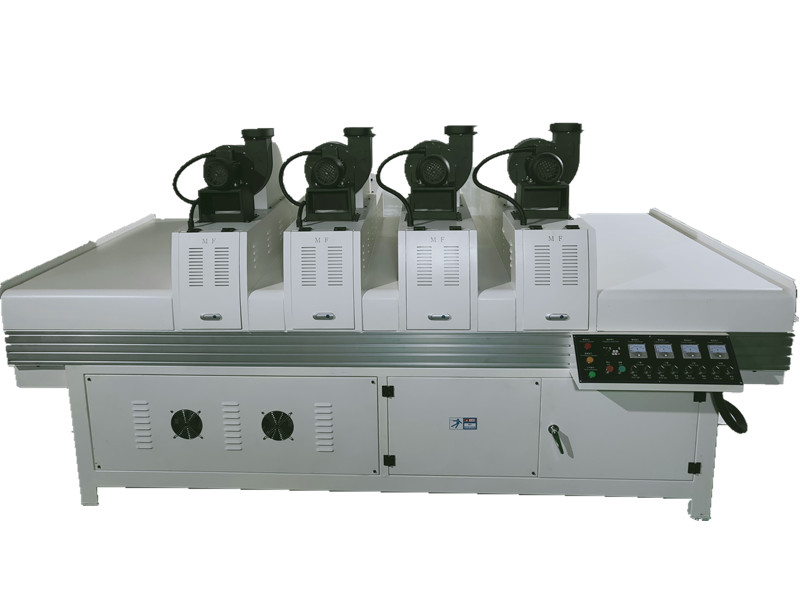
5. Glass and Ceramic Industry: UV Coating and Pattern Curing
In the glass and ceramic decoration industry, traditional high-temperature firing is costly and energy-intensive, while UV curing technology provides a low-temperature, high-efficiency alternative.
Applications:
• UV ink curing for glass printing patterns;
• Curing of underglaze printing on ceramics;
• Curing of anti-fingerprint and anti-reflective coatings on optical glass surfaces.
Equipment Configuration:
• Uses high-power metal halide UV lamps;
• Typically equipped with quartz reflectors to improve light utilization;
• Adjustable conveyor speed to accommodate substrates of different thicknesses.
Advantages:
• Low temperature does not affect the substrate structure;
• Vibrant pattern colors;
• Significantly improved surface hardness.
It is evident that UV dryer machines have significant technological adaptability in the glass and ceramic decoration industry.
6. Automotive and Industrial Coating: Coating Protection and Wear-Resistant Layer Curing
UV coatings are widely used on automotive parts, metal surfaces, and engineering plastic surfaces to improve appearance and durability.
Typical Applications:
• UV primers and topcoats for automotive interiors;
• Metal casing coatings;
• Curing of protective layers for industrial pipe fittings and machinery housings.
UV dryer machine requirements:
• High power and uniform irradiation;
• Support for multi-lamp group zone control;
• Adjustable wavelength to match different materials.
Performance Effects:
• Film hardness increased by more than 30%;
• Corrosion and scratch resistance;
• Smooth and glossy surface.
Therefore, UV dryer machines have become an important component of modern automotive parts surface treatment lines.
7. Optics and Precision Manufacturing: High-Demand Surface Curing
UV dryer machines are widely recognized for their high precision and low-temperature curing characteristics in fields such as optical lenses, display modules, and optical thin film manufacturing.
Applications:
• Optical adhesive curing;
• Display module protective film curing;
• Anti-reflective layer drying for optical lenses.
Features:
• Uses an LED UV system;
• Precise wavelength control;
• No heat deformation, no bubbles.
Advantages:
• Stable surface optical properties;
• Uniform coating, no micro-cracks;
• Guaranteed optical transmittance.
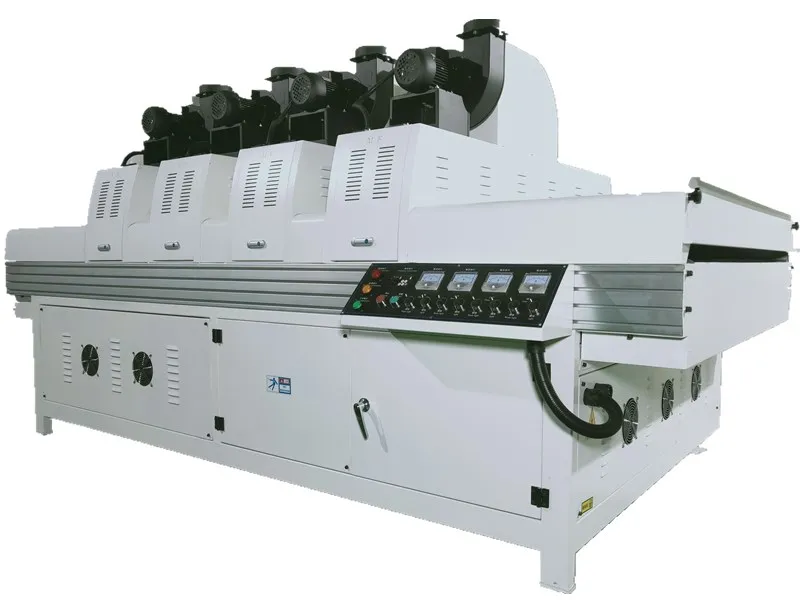
How to Choose the Right UV Dryer Machine?
To fully utilize the capabilities of a UV dryer machine, it is essential to match it to industry needs and material characteristics.
1. Select the light source wavelength based on substrate type
• Wood, paper → 365nm mercury lamp;
• Plastics, electronic components → 395nm LED UV;
• Metals, glass → 380–420nm metal halide lamp.
2. Adjust the energy density based on coating thickness
• Thick film → High power + multiple lamp groups;
• Thin film → Low power + short distance.
3. Selecting Equipment Structure Based on Production Method
• Continuous Production → Tunnel UV Dryer Machine;
• Small Batch Processing → Desktop UV Dryer Machine;
• Precision Spot Curing → Point Light Source UV Equipment.
What industries benefit most from XMF Machinery solutions?
Industries such as furniture manufacturing, wooden doors, flooring, decorative panels, and building materials benefit significantly from XMF Machinery solutions. Our equipment is also suitable for plastic, glass, metal, and ceramic surface processing. As a professional supplier and manufacturer, we provide tailor roller coating machines, printing machines, embossing machines, and sanding machines to match industry-specific requirements.