

As the level of automation in manufacturing continues to rise, spraying processes are rapidly evolving from traditional manual operations toward mechanization and intelligent systems. In industrial production, paint spraying is far more than just adding color to a product; it serves multiple critical functions, including corrosion resistance, oxidation prevention, wear resistance, aesthetic enhancement, and the creation of added value. Consequently, paint spraying processes hold a pivotal position in modern industry, and paint spraying production lines have become indispensable core equipment for many manufacturing enterprises.
In recent years, driven by rising labor costs, stricter environmental regulations, and increasing customer demands for product aesthetics, more companies are deploying automated spraying equipment—such as automatic sprayers, spraying robots, and automatic paint supply systems—to build highly efficient and stable production lines. For many business managers, a key question remains: in which industries are these production lines primarily used, and where is the market demand the greatest? The answer impacts not only equipment procurement strategies but also the future trajectory of the entire industry.
Current market data indicates that paint spraying production lines have a wide range of applications; virtually any industry involving the surface treatment of metal, plastic, wood, or composite materials utilizes this process. However, requirements regarding automation levels, spraying precision, and equipment configuration vary significantly across different sectors. This article provides a detailed analysis covering industry applications, market demand, equipment trends, and future developments to offer a comprehensive understanding of the market landscape for paint spraying production lines.
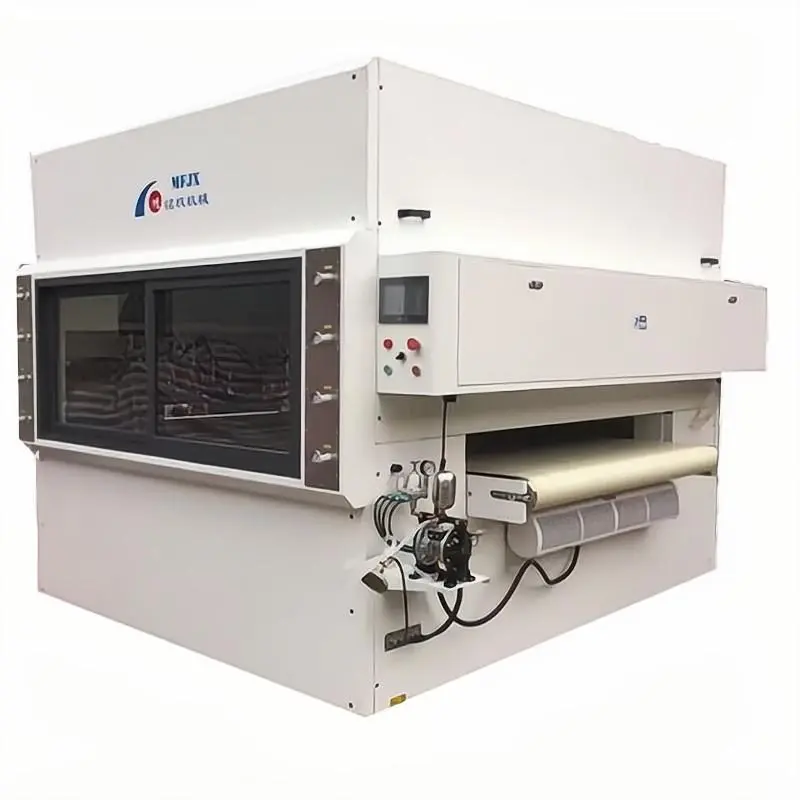
What is a paint spraying production line, and why do so many industries rely on it?
A paint spraying production line is an integrated, continuous production system that combines processes such as pre-treatment, spraying, leveling, drying, cooling, and inspection. Its primary objective is to create a uniform, stable coating on the surface of workpieces. Compared to traditional, decentralized spraying methods, modern paint spraying production lines emphasize automation, standardization, and high-volume production capabilities.
A complete paint spraying production line typically comprises several modules, including pre-treatment equipment, conveying systems, spraying equipment, drying equipment, environmental protection/treatment systems, and control systems. Among the components of a painting production line, the automatic painting machine is a critical piece of equipment; it is responsible for applying paint precisely and evenly to the surface of workpieces, thereby ensuring consistent film thickness and uniform surface gloss while minimizing material waste.
In the past, many industries relied on manual painting for surface finishing. However, as production scales expanded, the limitations of manual spraying became increasingly apparent. Issues included inconsistent quality dependent on worker experience, fluctuating efficiency, low paint utilization rates, and difficulties in meeting environmental control standards. These problems are often exacerbated in large-scale manufacturing environments, prompting more enterprises to adopt automatic painting machines as a replacement for manual methods.
Industry data indicates that in standardized mass-production environments, automatic painting machines can boost production efficiency by 30% to 200% and increase paint utilization by over 20%, while significantly reducing rework rates. This is a primary driver behind the growing demand for painting production lines.
The Automotive Manufacturing Industry: A Sector with High Demand for Painting Production Lines
When discussing which industry has the greatest demand for painting production lines, the automotive manufacturing sector is undoubtedly a prime example. The automotive industry imposes extremely high standards for surface coating; vehicle body painting affects not only aesthetics but also directly impacts corrosion resistance and brand image.
The journey of a vehicle from "body-in-white" to a finished product typically involves multiple coating stages, including electro-deposition (ED), primer, intermediate coating, base coat, and clear coat. The entire process demands exceptional precision regarding coating uniformity, color consistency, film thickness, and gloss levels. Even slight color variations can be immediately detected by consumers.
Consequently, large automotive plants are generally equipped with highly automated painting lines. Many automakers employ a combination of painting robots and high-precision automatic painting machines to achieve fully automated operations. Leading global automotive plants typically boast painting automation rates exceeding 90%, with some high-end facilities approaching 100%.
According to industry data, for a plant with an annual capacity of 300,000 vehicles, the investment in painting workshop equipment can account for approximately 20% of the total investment for the entire facility—underscoring the vital importance of painting production lines in automotive manufacturing. The automotive industry is a major consumer of painting production lines primarily due to its high production volumes, stringent quality standards, and high degree of standardization—factors that make it ideal for the large-scale application of automatic painting machines.
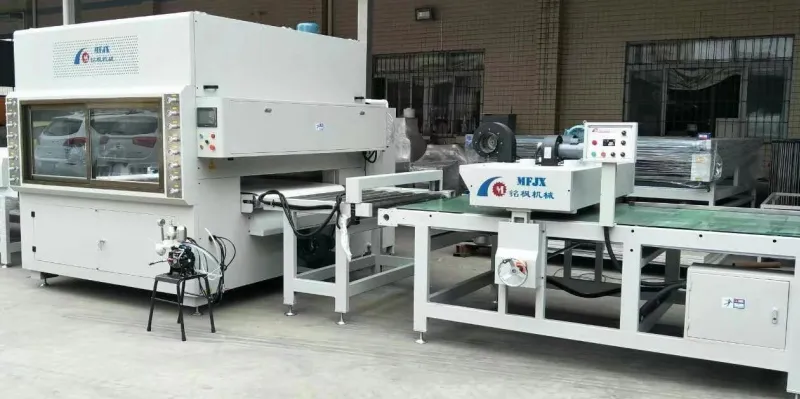
Home Appliance Industry: A Sector with Mature Applications for Automatic Painting Machines
The home appliance industry is another key sector for painting production lines. Products ranging from refrigerators, washing machines, air conditioners, and water heaters to small kitchen appliances all require surface coating to enhance their visual appeal and protective qualities.
Modern consumers prioritize aesthetics alongside functionality when purchasing appliances. For instance, high-end refrigerators often feature metallic-finish coatings, while air conditioner panels require a smooth, refined finish with uniform gloss. Consequently, manufacturers must rely on highly stable painting production lines to ensure consistency across mass-produced items.
The home appliance industry is characterized by rapid production cycles, large batch sizes, and a wide variety of SKUs; therefore, painting lines must be not only efficient but also capable of quick changeovers. Automatic painting machines excel in this environment, as they can rapidly adapt to different product models through program switching.
Market statistics indicate that the automation rate for coating processes among large Chinese home appliance enterprises generally exceeds 80%, with leading companies approaching full automation. Driven by frequent product updates and a massive market scale, the industry maintains a consistently strong demand for painting production lines.
Hardware Industry: Stable Demand and Rapid Growth
The hardware industry is another sector where automatic painting machines are widely used. Common products include door locks, handles, brackets, lighting fixtures, bathroom accessories, and architectural hardware; while these items are often small in size, they are produced in massive quantities.
The primary objectives of coating hardware components include rust and corrosion prevention, as well as aesthetic enhancement. High-end hardware products, in particular, demand increasingly high standards for coating uniformity and finish quality. While manual spraying is often inefficient for small hardware parts, automatic painting machines enable high-efficiency, continuous coating on assembly lines.
The hardware industry is particularly well-suited for automated painting lines because product dimensions are relatively standardized, making it easy to program spray paths. Many hardware factories have seen production efficiency more than double—and defect rates drop significantly—after adopting automatic painting machines. As the architectural decoration and smart home markets grow, the demand for hardware products continues to expand, driving simultaneous growth in the market for spray painting production lines.
Furniture Industry: A Prime Example of Automation Upgrading in Traditional Sectors
The furniture industry has historically relied heavily on manual spray painting—particularly in the production of wooden doors, cabinets, panel furniture, and solid wood furniture—where the process often required skilled, experienced craftsmen. However, this model suffered from low efficiency, high labor dependency, and significant environmental compliance pressures.
In recent years, the rapid expansion of the custom furniture market and the resulting surge in orders have made traditional manual spraying inadequate to meet demand. Consequently, an increasing number of furniture enterprises are deploying spray painting production lines and adopting automated spray machines, UV coating equipment, and water-based paint spraying systems.
Automated spray machines offer distinct advantages in the furniture industry. First, they ensure uniform coating across large surface areas. Second, they minimize human error and enhance product consistency. Third, they are better suited for use with eco-friendly water-based coatings.
Industry research indicates that the adoption rate of automated spraying among medium-to-large domestic furniture enterprises is rising rapidly, with high growth expected to continue over the next five years.
Plastics and Electronics Industries: Rising Demand for High-Precision Spraying
The sectors manufacturing plastic components and electronic housings represent another key market for spray painting production lines. Products such as mobile phone casings, computer housings, smart device enclosures, gaming equipment, and consumer electronics demand exceptionally high standards for surface finishing.
These products are typically highly sensitive to the following parameters:
•Color consistency (Delta E)
•Gloss levels
•Tactile feel (texture)
•Coating film uniformity
Even minor imperfections can negatively impact the end-user experience; therefore, the electronics industry demands extreme precision from automated spray machines.
For instance, when coating 3C electronics, the tolerance for coating film thickness may be restricted to within ±3 microns, placing rigorous demands on the stability of the spray painting production line. Automated spray machines effectively meet these requirements through high-precision trajectory control and stable atomization technology.
As the consumer electronics market continues to evolve, the demand for high-end coating processes is also expanding.
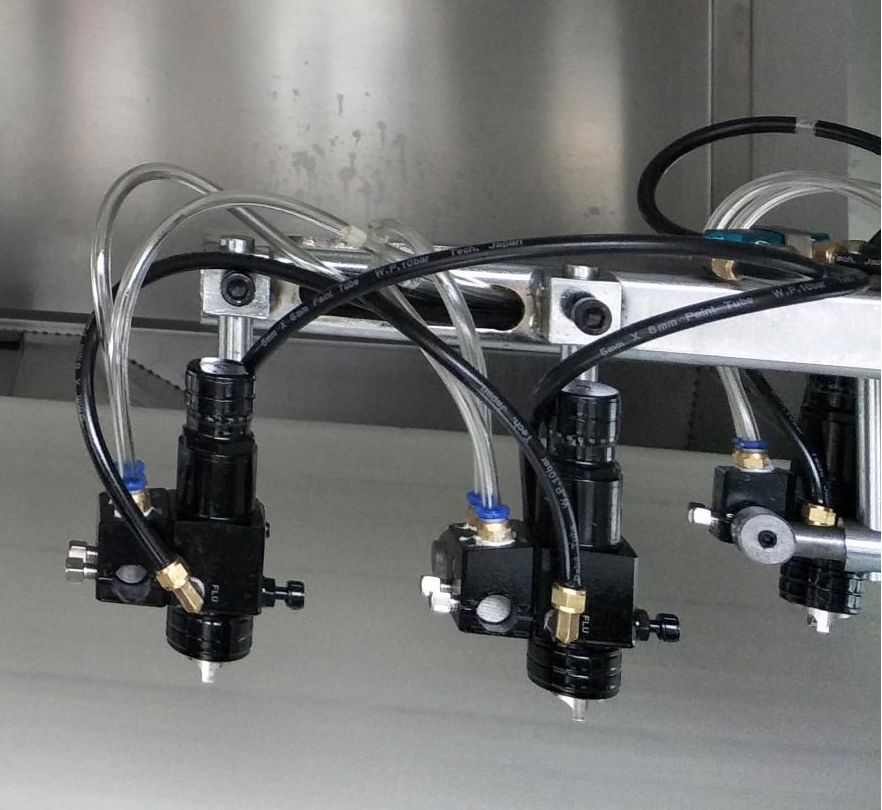
Construction Machinery and Heavy Industry: A Key Market for Large-Scale Spray Painting Lines
The construction machinery sector encompasses the manufacturing of large-scale equipment such as excavators, forklifts, cranes, and agricultural machinery. For these types of products, the focus of the coating process is primarily on corrosion resistance, weatherability, and wear resistance, rather than just aesthetics.
Due to the large size of the equipment, conventional small-scale automatic sprayers are unsuitable; consequently, the industry typically employs large-scale spray painting lines, spraying robots, or rail-mounted automatic spraying systems.
The demand for spray painting lines in the construction machinery industry is characterized by two factors: high unit value and large surface areas to be coated. This means that coating quality directly impacts equipment lifespan and after-sales costs. Surface coating quality is often a critical acceptance criterion for customers, particularly in export markets.
As global infrastructure development continues, demand for spray painting lines in the construction machinery industry remains steady.
Which industry has the highest demand for spray painting lines?
In terms of total market size, the automotive industry remains one of the largest markets for spray painting lines. This is primarily due to the industry's massive production volume, the high value of its products, and its extremely stringent standards for surface quality.
However, when considering the volume of equipment purchases and the prevalence of small and medium-sized enterprises (SMEs), the hardware and furniture industries also represent significant markets. These sectors comprise a vast number of companies with high equipment turnover rates, resulting in robust demand for automatic spraying machines.
In terms of future growth rates, the plastics/electronics and new energy sectors are likely to see the fastest expansion. Emerging products—such as battery casings for new energy vehicles, housings for charging equipment, and structural components for energy storage systems—are driving a new wave of growth in the spray painting line market.
In summary, the landscape can be characterized as follows:
Automotive industry: Largest market size
Home appliance industry: Among the highest levels of automation
Hardware industry: High purchase volume
Furniture industry: Rapid growth
Electronics industry: Strong demand for high-end solutions
New energy industry: Significant future potential
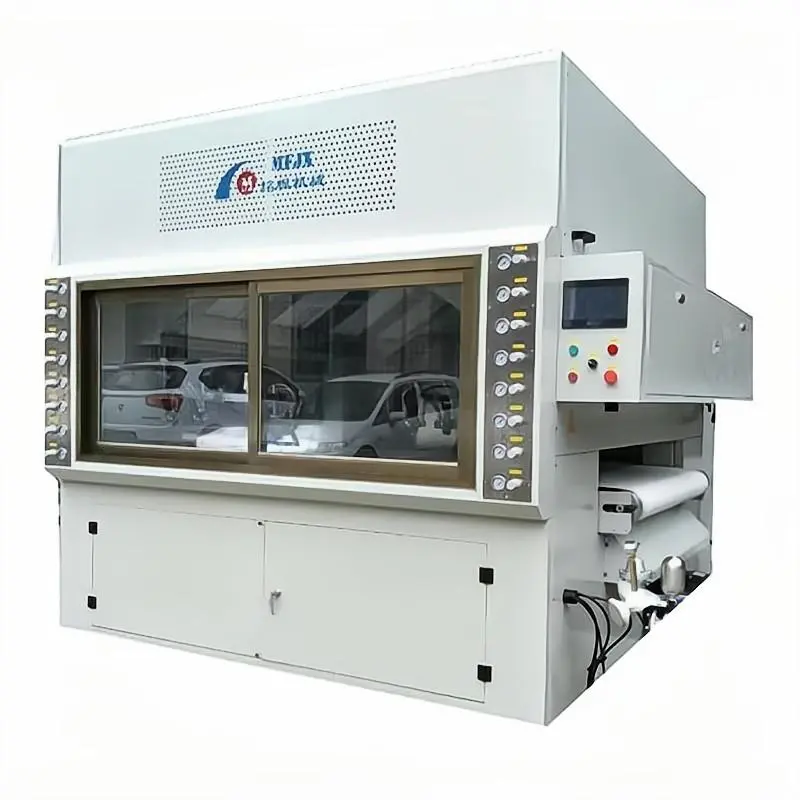
FAQ
Q1: Are spray painting lines suitable for small factories?
Yes. Small factories can start with basic automatic spraying machines and gradually upgrade to a complete spray painting line.
Q2: How much can automatic spraying machines improve efficiency?
Efficiency typically increases by 30% to 200%, depending on the product type and the complexity of the process.
Q3: Which industries are best suited for automatic spraying machines?
The automotive, home appliance, hardware, and plastics industries are all highly suitable.
Q4: Is the investment for a spray painting line significant?
Investment in basic equipment is relatively manageable, whereas the cost of large-scale automated painting production lines is higher.
Q5: Will the painting industry become fully automated in the future?
Standardized mass production will see increasing automation, but complex, customized scenarios will still require manual assistance.