

In modern industrial spraying production lines, CNC automatic spraying machines are widely used in surface coating of furniture, metal products, plastic casings, and automotive parts due to their high efficiency, stability, and precise control.
However, nozzle clogging is one of the most common and troublesome malfunctions during daily operation.
Nozzle clogging not only affects spraying quality but can also lead to equipment downtime, paint waste, and reduced production capacity.
So, how should nozzle clogging in CNC automatic spraying machines be handled?
This article will analyze this issue in depth from multiple perspectives, including the causes of nozzle clogging, identification methods, cleaning procedures, and prevention measures, providing a systematic technical reference for equipment maintenance and production management.
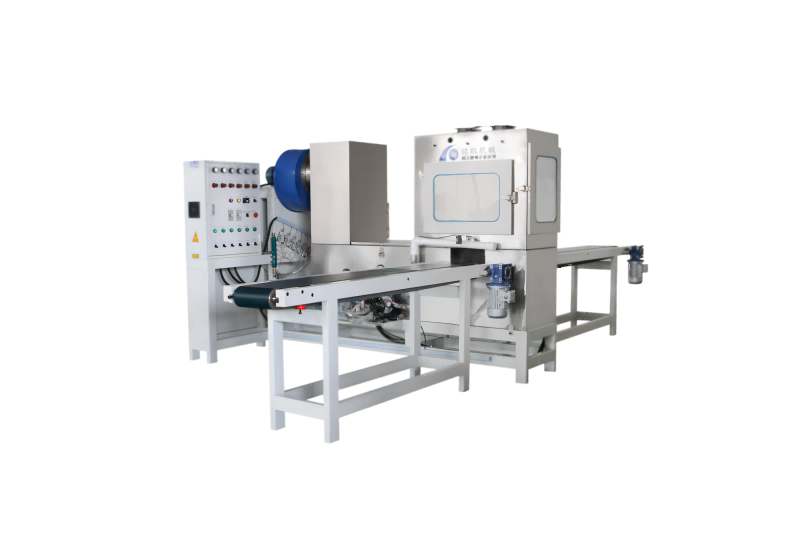
Why are nozzle clogging common in CNC automatic spraying machines?
The nozzle is one of the most critical components of the CNC automatic spraying machine spraying system. It is responsible for atomizing the paint into fine particles and distributing them evenly on the workpiece surface. Once the nozzle is clogged, it will lead to uneven spraying, abnormal flow, or even spraying failure.
The main causes of nozzle clogging include the following:
1. Paint impurities or inadequate filtration
When using oil-based, water-based, or PU paints, undissolved particles or impurities in the paint can enter the nozzle with the spray fluid, causing clogging.
Even stirred paint can accumulate and clog if the filtration process is inadequate.
2. Dry paint buildup during spraying
When a CNC automatic spraying machine operates continuously, the nozzle orifice is easily affected by air and temperature, causing some paint to dry around the nozzle. This dried paint layer gradually accumulates, altering the spray pattern and potentially completely blocking the channel.
3. Improper air pressure and flow control
When the atomizing air pressure is too low and the paint flow rate is too high, insufficiently atomized paint particles will adhere to the inner wall of the nozzle, eventually causing clogging.
Conversely, excessively high air pressure can cause backflow, introducing dust or dried paint particles.
4. Paint Residue Over Time
If the CNC automatic spraying machine is not cleaned promptly when not in use, residual paint inside the nozzles will dry and harden, leading to severe clogging.
5. Environmental Dust or Air Pollution
If the spray booth is not kept clean, dust, paint mist backflow, oil mist, or fibers in the air can enter the nozzles, forming tiny blockages.
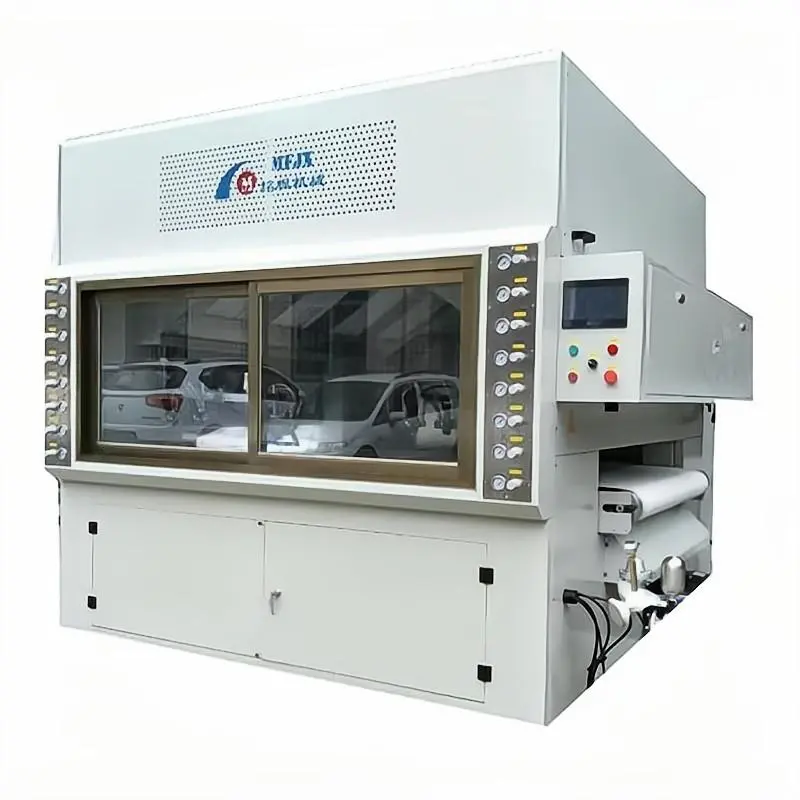
How to Determine if the Nozzles of a CNC Automatic Spraying Machine are Clogged?
Nozzle clogging often doesn't happen suddenly but develops gradually. Timely identification of clogging signs can effectively prevent more serious spraying problems. Here are some common methods for identification:
1. Uneven Spray Pattern
If the sprayed paint mist shows streaks, uneven distribution, or blurred edges, it's most likely that the nozzle orifice is partially blocked.
2. Significantly Reduced Spray Volume
Under the same air pressure and flow rate settings, if the spray volume decreases significantly, it indicates that the nozzle flow cross-section has decreased, resulting in clogging.
3. Spray Pattern Deviation or Angle Change
When one side of the nozzle is clogged, the spray angle will shift, resulting in uneven paint thickness.
4. Abnormal Nozzle Sounds
If the airflow at the nozzle orifice is obstructed during painting, the CNC automatic spraying machine may emit a hissing or intermittent spraying sound.
5. Dried Paint Adhesion on the Nozzle Surface
If paint clumps or dried paint marks are visible on the nozzle surface, it indicates that the nozzle may also be clogged internally.
If these phenomena occur, the machine should be stopped immediately for inspection to avoid coating defects or damage to the spray gun caused by continued operation.
Correct Steps for Handling Clogged Nozzles on CNC Automatic Spraying Machines
Once nozzle clogging is confirmed, it should be handled scientifically and according to regulations. The following is a recommended step-by-step procedure:
1. Stop the Machine and Cut Off the Paint Supply
First, shut down the CNC automatic spraying machine's spraying program, stop the airflow and paint supply, and ensure operational safety.
Never disassemble the nozzle while the system still has pressure to avoid splashing residual paint or damaging the equipment.
2. Disassemble the Nozzle Assembly
Carefully remove the nozzle head, spray cap, and needle valve assembly, ensuring safety.
Caution: Do not use metal tools to pry, as this may damage the delicate structure of the nozzle's internal orifice.
3. Use a Suitable Cleaning Solvent
Select the appropriate cleaning liquid based on the type of paint used:
• Oil-based paint → Use a dedicated thinner or gun cleaner;
• Water-based paint → Use water or a neutral detergent.
Soak the nozzle for 10–20 minutes to soften and remove the dried paint.
4. Clean with a Soft Brush or Ultrasonic Cleaner
For minor clogging, gently clean the nozzle orifice with a soft brush; for severe clogging, use an ultrasonic cleaner to remove tiny residues from the nozzle through high-frequency vibration.
Never use steel needles or wires, as this may enlarge the nozzle orifice and disrupt the spray pattern.
5. Inspect the Nozzle and Needle Valve
After cleaning, inspect the nozzle orifice for smoothness and the needle valve for wear using a magnifying glass or microscope. Replace immediately if any deformation or cracks are found.
6. Reassembly and Test Spray
After confirming the nozzles are dry, reinstall the return spray gun system in its original position and start the CNC automatic spraying machine for a low-pressure test spray to check if the spray pattern and flow rate have returned to normal.
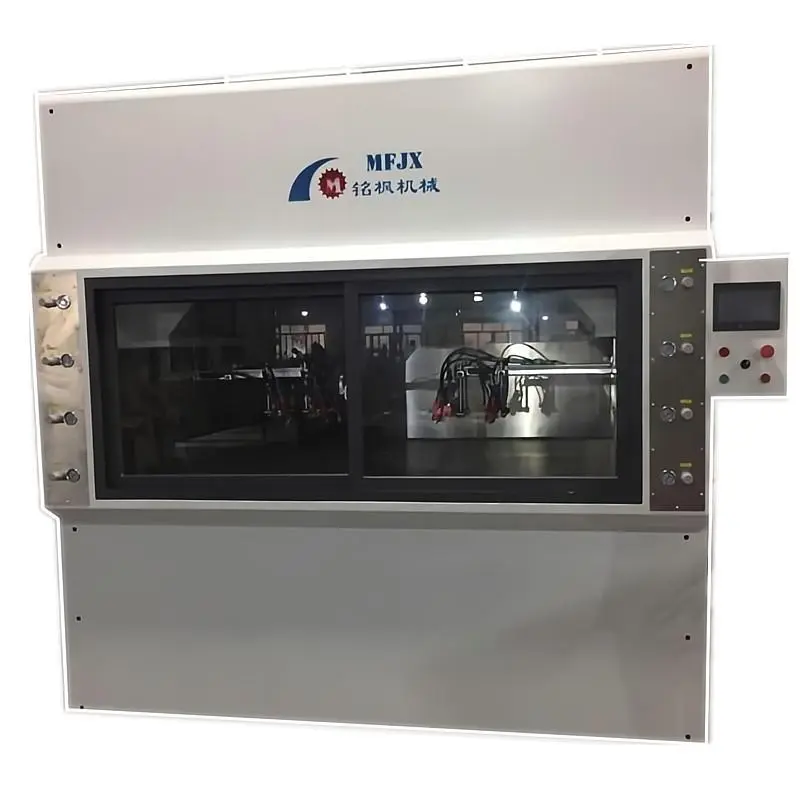
Prevention and Daily Maintenance of Nozzle Clogging
While nozzle clogging is difficult to completely avoid, its probability can be significantly reduced through proper operation and maintenance. The following are key measures to prevent clogging:
1. Strict Paint Filtration
Before the paint enters the CNC automatic spraying machine, it must be filtered with a precision filter (generally 200-400 mesh) to ensure its purity.
Regularly replacing the filter is the first step in keeping the nozzles clear.
2. Maintain a Clean Spraying Environment
The spraying workshop should maintain an operational air filtration system and regularly clean return air ducts and exhaust vents to prevent dust from entering the nozzles.
The cleanliness of the spraying area should be controlled at Class 100,000 or better to reduce external particulate contamination.
3. Appropriate Adjustment of Air Pressure and Flow Rate
Adjust the appropriate atomizing air pressure and fluid pressure according to the viscosity characteristics of different paints.
General Recommendations:
• Atomizing air pressure: 0.3–0.5 MPa
• Paint pressure: 0.1–0.3 MPa
Excessively high or low air pressure increases the risk of clogging.
4. Regularly Clean the Nozzle System
After each day's spraying operation, the nozzles and fluid lines should be cleaned immediately to prevent residual paint from drying.
For CNC automatic spraying machines that are not used for extended periods, the paint should be drained and replaced with cleaning agent for storage.
5. Use High-Quality Paint and Thinner
Inferior paint often contains impurities or particulate sediment, which not only affects spraying quality but also easily leads to nozzle clogging.
Choosing industrial-grade paint with good flowability and high stability is crucial for preventing clogging.
6. Establish Nozzle Maintenance Records
It is recommended that the factory establish a nozzle usage record, recording the usage time, cleaning frequency, pressure parameters, etc., for each nozzle to analyze nozzle life and perform periodic replacement.
Differences in Cleaning Nozzles for Different Types of CNC Automatic Spraying Machines
CNC automatic spraying machines come in various nozzle types, and the cleaning methods differ slightly depending on the nozzle structure:
Nozzle Type | Characteristics | Cleaning Precautions
Air Atomizing Nozzle | Uniform atomization, fine structure | Cannot be forcibly disassembled; requires ultrasonic cleaning
Airless Nozzle | High paint output, slightly larger orifice | Can be soaked in thinner and then brushed; avoid needle punctures
Electrostatic Nozzle | Contains high-voltage electrode structure | Always disconnect power before cleaning to avoid damaging the electrodes
Fan-shaped Nozzle | Commonly used for large-area spraying | Ensure consistent nozzle angle to avoid deformation during cleaning
Choosing the appropriate cleaning method can not only restore spraying performance but also extend nozzle life.
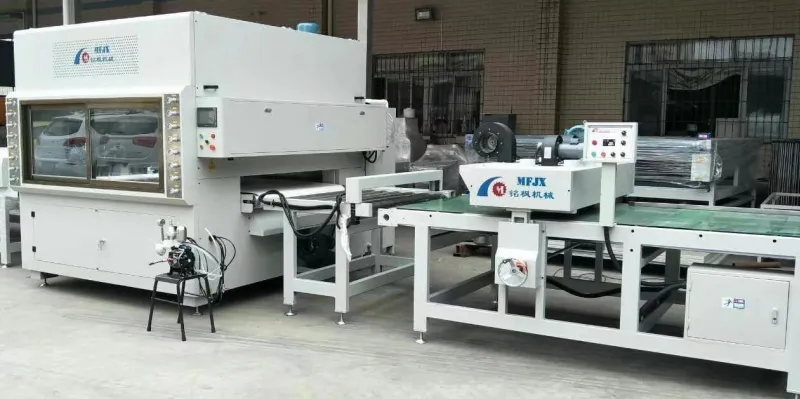
The Impact of Nozzle Clogging on the Coating Effect of CNC Automatic Spraying Machines
Nozzle clogging, seemingly a localized problem, actually has a cascading effect on the entire coating system:
• Uneven spray distribution → Inconsistent paint layer thickness, affecting appearance;
• Increased paint consumption → Waste due to paint buildup;
• Unstable equipment operation → System pressure fluctuations, triggering alarms;
• Increased workpiece rework rate → Increased production costs and lead times;
• Accelerated spray gun wear → Poor paint flow causing needle valve wear.
Therefore, regular nozzle inspection and maintenance is not only a quality control requirement but also a key guarantee for maintaining the high efficiency of CNC automatic spraying machines.
Is XMF Machinery experienced in international cooperation?
Yes, XMF Machinery has extensive experience in international cooperation and export business. Our machines are sold to Southeast Asia, the Middle East, Africa, and other regions. As an export-oriented manufacturer and supplier, we understand logistics, packaging, and technical communication requirements. Customers buying from our company benefit from professional documentation, reliable delivery, and responsive support.