

- - Why is paint film thickness control crucial for coating quality?
In automated coating production, paint film thickness is a key indicator of coating quality. Whether it's metal parts, plastic parts, or wooden surfaces, paint films that are too thick or too thin directly affect product performance and appearance.
If the paint film is too thick, the following problems may occur:
• Sagging, wrinkling, or uneven curing;
• Abnormal surface gloss, color deviation;
• Material waste, prolonged drying time.
Conversely, a paint film that is too thin may lead to:
• Reduced adhesion, easy peeling;
• Reduced corrosion resistance, water resistance, or abrasion resistance;
• Insufficient gloss, rough surface.
Therefore, accurately controlling paint film thickness during the spraying process has become a key issue for manufacturing companies to improve product consistency and production efficiency.
This is precisely the significant advantage of CNC automatic spraying machines compared to manual spraying—they can achieve stable and uniform coating thickness through programmed and data-driven control.
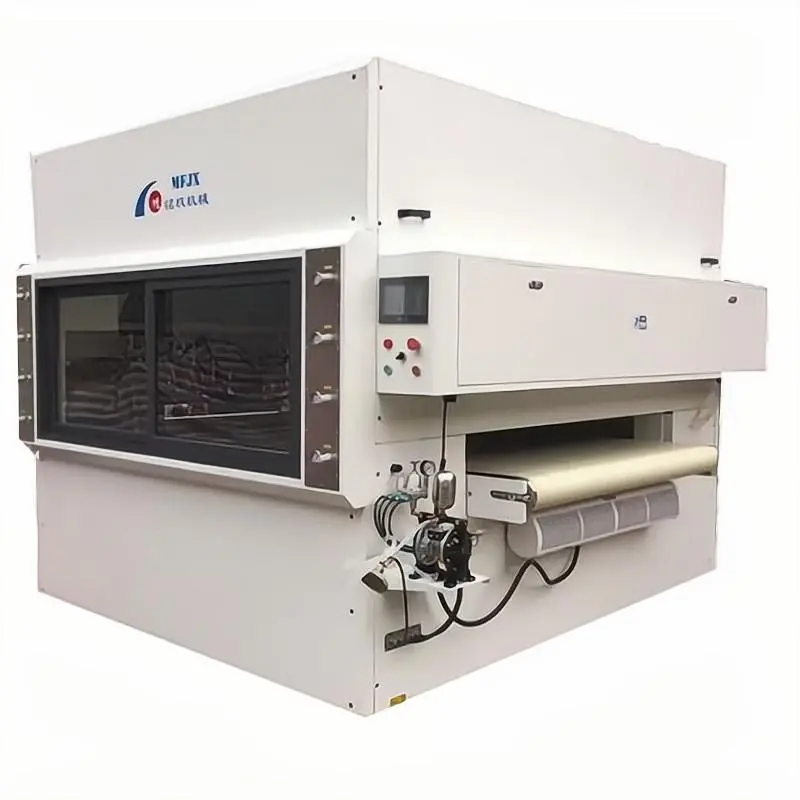
What is the principle behind CNC automatic spraying machines controlling paint film thickness?
CNC automatic spraying machines (Computer Numerical Control Spray Coating Machines) control parameters such as the spray gun's trajectory, spray distance, speed, air pressure, and flow rate through computer programs.
During operation, the equipment evenly atomizes and deposits paint onto the workpiece surface according to the set spray path and cycle time, thus forming a stable paint film.
The paint film thickness is mainly determined by the following factors:
1. Spray Gun Flow Rate
The higher the paint output, the thicker the paint film.
CNC automatic spraying machines can precisely control the flow rate through servo valves or variable frequency pumps.
2. Spray Speed
The faster the spray gun moves, the less paint is deposited per unit area.
3. Spray Distance
If the spray distance is too close, paint will accumulate; if it is too far, excessive atomization and diffusion will result in a thinner paint film.
4. Atomization Pressure
Fineer atomized particles result in a more uniform coating. Excessive or insufficient air pressure will affect coating thickness consistency.
5. Coating Layers & Angles
Multi-layer cross-coating can even out thickness, improving coverage and surface smoothness.
CNC automatic spraying machines achieve high-precision paint film thickness control by comprehensively adjusting the above parameters.
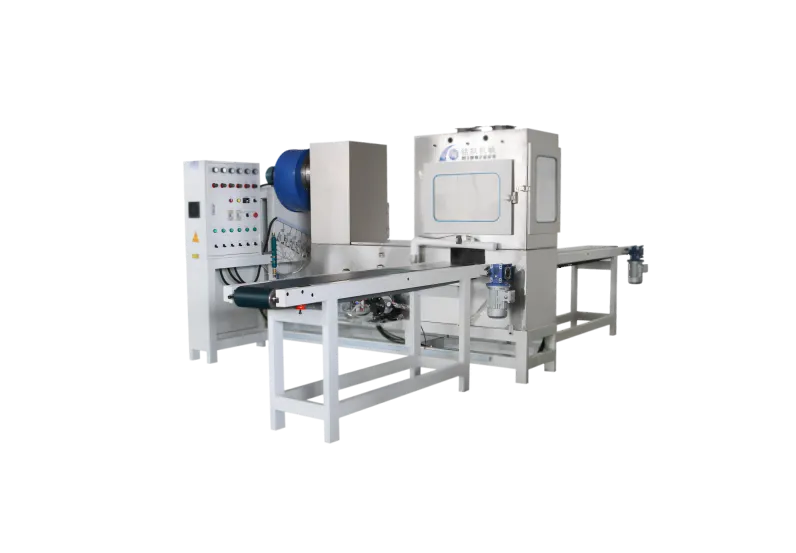
How to set spraying parameters to control paint film thickness on a CNC automatic spraying machine?
1. Setting the spray flow rate
In a CNC automatic spraying machine, the flow rate is typically adjusted by an electronically controlled proportional valve or gear pump.
The operator can input the target paint film thickness (e.g., 30μm, 60μm, etc.) in the control interface, and the system will automatically calculate the optimal parameters based on the spraying area and flow rate algorithm.
Key points for flow rate setting:
• Select a nozzle diameter that matches the paint viscosity;
• Ensure the paint output from the spray gun is proportional to the air pressure;
• Calibrate the actual output using a test spray thickness gauge.
2. Adjusting the spray gun movement speed
Speed is one of the most direct variables affecting paint film thickness.
In a CNC automatic spraying machine, speed can be precisely controlled via a servo motor, down to 0.1 mm/s.
General rules:
• High speed → Thinner paint film;
• Slow speed → Thicker paint film.
Through program optimization, a constant spray speed can be maintained on complex curved surfaces, avoiding thickness accumulation at corners.
3. Controlling spraying distance and angle
The distance between the spray gun and the workpiece is typically maintained between 150 mm and 250 mm.
A CNC automatic spraying machine can automatically maintain the ideal spray distance through a three-axis or five-axis motion system, avoiding human error.
Angle control determines the incident direction of the atomized particles, affecting the uniformity of coverage.
Common control methods include:
• Multi-angle cyclic spraying;
• Automatic adjustment of spray gun tilt angle;
• Real-time correction of spray distance error using trajectory algorithms.
4. Spraying Pressure and Airflow Control
Air pressure affects atomized particle size and paint distribution.
• Excessive air pressure: Particle size is too fine, paint mist diffusion is too large, resulting in a thinner paint film.
• Insufficient air pressure: Insufficient atomization, resulting in a rough surface and uneven thickness.
The air pressure system of a CNC automatic spraying machine typically uses closed-loop control, with pressure sensors monitoring and automatically adjusting in real time to ensure stable spraying.
5. Number of Sprays and Layering Patterns
Multi-layer spraying is an effective way to ensure uniform coating thickness.
CNC automatic spraying machines can be programmed with single or multiple layers, such as a cross-spraying pattern of "one horizontal spray + one vertical spray".
This eliminates overlapping zones and dry spray areas caused by unidirectional spraying, resulting in a more consistent overall film thickness.
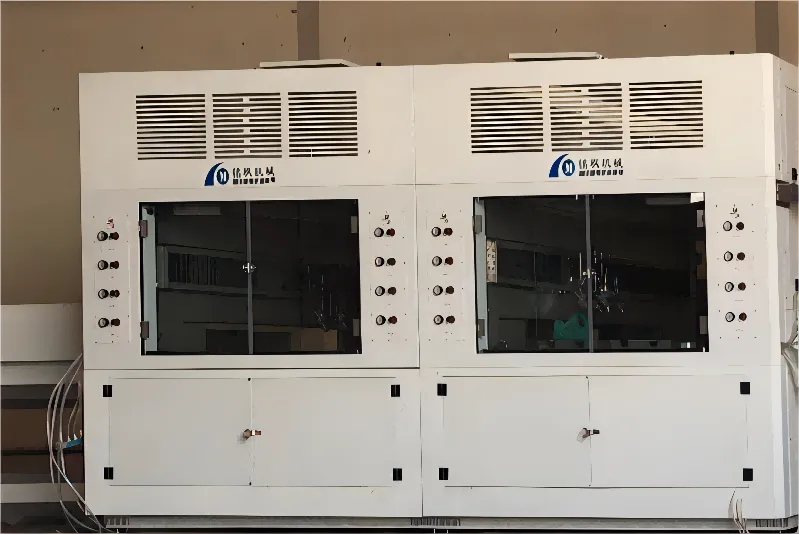
How does a CNC automatic spraying machine control film thickness for different types of coatings?
Different types of coatings have different requirements for coating thickness control.
A CNC automatic spraying machine can adapt to various coating characteristics through parameter matching:
1. Water-based coatings
Water-based paints have higher viscosity and weaker atomization, therefore requiring slightly higher spraying air pressure and temperature.
A CNC automatic spraying machine can be equipped with a heating module at the front of the spray gun to improve the flowability of water-based paint, thus forming a uniform film thickness.
2. Solvent-based coatings
These coatings have good leveling properties but are prone to sagging.
A CNC automatic spraying machine controls paint buildup and maintains stable film thickness by reducing the flow rate and increasing the spray speed.
3. Powder coatings
Powder coating thickness is mainly determined by the amount of electrostatic adsorption.
A CNC automatic spraying machine ensures uniform powder deposition by precisely controlling the spray gun voltage and powder output rate.
The typical thickness is controlled between 60~120μm.
4. UV-Curable Coatings
UV coatings are mostly used in high-gloss products, requiring extremely high uniformity of film thickness.
CNC automatic spraying machines can be equipped with online film thickness detection devices, automatically fine-tuning the flow rate and speed through a feedback system to achieve high gloss consistency.
Can CNC automatic spraying machines achieve automatic detection and feedback of paint film thickness?
Modern CNC automatic spraying machines are typically equipped with online detection systems, enabling real-time monitoring and closed-loop control.
The working mechanism is as follows:
• Non-contact film thickness measurement sensors (such as laser thickness gauges or electromagnetic induction probes) detect the film thickness after spraying in real time;
• Data is fed back to the control system and compared with preset values;
• If the deviation exceeds the allowable range, the system automatically corrects the flow rate or spray speed.
This closed-loop feedback method significantly improves product consistency, avoiding the lag and errors of manual sampling.
In high-end CNC automatic spraying machines, this function is particularly crucial, achieving a thickness control accuracy of ±3μm.
In actual production, which parameters are most likely to cause unstable paint film thickness?
Although CNC automatic spraying machines offer extremely high precision, improper parameter settings can still cause thickness fluctuations.
Common issues include:
• Nozzle wear or clogging – leading to reduced paint output and thinner film thickness;
• Air pressure fluctuations – affecting atomization uniformity;
• Inaccurate flow controller calibration – causing paint volume errors;
• Workpiece posture or clamping deviations – resulting in uneven spray distance;
• Changes in ambient temperature and humidity – affecting paint viscosity and drying speed.
Therefore, operators need to regularly maintain the spraying equipment, calibrate sensors, and maintain a stable spraying environment to ensure consistent film thickness.
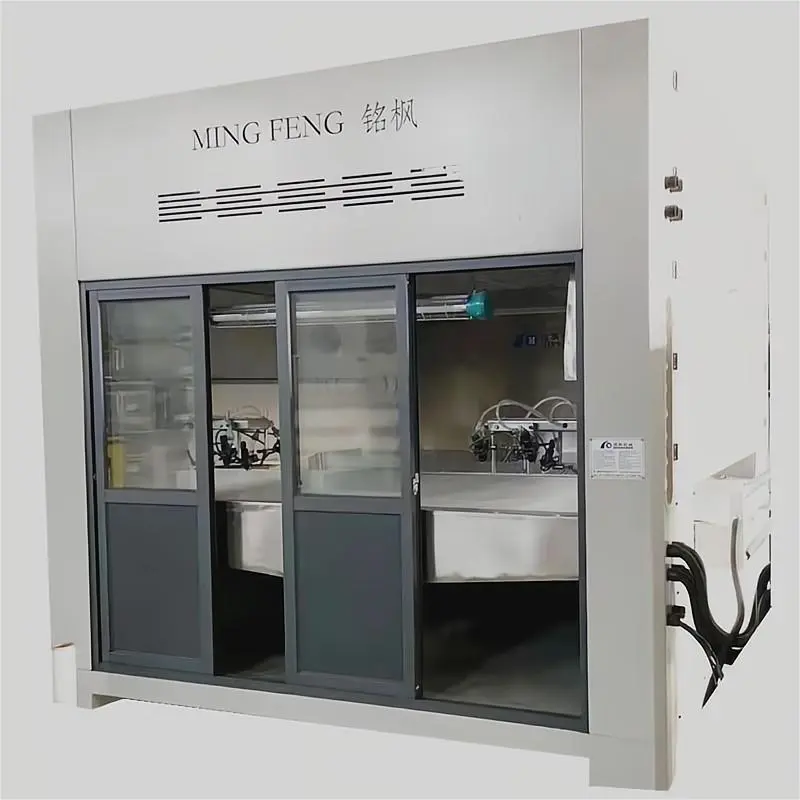
How can a CNC automatic spraying machine maintain uniform paint film thickness on complex curved surfaces?
Complex geometries (such as grooves, curved surfaces, and corners) often present challenges for paint film thickness control.
CNC automatic spraying machines, through 3D trajectory algorithms and multi-axis linkage systems, can achieve the following optimizations:
• Automatic adjustment of the spray gun posture to ensure the atomization direction is perpendicular to the surface;
• Path compensation algorithm to automatically reduce speed or increase the number of sprays for recessed areas;
• Simulation function to simulate coating distribution and predict film thickness changes before spraying.
This precise control keeps the film thickness error of complex surface spraying within ±5μm, significantly improving the consistency of finished products.
How to verify the paint film thickness after spraying by a CNC automatic spraying machine?
The following methods can be used to measure the paint film thickness:
• Dry film thickness measurement: Using an electromagnetic or eddy current film thickness gauge to detect the coating thickness after curing;
• Wet film thickness measurement: Using a wet film comb to detect the paint thickness in the undried state after spraying;
• Weighing method: Calculating the film thickness by weighing the difference in weight of the workpiece before and after spraying;
• Optical method: Laser interferometry or reflection measurement, suitable for high-precision control scenarios.
CNC automatic spraying machine production lines can integrate online detection modules to achieve automatic recording and statistical analysis, facilitating process optimization.
How can program optimization further improve paint film thickness consistency?
The advantage of CNC automatic spraying machines lies in their programmable control. Parameter optimization can further improve coating uniformity.
Common optimization methods include:
• Uniform path distribution algorithm: Reduces edge overlap;
• Flow-speed linkage control: Adjusts paint output in real time based on the trajectory;
• Automatic temperature and humidity compensation: Maintains stable paint atomization;
• Intelligent data analysis: Automatically optimizes spraying parameters based on historical spraying data.
Through these measures, CNC automatic spraying machines can maintain a high degree of consistency in paint film thickness across different production batches.