

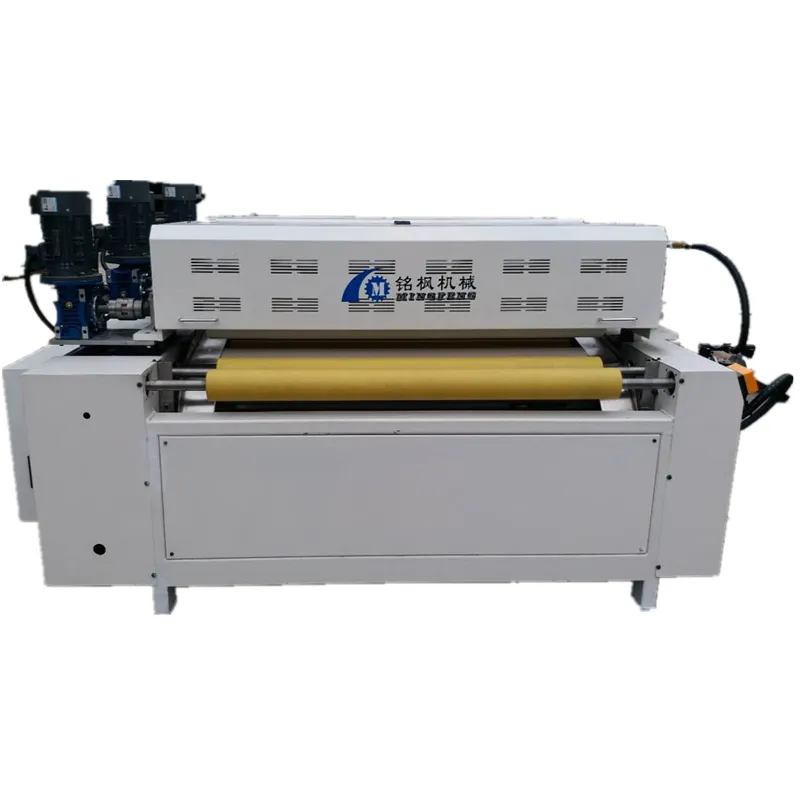
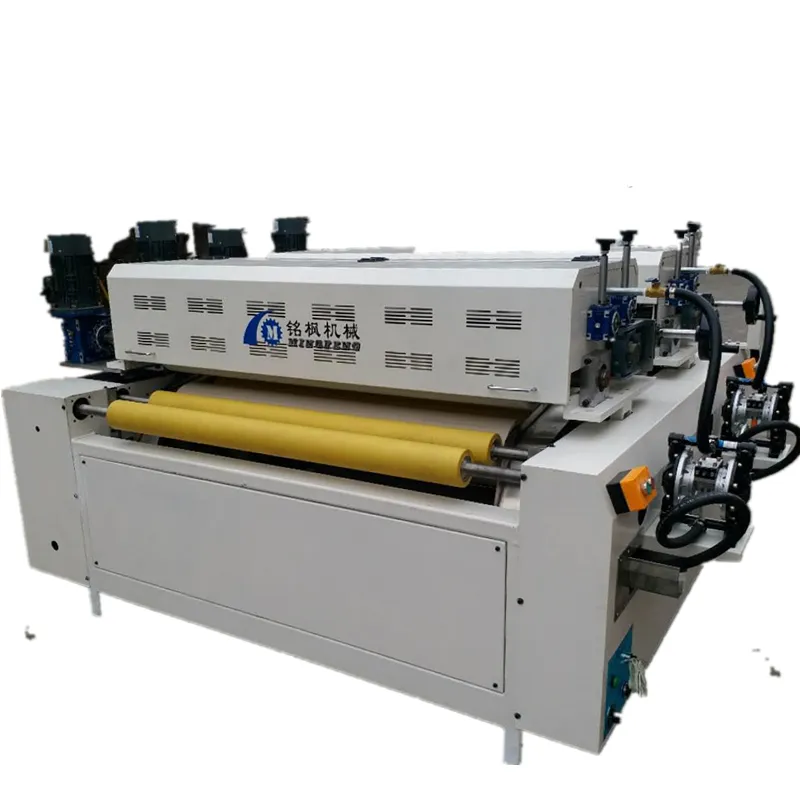
In the furniture, flooring, and decorative panel industries, UV Roller Coating Machines are crucial for achieving efficient coating and high-gloss surface treatment. They use precision rollers to evenly apply UV coating to the surface, which is then instantly cured by UV lamps, forming a strong, smooth coating.
However, if the coating is not thoroughly cleaned after operation, it can lead to paint clumping, channel blockage, and uneven roller surfaces upon restarting, severely impacting coating quality and machine lifespan.
This article will systematically and thoroughly answer the question: How to clean a UV Roller Coating Machine after shutdown?
We will analyze the cleaning process from multiple aspects, including the principle of cleaning, specific steps, precautions, common mistakes, and equipment maintenance, to help operators correctly master the shutdown cleaning procedure and keep the equipment in optimal working condition.
Why is it necessary to clean a UV Roller Coating Machine after shutdown?
UV coatings differ from ordinary water-based or oil-based paints. They contain photoinitiators and active monomers, which rapidly polymerize and cure upon exposure to air or ultraviolet light.
This means that even if the UV Roller Coating Machine stops operating, any paint residue remaining in the rollers or runners can harden into a solid film within a short time.
1. Consequences of Not Clearing the Coating
• Film formation on the roller surface, leading to uneven coating in subsequent applications;
• Hardened paint sticking to the edges of the scraper, affecting coating thickness control;
• Blockage in the paint tank and runners, resulting in poor paint circulation;
• Long-term paint buildup corrodes the metal surfaces of the equipment;
• Impurities are generated upon restarting, contaminating the surface of the substrate.
2. The Role of Clear Coating
• Thoroughly removes residual paint, preventing hardening;
• Keeps the rollers, scrapers, and paint tanks clean;
• Extends the lifespan of the equipment;
• Improves the consistency and smoothness of subsequent coatings.
Therefore, clear varnishing after shutdown is not optional, but an essential part of the UV Roller Coating Machine operation process.
What are the basic principles of clear varnishing after a UV Roller Coating Machine shutdown?
To properly clean a UV Roller Coating Machine, the following three basic principles must be followed:
1. Timeliness Principle
Cleansing should be performed immediately after the machine is shut down, especially before long-term shutdowns, shift changes, or holidays.
If delayed for several hours, residual active monomers in the UV coating may have begun to partially cure, making cleaning difficult and potentially damaging the equipment surface.
2. Comprehensive Principle
The cleaning scope should include not only the main coating roller but also:
• Adhesive tank (paint tank);
• Adhesive pump and return piping;
• Doctor blade assembly;
• Paint-contaminated areas on the conveyor belt edges;
• Coating chamber walls and guide plates.
3. Safety Principle
The cleaning solvent used must be compatible with the UV coating. Cleaning agents containing strong acids or alkalis must not be used. During operation, the power should be turned off, UV lamp irradiation stopped, and protective gloves and goggles worn to avoid skin contact.
How to clean a UV Roller Coating Machine after shutdown?
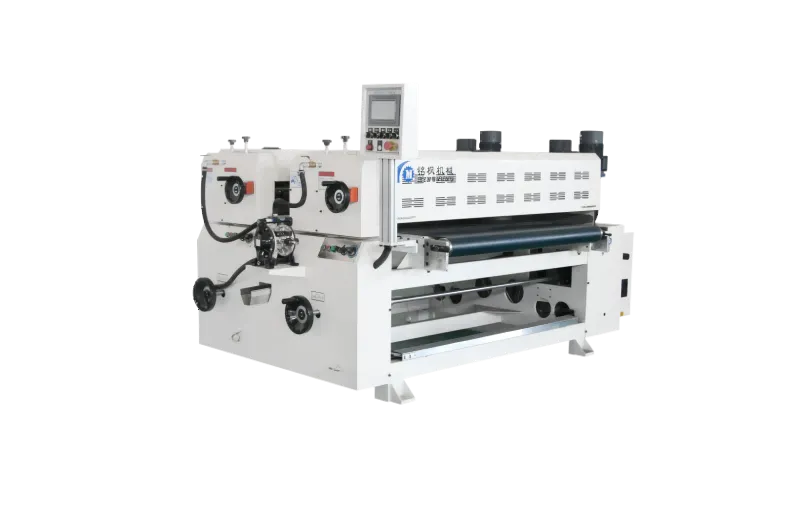
The following details the cleansing steps for a UV Roller Coating Machine after shutdown, following industry standard procedures.
Step 1: Shut Down Equipment and Power System
• Stop the conveyor belt;
• Turn off the UV lamp and fan;
• Disconnect the main power supply;
• Allow the equipment temperature to drop to a safe level (approximately below 40°C) before proceeding with any operation.
Note: The UV lamp can reach temperatures exceeding 200°C during operation. Allow it to cool completely before disassembling and cleaning parts to prevent burns or equipment damage.
Step 2: Empty the Coating System
• Open the drain port at the bottom of the coating tank to collect any remaining coating into a sealed container;
• Start the paint pump return system to drain the paint from the pipes;
• For high-viscosity UV paints, use an appropriate amount of dedicated thinner to assist in emptying.
At this time, ensure:
No paint residue remains in the pipes, pump body, or joints to prevent hardening and blockage.
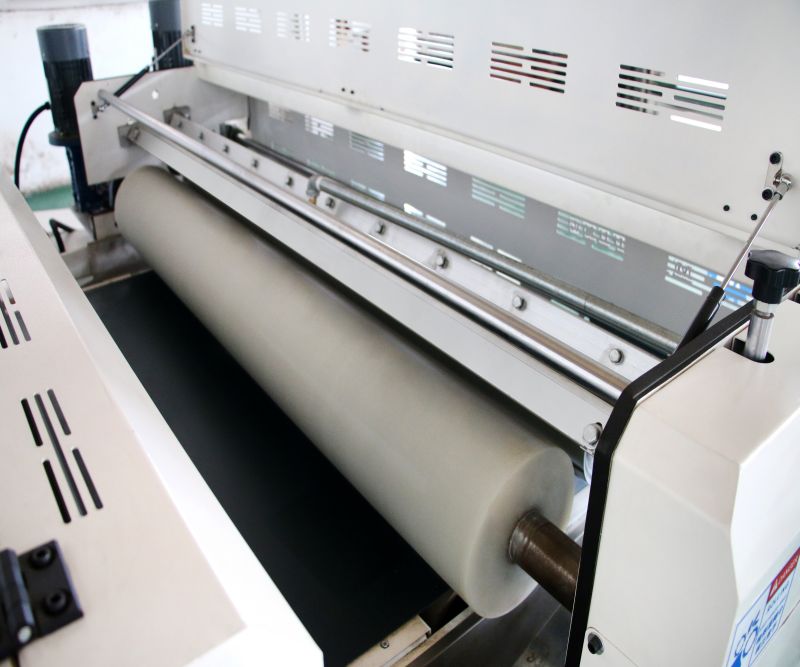
Step 3: Clean the Roller Surface
The roller is the core component of the UV Roller Coating Machine and the primary target for varnishing.
The method is as follows:
• Apply a small amount of specialized UV cleaning agent to a lint-free cloth;
• Wipe the roller surface evenly, rotating the roller in a circular motion;
• For stubborn paint residue, gently scrape it off with a soft plastic scraper;
• Repeat wiping until the surface is completely smooth and free of paint residue;
• Wipe away any residual solvent with a dry cloth to prevent surface corrosion.
Never use steel wool or hard metal scrapers, as this may damage the roller coating or alter the surface roughness.
Step 4: Cleaning the Scraper System
The scraper is responsible for controlling the paint film thickness, and its cleanliness directly affects the uniformity of the next coating application.
• Remove the scraper assembly;
• Clean the scraper and scraper holder separately;
• Wipe the paint accumulation areas at the edge of the paint tank with a cotton cloth;
• Check the scraper for wear or deformation; replace it if any abnormalities are found.
Residual paint on the scraper hardens easily and should be cleaned first.
Step 5: Cleaning the Paint Tank and Conveying System
• Soak the paint tank in cleaning agent for 3–5 minutes;
• Thoroughly clean the inner walls with a soft brush;
• Dry with compressed air;
• Wipe away any excess paint from the conveyor belt sides and support rollers;
• Check the guide rails and roller bearings for residual paint, adding lubricant if necessary.
Step 6: Cleaning the Pipes and Pump
This step is easily overlooked but is crucial for preventing blockages.
• Close the feed valve and add cleaning agent;
• Start the paint pump and circulate the cleaning agent for 3–5 minutes;
• Drain the cleaning solution after stopping the machine;
• Blow away any residual liquid with dry air;
• Remove the filter screen and clean or replace it.
For long-term shutdowns, it is recommended to disassemble and dry the pipes to prevent residual liquid buildup.
Step 7: Surface Inspection and Drying
After cleaning, perform a comprehensive inspection of all components of the UV Roller Coating Machine:
• Is the roller surface smooth?
• Is the scraper mounting area clean?
• Is the paint tank completely free of paint residue?
• Are the pipe connections dry?
• Is the electrical control box clean and free of solvent odor?
After confirming everything is in order, allow all components to air dry naturally to ensure the equipment is clean and residue-free before the next startup.
What cleaning agent should be used for varnish removal?
The choice of cleaning agent directly affects the cleaning effect and the lifespan of the equipment.
1. Recommended Types
• Dedicated UV Coating Cleaner
→ Mild formula, non-corrosive to metals and rubber parts;
• Isopropyl alcohol (IPA) + neutral solvent compound cleaning solution
→ Quickly dissolves uncured paint;
• Low-odor environmentally friendly cleaning solution
→ Suitable for enclosed work environments.
2. Solvents Not Recommended
• Cleaning agents containing strong acids or alkalis;
• Solvents containing highly volatile solvents such as toluene and xylene;
• Ordinary water-based cleaning agents (have no dissolving power for UV coatings).
Cleaning agents must avoid direct contact with UV light to prevent the volatile gases from igniting.
Common Mistakes and Preventive Measures During Coating
Many operators encounter the following problems when using a UV Roller Coating Machine due to improper coating procedures:
Common Mistakes | Consequences | Correct procedures |
| Delaying cleaning by more than 2 hours | Semi-cured paint, difficult to remove | Clean immediately after shutdown |
| Using a hard scraper to remove paint | Scratches on roller coating | Use a plastic or soft cloth |
| Ignoring residual paint inside pipes | Paint pump blockage, no material flow on next startup | Circulate the cleaning solution after each cleaning |
| Not drying the cleaning agent properly | Paint diluted, reduced adhesion | Blow dry or air dry after cleaning |
| Using general thinner instead of a specialized cleaning agent | Corrosion of seals and rubber parts | Use only UV-specific cleaning agents |
Strict adherence to operating procedures is essential to ensure the long-term stable operation of the UV Roller Coating Machine.
How to Properly Maintain a UV Roller Coating Machine After Coating?
Coating is not the end of the process. To ensure the equipment is immediately back to optimal condition for the next use, the following maintenance is required:
1. Roller Protection
• Apply a small amount of rust-preventive oil;
• Cover with a dustproof cloth to prevent airborne particles from adhering.
2. Scraper Storage
• Place in a dedicated scraper holder;
• Avoid moisture or contact with hard objects to prevent deformation.
3. Electrical Control and Transmission System Maintenance
• Check for loose wiring;
• Lubricate bearings and chains;
• Regularly calibrate the coating thickness control system.
4. UV Lamp Maintenance
• Regularly wipe the lamp cover glass;
• Check the cleanliness of the reflector;
• If the machine is to be shut down for an extended period, disconnect the power to prevent moisture intrusion.
After each maintenance, record the cleaning date, operator, type of cleaning agent used, and inspection results in the equipment log.
What is the difference between varnish and routine maintenance?
Although both fall under the category of equipment maintenance, their purposes and frequencies differ:
Project | Clear varnish | Routine maintenance |
| Purpose | Removes residual paint and prevents hardening | Maintaining the stability of mechanical and electrical systems |
| Frequency | Performed after each machine shutdown | Perform weekly or monthly |
| Content | Roller, scraper, and tank cleaning | Lubrication, tightening, calibration, and dust removal |
| Components Involved | Parts in contact with paint | Across the entire equipment range |
Combining both ensures the long-term reliable operation of the UV Roller Coating Machine.
What to do when the machine is to be shut down for an extended period (more than 3 days)?
When a UV Roller Coating Machine requires extended downtime, in addition to thorough varnish removal, the following protective measures must be implemented:
• Complete all standard cleaning procedures;
• Ensure no residual paint or liquid remains;
• Apply rust-preventive oil evenly to the rollers and scrapers;
• Disconnect the main power supply and seal the paint inlet pipes;
• Cover the entire coating area with a dust cover;
• Maintain a dry workshop with a stable temperature (20–25°C).
This prevents paint residue from clumping, component oxidation, or electrical components from becoming damp.
Does XMF Machinery provide eco-friendly coating equipment?
Yes, our company focuses on sustainability by designing machines that reduce waste, improve paint efficiency, and utilize UV curing for environmentally friendly processes. Buyers purchasing eco-friendly equipment from us not only save costs but also comply with global green production standards. We supply high-quality, sustainable solutions at affordable factory prices.