

In the modern coating industry, paint usage efficiency has always been a crucial aspect of production cost control. With the continuous advancement of surface treatment technology, UV Roller Coating Machines have gradually become essential equipment in fields such as wood, plastics, metal, and composite panels.
They are renowned for their high efficiency, low waste, and stable coating results. So, the question many companies are most concerned about is—how much paint can a UV Roller Coating Machine save?
This article will systematically analyze this question from the aspects of equipment principles, coating methods, paint-saving mechanisms, comparison with traditional processes, cost accounting, and influencing factors, helping readers to deeply understand the energy-saving and economic value of UV Roller Coating Machines.

What is a UV Roller Coating Machine?
Why is its paint-saving effect more outstanding?
A UV Roller Coating Machine is a device that uses rollers to evenly coat the surface of a substrate. Unlike traditional methods such as spraying and curtain coating, it uses precise control of the mechanical rollers to achieve a more uniform coating thickness and less waste.
Its working principle can be summarized in three steps:
• Paint supply system: UV coating is delivered to the coating roller surface via a paint tank and a paint supply pump.
• Coating control: The coating thickness is precisely controlled by a metering roller or doctor blade.
• UV curing: The UV coating is instantly cured into a film by UV lamp irradiation.
Compared to spraying methods, the UV Roller Coating Machine achieves almost "zero splatter, zero overspray," with a paint utilization rate of over 90%, while traditional spraying methods typically only achieve 40%–60%. This is the key reason for its significant paint savings.
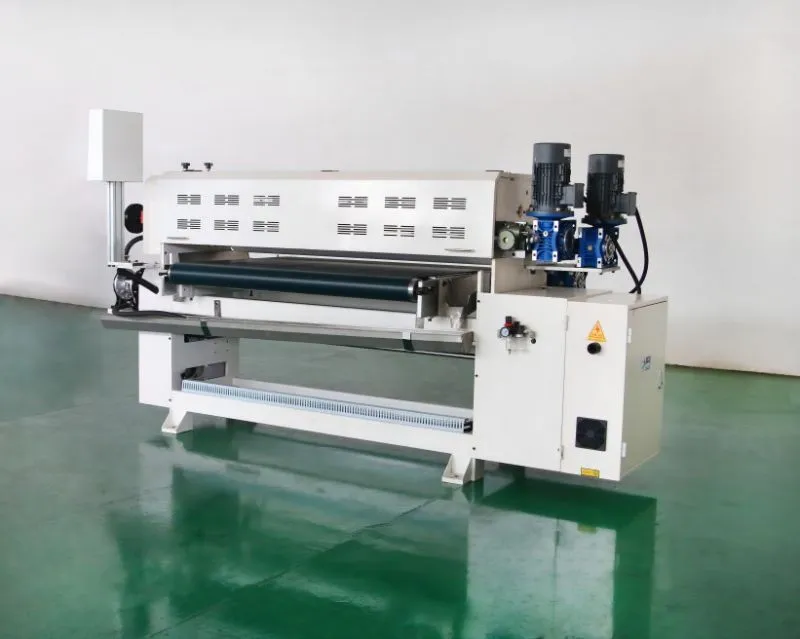
How much paint does a UV Roller Coating Machine save compared to traditional spraying methods?
Quantitatively speaking, the paint saving rate of a UV Roller Coating Machine is typically between 30% and 50%, or even higher.
Here is a general comparative analysis:
Coating methods | Paint utilization rate | Average loss rate | Coating thickness control | Coating uniformity |
| Traditional spraying | 40%~60% | High (splashing, overspraying) | Relying on manual experience | Uneven |
| Roller coating | 85%~95% | Extremely low | Automatic control | Very uniform |
For example:
For the same area, if a wooden board requires 100 grams of UV paint using traditional spraying, then using a UV Roller Coating Machine only requires about 55-70 grams to achieve the same thickness and surface effect. This means that for every 1000 square meters of product produced, 30-45 kilograms of paint can be saved.
Converting to cost, at a unit price of 80 yuan per kilogram for UV paint, a single batch can save approximately 2400-3600 yuan in raw material costs. Over the long term, this saving benefit is significant.
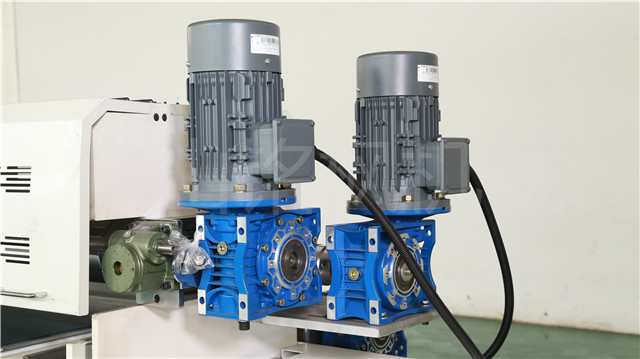
Why can the UV Roller Coating Machine achieve a paint utilization rate of up to 90%?
The high utilization rate of the UV Roller Coating Machine stems from its unique mechanical structure and physical principles. This is mainly reflected in the following four aspects:
1. Precision Metering System
The equipment achieves precise coating thickness adjustment through micron-level gap control between the metering roller and the scraper.
The paint is "scraped" into a thin and uniform layer, resulting in almost no waste.
2. Closed-Loop Paint Supply System
UV Roller Coating Machines typically employ a closed-loop paint supply system to prevent air exposure and evaporation losses.
Unused paint automatically returns to the paint reservoir for reuse.
3. Zero Splash Structure
Roller coating is a contact coating process without nozzles or airflow, completely eliminating problems such as overspray, bounce, and paint splatter.
This is often the biggest source of waste in paint shops.
4. High Curing Efficiency
UV coatings cure instantly under ultraviolet light, reducing waste caused by sagging, evaporation, or secondary contamination.
In summary, UV Roller Coating Machines not only save paint but also improve coating quality and consistency.
How much do paint type and viscosity affect paint-saving effects?
Different types of UV coatings have different flowability and viscosity, which directly affects the coverage and amount used in roller coating.
• Low-viscosity UV paint: Easier to spread, suitable for roller coating; paint savings can reach over 50%.
• High-viscosity UV paint: Poor flowability, requires a slightly thicker coating, paint savings are relatively lower (around 30%).
• Matte and high-gloss UV paints: Matte paints often have more fillers, resulting in slightly higher paint consumption per unit area, but significant savings can still be achieved on roller coating machines.
Therefore, when using a UV Roller Coating Machine, a UV paint viscosity range (generally 3000~8000 cps) should be selected to maximize paint savings.
Does the precision of coating thickness control affect paint savings?
The answer is yes. The paint-saving performance of a UV Roller Coating Machine is closely related to the precision of its coating thickness control.
High-end equipment can typically control the thickness error precisely to ±1μm, meaning extremely stable coating consumption per square meter. Manual spraying, on the other hand, often results in thickness fluctuations due to techniques, air pressure, or environmental changes, leading to significant paint waste.
For example, if the coating thickness is mistakenly increased from 30μm to 35μm, approximately 16% more paint will be consumed per square meter. This deviation is almost impossible to avoid manually, but a UV Roller Coating Machine can automatically maintain a stable output, eliminating waste at the source.
Does the paint-saving performance of a UV Roller Coating Machine remain consistent across different materials?
Not entirely. Different materials have different requirements for paint absorption, surface tension, and smoothness.
However, overall, a UV Roller Coating Machine delivers significant paint-saving advantages across various materials:
Material Types | Coating Characteristics | Paint-saving effect |
| Wood (MDF, Solid Wood) | High surface absorbency, good coating adhesion | Saves approximately 40%~50% |
| Plastic (ABS, PVC) | Smooth surface, requires even spreading | Saves approximately 30%~40% |
| Metal Sheet | Non-absorbent, requires thin coating control | Saves approximately 35% |
| Artificial Stone/Composite Board | Dense surface, requires even roller coating | Saves approximately 40% |
Therefore, although the specific figures vary slightly depending on the material, a UV Roller Coating Machine achieves significant paint savings in all scenarios.
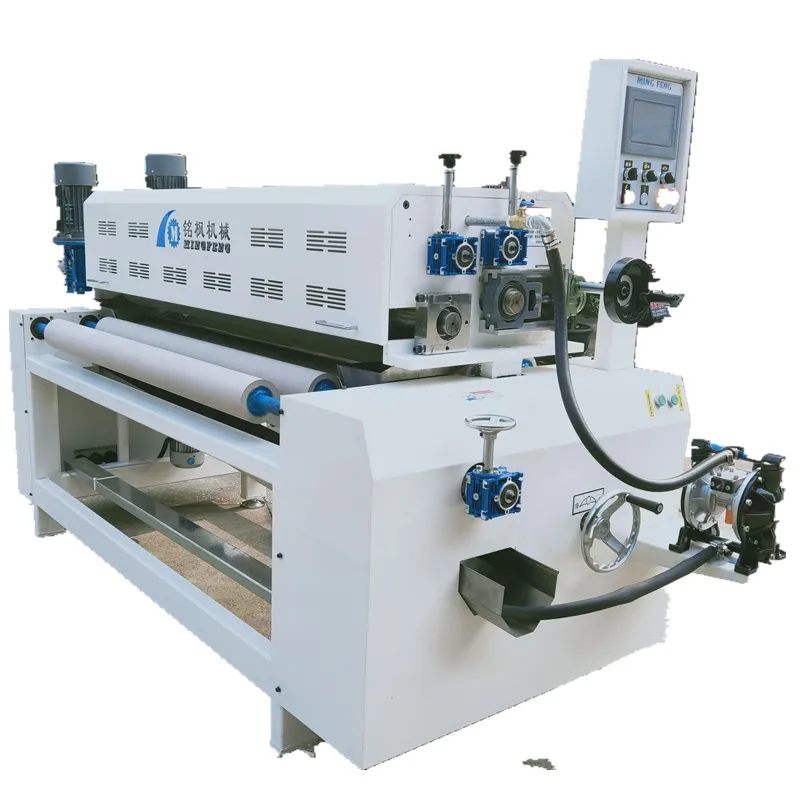
Besides paint savings, what other hidden economic benefits does a UV Roller Coating Machine offer?
In addition to direct paint savings, a UV Roller Coating Machine also brings a series of indirect economic benefits:
• Reduced labor costs: High degree of automation reduces reliance on skilled spray painters.
• Reduced exhaust gas treatment costs: No aerosol splashing significantly reduces VOC emissions.
• Reduced cleaning frequency and waste: The closed-loop coating system allows for longer cleaning intervals.
• Improved yield: High coating uniformity reduces rework.
• Reduced curing energy consumption: Thin coatings cure faster, reducing UV lamp energy consumption by approximately 15%~25%.
In summary, considering all these factors, the actual total savings of a UV Roller Coating Machine far exceed the cost of the coating itself by 30%~50%.
How to further improve the paint-saving efficiency of a UV Roller Coating Machine?
To fully realize the equipment's potential, the following optimization measures should be considered:
• Maintain roller cleanliness and precision: Surface dirt or wear can lead to localized overcoating or missed areas.
• Properly adjust roller pressure and gap: Different substrate thicknesses require matching appropriate parameters.
• Use highly compatible UV paint: Moderate viscosity and flowability are necessary for a stable coating.
• Regularly maintain the metering roller system: Prevent paint deposition that can cause metering errors.
• Controlling ambient temperature and humidity: Avoids unstable flow rates caused by viscosity variations.
These optimization methods ensure that the paint utilization rate of the UV Roller Coating Machine remains stable at over 90%, maximizing savings.
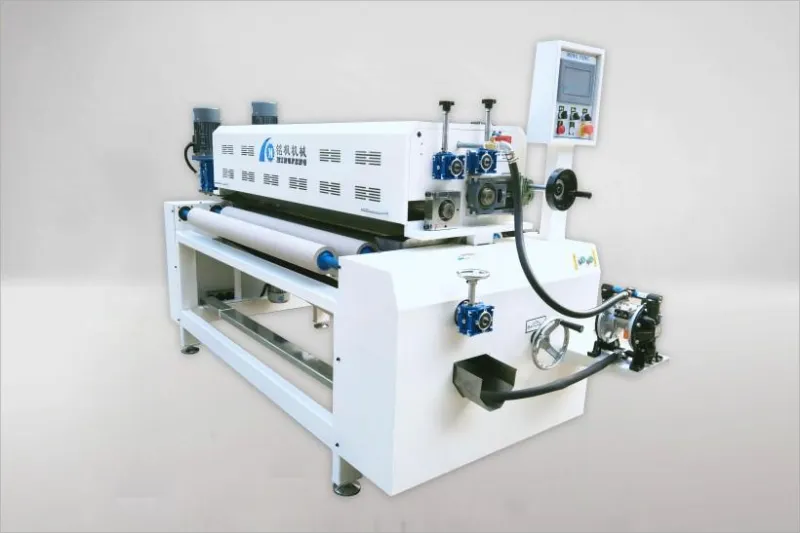
How much paint can a UV Roller Coating Machine actually save?
UV Roller Coating Machines can save 30% to 50% of paint compared to traditional spraying methods, with paint utilization rates as high as 90% to 95%.
The core reasons for paint savings lie in:
• Precise coating thickness control;
• Closed-loop paint supply system;
• Mechanical coating principle with no splattering or overspray;
• High-efficiency UV process with instant curing.
For any manufacturing company looking to reduce production costs and improve efficiency, choosing a high-performance UV Roller Coating Machine not only means saving paint, but also signifies a move towards standardized, green, and efficient production management.
Can buyers visit the XMF Machinery factory before purchasing?
Yes, buyers are welcome to visit our factory in Foshan, Guangdong. A visit allows customers to see our high-quality manufacturing process, discuss customized solutions, and receive direct price quotes. Many customers prefer factory visits before purchasing because it provides assurance of reliability, brand strength, and professional service.