

In modern panel surface coating processes, UV roller coating machines have become essential production equipment in industries such as furniture, flooring, cabinetry, and decorative materials. Their high efficiency, high precision, and low pollution characteristics place higher demands on the core element of "speed control" as companies strive for a balance between production capacity and quality.
Many operators have questions during actual use:
"Does the coating speed of a UV roller coating machine need to be manually controlled?"
"If the speed is not adjusted properly, will it affect the film thickness or gloss?"
This article will systematically analyze this question from the perspectives of speed control principles, differences between automatic and manual modes, the relationship between speed and coating quality, control strategies, and precautions.
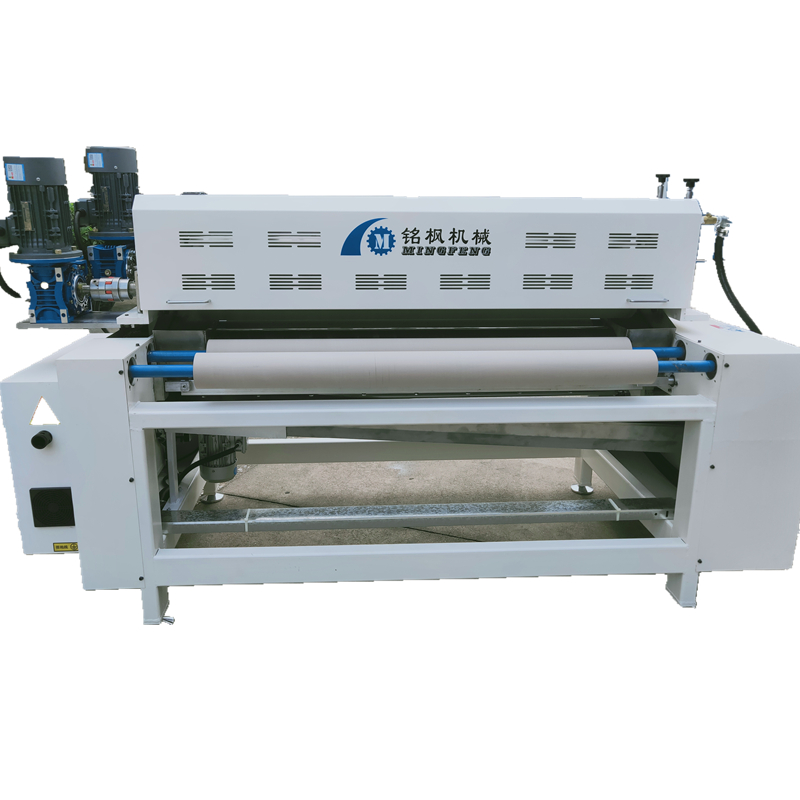
Why is speed control of a UV roller coating machine so critical?
During the operation of a UV roller coating machine, speed control is not simply a matter of adjusting the conveyor belt speed; it relates to multiple technical indicators such as coating thickness, film uniformity, gloss, and curing matching.
In short, speed is one of the core variables affecting UV coating quality.
1. Speed directly determines film thickness
A faster coating speed results in a shorter coating transfer time between rollers, leading to a thinner film; a slower speed results in a longer coating residence time, leading to a thicker film.
Therefore, speed and coating weight are inversely proportional. Insufficient control precision will result in inconsistent product thickness and gloss.
2. Speed affects coating uniformity
UV roller coating machines rely on the difference in roller gap and speed to create coating force. If the speeds are mismatched, defects such as stringing, paint breaks, ripples, or bubbles will occur.
3. Speed determines curing matching
UV coatings need to cure instantly under ultraviolet light. If the speed is too fast, the curing energy is insufficient; if the speed is too slow, over-curing or surface scorching will occur.
This indicates that speed and curing lamp power are synergistic control parameters and must be matched.
4. Speed affects equipment lifespan and energy consumption
Improper speed control can lead to abnormal roller load, increased friction, and increased energy consumption, thus affecting equipment stability.
Therefore, speed control of a UV roller coating machine is a crucial aspect that requires close attention, both from a process and equipment maintenance perspective.
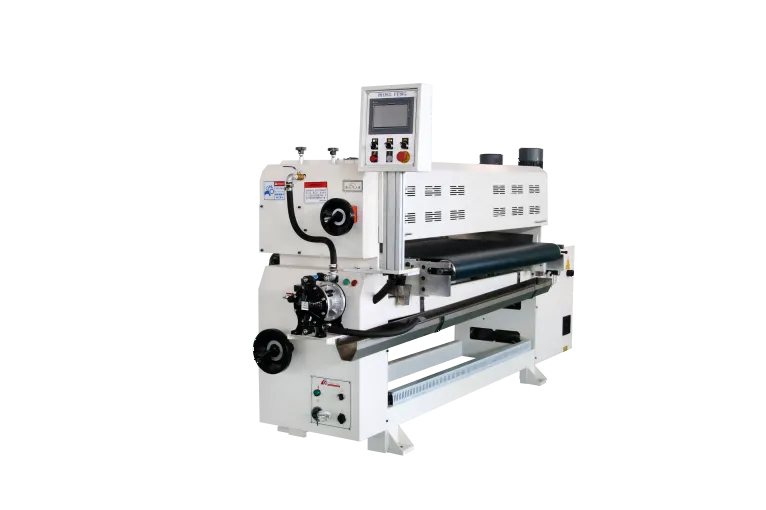
How is the speed of a UV roller coating machine controlled?
Before answering the question of "whether manual control is needed," let's understand the speed control methods of a UV roller coating machine. Generally, there are two categories: manual control and automatic control.
1. Manual Control
Manual control is the most basic speed adjustment mode. The operator inputs speed parameters via knobs, buttons, or a touchscreen to directly adjust the conveyor belt and roller speeds.
Its characteristics include:
• Intuitive operation, adjustable at any time;
• Suitable for process trials or short-batch production;
• High reliance on operator experience;
• Prone to thickness instability due to human error.
For example, when coating different thicknesses of primer or topcoat, the operator can manually adjust the speed to 15–25 m/min to accommodate different paint viscosities and curing requirements.
2. Automatic Control
Automatic control relies on a PLC control system, frequency converter, or servo drive system to automatically adjust the roller and conveyor speeds according to set parameters. In automatic mode, the system will:
• Calculate the optimal speed based on parameters such as paint viscosity, target film thickness, and UV lamp power;
• Maintain a constant linear speed to avoid manual fluctuations;
• Integrate with the curing system for synchronized control.
This type of mode is widely used in modern production lines, especially in continuous coating operations, where automatic speed control is a key technology for ensuring stable quality.
Does the coating speed of a UV roller coating machine need to be manually controlled?
The answer is: Manual control is required in certain process stages, but in standard production, it is recommended to use automatic control as the primary method and manual control as a supplement.
1. Situations requiring manual control
Although most modern UV roller coating machines have automatic control systems, manual intervention is still required in the following situations:
• Initial commissioning: When using new materials, new process formulations, or restarting the equipment, the speed must be manually adjusted to observe the film condition and determine the optimal linear speed range.
• Roller coating of special paints: Some high-viscosity or slow-leveling UV paints cannot be precisely matched to the speed in automatic mode and require manual fine-tuning.
• Localized repairs or small-batch production: Manual speed control offers greater flexibility during sample testing or single-piece repairs.
• Emergency shutdowns or abnormal operating conditions: When the system detects an anomaly, the operator can intervene manually to avoid paint waste.
In these situations, manual control allows for rapid parameter adjustments, ensuring process safety and product quality.
2. Reasons for not recommending long-term reliance on manual control
Long-term manual operation presents several risks:
• Significant differences in operator subjective judgment make it difficult to maintain stable speed;
• Difficulty in accurately matching UV lamp energy and coating flowability;
• Increased frequency of manual intervention reduces production continuity;
• Hinders quality standardization and data traceability.
Therefore, in large-scale production, UV roller coating machines should primarily rely on automatic speed control, with manual intervention only as an auxiliary correction method.
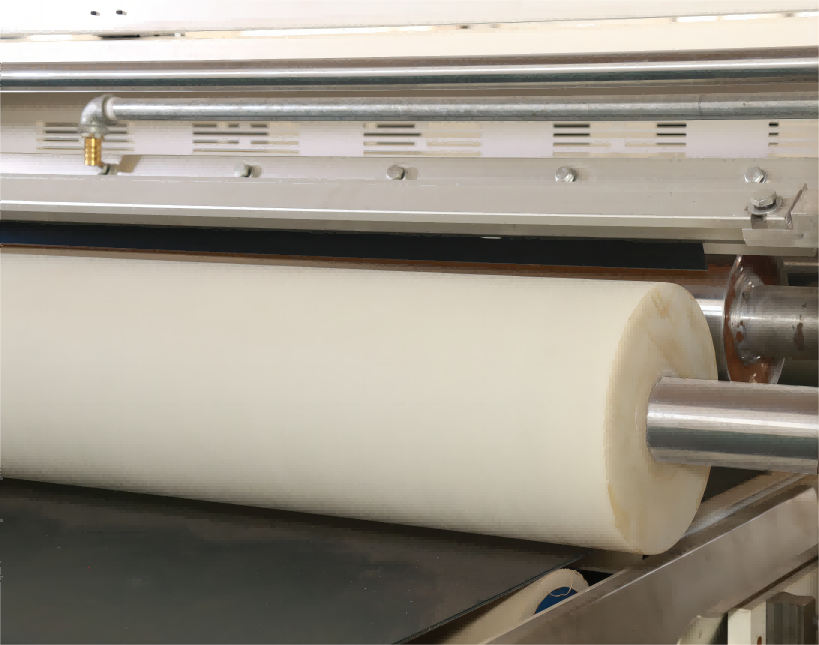
How does an automatically controlled UV roller coating machine achieve speed accuracy?
The core of an automated control system is synchronization and feedback accuracy. In UV roller coating machines, speed control is primarily achieved through the following technologies:
1. Frequency Converter Control System
The frequency converter automatically adjusts the motor speed according to a set frequency, achieving linear and continuous speed changes. Its advantages include high stability and fast response.
2. PLC Logic Control
The PLC receives the speed signal and controls the speed ratio between the conveyor belt and the rollers according to set logic, ensuring uniform and consistent coating.
3. Servo Motor Synchronization System
Advanced UV roller coating machines employ multi-servo systems, enabling independent drive and联动 control of multiple rollers.
For example, the gluing roller, metering roller, and coating roller can each have their speed adjusted independently while maintaining a linear ratio.
4. Closed-Loop Feedback Mechanism
The roller speed is monitored in real time by speed sensors and photoelectric encoders. When deviations occur, the system automatically corrects them to ensure constant speed.
5. Linked Control of the UV Curing Line
Some equipment can also be linked with the UV lamp energy control system—automatically increasing the UV lamp power when the speed increases and automatically reducing the energy when the speed decreases to maintain balanced curing.
These control technologies work together to make automatic speed adjustment far superior to manual operation in terms of precision and stability.
How should coating speed and film thickness be matched?
When using a UV roller coating machine, there is a strict correlation between speed and coating thickness.
Generally speaking:
Coating speed (m/min) | Recommended coating thickness (μm) | Applicable Processes |
| 10–15 | 30–60 | Thick primer coat, sealing primer |
| 20–30 | 15–30 | Ordinary primer or intermediate coat |
| 35–50 | 5–15 | Topcoat, clear coat |
| 50 and above | <5 | Ultra-thin protective coat, clear finish |
If the speed is not properly controlled, it will lead to:
• Too fast: Thinner paint layer, insufficient hiding power;
• Too slow: Paint layer buildup, poor leveling;
• Speed fluctuation: Uneven film thickness, unstable gloss.
Therefore, the speed adjustment of a UV roller coating machine not only affects output but also directly determines the appearance quality of the finished product.
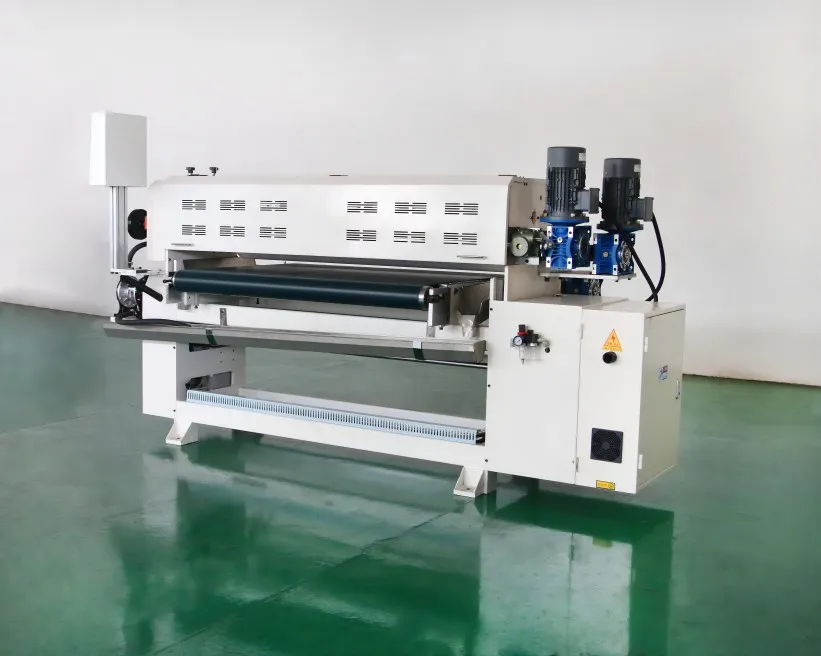
Why can't coating speed be completely based on a fixed value?
On many production lines, operators are accustomed to setting a fixed speed, but this practice is not scientifically sound in practice.
The reason is that many variables affect the speed setting:
1. Differences in paint viscosity
For the same model of UV roller coating machine, using UV paints from different manufacturers will require different linear speeds due to differences in viscosity, solid content, and leveling properties.
2. Ambient temperature and humidity
Increased temperature reduces paint viscosity, making it suitable for higher speeds; lower temperatures require lower speeds to ensure uniformity.
3. Board material
High-density or highly absorbent boards (such as MDF) require low-speed, thick coating; well-sealed PVC boards can be coated at high speeds with thin layers.
4. Curing energy matching
With a constant UV lamp power, excessive speed will result in incomplete curing; increasing lamp energy allows for a corresponding increase in speed.
Therefore, even if a UV roller coating machine has an automatic control system, reasonable speed calibration based on actual process conditions is necessary.
Under what circumstances can automatic speed control be relied upon completely?
The coating speed of a UV roller coating machine can be fully automatically controlled by the system when the following conditions are met:
• Stable process parameters: Continuous use of the same formula and batch of coatings;
• Accurate equipment calibration: The rotational speed ratios of each roller and conveyor belt have been adjusted;
• Constant temperature and humidity environment: Temperature and humidity variations are less than ±5%;
• Fixed UV lamp power: Stable energy output;
• Large production batches: Continuous production with high repeatability of operating parameters.
In this environment, the automatic control mode can fully leverage its advantages of precision and efficiency, requiring no frequent manual intervention.
Common Problems and Manifestations of Improper Speed Control
If the speed of the UV roller coating machine is not properly controlled, common problems are as follows:
Problem Manifestations | Possible causes | Adjustment suggestions |
| Uneven or mottled coating | Speed fluctuations | Maintain constant speed |
| Excessively thick paint film or paint buildup | Speed too slow | Increase speed appropriately |
| Whitening or flow marks in the coating | Speed too fast | Decrease line speed |
| Incomplete curing | Speed exceeds UV lamp energy matching | Decelerate or increase lamp power |
| Roller slippage or stringing | Speed mismatch | Adjust drum ratio |
| Decreased gloss | Speed and curing incoordination | Adjust synchronization system |
These problems illustrate that speed control is one of the key parameters determining the coating effect and must be precisely controlled by skilled personnel or an intelligent system.
Should the coating speed of a UV roller coating machine be manual or automatic?
The coating speed of a UV roller coating machine can be controlled by an automatic system, but manual calibration is still required.
Automatic control ensures stability, while manual intervention is used for initial settings and error correction.
In stable mass production, automatic control should be used.
It ensures constant speed, consistent thickness, and uniform gloss, avoiding human error.
Manual control can be used for debugging or small-batch process trials.
Operators can find the optimal line speed more quickly through experience.
Manual and automatic control should be used in combination, not as a complete replacement.
Manual calibration + automatic constant speed = optimal production mode.
How does XMF Machinery support environmentally friendly coating processes?
XMF Machinery focuses on developing environmentally friendly and efficient coating equipment. As a responsible manufacturer, we design machines that support water-based coatings, UV coatings, and controlled paint usage. Our automatic spraying machines, curtain coating machines, and roller coating machines help reduce overspray and material waste. Customers purchasing our equipment can improve coating efficiency while meeting environmental standards.