

In modern furniture manufacturing and veneer panel processing, the UV Roller Coating Machine is a key piece of equipment for achieving high-quality surface coating. It is renowned for its automation, high efficiency, and high flatness, significantly improving the appearance and durability of products.
However, many industry professionals raise an important question after using a UV Roller Coating Machine: Is polishing necessary after roller coating of furniture veneer panels?
This article will systematically analyze this core question from multiple aspects, including coating processes, paint film performance, surface effects, equipment parameters, and process control, to help readers deeply understand whether polishing is necessary after UV Roller Coating Machine coating, and how to scientifically determine and correctly operate the machine.
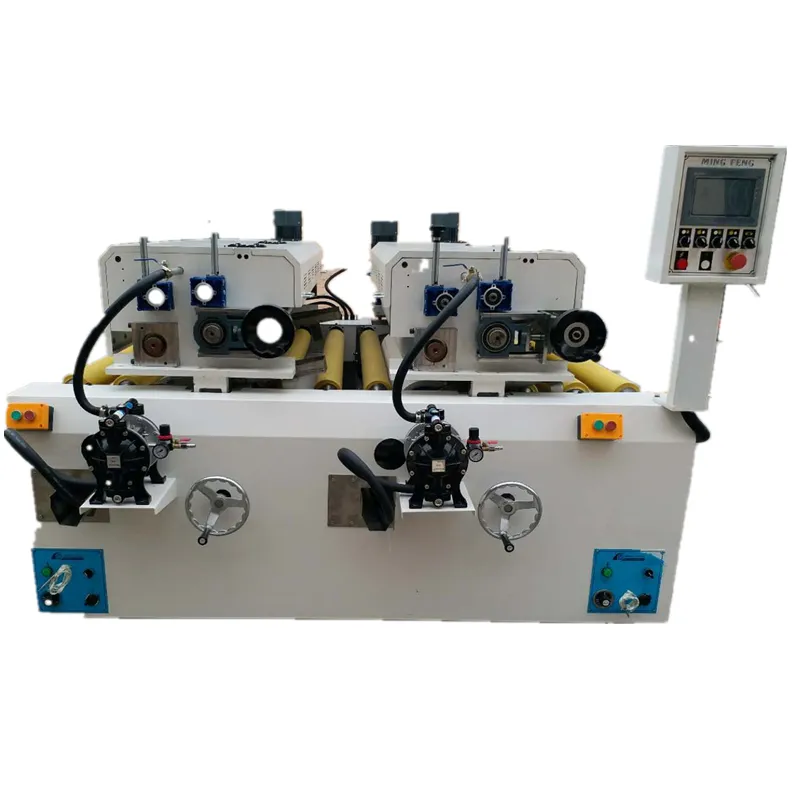
Why consider polishing after using a UV Roller Coating Machine?
Theoretically, a UV Roller Coating Machine can achieve a smooth, uniformly glossy paint film effect, especially for high-gloss products. However, in actual production, the surface finish after roller coating can be affected by various factors, such as:
• Insufficient coating leveling;
• Uneven curing gloss;
• Slight particle or orange peel appearance on the surface;
• Gloss not meeting expectations.
In these cases, companies often consider adding a polishing process to further improve the smoothness and appearance quality of the veneer. So, is polishing necessary? The answer depends on the specific process requirements.
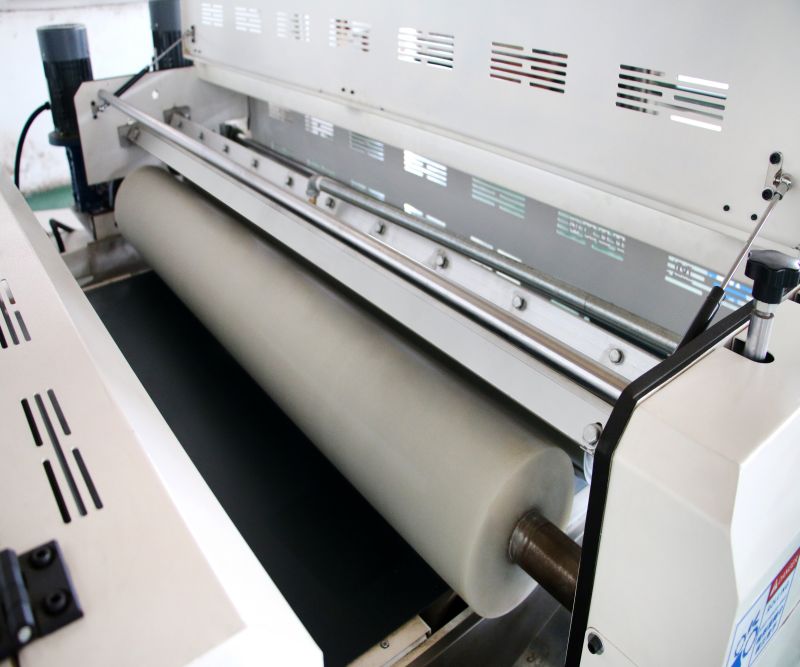
Is the surface sufficiently smooth after UV Roller Coating Machine coating?
UV Roller Coating Machines are designed to achieve highly uniform coatings using precision rollers. Theoretically, if properly controlled, the surface after roller coating can directly achieve a mirror finish.
1. Coating Characteristics Determine Gloss
Different UV coating formulations have different surface tension, refractive index, and leveling properties after curing. High-gloss UV paints inherently possess mirror-like gloss characteristics; if equipment parameters are properly matched, polishing is usually unnecessary to meet the visual requirements of furniture veneer panels.
2. Roller Precision Affects Coating Smoothness
The surface smoothness, coaxiality, and material hardness of the roller directly affect the coating transfer and spreading performance. If a high-precision roller is used in the UV Roller Coating Machine and the surface is kept clean, the paint film surface will generally not have significant unevenness.
3. Curing System Matching
The power, irradiation angle, and distance of the UV curing lamp affect the release of surface tension in the coating. If the curing energy is appropriate, the coating can be fully leveled, greatly reducing the need for polishing.

When is Polishing Necessary for UV Roller-Coated Panels?
Although in most cases the surface of a roller-coated panel is already sufficiently smooth, polishing still plays an important role in the following situations:
1. Inconsistent Surface Gloss
When using a multi-coat process (such as primer + topcoat), if the degree of curing or surface tension of each layer is different, it may lead to localized differences in gloss. In this case, polishing can unify the gloss.
2. Microparticles or Orange Peel Effect
Even in a clean UV Roller Coating Machine environment, slight surface particles may appear due to airborne dust, electrostatic adsorption, or insufficient leveling. Polishing effectively eliminates these imperfections, resulting in a smoother finish.
3. The Pursuit of a High-End Mirror Finish
Some furniture products (such as piano lacquer panels and high-gloss display cabinets) require extremely high surface mirror finishes. Even if the coating layer is smooth, mechanical polishing is still necessary to achieve the ultimate reflective gloss.
What Happens If You Don't Polish After UV Roller Coating?
Whether or not to polish depends on the final product's intended use and quality standards. If conditions permit, polishing can be completely omitted for some products, saving time and costs.
1. For Matte or Satin Finishes
These finishes aim for a soft visual texture rather than a highly reflective mirror finish. If the UV Roller Coating Machine coating is uniform and the gloss is stable, polishing is unnecessary. Polishing will actually ruin the matte effect.
2. For Sealing Primers or Intermediate Layers
If the roller coating is only a sealing or intermediate layer process, and a topcoat or film will be applied subsequently, polishing is unnecessary. Simply ensure the surface is smooth and free of particles.
3. For High-Efficiency Production Lines
In mass automated production, if the product does not require high gloss or the process is stable, optimizing the UV Roller Coating Machine parameters can completely avoid adding polishing steps and improve production efficiency.
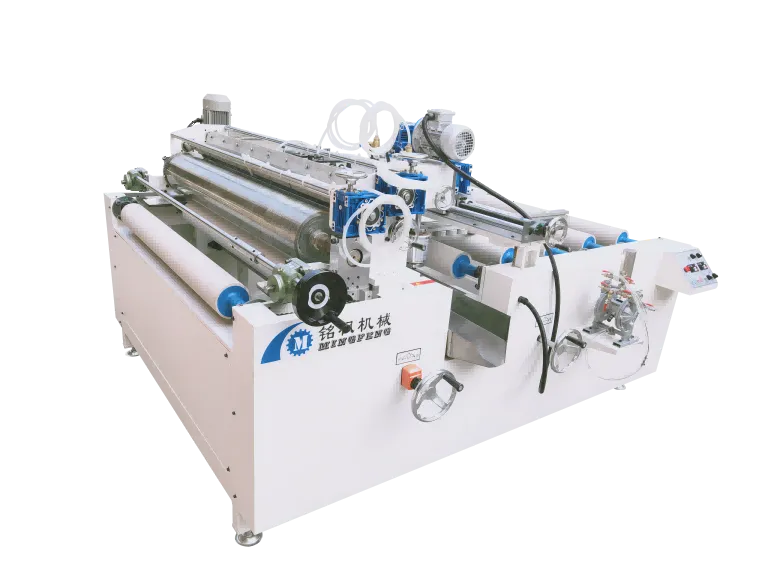
What are the key technical differences between polishing and not polishing?
To determine whether polishing is necessary, it is essential to understand the fundamental differences between roller coating and polishing processes.
Therefore, if the coating quality of the UV Roller Coating Machine has reached the design standards, polishing is not a necessary step. However, if further improvement in specular reflection is required, polishing is an effective supplementary process.
What are the prerequisites for polishing? What factors affect the polishing effect?
Polishing is not an arbitrary step; it has strict requirements on the quality and curing degree of the preceding coating.
1. Coating hardness must meet the standard
If the coating is not fully cured, the polishing process may lead to surface softening, deformation, or sticking to the plate. 1. The UV Roller Coating Machine should ensure sufficient curing power and energy to achieve a coating hardness of ≥3H.
2. High Surface Smoothness Requirements
If the paint film thickness is uneven or has obvious ripples, uneven gloss spots will still occur after polishing. Leveling and film thickness consistency should be controlled during roller coating.
3. Matching Polishing Materials and Rotation Speed
Excessively coarse abrasives or excessively high rotation speeds can damage the coating structure, causing "burning" or uneven gloss. It is recommended to use fine-grained polishing paste and a flexible sponge pad.
How to Reduce Polishing Needs by Adjusting UV Roller Coating Machine Parameters?
In most cases, optimizing the UV Roller Coating Machine process can directly achieve the desired effect on the decorative panel surface, eliminating the need for further polishing.
1. Optimize Coating Viscosity and Leveling Time
Appropriately reducing viscosity and extending leveling time helps the paint film to level automatically, reducing surface unevenness.
2. Precisely Adjust Roller Speed and Pressure
Excessive roller speed or pressure will lead to uneven film thickness. It is recommended to control the speed difference between the upper and lower rollers within a reasonable range (generally 1.2:1 to 1.5:1).
3. Control the coating amount
An excessively thick coating will cause uneven surface tension, resulting in a slight orange peel effect. Adjusting the coating amount according to the adhesion characteristics of the decorative panel will yield a smoother paint film.
4. Maintain a clean environment and stable humidity
Avoid airborne dust and static electricity adsorption to prevent particles from requiring secondary sanding or polishing. The ideal humidity range is 50% to 60%.
Does polishing affect UV coating performance?
While polishing can improve the appearance, improper handling can affect coating performance.
1. Effect on gloss
Moderate polishing can increase gloss, but excessive polishing can damage the surface protective layer, leading to uneven reflection or "hazing."
2. Effect on abrasion resistance and adhesion
Polishing slightly thins the coating; excessive removal may reduce the abrasion resistance of the paint film.
3. Impact on Color Consistency
In colored or dyed UV coatings, excessive polishing can cause color differences, therefore precise operation is required.
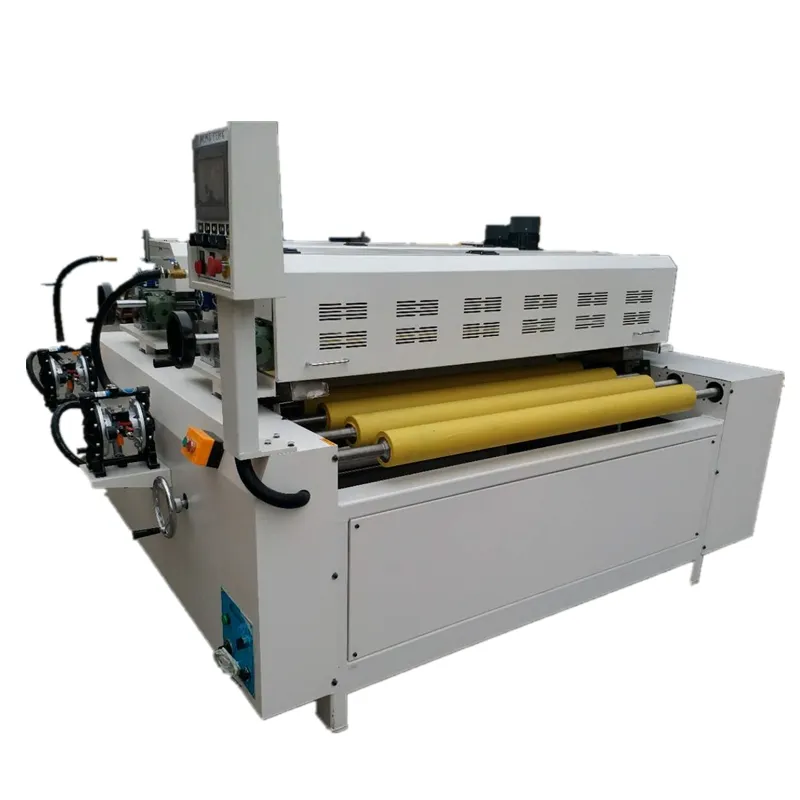
Scientific Judgment Criteria for Polishing After Roller Coating of Furniture Veneer Panels
Whether polishing is necessary should be comprehensively evaluated by companies based on the following indicators:
| Evaluation Items | Reference Standards | Polishing Recommendations |
| Gloss (60° gloss meter) | ≥90 | You can choose not to polish |
Surface smoothness | No obvious ripples or particles | You can choose not to polish |
| Tactile feel | Smooth to the touch, no grainy feel | You can choose not to polish |
| Appearance requirements | Regular furniture, matte finish | No polishing required |
| Appearance requirements | Mirror finish, piano gloss finish | Polishing is recommended |
| Cure degree | ≥3H | Polishing is possible |
| Environmental cleanliness | Meets standards | You can choose not to polish |
Through scientific testing and standardized judgment, unnecessary polishing steps can be effectively avoided, improving efficiency and consistency.
Polishing is Not Mandatory. But Depends on the Target Quality
Whether polishing is necessary after UV Roller Coating Machine coating depends on the target surface effect and product positioning.
• If the product requires a normal high-gloss or satin finish, and the equipment and coating are well-matched, polishing is usually unnecessary;
• If the goal is an ultimate mirror finish and high-end visual performance, light polishing can be performed after complete curing to further enhance the shine.
Polishing is not to compensate for defects, but to refine and improve surface quality. The key is to master the precise parameter control and system maintenance of the UV Roller Coating Machine to allow the equipment to perform at its best.
Can XMF Machinery provide installation and training services?
Yes, we supply not only machines but also complete technical support. Customers purchasing our equipment can request professional training, detailed installation guidance, and maintenance advice. Our factory-trained experts ensure your staff can operate the machines safely and effectively. This service adds extra value to your purchase and helps guarantee long-term success with our brand.