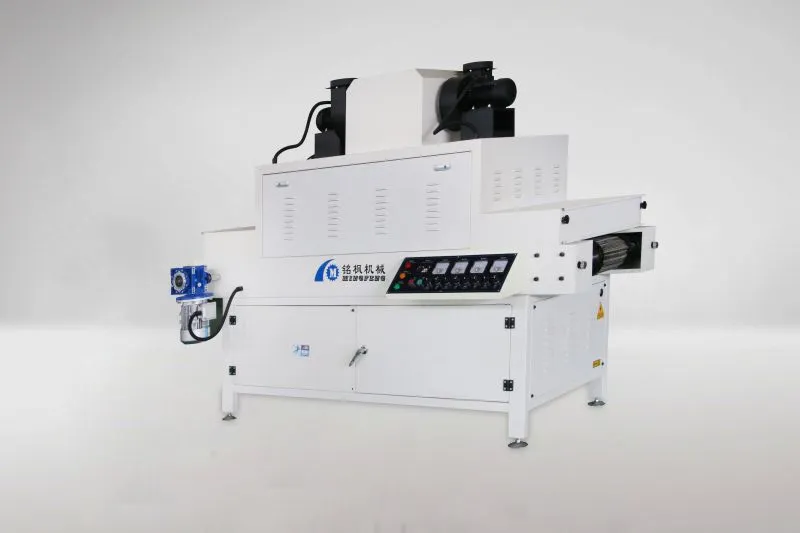

In modern industrial coating production processes, the curing of coatings is a critical stage for ensuring the surface quality of products. Many automated spray-painting lines utilize UV curing technology, employing UV dryer machines to rapidly cure coatings immediately after application. Compared to traditional hot-air drying methods, UV curing technology can complete the curing process in a significantly shorter time; consequently, it is widely adopted across industries such as furniture manufacturing, electronics, metal fabrication, and plastics production.
However, in actual production environments, some companies may observe that—after a period of operation—the curing performance of their UV dryer machines begins to change. These changes may manifest as slower curing speeds, reduced surface hardness, or diminished coating adhesion. Such issues are often directly linked to a decline in the power output of the UV lamps within the equipment.
So, does a decrease in UV lamp power truly impact curing effectiveness? Why does the power output of UV lamps tend to diminish gradually over time? What implications does this variation have for the spray-painting production line? And how should businesses approach and understand this issue?
This article will systematically analyze these questions, providing a detailed explanation from multiple perspectives, including the fundamental principles of UV curing, the operational mechanisms of the equipment, and production management strategies.
What is a Spray-Painting Production Line?
A spray-painting production line is an automated manufacturing system designed for the surface coating of industrial products. Utilizing spray guns or automated spraying equipment, the system applies paint uniformly across the product's surface, thereby creating a protective or decorative layer.
A typical spray-painting production line generally comprises the following key stages:
•Surface Pre-treatment
•Product Dust Removal
•Spraying Process
•Curing or Drying Process
•Cooling Process
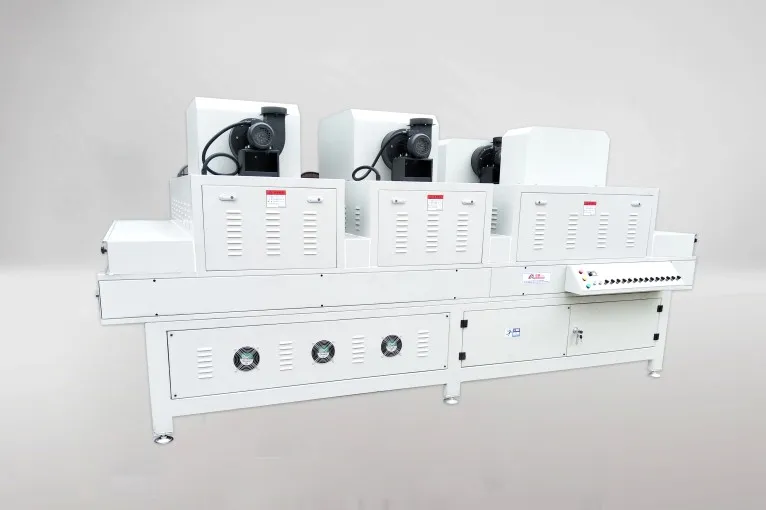
Among these stages, the coating curing process is a particularly critical step, and the UV dryer machine is a common piece of curing equipment found in many spray-painting production lines.
What is a UV Dryer Machine?
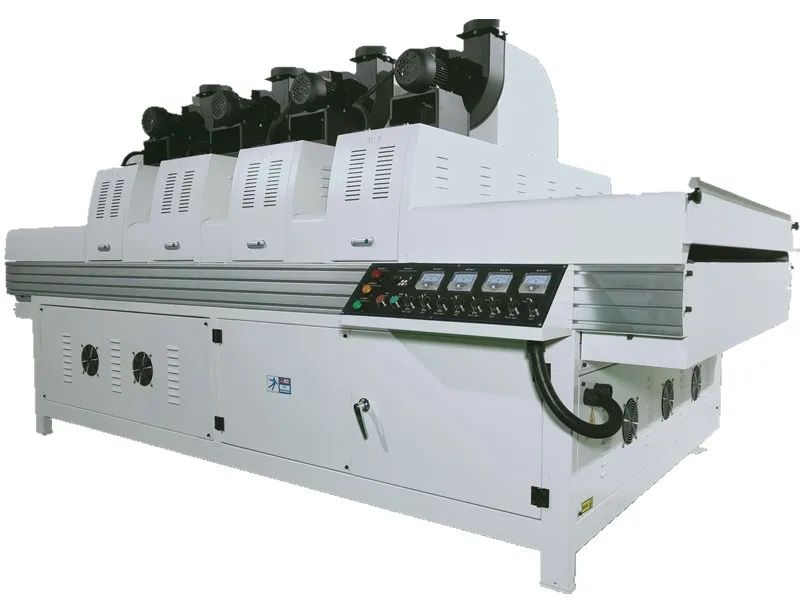
A UV dryer machine is an industrial device that utilizes ultraviolet (UV) energy to rapidly cure coatings. Certain coating formulations contain specific photoinitiator components. When UV light irradiates the surface of the coating, these photoinitiators trigger a chemical reaction, causing the coating to rapidly form a solidified structure.
A typical UV dryer machine typically consists of the following components:
•UV lamps (ultraviolet light sources)
•Power supply system
•Cooling system
•Conveyor system
•Control system
In a paint finishing line, products enter the UV dryer machine after painting is complete, where the curing process is achieved through exposure to ultraviolet radiation.
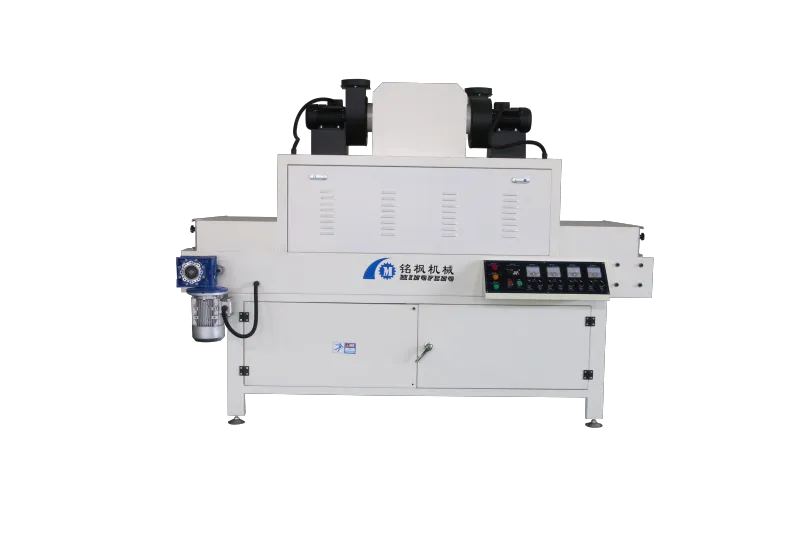
What role do UV lamps play in a UV dryer machine?
In a UV dryer machine, the UV lamps are one of the most critical components. They are responsible for generating ultraviolet energy, providing the necessary conditions for the coating's curing reaction. When products on the paint finishing line enter the UV dryer machine, the UV lamps emit ultraviolet light at specific wavelengths. This ultraviolet light irradiates the surface of the coating, thereby triggering photochemical reactions within the paint material.
If the UV lamps in the dryer machine can maintain a stable output of sufficient energy, the coating can complete its curing process within a short period. Consequently, the power output and stability of the UV lamps directly impact the curing effectiveness of the paint finishing line.
Does a decline in UV lamp power affect curing effectiveness?
From the perspective of the principles of UV curing, a decline in UV lamp power can indeed compromise curing effectiveness. In a UV dryer machine, ultraviolet energy is a crucial prerequisite for driving the coating's curing reaction. If the lamp's power output diminishes, the intensity of the ultraviolet radiation decreases accordingly; this may result in the coating failing to complete its curing process within the allotted time.
In a paint finishing line, this situation may manifest as:
•A slower curing rate
•Reduced surface hardness of the coating
•Diminished adhesion of the coating
•A potential "tacky" or sticky sensation on the surface
Therefore, fluctuations in UV lamp power can have a tangible impact on the operational performance of the UV dryer machine.
Why does UV lamp power gradually decline?
During prolonged periods of operation, a decline in UV lamp power is a common phenomenon. This change can be attributed to a variety of factors.
1. Increased lamp usage time
As the cumulative operating time increases, structural changes may occur within the UV lamp, thereby affecting its capacity to emit ultraviolet light. Consequently, in UV dryer machines that undergo continuous, long-term operation, the power output of the lamps may gradually diminish.
2. Contamination of the lamp surface
In the environment of a paint finishing line, the surrounding air may contain airborne dust or paint mist particles. If these substances accumulate on the surface of the UV lamp tubes, they may compromise the efficiency of UV light transmission.
When the UV light is partially obstructed, the actual energy delivered to the product surface is reduced.
3. Impact of the Cooling System
UV lamp tubes generate heat during operation; therefore, a cooling system is required to maintain a stable operating temperature. If cooling conditions are unstable, this can also adversely affect the operational status of the UV dryer machine.
What impact does a decline in UV lamp power have on a paint production line?
In an automated paint production line, curing efficiency directly dictates the production pace. If the UV output capacity of the UV dryer machine diminishes, it may have a significant impact on the overall production process.
For example:
1. Extended Curing Times
When UV energy levels drop, the coating may require a longer duration to achieve complete curing.
2. Changes in Coating Quality
In certain instances, insufficient curing can compromise the coating's hardness or adhesion properties.
3. Reduced Production Efficiency
If curing times are prolonged, the overall production rhythm of the paint line may be disrupted.
Consequently, it is essential to closely monitor the condition of the UV lamp tubes when utilizing a UV dryer machine.
How can one determine if UV lamp power has declined?
In industrial production settings, the operational status of a UV dryer machine can be monitored through various methods.
For example:
•Observing changes in coating curing times
•Checking the surface hardness of the coating
•Testing the adhesion of the coating
•Inspecting the operational status of the lamp tubes
If the paint production line exhibits fluctuations in curing efficiency, it becomes necessary to inspect the condition of the UV lamp tubes within the UV dryer machine.
How can the stable operation of a UV dryer machine be ensured?
To guarantee stable production on the paint line, companies typically need to implement a regular maintenance program for their UV dryer machines.
Common maintenance measures include:
•Regularly cleaning the surfaces of the UV lamp tubes
•Inspecting the operational status of the lamp tubes
•Ensuring the cooling system remains fully functional
•Periodically checking the equipment's power supply system
By implementing these management measures, it is possible to help maintain the stable operational status of the UV dryer machine.
Why is it critical to monitor the condition of UV lamp tubes in a paint production line?
In an automated paint production line, coating curing is one of the most critical stages. If the curing outcome is inconsistent, it may compromise the surface quality of the finished products. The UV lamps within a UV dryer machine are critical components responsible for generating ultraviolet energy. Consequently, the condition of these lamps directly impacts curing efficiency.
By regularly inspecting the equipment's status, potential issues during the production process can be minimized.