

As industrial manufacturing continues to evolve toward automation and intelligence, the painting process is no longer merely a simple surface treatment step; it is a critical phase that directly impacts a product's visual quality, corrosion resistance, market competitiveness, and brand value. For manufacturing enterprises, factors such as consistent painting quality, high painting efficiency, and controllable labor costs have become pivotal to overall profitability. Consequently, more and more companies are asking: do spray painting production lines use automatic painting systems? The answer is a definite "yes." In modern industrial environments, automatic painting systems have shifted from being "optional add-ons" to "mainstream configurations," and in some high-standard manufacturing sectors, they have become indispensable core equipment.
Across industries—ranging from automotive manufacturing, home appliance production, furniture processing, and hardware manufacturing to plastic casings, electronics, and construction machinery—spray painting production lines are rapidly adopting automatic painting systems to elevate overall painting standards. Compared to traditional manual painting, automatic painting machines not only enhance coating consistency but also significantly reduce paint waste, decrease reliance on manual labor, and stabilize production cycle times. The value of automatic painting systems is being increasingly recognized, particularly against the backdrop of ever-stricter environmental regulations and rising labor costs.
What is a spray painting production line?
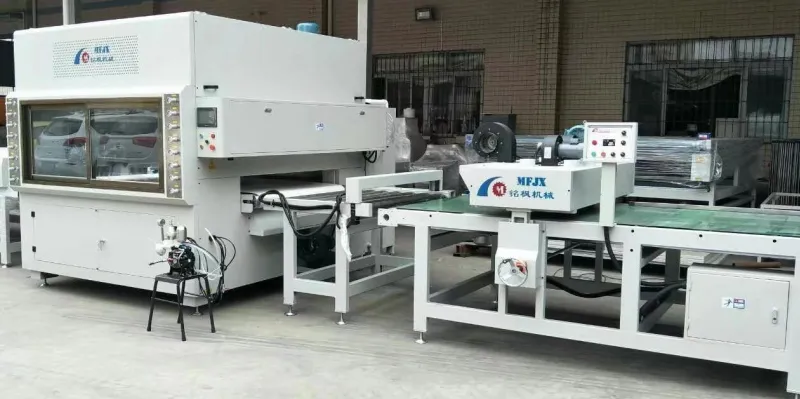
A spray painting production line is a continuous production system that integrates processes such as surface pretreatment, painting, drying, curing, and cooling. Its primary function is to apply a protective, decorative, or functional coating to the product surface, thereby enhancing wear resistance, oxidation resistance, corrosion resistance, and visual appeal. For many manufacturers, the spray painting production line is not merely auxiliary equipment but a core process system that directly determines product quality and delivery efficiency.
A complete spray painting production line typically comprises several sections, including the pretreatment zone, conveyor system, painting zone, leveling zone, drying and curing zone, and unloading zone. The pre-treatment stage is primarily designed to remove oil, dust, and oxide layers from the workpiece surface, thereby enhancing paint adhesion. The conveying system manages the movement of workpieces; common configurations include overhead conveyors, floor tracks, and roller conveyors. The spraying zone serves as the core of the entire spray painting production line and is the critical area where the automatic painting system operates. Subsequently, workpieces undergo leveling and drying processes, allowing the paint film to spread evenly and cure, ultimately resulting in a stable, high-quality surface coating.
In the past, many spray painting production lines relied heavily on manual spray guns. However, as production scales have expanded and customer quality requirements have risen, traditional manual spraying has revealed increasing drawbacks—such as uneven coating thickness, inconsistent efficiency, high personnel turnover, and significant material waste. Consequently, automatic painting systems have become a key focus for the upgrading and modernization of spray painting production lines.
Why are spray painting production lines increasingly relying on automatic painting systems?
Industry trends indicate that the adoption of automatic painting systems is not merely coincidental but an inevitable outcome of the manufacturing sector's evolution. While manual spraying offers flexibility, its shortcomings become glaringly apparent in large-scale production environments; automatic painting systems, by contrast, provide systematic solutions to these pain points.
First is the improvement in coating consistency. Manual spraying relies heavily on the operator's experience; even with the same spray gun, results can vary significantly between different technicians. Factors such as the distance between the gun and the workpiece, the spray angle, movement speed, and dwell time all influence the final paint film quality. Less experienced operators are prone to issues like sagging, "orange peel" texture, missed spots, or excessive local film thickness—all of which directly compromise the product's appearance and quality stability.
In contrast, automatic painting systems allow for the precise programmed control of operational parameters—including spray gun trajectory, atomization pressure, paint flow rate, spraying speed, and gun angle. This precision enables automatic painting machines to drastically reduce variations in film thickness. Industry data shows that while manual spraying typically yields thickness variations of around ±15%, high-precision automatic systems can keep this variance within ±3% to ±5%. Such stability is crucial for high-standard products, such as automotive bodies, premium home appliance panels, and precision electronic casings.
Second is the increase in efficiency. A spray painting production line is essentially a system designed for continuous, paced production. In contrast, manual spraying is often susceptible to variables such as physical exertion, fatigue, mood, and shift scheduling, leading to significant fluctuations in output. Automated spray painting systems, however, ensure continuous, stable operation without efficiency drops caused by human factors. It is not uncommon for enterprises to see spraying efficiency gains of 30% to 200% after implementing automated painting machines.
For instance, a medium-sized hardware processing company previously relied on manual spraying, completing a maximum of 80 workpieces per hour. After upgrading to an automated spray painting production line, hourly capacity rose to over 200 units—an increase of more than 150%. This boost in efficiency allows the company to shorten delivery times, increase its capacity to handle orders, and gain a competitive edge in the market.
More importantly, automated spray painting systems can significantly reduce labor costs. Labor costs in the manufacturing sector have been rising steadily; spray painting, in particular, involves high-intensity, high-pollution work, making recruitment difficult and turnover rates high. In the domestic market, for example, the monthly salary for a skilled spray painter often ranges from 8,000 to 15,000 RMB, or even higher in some regions. While a traditional spray painting line might require several painters working simultaneously, an automated system often requires only a few operators and maintenance staff to manage production. For factories with long-term operations, these cost savings are substantial.
How do automated spray painting systems help enterprises save costs?
When evaluating automated spray painting systems, many enterprises focus solely on equipment procurement costs while overlooking the value of long-term savings. In reality, the core value of an automated painting machine lies not just in replacing manual labor, but in reducing overall operating costs.
Paint waste is a common issue in traditional spraying. With manual spraying, it is difficult to maintain a perfectly consistent spray gun trajectory, often resulting in overspray, double-coating, and excessive paint mist dispersion; consequently, a large amount of paint fails to adhere effectively to the workpiece surface. Industry data indicates that paint utilization rates for traditional manual spraying are typically only 30% to 50%, meaning roughly half of the purchased paint may go to waste.
Automated spray painting systems, however, can significantly improve utilization rates through precise control. When combined with electrostatic spraying technology, in particular, an automatic painting machine can boost paint utilization rates to between 65% and 85%. For a factory with an annual paint procurement cost of 3 million RMB, a mere 15% increase in utilization could yield annual savings of over 450,000 RMB. For enterprises with high paint consumption, such savings can even recoup the entire investment cost of the automatic painting system within two to three years.
A reduction in the rework rate is another significant source of savings. Defective products on a spray painting production line not only waste paint but also incur additional costs for sanding, repainting, and quality inspections. By utilizing stable, programmed spraying processes, automatic painting systems lower defect rates and significantly improve the enterprise's overall yield.
What equipment makes up an automatic painting system?
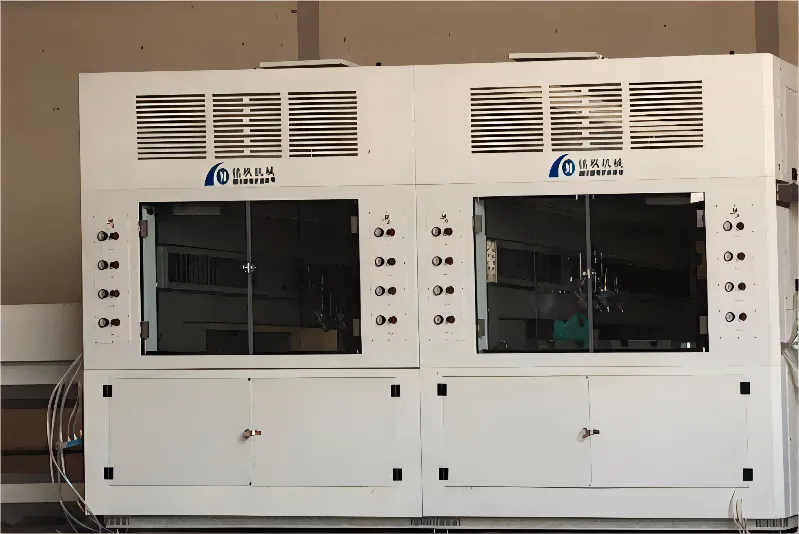
Although many people tend to equate an automatic painting system with a single automatic painting machine, it is actually a comprehensive, coordinated automation system. The automatic painting system within a spray painting production line typically consists of multiple modules working in tandem to ensure stable and efficient spraying operations.
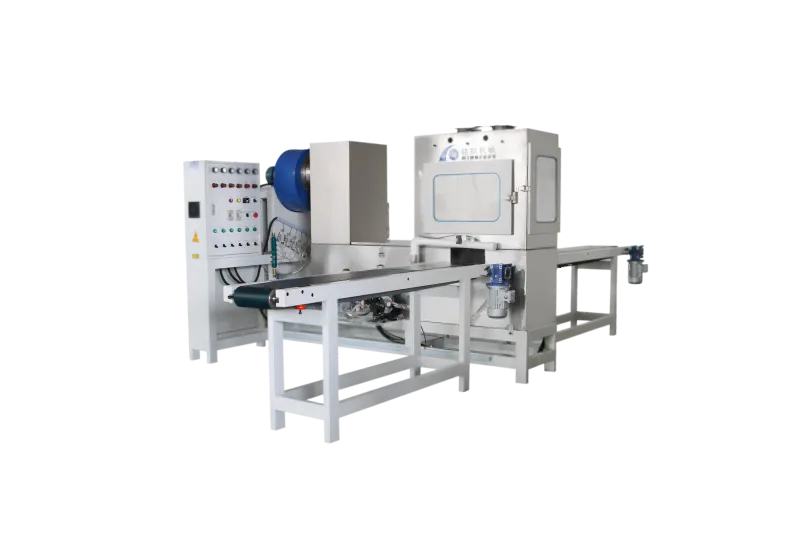
The automatic painting machine serves as the core execution unit responsible for the actual spraying. Depending on the product type, common equipment includes reciprocating automatic painting machines, flat-surface automatic painting machines, rotary disc sprayers, and six-axis spraying robots. Flat-surface machines are generally used for flat products, whereas multi-axis robots are better suited for spraying complex, irregularly shaped workpieces.
Core Control Module
The control system acts as the brain of the automatic painting system. It typically employs a PLC, industrial PC, or touchscreen control platform to precisely manage spraying programs. The system controls functions such as spray gun activation, movement trajectories, spraying speed, pressure regulation, and fault alarms. High-end spray painting production lines can even integrate with MES systems to enable real-time production data monitoring and remote management.
The paint supply system is responsible for delivering paint steadily to the spray gun. This system usually includes mixing units, filters, pressure regulation modules, and precision dosing devices to ensure consistent paint viscosity and uniform flow rates. If the paint supply system is unstable, achieving consistent spraying quality becomes difficult, regardless of how high-performance the automatic painting machine itself may be.
Environmental treatment systems are also a crucial component that cannot be overlooked. Spray painting operations generate significant amounts of VOC emissions and paint mist particles; consequently, modern spray painting production lines are typically equipped with water curtain booths, dry filtration systems, activated carbon adsorption units, or RTO (Regenerative Thermal Oxidizer) systems to meet environmental emission standards.
Which industries most frequently utilize automated spray painting production lines?
Automated spray painting systems have a wide range of applications, and virtually all industries involving surface coating are gradually transitioning toward automation.
The automotive manufacturing industry is one of the most mature sectors for the application of automated spray painting production lines. Automotive body coating processes are complex and demand exceptionally high standards for visual quality; a single vehicle typically undergoes multiple coating stages, including primer, intermediate coat, topcoat, and clear coat. Large automotive plants often achieve automation rates exceeding 90% in their painting operations, with some high-end facilities approaching 100%.
The home appliance industry also makes extensive use of automated spray painting systems. The casings of refrigerators, air conditioners, washing machines, and kitchen appliances require high visual consistency, leading to a very high adoption rate of automatic painting machines in this sector. Industry data indicates that leading home appliance manufacturers generally achieve painting automation rates of over 80%.
The furniture industry has also been accelerating its technological upgrades in recent years. While the coating of wooden doors, panels, and furniture previously relied heavily on manual labor, the rise of stricter environmental regulations and mass customization has made UV coating lines, water-based paint lines, and automated spray painting systems the mainstream solutions.
The hardware and plastics industries are particularly well-suited for the implementation of automated spray painting production lines due to the high degree of product standardization. These products are typically manufactured in large batches with rapid production cycles, allowing automatic painting machines to maximize their advantages in efficiency and consistency.
Can automatic painting machines completely replace manual labor?
This is a primary concern for many enterprises before purchasing equipment. The answer is that while they can largely replace manual labor in most scenarios, achieving 100% replacement in the short term is not feasible.
For standardized, mass-produced, and highly repetitive products—such as automotive parts, hardware components, and plastic housings—automated spray painting systems can handle almost all primary coating tasks. Because these products feature uniform dimensions and coating paths that are easily standardized, automatic painting machines can deliver maximum value.
However, manual labor retains a distinct advantage in terms of flexibility when dealing with small-batch customized products or workpieces with highly complex structures. Robotic spray guns may struggle to fully cover certain deep holes, internal cavities, or "dead zones," necessitating manual touch-ups. Additionally, during the prototyping phase for new products, manual spraying is often used to validate the process before the spraying parameters are programmed into the automated system.
Therefore, the optimal real-world approach is usually not the complete replacement of humans by machines, but rather a collaborative model where automated systems handle the bulk of the work, supplemented by manual assistance. This model ensures the efficiency of the spray painting production line while maintaining the flexibility needed to handle complex spraying scenarios.
FAQ
Q1: Are automated spray painting systems suitable for small factories?
Yes, though the configuration should be selected based on production volume and budget. Small factories can start by deploying a basic automatic painting machine and gradually upgrade to a full spray painting production line.
Q2: Are automatic painting machines expensive?
Prices vary significantly; basic equipment might cost tens of thousands of yuan, whereas large-scale robotic spray painting production lines can cost hundreds of thousands or even millions of yuan.
Q3: How long does it take to recoup the investment in an automated spray painting system?
For most enterprises, the payback period ranges from one to three years, depending on the extent of production capacity increases and cost savings.
Q4: Is the maintenance of automated spray painting systems complex?
Overall maintenance is moderately difficult; key tasks include cleaning spray guns, replacing filters, lubricating tracks, and checking programs.
Q5: Is an automated spray painting production line always superior to manual spraying?
Automated systems offer distinct advantages for high-volume, standardized production, whereas highly customized products require a combination of automation and manual assistance.