

In modern furniture manufacturing, surface finishing is a critical stage that directly impacts product quality and market competitiveness. With the widespread adoption of automation technologies, curtain coaters are attracting increasing attention—and being increasingly adopted—by furniture manufacturing enterprises.
Characterized by high efficiency, exceptional uniformity, and minimal pollution, these machines offer an ideal coating solution for furniture panels, door fronts, flooring, and similar products.
However, when considering the introduction of a curtain coater, many furniture manufacturers frequently encounter a common question:
"Is it absolutely necessary to pair a curtain coater with upstream and downstream equipment? Can a standalone unit handle the entire coating process?"
Drawing upon the practical realities of furniture production, this article will systematically analyze the process characteristics of curtain coaters, the auxiliary equipment they require, how they integrate with upstream and downstream workflows, and the overall value of a comprehensive system setup. Our goal is to assist you in scientifically evaluating and determining the optimal equipment configuration for your needs.
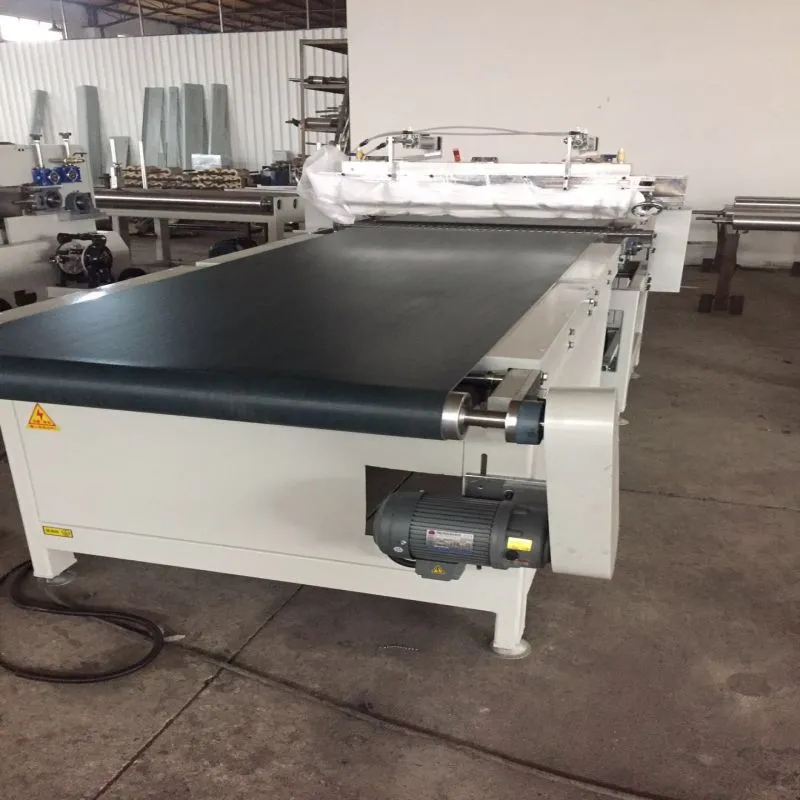
Why Does the Furniture Industry Choose Curtain Coaters?
Before delving into the question of whether upstream and downstream equipment is required, we must first address a fundamental point: Why are furniture manufacturers increasingly favoring curtain coaters?
1. Uniform Coating and Flat Surfaces
Curtain coaters utilize gravity to form a continuous "liquid curtain" of coating material. As furniture panels pass through this curtain, the coating is deposited uniformly across the surface, resulting in a consistent film thickness that is smooth and free of ripples or waves. Compared to methods such as spraying or roller coating, curtain coating achieves superior uniformity and coating density on flat panel surfaces.
2. High Production Efficiency
Curtain coaters enable continuous conveying and high-speed coating operations, making them ideally suited for the mass production models prevalent in the furniture industry—specifically for items such as panels, door fronts, and flooring. When integrated with automated conveyor lines and drying systems, these machines can sustain stable operating speeds of tens of meters per minute.
3. High Coating Utilization and Cost Savings
Unlike spray coating methods—which often result in significant material waste due to overspray—curtain coaters employ a circulating supply and automatic recovery system. This allows for coating material utilization rates exceeding 95%, thereby substantially reducing raw material costs.
4. Eco-Friendly and Clean Operation
The curtain coating process generates virtually no splashing, dust, or airborne mist (atomization). This ensures a clean and tidy working environment that complies with the increasingly stringent environmental protection standards within the furniture industry. In summary, the curtain coater is highly suitable for the continuous coating of flat components within the furniture industry. However, it does not operate as a standalone unit—and this constitutes the central issue addressed in this article.
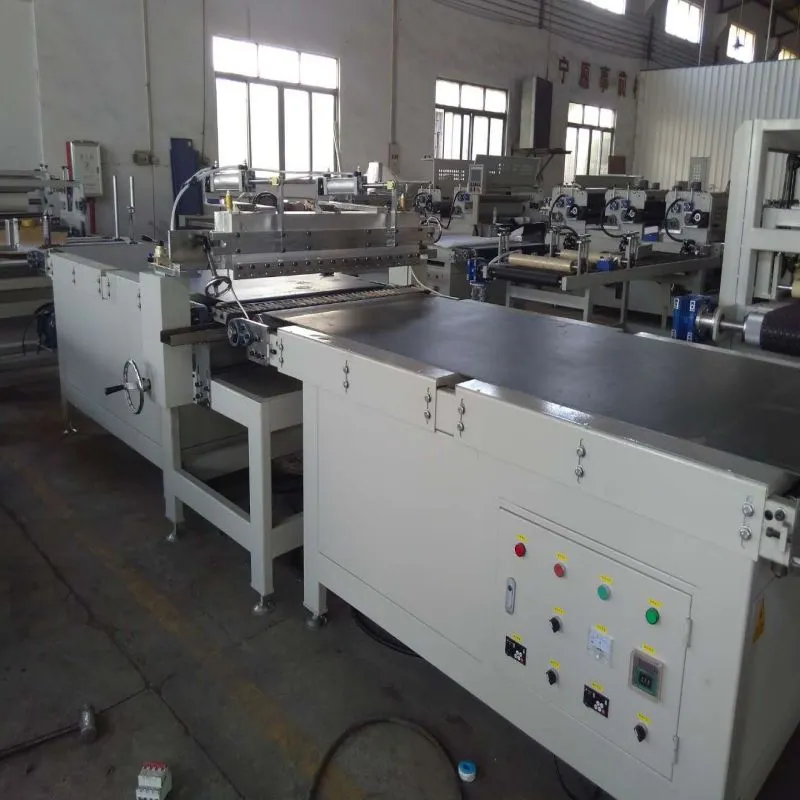
Can a curtain coater independently complete the coating process for furniture panels?
If one were to use only a curtain coater, without integrating any other equipment, would it be possible to execute the entire coating workflow for furniture panels? Theoretically, a curtain coater is capable of applying a uniform coating to flat panels; however, when viewed within the context of the overall furniture manufacturing process, using it as a standalone machine is not a viable option.
The primary reasons for this are as follows:
1. Absence of Pre-treatment Stages
Before entering the curtain coater, furniture panels typically require preliminary processing steps such as sanding, dust removal, and primer application.
If the panels are fed directly into the curtain coater without these steps, any residual dust or surface irregularities on the panel face will compromise the adhesion and gloss of the resulting paint film.
2. The Indispensability of Post-coating Curing and Drying
Once the curtain coater has deposited the coating layer, the paint film remains in a wet state. Without a complementary drying and curing system (such as a UV curing unit or a hot-air drying line), the coating cannot set rapidly, making it difficult—if not impossible—to apply subsequent layers.
3. Requirements for Material Handling and Process Integration
Curtain coaters are typically deployed within continuous production lines. In the absence of an automated conveying system, manual handling is not only inefficient but also carries a high risk of scratching or contaminating the wet paint film.
The conclusion is unequivocal:
In furniture manufacturing, a curtain coater must be integrated with upstream and downstream equipment to establish a complete and stable coating system.
What equipment typically comprises the upstream stages of the curtain coating process?
The primary function of upstream equipment is to prepare the panels for the coating process, ensuring that their surfaces are clean, smooth, and primed for optimal paint adhesion.
1. Automated Feeding and Conveying Systems
Given the large dimensions and substantial weight of furniture panels, manual handling is highly inefficient. Automated feeding machines and roller conveyor lines enable the automatic loading and unloading of panels, thereby enhancing the operational continuity of the curtain coater.
2. Grinding or Sanding Machines
Sanding is a critical step in the pre-treatment process for furniture finishing. Precision sanding machines are used to remove surface burrs and impurities, ensuring uniform adhesion of the coating layer.
3. Dust Removal Equipment
After sanding, the surface of the panels often retains fine dust particles; if left uncleaned, this can easily lead to coating defects. Dust collectors and electrostatic dust removal devices are essential auxiliary systems required upstream of the curtain coater.
4. Primer Coaters (or Sealer Application Units)
In certain furniture manufacturing processes, a primer layer must first form a sealing film to prevent excessive paint absorption or color bleed-through. A curtain coater can be positioned downstream from the primer coater to apply the topcoat layer.
In summary, the primary objective of upstream equipment is to ensure that the panel surface condition meets the optimal requirements for coating, thereby allowing the curtain coater to fully leverage its high-precision capabilities.
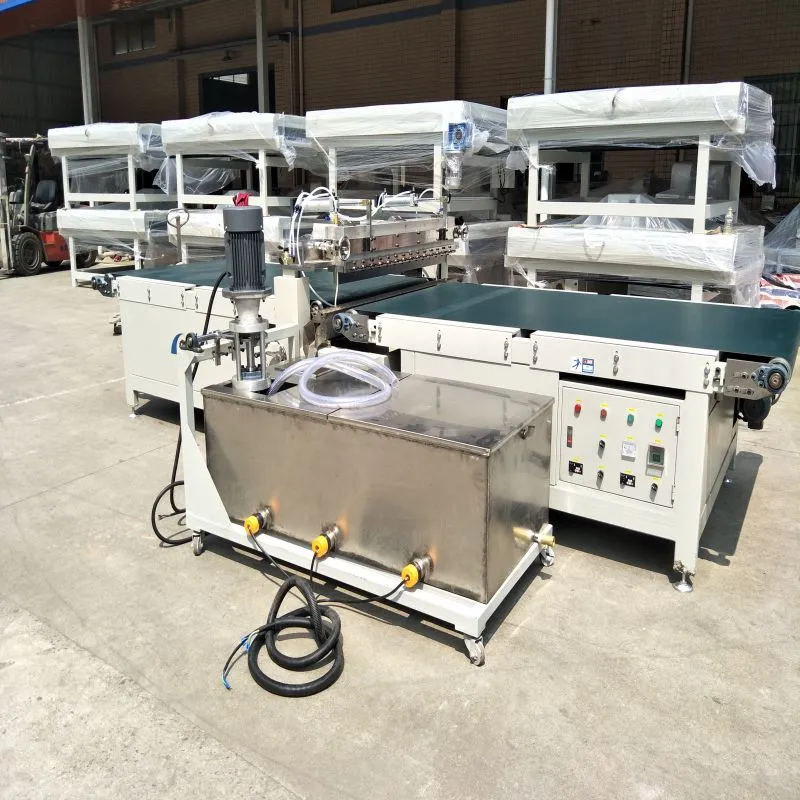
What equipment constitutes the downstream section of a curtain coating line?
The role of downstream equipment is to cure, cool, and dry the coating, as well as to facilitate subsequent surface treatments.
1. Drying and Curing Systems
Depending on the type of coating used for the furniture, different curing equipment must be selected:
• UV Curing Machines: Suitable for UV-curable paint systems, offering rapid curing speeds and high surface hardness;
• Hot Air Drying Tunnels: Used for water-based or solvent-based coatings, providing a gentle drying process;
• Infrared (IR) Heating Units: Facilitate paint film leveling and initial drying.
2. Cooling Units
After curing, the coating remains at an elevated temperature; therefore, cooling machines or cold-air sections are required to lower the temperature and prevent adhesion issues during subsequent stacking.
3. Automatic Panel Turners and Stackers
Once coating is complete, the panels often need to be flipped over, stacked, or conveyed to the next processing stage (such as sanding or a second coating application). Automatic panel turners enable directional changes without making physical contact with the wet paint surface, thereby boosting production efficiency.
4. Quality Inspection Systems
Some furniture production lines incorporate inline inspection devices downstream from the curtain coater to monitor paint film thickness, surface flatness, and gloss levels, thereby ensuring consistent quality. Consequently, within the complete process chain of the furniture industry, curtain coating machines are typically positioned between the sanding line and the drying line, thereby forming a continuous, automated workflow.
What are the typical configurations for curtain coating production lines commonly found in the furniture industry?
The following are several common equipment configuration models, which can be flexibly adjusted according to specific production requirements:
1. Basic Production Line
Sander → Dust Collector → Curtain Coating Machine → Drying Line
Suitable for the production of furniture panels requiring a single coating layer and a low-gloss finish.
2. Double-Coat, Double-Dry Production Line
Sanding → Dust Removal → Curtain Coating Machine (Primer) → Drying → Sanding → Curtain Coating Machine (Topcoat) → UV Curing
Suitable for the production of multi-layer structures, such as high-gloss finishes and decorative door panels.
3. Fully Automated Continuous Production Line
Loading → Sanding → Dust Removal → Curtain Coating Machine → Drying → Panel Turnover → Recoating → Curing → Stacking
This is the automated solution most frequently adopted by modern furniture manufacturers, capable of achieving 24-hour unmanned operation.
In summary, the curtain coating machine typically serves as a "core node" within a furniture coating production line; only when integrated with upstream and downstream equipment to form a complete system can its advantages—namely high efficiency and stability—be fully realized.
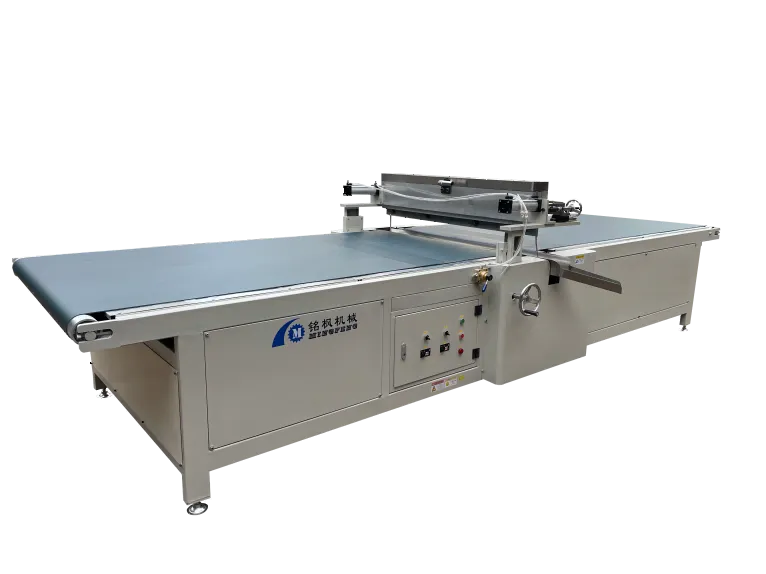
What factors should furniture manufacturers consider when selecting and configuring a curtain coating production line?
1. Product Type
If the primary output consists of flat panel products (such as cabinet doors, flooring, or decorative boards), a curtain coating machine is an ideal choice; however, if the production involves complex three-dimensional components, a spray coating process will still be required.
2. Coating System
Identify the specific type of coating to be used (e.g., UV-curable, water-based, or solvent-based), and then select the corresponding paint supply and curing systems to match.
3. Production Capacity Requirements
Determine the required line speed and coating width based on daily production targets, and subsequently configure the appropriate conveying and drying equipment.
4. Factory Layout and Space
Curtain coating machines and their associated upstream and downstream equipment typically require a linear layout; therefore, sufficient floor space must be allocated to ensure a smooth and unobstructed material flow path. 5. Ease of Maintenance and Operation
It is recommended to select curtain coating machines equipped with automatic cleaning and intelligent monitoring systems to minimize the burden of manual maintenance.
By comprehensively evaluating the aforementioned factors, furniture manufacturers can construct a finishing system that is optimally tailored to their specific production rhythm.
Curtain Coating Machines and Upstream/Downstream Equipment: A Synergistic System for Furniture Production
Based on the analysis above, we can draw the following professional conclusions:
— Curtain coating machines cannot be operated in isolation.
In the furniture industry, they must function in conjunction with upstream equipment—such as sanding, dust removal, and priming machinery—as well as downstream systems for drying and curing.
— The compatibility of upstream and downstream equipment determines overall performance.
Parameters such as line speed, paint supply rate, and curing time must be harmonized to ensure consistent and stable coating results.
— Proper integration is essential to realize the full potential of a curtain coating machine.
Only within the context of a complete automated production line can a curtain coating machine fully unleash its technical capabilities regarding high precision, high efficiency, and high consistency.
Therefore, for furniture manufacturing enterprises, the acquisition of a curtain coating machine represents far more than merely the selection of a single piece of equipment; it constitutes a pivotal decision at the very core of the entire finishing system's design.