

In modern manufacturing, CNC automatic spraying machines are widely used in surface coating processes for metal, plastic, wood, and glass products.
When introducing automated spraying equipment, companies often focus on spraying accuracy, production efficiency, and cost savings, but easily overlook a crucial supporting component—the dust collection system.
So, the question arises:
Does a CNC automatic spraying machine necessarily require dust collection equipment?
What is the function of a dust collector? What are the consequences of not having a dust collection system?
This article will delve into these core questions, analyzing the relationship between automated painting machines and dust collection equipment from the perspectives of spraying process principles, air cleanliness requirements, the working mechanism of dust collectors, and configuration recommendations, helping you systematically understand the necessary synergy between the two.
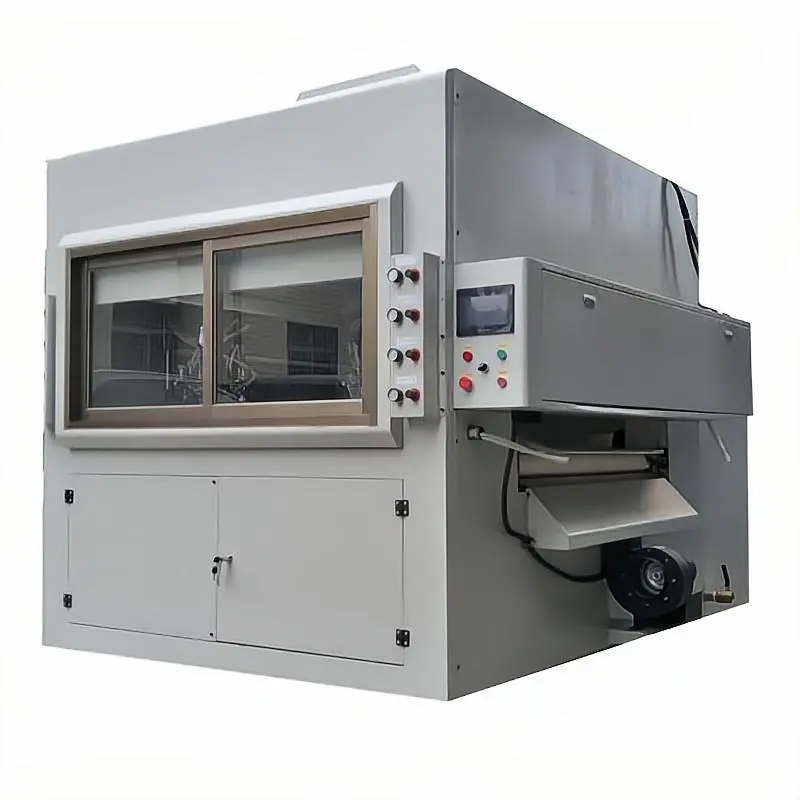
Why do CNC automatic spraying machines have extremely high requirements for air cleanliness?
The essence of the spraying process is to atomize paint into tiny particles and evenly adhere them to the workpiece surface.
In this process, the cleanliness of the air environment directly determines the smoothness and gloss of the paint film surface.
Even with the extremely high trajectory accuracy and flow control capabilities of CNC automatic spraying machines, the spraying results will still be severely affected if there is dust, particulate matter, or floating particles in the air.
Common contamination problems include:
• Grainy paint surface – Dust particles fall into the undried paint layer, forming surface bumps;
• Pinholes and pitting – Impurities in the air cause air bubbles or voids;
• Reduced adhesion – Dust adheres to the substrate surface, affecting paint penetration and bonding;
• Nozzle clogging – Fine dust enters the paint supply pipes or nozzles, leading to uneven spraying.
Therefore, to allow CNC automatic spraying machines to achieve their intended high-precision advantages, it is essential to maintain a clean, temperature-controlled, and dust-free environment in the spraying area. This is the fundamental necessity of configuring a dust collector.
What is the relationship between an automated painting machine and a dust collector?
On an industrial painting line, a CNC automatic spraying machine and a dust collector are two interdependent systems. The former is responsible for precise spraying, while the latter is responsible for environmental purification. Only through their combined operation can stable, high-quality surface treatment be achieved.
The relationship between the two can be summarized as follows:
Project | CNC automatic spraying machine | Dust collector |
| Functional Positioning | Precisely controls spray trajectory and atomization parameters | Filters dust and suspended particles from the air |
| Control Variables | Flow rate, air pressure, speed, spray distance | Airflow, suction power, and filtration efficiency |
| Main Objectives | Forms a uniform, dense paint film | Ensures a clean and stable spraying environment |
| Influencing Results | Coating thickness, adhesion, gloss | Paint film smoothness and appearance quality |
Simply put:
The CNC automatic spraying machine is responsible for "accurate spraying," while the dust collector is responsible for "clean spraying."
Only when both operate together can truly high-quality automated spraying be achieved.
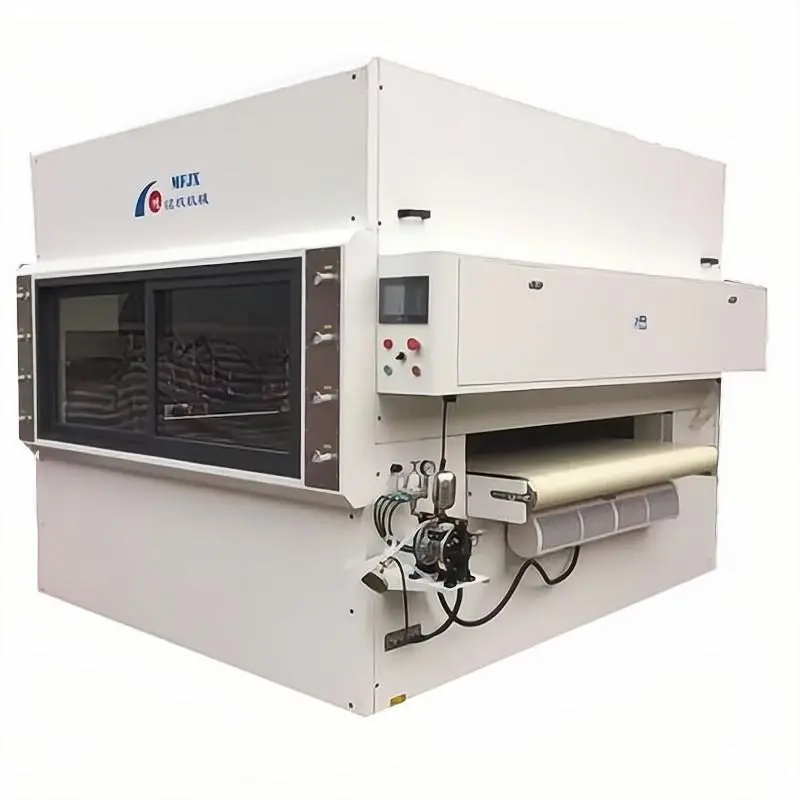
What are the sources of dust during automatic spraying?
Understanding the sources of dust is a prerequisite for determining dust removal requirements.
Even in a closed spraying workshop, there may still be various sources of dust in the air:
1. Dust from the workpiece surface
Before painting, workpieces undergo grinding, cutting, and transportation, leaving fine particles on their surface.
If not thoroughly cleaned, these particles will be stirred up by the airflow during spraying.
2. Secondary pollution from the spraying airflow
When the CNC automatic spraying machine is working, the high-speed airflow generated by the spray gun disturbs the air, causing dust to become suspended.
3. Dust brought in by operators
Human skin flakes, clothing fibers, and dust from shoe soles are all hidden sources of pollution.
4. Ambient Air Pollution
If the painting workshop lacks an air filtration system, dust from the outside air will continuously enter the work area.
5. Waste Paint Mist and Overspray
During the spraying process, some paint does not adhere to the workpiece but floats in the air as mist, creating "overspray" pollution.
If these contaminants are not removed promptly, they will directly affect the painting quality and lifespan of the CNC automatic spraying machine.
Therefore, configuring an efficient dust collection system is a key measure to maintain a clean painting environment.
Why must a dust collection machine be equipped with a CNC automatic spraying machine?
1. Ensuring Paint Film Quality and Consistency
A dust collection machine effectively removes dust particles from the air, preventing contaminants from adhering to the wet paint surface.
This allows the high-precision spraying effect of the CNC automatic spraying machine to be fully realized, resulting in a smooth, delicate paint film with uniform color.
2. Preventing Equipment Malfunction and Nozzle Clogging
The nozzle is one of the core components of a CNC automatic spraying machine.
Airborne dust particles, once inside the spray gun or paint supply pipes, can cause unstable spraying, mottling, or blockages.
A dust collector can significantly reduce this risk and extend equipment life.
3. Reduced Defect Rate and Rework Costs
Spraying contamination can lead to surface defects, increasing the frequency of sanding and rework.
A stable dust collection system reduces defect rates, ensures production line continuity, and saves labor and time costs.
4. Improved Working Environment and Employee Health
High dust concentrations in the spraying workshop not only affect products but also harm the respiratory health of operators.
A dust collector paired with a CNC automatic spraying machine can effectively adsorb paint atomized particles, VOCs, and dust, maintaining clean air.
5. Compliance with Environmental and Safety Standards
Modern industrial production requires compliance with environmental emission standards.
The dust collector's filtration system collects spraying dust and waste paint mist, preventing pollution emissions and achieving green production.
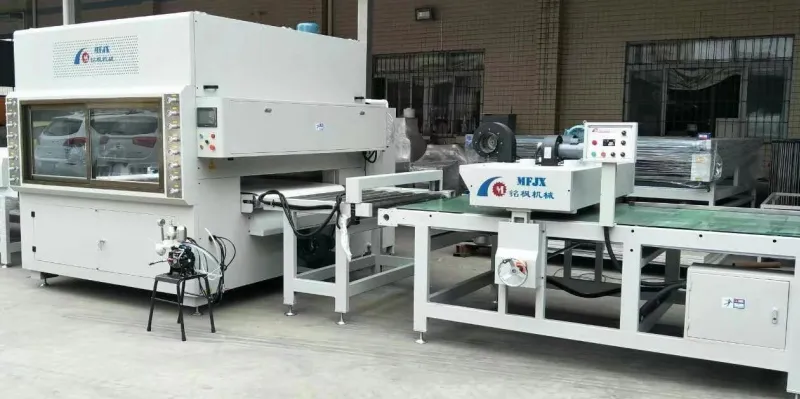
What are the commonly used types of dust collectors for CNC automatic spraying machines?
The selection of dust removal equipment needs to be determined based on the object being sprayed, the characteristics of the process, and the properties of the dust. Common types of equipment are as follows:
1. Dry Dust Collector
Utilizes multiple layers of filter cotton or activated carbon adsorption layers to filter paint mist and dust from the air.
Suitable for small spray booths or plastic parts spraying scenarios.
• Advantages: Simple structure, easy maintenance.
• Disadvantages: Filter cotton needs to be replaced regularly.
2. Wet Dust Collector
Utilizes a water curtain or spray device to capture dust particles, resulting in high dust removal efficiency.
Commonly used in conjunction with CNC automatic spraying machines in industries such as metal parts and woodworking.
• Advantages: High adsorption efficiency, can operate continuously.
• Disadvantages: Water tank needs to be cleaned regularly to prevent wastewater accumulation.
3. Electrostatic Precipitator
Uses a high-voltage electric field to adsorb fine dust and oil mist from the air.
Suitable for situations where a large number of particles are generated during the spraying process.
• Advantages: Wide applicability, high filtration accuracy.
• Disadvantages: Dust accumulation on the electrodes must be prevented, as it can reduce discharge efficiency.
4. Centralized Dust Collection System
A dust collection solution for centralized management of multiple CNC automatic spraying machines.
Spraying dust is collected uniformly through a duct network and then centrally purified by a main dust collector.
• Advantages: High degree of automation, low management cost.
• Disadvantages: Higher initial investment, but significant long-term benefits.
How to scientifically configure the dust collection system for a CNC automatic spraying machine?
1. Define the dust collection area and airflow requirements
The airflow of the dust collector should be determined based on the volume of the spray booth, the number of spray guns, and the airflow distribution.
The general principle is: Insufficient airflow → incomplete dust collection; excessive airflow → disrupts the spray trajectory.
2. Determine the filtration accuracy
It is generally recommended that the dust collector's filtration accuracy reach ≥95% @ 0.3μm to effectively capture spraying dust.
For high-requirement products, a HEPA or activated carbon combined filter module can be selected.
3. Establish a Reasonable Airflow Direction
The dust collection airflow should be opposite to the spray mist flow to prevent contaminants from flowing back into the spraying area.
A top-supply, bottom-exhaust design is commonly used, allowing dust to naturally settle into the recovery tank.
4. Maintain a Positive Pressure Clean Zone
Maintaining a slight positive pressure in the spraying area prevents external dust from flowing back in.
When the CNC automatic spraying machine is linked with the dust collector, the airflow can be automatically adjusted via a pressure sensor.
5. Regular Maintenance and Cleaning
The filter cartridges, water curtains, or dust collection boxes of the dust collection system need to be replaced and cleaned regularly to maintain dust collection efficiency.
Improper maintenance will lead to increased filtration resistance and decreased suction, affecting spraying quality.
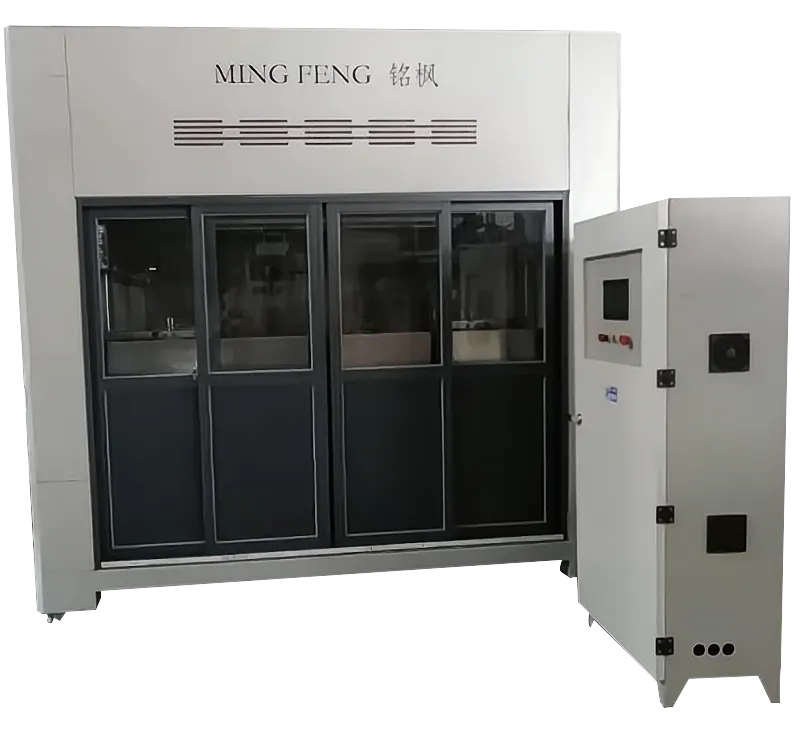
What are the consequences of not installing a dust collector?
CNC automatic spraying lines without dedicated dust collection equipment often experience the following serious problems:
• Increased paint defect rate: Dust particles cause pitting, orange peel, bubbles, and other imperfections;
• Frequent equipment clogging: Dust is drawn into the nozzles, causing unstable spraying;
• Reduced spraying accuracy: Air turbulence interferes with atomization trajectory;
• Increased safety hazards: High dust concentrations may pose a fire or explosion risk;
• Increased maintenance costs: Frequent equipment cleaning and product rework reduce production efficiency.
From both an economic and quality perspective, equipping a CNC automatic spraying machine with a professional dust collection system is a necessary and cost-effective investment.
What are the key points for the coordinated operation of a CNC automatic spraying machine and a dust collection system?
To ensure system efficiency and stability, the CNC automatic spraying machine and dust collector should be linked in the control system:
• Synchronized start/stop control: When the spraying machine starts, the dust collector automatically runs and shuts down after a delay upon stopping;
• Intelligent airflow adjustment: Automatically adjusts suction power based on the number and position of spray guns;
• Fault interlock protection: If the dust collector malfunctions, the CNC automatic spraying machine pauses spraying to prevent contaminant accumulation;
• Data monitoring system: Displays real-time parameters such as filtration status, air pressure, and dust concentration for easy maintenance.
This collaborative operation mechanism not only improves production efficiency but also ensures the stability and traceability of spraying quality.
How does XMF Machinery handle printing machine orders?
XMF Machinery supplies professional printing machines for patterns and textures on wood, metal, ceramics, plastics, and glass. Buyers can request customized machines tailored to specific substrates or coatings, and our factory offers wholesale pricing and promotional discounts. As a trusted manufacturer, XMF Machinery ensures high quality machines, professional quotes, and technical support for every order.
Purchasing printing machines from our company guarantees long-term performance, efficient production, and cost-effective solutions for industrial and commercial applications.