

In the field of modern industrial surface treatment, curtain coating production lines have become widely adopted for coating wood flooring, furniture panels, decorative boards, glass, metal coils, calcium silicate boards, fiber cement boards, new energy materials, and various flat workpieces. This adoption is driven by advantages such as high coating efficiency, excellent film uniformity, high material utilization, and a high degree of automation. As manufacturers increasingly demand higher standards for product appearance, curtain coating machines have become essential equipment in many automated coating workshops.
However, when purchasing or operating these lines, companies often focus on a critical question: within what range should the coating viscosity be maintained? What are the effects of excessively high viscosity, and what problems arise from viscosity that is too low? Do different coating systems have the same viscosity requirements?
In reality, coating viscosity not only affects the quality of the liquid curtain formation but also directly determines the final coating's smoothness, fullness, adhesion, and overall production efficiency. Consequently, it is a core parameter in the process control of the entire curtain coating production line.
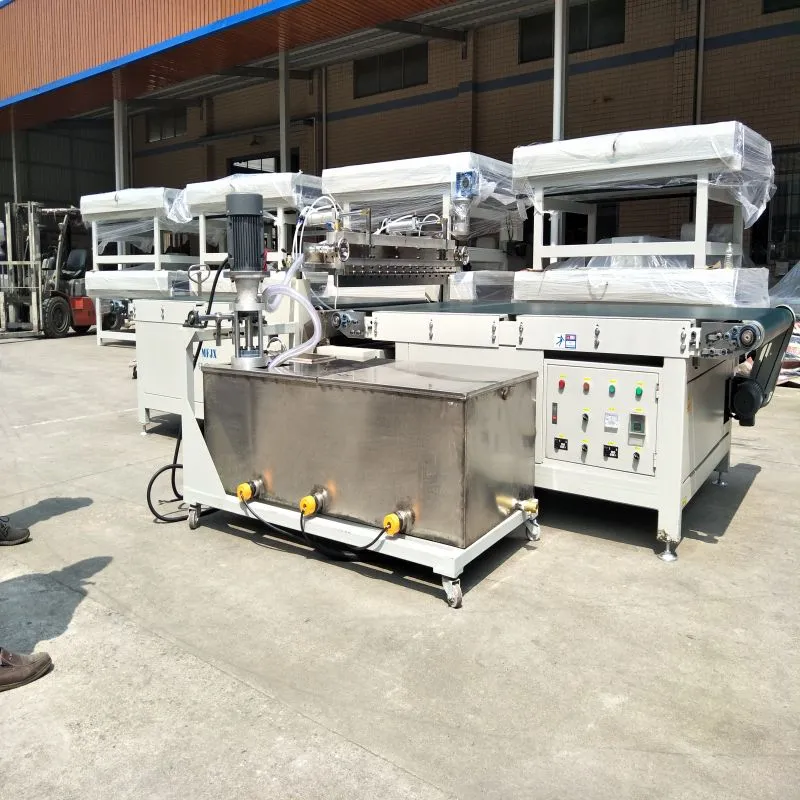
What is a curtain coating production line?
A curtain coating production line is an automated manufacturing system that utilizes a continuous, uniform flow of coating material to create a stable liquid curtain. As workpieces pass beneath this curtain, the coating covers their surfaces evenly, completing the coating process. Unlike traditional spray coating methods, curtain coating machines do not rely on compressed air for atomization; this eliminates issues with excessive overspray and paint mist dispersion. Material utilization rates typically exceed 95%, whereas traditional air spraying often achieves only 40% to 70% utilization.
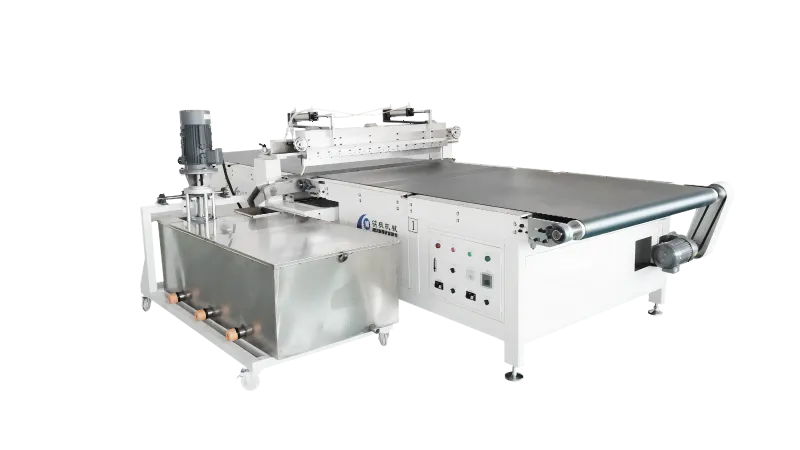
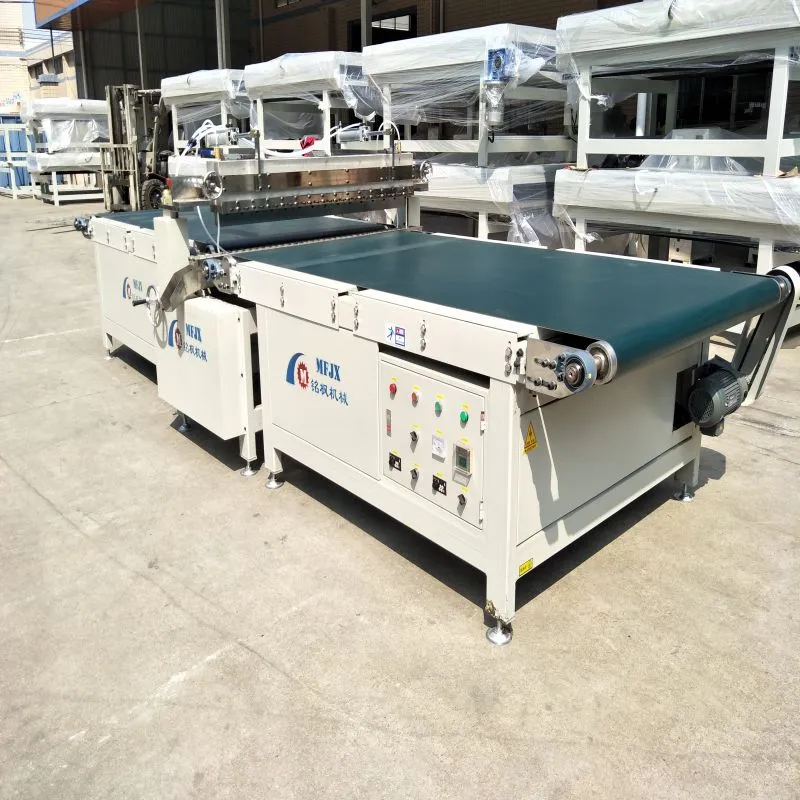
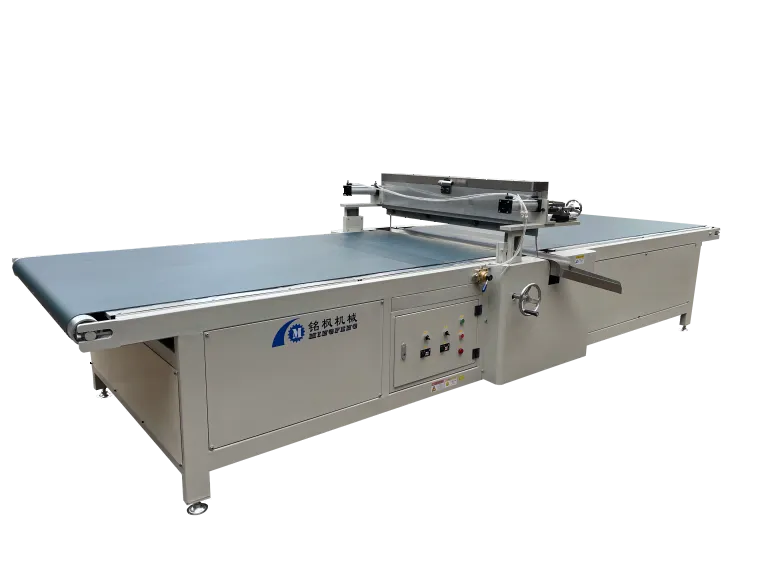
A complete curtain coating production line typically comprises a conveying system, a dust removal system, the curtain coating machine itself, a leveling system, a drying system, a cooling system, and an automatic control system. The curtain coating machine is the core component; it uniformly delivers coating material from the circulation system to the coating head, using precision control to generate a stable liquid curtain. As workpieces pass through, the curtain continuously coats the product surface, ensuring a high-quality finish.
What exactly is coating viscosity?
From a technical perspective, viscosity is a physical measure of a fluid's internal resistance to flow. Simply put, higher viscosity results in lower fluidity, while lower viscosity results in higher fluidity. For instance, honey has a significantly higher viscosity than pure water; consequently, honey flows slowly, whereas water flows rapidly.
In a curtain coating production line, viscosity directly affects the formation of the liquid curtain. Since curtain coating machines rely on gravity to form a continuous curtain, the coating material must possess appropriate rheological properties. If the viscosity falls outside the required range, the liquid curtain cannot remain stable, ultimately leading to a decline in coating quality.
Common units of viscosity measurement in industrial production include:
•cP (centipoise)
•mPa·s (millipascal-seconds)
•DIN seconds
•Ford Cup seconds
•Iwata Cup seconds
During actual operation of curtain coating lines, most companies use DIN 4 cups or Ford cups for rapid on-site testing to ensure the coating remains within the specified process parameters.
What is the typical coating viscosity for a curtain coating production line?
In reality, there is no single, universal viscosity standard applicable to all curtain coating lines, as requirements vary significantly depending on the product, materials, and coating system used. However, based on industry experience, the viscosity of coatings used in curtain coating machines is generally controlled within the range of 20 to 120 seconds (measured via DIN 4 cup).
When converted to standard international units, the operating viscosity for most curtain coating lines typically falls within the range of 100 mPa·s to 1500 mPa·s.
Typical reference ranges are as follows:
Coating Type Viscosity Range (DIN 4 Cup)
UV Primer 20–40 seconds
UV Topcoat 25–50 seconds
Water-based Primer 30–70 seconds
Water-based Topcoat 40–90 seconds
PU (Polyurethane) Primer 25–60 seconds
PU (Polyurethane) Topcoat 30–80 seconds
NC (Nitrocellulose) Lacquer 20–45 seconds
High-solids Coating 60–120 seconds
In curtain coating production lines used in the wood flooring industry, the viscosity of UV coatings is generally controlled between 25 and 45 seconds; in furniture panel production, water-based coatings are typically maintained at around 40 to 70 seconds. However, for processes requiring thicker coatings, curtain coating machines may even utilize high-viscosity coatings exceeding 100 seconds to achieve superior fullness and hiding power.
Why is viscosity so critical for curtain coating machines?
When purchasing curtain coating production lines, many enterprises focus heavily on equipment brands, conveyor speeds, and automation levels while overlooking the importance of viscosity management. In reality, even with a state-of-the-art curtain coating machine, improper viscosity control prevents the achievement of ideal coating results.
First, viscosity determines the stability of the liquid curtain. When viscosity is optimal, the machine forms a continuous, smooth curtain with uniform flow and resistance to breakage. If viscosity is too low, the curtain tends to sway or ripple and may even break; if viscosity is too high, the curtain thickness becomes uneven, compromising the quality of the final coating film.
Second, viscosity directly affects coating thickness. Generally, higher viscosity results in more coating material adhering per unit area and a thicker film, whereas lower viscosity yields a thinner coating. Consequently, many high-end panel manufacturers precisely adjust viscosity parameters to control film thickness and meet diverse product specifications.
Furthermore, viscosity influences leveling performance. Effective leveling is a key factor in achieving mirror-like finishes and high-gloss surfaces. If the viscosity is too high, the coating lacks sufficient fluidity, making it prone to "orange peel" defects; conversely, if the viscosity is too low, sagging issues may occur. Therefore, a curtain coating production line must strike an optimal balance between fluidity and stability.
What problems arise from excessively high viscosity?
In actual production, some enterprises increase coating concentration—and consequently viscosity—in pursuit of a thicker paint film. However, excessive viscosity creates numerous problems for the curtain coating production line.
First, the liquid curtain becomes unstable. Increased flow resistance causes localized fluctuations in the curtain formed by the machine, resulting in uneven coating thickness.
Second, surface leveling is compromised. High-viscosity coatings flow slowly and fail to spread adequately in the leveling zone, leading to orange peel, brush marks, or fine ripples.
Third, equipment load increases. The internal circulation pump must continuously transport the coating; when viscosity is too high, pumping pressure rises significantly, driving up energy consumption and accelerating equipment wear.
Statistical data from panel manufacturers indicate that when coating viscosity exceeds process standards by more than 30%, the surface defect rate can rise by 20% to 40%, severely impacting production efficiency and product quality.
What are the effects of excessively low viscosity?
Low viscosity can disrupt the normal operation of a curtain coating production line just as high viscosity does.
The most common issue is sagging. When fluidity is excessive, gravity causes the liquid to pool at the edges, resulting in uneven film thickness.
Another issue is reduced hiding power. Because less coating adheres per unit area, some products may require multiple coating passes to meet specifications, thereby increasing production costs.
Additionally, low viscosity can lead to surface defects such as pinholes and craters. If the coating flows too rapidly, air may become trapped, forming tiny bubbles or voids.
Therefore, for a curtain coating machine, lower viscosity is not necessarily better; it must be maintained within a reasonable range.
What factors influence coating viscosity in a curtain coating production line?
In actual production, coating viscosity is not static; it is influenced by various factors.
Temperature is one of the most significant factors. Generally, for every 10°C rise in temperature, coating viscosity may drop by 15% to 30%. Consequently, many high-end curtain coating production lines are equipped with constant-temperature circulation systems to maintain the coating temperature between 20°C and 30°C.
Another factor is the change in solids content. As solvents or water evaporate, the solids content increases, causing the viscosity to rise. Therefore, companies must regularly replenish thinners or pure water to maintain stable process parameters.
Storage time also affects viscosity. Some two-component coatings undergo chemical reactions after mixing, leading to a continuous increase in viscosity over time; thus, the usage timeframe must be strictly controlled.
How can coating viscosity be accurately controlled?
To ensure the stable operation of a curtain coating production line, companies typically establish comprehensive viscosity management protocols.
First, professional testing equipment—such as DIN cups, Ford cups, and digital rotational viscometers—should be utilized to monitor the coating's condition regularly.
Second, standardized process documentation should be established to clearly define the viscosity ranges for different products. For instance, a furniture panel manufacturer might specify a range of 30 ± 3 seconds for UV primers and 40 ± 5 seconds for UV topcoats to ensure consistent product quality.
Additionally, modern intelligent curtain coating machines can be equipped with in-line viscosity monitoring systems. These systems use sensors to detect viscosity changes in real-time and automatically add thinner, achieving closed-loop control and significantly reducing errors associated with manual intervention.
FAQ
FAQ 1: What is the optimal viscosity for a curtain coating machine?
There is no universal standard; the operating viscosity for most curtain coating machines falls between 30 and 70 seconds (DIN 4 cup), though the specific range depends on the coating type and product requirements.
FAQ 2: Why are viscosity requirements so strict for curtain coating production lines?
Viscosity directly determines the stability of the liquid curtain, coating thickness, leveling performance, and final product quality, making it a critical parameter affecting the coating outcome.
FAQ 3: How can one determine if the coating viscosity is appropriate?
Testing is typically performed using DIN cups, Ford cups, or digital viscometers, with a comprehensive assessment based on the condition of the coating curtain, film thickness data, and the surface quality of the product.
FAQ 4: Can curtain coating machines use water-based coatings?
Yes. Many eco-friendly curtain coating production lines now widely utilize water-based coatings, ensuring stable production through constant temperature control and viscosity management.
FAQ 5: Does viscosity fluctuation affect production costs?
Yes. Abnormal viscosity can lead to coating waste, increased rework, higher equipment loads, and a higher product defect rate; therefore, precise viscosity control can effectively reduce overall operating costs.