
In modern surface coating production, curtain coater machines and automatic spraying machines are the two most common types of automated painting equipment. They each have their own characteristics in terms of application areas, coating effects, and production efficiency.
However, when companies evaluate production costs, their primary concern is often not equipment price, but rather—which machine saves more paint?
This article will take a professional perspective, focusing on the core question of "which saves more paint: a curtain coater machine or an automatic spraying machine?", and will delve into their process principles, paint utilization rates, coating uniformity, and paint recycling mechanisms to help you make a scientific judgment when selecting a machine.
To Compare Which Machine Saves More Paint, You Must First Understand Their Working Principles
Before discussing "which saves more paint: a curtain coater machine or an automatic spraying machine?", it's essential to understand their fundamental differences in painting methods.
1. The Principle of a Curtain Coater Machine
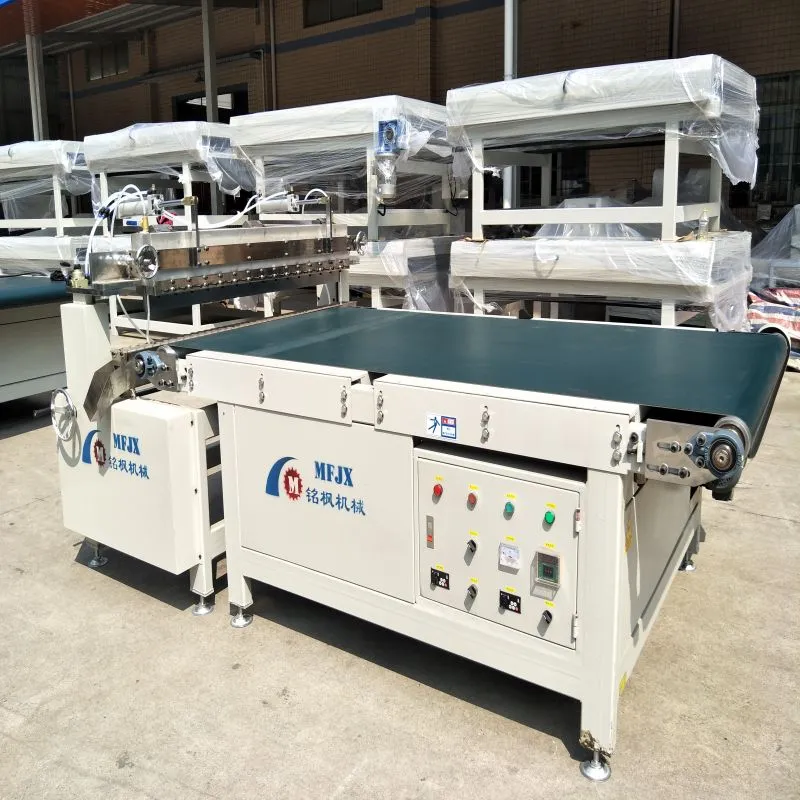
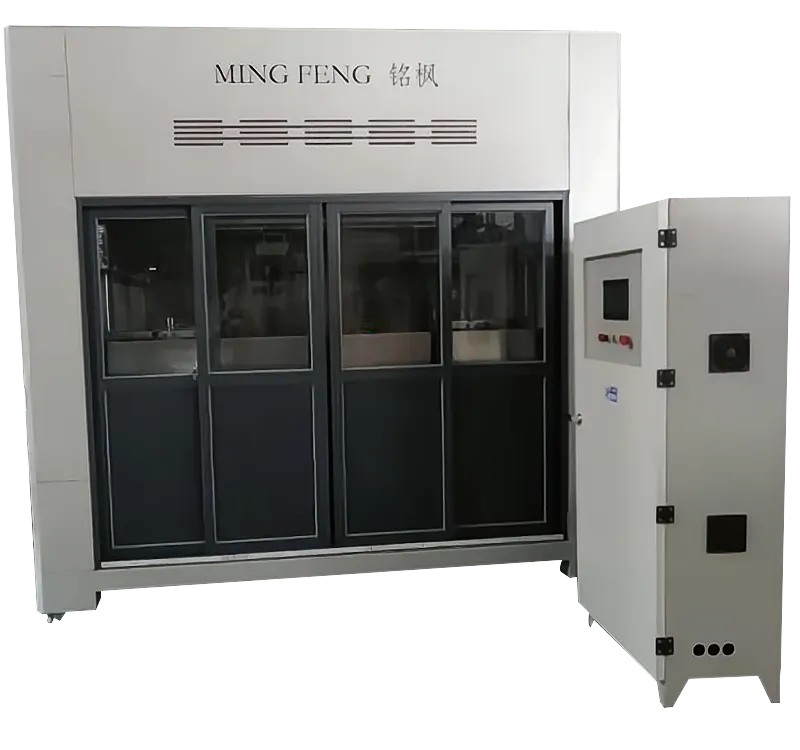
A curtain coater machine is a device that uses the gravity of a liquid to form a "curtain" for non-contact coating.
The basic workflow is as follows:
• Paint flows out evenly through an overflow trough, forming a continuous liquid curtain;
• The workpiece to be coated (e.g., sheet metal) passes through the liquid curtain at a constant speed;
• The paint forms a uniform coating on the surface;
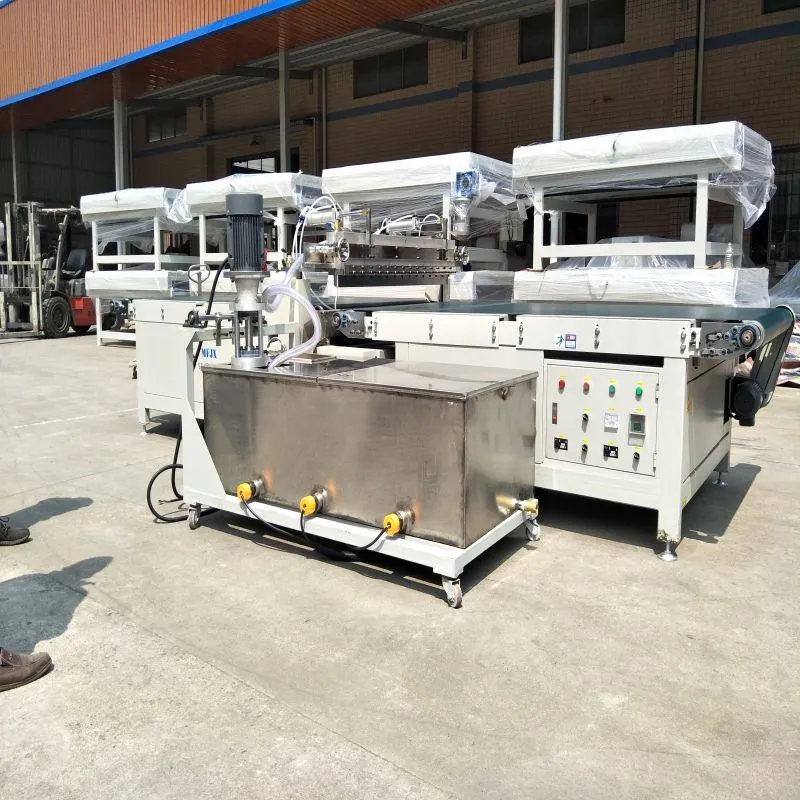
• Excess paint is recovered and reused after flowing down.
Features:
• Uniform paint coverage;
• High recycling rate;
• Almost no air dispersion loss.
2. Principle of Automatic Spraying Machines
Automatic spraying machines atomize paint using a spray gun or nozzle, utilizing airflow or electrostatic force to adhere the paint mist to the workpiece surface.
The process includes:
• Paint atomization;
• Spraying coverage;
• Excess paint mist discharge or recovery;
• Coating leveling and drying.
Features:
• Can coat workpieces with complex shapes;
• Flexible coating coverage;
• However, there is significant atomization loss during the spraying process.
Therefore, it can be seen that, in principle, curtain coater machines naturally have higher paint utilization efficiency, but specific differences still need further comparison through process analysis.
Why is the paint utilization rate of curtain coater machines high?
1. Closed-loop paint recycling
The biggest advantage of curtain coater machines lies in their paint recycling system.
During the coating process, excess paint falls directly into the return tank and is recycled back into the paint storage tank.
The entire process is closed and controllable, with almost no waste.
Typically, the paint utilization rate of curtain coater machines can reach 95%–98%.
2. Precise coating thickness control
By adjusting the curtain thickness, flow rate, and workpiece throughput speed, curtain coater machines can precisely control the coating thickness (the error is usually within ±2μm).
More paint is not wasted, and less paint maintains uniform surface coverage, thus ensuring stable overall paint consumption.
3. No atomization loss
Unlike spraying, curtain coating is a liquid-coverage film formation process. There is no air intervention in the entire process, and there is no "spraying" problem. Paint mist loss during spraying is completely absent in curtain coating, a key factor in paint savings.
Therefore, from both theoretical and practical perspectives, curtain coater machines have a natural advantage in paint saving.
At what stages does paint loss in automatic spraying machines mainly occur?
For a comprehensive comparison, we also need to analyze the sources of loss in automatic spraying machines.
1. Atomization and Scattering Loss
During spraying, some paint mist fails to adhere to the workpiece surface and is sucked away by the exhaust system.
Even with electrostatic spraying, the adhesion rate can only be increased to about 80%, with about 20% of the paint still becoming airborne waste mist.
2. Overspray Loss
When the workpiece has a complex shape or irregular edges, it is difficult to precisely control the spray range, and excess paint is sprayed into empty areas or onto masking devices, resulting in waste.
3. High Recycling Difficulty
Although some high-end automatic spraying machines are equipped with paint mist recovery systems, the recovery rate is low due to paint mixing with air and partial drying. Additional filtration and equipment cleaning are required, increasing costs.
4. Spray Uniformity Affected by Multiple Factors
Air pressure, flow rate, spray gun distance, and angle all affect paint layer thickness. Improper control often leads to areas that are too thick or too thin, requiring more repeated spraying and further increasing paint consumption.
Therefore, the paint utilization rate of automatic spraying machines is typically between 60% and 85%, far lower than that of curtain coater machines.
Which is more paint-efficient, a curtain coater machine or an automatic spraying machine?
Comparison Dimensions | Curtain coater machine | Automatic spraying machine |
| Coating Utilization Rate | 95%–98% | 60%–85% |
| Coating Thickness Control | High precision (±2μm) | Susceptible to environmental and operational factors |
| Recycling and Reuse | Coat recycling | Difficult to recover atomized paint |
Air Loss | Nearly zero | Significant spray loss |
| Equipment Cleaning Frequency | Low | High (spray gun requires frequent cleaning) |
The conclusion is clear:
Curtain coater machines are more paint-efficient.
Both from a physical and economic perspective, curtain coater machines outperform automatic spraying machines in paint saving.
Why is the paint-saving effect of curtain coater machines more consistent?
1. Highly Controllable Coating Process
Curtain coater machines control coating thickness through fluid dynamics, making them virtually unaffected by external air disturbances.
Automatic spraying, on the other hand, is easily affected by airflow, air pressure, and spray distance, leading to fluctuations in spray volume.
2. High-Efficiency Automatic Recovery System
The paint recovery system of a curtain coater machine typically includes:
• Return tank;
• Filter;
• Automatic level adjustment device.
This ensures stable paint recycling and minimizes contamination. Sprayers require additional gas filtration and pipeline cleaning, increasing losses.
3. Suitable for High-Solids or High-Viscosity Paints
Curtain coater machines can handle high-viscosity paints, while spraying requires lower viscosity.
Low-viscosity paints have low solids content and high solvent content, resulting in lower actual dry film yield and thus inherently lower paint efficiency.
In summary, the paint-saving characteristics of a curtain coater machine stem not only from its high recovery rate but also from the fact that the entire system operates under closed, uniform, and low-loss conditions.
In what situations are automatic spraying machines more wasteful?
Even in highly automated factories, the spraying process still presents some structural waste issues:
• Spray gun cleaning during multi-workpiece switching: Each time a color or paint type is changed, the pipeline needs to be cleaned, resulting in the direct disposal of cleaning fluid and residual paint;
• Coating complex-shaped parts: To ensure complete coverage, it is often necessary to increase the number of spray passes or the angle, leading to overlapping layers and excessive paint;
• Hidden waste due to air dilution: Spray paint needs to be adjusted to a lower viscosity, reducing the coverage rate and requiring more paint for the same area.
These issues mean that even with proper control, paint waste in spraying is difficult to completely avoid.
What additional advantages do curtain coater machines offer while saving paint?
1. Reduced environmental treatment costs
Because curtain coater machines produce almost no spray emissions and do not generate paint-containing exhaust gases (VOCs) or paint mist particles, investment in exhaust gas treatment equipment is lower, resulting in lower environmental costs.
2. Improved Production Cleanliness
The paint circulates within a closed system, keeping equipment surfaces clean and free of paint dust buildup, significantly reducing manual cleaning and downtime for maintenance.
3. High Coating Reproducibility
Due to the stable and consistent coating process, paint consumption and coating thickness fluctuations are minimal for each batch, facilitating standardized quality management.
These additional advantages further enhance the paint-saving economic value of the curtain coater machine.
Is there room for optimization in paint saving for automatic spraying machines?
While automatic spraying machines inherently suffer from paint mist loss, utilization can be improved to some extent through optimized control:
1. Employing Electrostatic Spraying Technology
Utilizing the principle of electric field adsorption to improve adhesion, utilization can be increased to approximately 80%;
2. Optimizing Spray Gun Trajectory and Angle
Precisely controlling the spray width and distance reduces areas of dry spray;
3. Improving the Spray Booth Ventilation System
Reducing the proportion of paint mist carried away by exhaust air;
4. Using High-Solids Paint
Increasing film formation per unit volume.
While these methods can partially improve paint utilization efficiency in spraying, they still cannot match the closed-loop recycling mechanism of a curtain coater machine.
Why choose XMF Machinery as your coating machine supplier?
Choosing XMF Machinery means working with an experienced manufacturer that has been dedicated to surface coating machinery since 2006. Our factory integrates R&D, manufacturing, sales, and after-sales service, ensuring consistent quality control and reliable delivery. As a long-term supplier, XMF Machinery also establishes strategic cooperation with coating enterprises to continuously optimize machine design and production efficiency, helping customers achieve sustainable and cost-effective coating solutions.