

In the field of wood surface finishing, curtain coating machines have become one of the key pieces of equipment in the coating process due to their high efficiency, uniformity, and controllable coating characteristics. Many manufacturers have a common question when dealing with engineered wood products such as medium-density fiberboard (MDF) or particleboard:
"Can curtain coating machines be used on MDF or particleboard?"
The answer is—of course.
This article will provide an in-depth analysis from multiple perspectives, including principles, material properties, process compatibility, equipment advantages, key operating points, and common problems, to help you fully understand why curtain coaters are perfectly suitable for coating the needs of MDF and particleboard.
What is a Curtain Coating Machine? How Does It Work?
A curtain coating machine is a device that uses a free-falling liquid film to achieve uniform coating coverage. At its core is a "coating curtain" formed by a specific fluid. The liquid flows evenly from an upper reservoir, forming a continuous thin curtain under gravity. When a workpiece (such as MDF or particleboard) passes underneath, the coating covers its surface with extremely high consistency and smoothness.
The biggest advantage of this principle is non-contact coating. Compared to traditional roller coating or spray coating methods, curtain coating avoids problems such as surface scratches, uneven thickness, bubbles, or flow marks caused by mechanical contact.
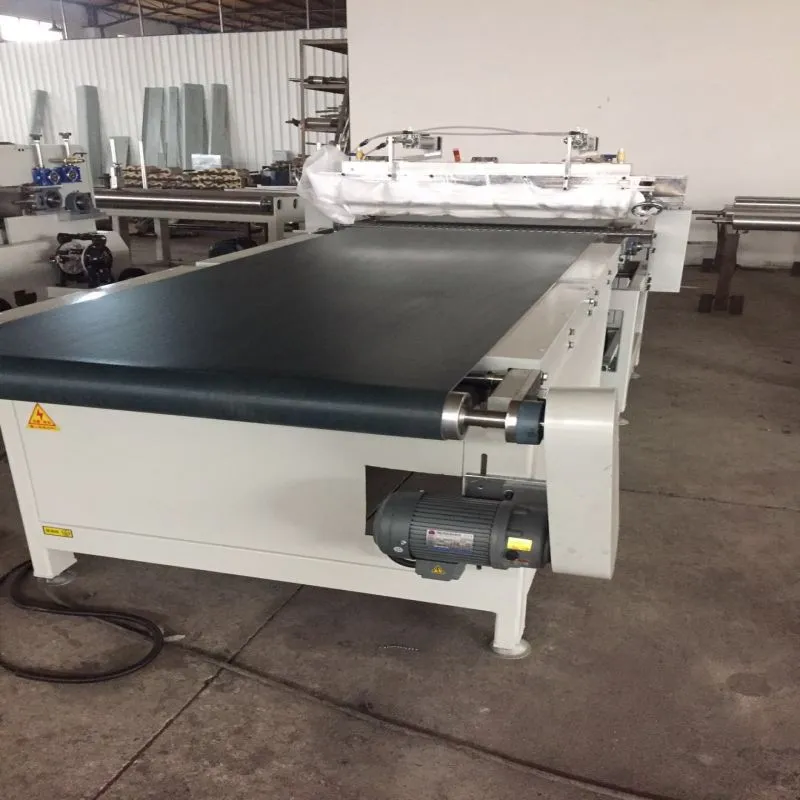
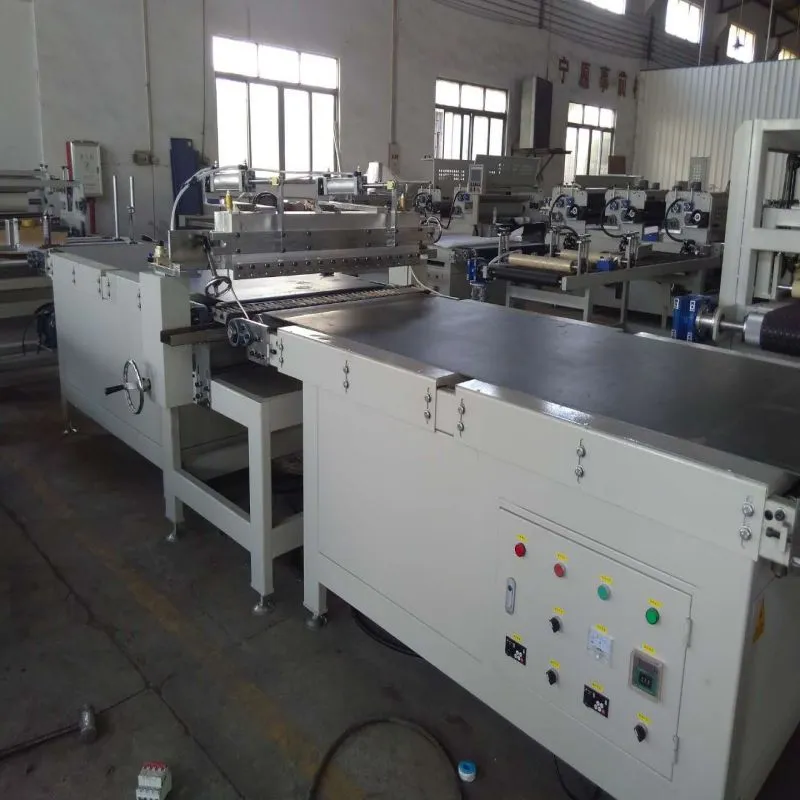
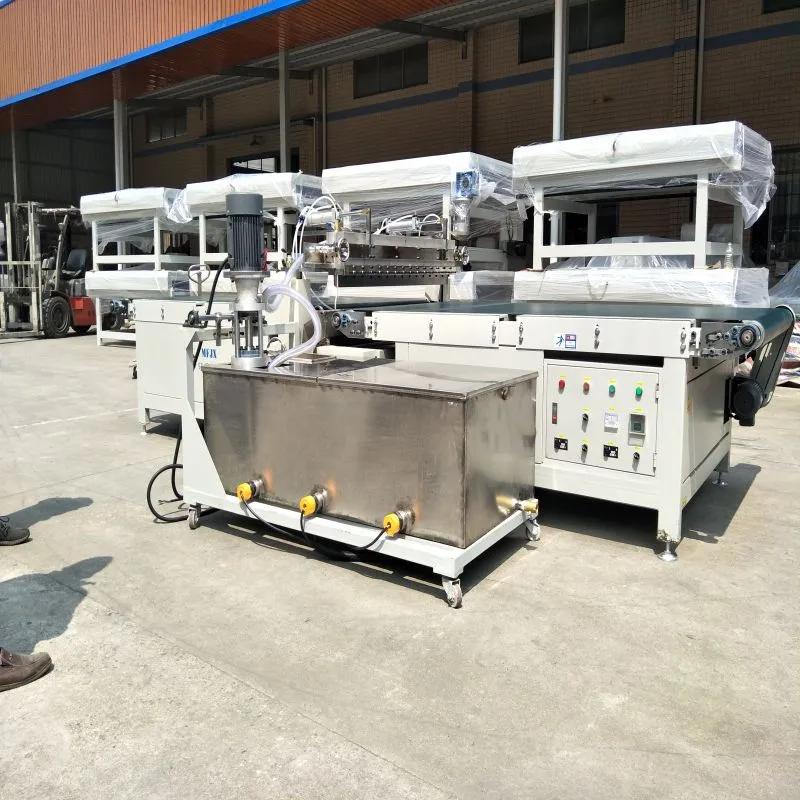
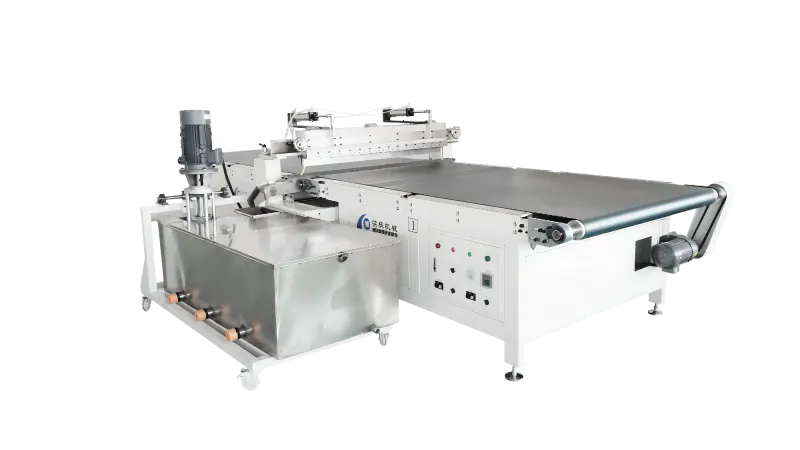
The main components of a curtain coater include:
• Paint supply system: Responsible for storing and circulating paint, ensuring continuous and stable liquid flow.
• Curtain Head: Determines the thickness and uniformity of the liquid curtain.
• Conveying system: Smoothly transports MDF or particleboard under the liquid curtain.
• Recycling system: Recycles and reuses excess paint, reducing waste.
Through the coordinated operation of these components, the curtain coater achieves high-speed, uniform, and stable coating results, which are key performance characteristics required for the surface finishing of MDF and particleboard.
Are the surface characteristics of MDF and particleboard suitable for curtain coating?
Many users worry that the porous and highly absorbent surface of MDF or particleboard might affect the curtain coating effect. In fact, as long as the correct process parameters are mastered, curtain coaters can fully handle these characteristics.
1. Characteristics of MDF (Medium-Density Fiberboard)
MDF is a type of board made primarily from wood fibers under high temperature and pressure. Its surface is smooth, its density is uniform, and its water absorption and swelling rate is low, making it very suitable for uniform coating. Curtain coating machines can achieve high-gloss, high-smoothness coatings on MDF surfaces.
2. Characteristics of Particleboard
Particleboard is made by hot-pressing wood chips and adhesives. Its internal structure is relatively loose, and its surface is relatively rough. However, after sanding and sealing, particleboard can also achieve a dense, uniform coating through curtain coating, making it particularly suitable for large-area finishes such as furniture, cabinets, and flooring.
3. Why can curtain coating machines be used with these types of boards?
• High leveling properties: The liquid curtain formed by curtain coating has self-leveling properties, automatically filling minor depressions.
• Precise thickness control: Micron-level control can be achieved by adjusting the flow rate and conveyor speed.
• Adaptability to various coating systems: UV paints, PU paints, water-based coatings, etc., can all operate stably on curtain coaters.
Therefore, from a material matching perspective, curtain coating machines are ideal surface coating equipment for both MDF and particleboard.
Key Advantages of Curtain Coating Machines in MDF and Particleboard Coating
Why are more and more board processing plants choosing to use curtain coaters? There are several reasons. Here are some core advantages:
1. Excellent coating uniformity
Curtain coating machines can form a continuous liquid curtain, with the coating deposited on the board surface at a stable thickness. Compared to roller coating, it has smaller coating thickness errors and higher gloss consistency.
2. Higher surface quality
Because liquid curtain coating is non-contact, it avoids defects caused by rollers or nozzles. After curing, the surface of MDF or particleboard is smooth as a mirror.
3. High Speed and High Efficiency
Curtain coating machines support continuous production at speeds of tens of meters per minute, making them ideal for large-scale industrial applications.
4. High Coating Utilization
The system features a coating recovery function, allowing uncoated coating to be recycled, resulting in virtually zero waste.
5. Easy Cleaning and Maintenance
Compared to spray coating equipment, curtain coaters have a simpler structure, are less prone to clogging, have longer maintenance cycles, and lower operating costs.
6. Environmental Protection and Safety
The closed-loop system reduces VOC emissions, making it even more environmentally friendly when used with water-based coatings, meeting the sustainability requirements of modern production.
What process points should be considered when using a curtain coating machine?
While curtain coating machines are perfectly compatible with MDF and particleboard, several key parameters still need to be considered to achieve optimal results.
1. Coating Viscosity Control
Curtain coating machines have high requirements for coating viscosity. Too low a viscosity will cause sagging, while too high a viscosity will cause discontinuous liquid curtain flow. Ideally, the coating time should be controlled between 18 and 25 seconds (DIN 4 cup).
2. Surface Pretreatment
For MDF or particleboard, sanding and dust removal are necessary, and undersealing may be required to reduce seepage and the impact of pores.
3. Flow Rate and Speed Matching
The flow rate and conveyor speed of the curtain coater must be matched; otherwise, the coating thickness will be uneven. A stable liquid curtain can be maintained by precisely adjusting the pump speed and conveyor belt speed.
4. Ambient Temperature and Humidity Control
Temperature affects coating fluidity, and humidity affects curing performance. The ideal operating environment is a temperature of 20–25°C and a humidity of 50–60%.
5. Coating Circulation and Filtration
Maintaining coating cleanliness is crucial. The filtration system should be replaced regularly to prevent particle blockage from affecting the continuity of the liquid curtain.
What coating systems can a curtain coating machine use?
In MDF and particleboard applications, curtain coaters are compatible with a variety of coating types, including:
• UV-cured coatings: Fast curing speed, suitable for high-speed production lines.
• PU polyurethane coatings: Abrasion-resistant, strong adhesion, suitable for furniture panels.
• Water-based coatings: Environmentally friendly, low odor, suitable for green production.
• Acrylic coatings: Strong weather resistance, suitable for outdoor decorative panels.
Different coating systems can achieve optimal results on a curtain coating machine by adjusting parameters such as flow rate, viscosity, and temperature.
What are the differences between a curtain coater and traditional roller coating and spraying methods?
1. Coating thickness control
Curtain coating can achieve thicker and more uniform coatings, while roller coating is greatly affected by pressure and surface structure.
2. Coating efficiency
Curtain coating machines are fast and can produce continuously; spraying methods are less efficient and wasteful.
3. Environmental impact
Spraying produces a large amount of paint mist, while curtain coaters produce almost no splatter, making them more environmentally friendly.
4. Surface finish
Curtain coating produces a mirror-like finish with no contact marks.
In summary, curtain coating machines are not only suitable for MDF and particleboard, but also significantly outperform traditional coating methods.
Typical Applications of Curtain Coating Machines in MDF and Particleboard Production Lines
Curtain coating machines can be flexibly configured at different locations on the production line:
• Primer coating: Provides a smooth base for subsequent decorative layers;
• Topcoat coating: Achieves high-gloss or matte finishes;
• Sealing layer: Enhances moisture resistance and abrasion resistance;
• UV transparent protective layer: Improves scratch resistance and decorative effect.
Through multi-coating and curing combinations, a fully automated coating process from base sealing to finished product can be achieved on the same production line.
Common Problems and Solutions in Curtain Coating Machine Operation
Problem 1: Discontinuous or broken liquid curtain?
Cause: Paint viscosity too high or flow rate insufficient.
Solution: Appropriately reduce viscosity or increase pump speed.
Problem 2: Sagging on the board surface?
Cause: Viscosity too low or conveying speed too slow.
Solution: Adjust viscosity to the normal range and increase conveyor speed.
Problem 3: Uneven coating thickness?
Cause: Insufficient liquid curtain stability or unstable conveying.
Solution: Check liquid curtain distribution and conveyor belt tension.
Problem 4: Bubbles or particle defects?
Cause: Insufficient paint filtration or excessively high ambient humidity.
Solution: Replace the filtration system and control humidity.
With scientific maintenance and correct operation, curtain coaters can maintain stable and efficient performance in MDF and particleboard coating over a long period.
Limitations and Countermeasures of Curtain Coating Machines
Although curtain coaters have significant advantages, there are still some limitations that need attention:
• High requirements for board flatness: Uneven MDF or particleboard may cause coating thickness fluctuations.
• Not suitable for three-dimensional structural parts: Curtain coating is mainly suitable for flat workpieces.
• The paint recycling system needs regular maintenance: Ensure stable quality of recycled paint.
These problems can be overcome through reasonable equipment configuration and process management.