

Compared to traditional manual spray painting methods, automatic spray painting systems not only boost production efficiency but also ensure greater consistency in coating quality. In practical applications, automatic spray painting systems are not only widely utilized for coating metal products but are also increasingly being adopted for the surface treatment of plastic products.
However, some companies still harbor doubts when planning their spray painting equipment:
Can automatic spray painting systems actually be used to paint plastic products?
The answer is a resounding yes. Automatic spray painting systems are entirely suitable for coating plastic products; however, in actual practice, several factors must be taken into account—including the specific properties of the plastic material, the surface treatment method, the spraying parameters, and the type of coating being used.
What Is an Automatic Spray Painting System?
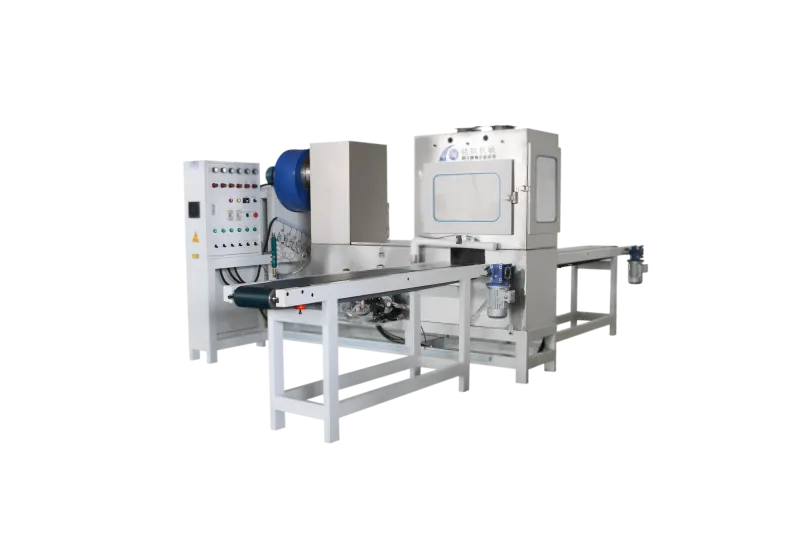
An automatic spray painting system is an industrial coating system that utilizes automated equipment to execute the painting process. Typically, the system employs components such as automatic spray guns, control systems, conveyor equipment, and paint supply systems to achieve continuous coating of workpieces.
Within an automatic spray painting system, the paint is atomized by the spray gun into fine droplets, which are then uniformly projected onto the workpiece surface to form an even coating. Subsequently, leveling and drying processes are applied to cure the coating into a stable paint film.
The key features of automatic spray painting systems include:
•High spraying efficiency
•Consistent coating quality
•High degree of automation
•High paint utilization rate
•Suitability for mass production
Due to these advantages, automatic spray painting systems are widely employed for the surface coating of a diverse range of industrial products.
Why Do Plastic Products Need to Be Painted?
In many industries, plastic products require not only robust structural integrity but also an aesthetically pleasing appearance and a certain level of surface protection. Consequently, many plastic products undergo a spray painting process after their manufacturing is complete.
The spray painting of plastic products typically serves the following purposes:
1. Enhancing Aesthetic Quality
Painting gives the surface of plastic products a uniform color and gloss, thereby improving the product's visual appeal.
2. Improving Surface Abrasion Resistance
Certain types of coatings can enhance the abrasion resistance of the plastic surface, making the product more durable.
3. Enhancing Weather Resistance
By applying specialized coatings, the plastic product's resistance to ultraviolet (UV) radiation, humidity, and temperature fluctuations can be significantly strengthened. 4. Improving Tactile Feel
Certain coatings can alter the tactile feel of a plastic surface—for instance, by creating a matte finish or a soft-touch texture.
Consequently, in the manufacturing of many plastic products, spray painting has become a crucial processing step, and automated spray painting systems are highly effective at executing this process.
Are Automated Spray Painting Systems Suitable for Plastic Products?
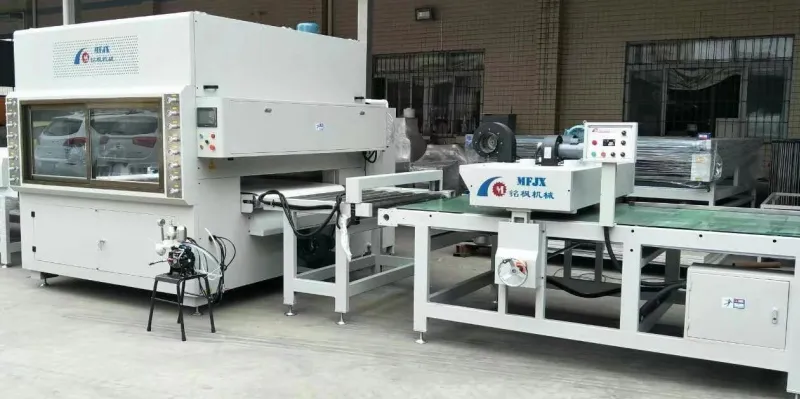
From a technical standpoint, automated spray painting systems are entirely suitable for coating plastic products. In fact, across numerous industries, automated systems have already been widely adopted for the spray painting of plastic goods.
By precisely controlling the spray gun's trajectory and painting parameters, automated systems ensure uniform coating coverage over the plastic surface, thereby achieving consistent and high-quality finishes.
However, given the inherent differences in properties between plastic and metal materials, specific process requirements must be carefully observed when utilizing automated systems for plastic painting.
Why Do Plastic Products Require Surface Treatment Before Painting?
Plastic materials typically possess low surface energy, which implies that coatings adhere poorly to their surfaces. If paint is applied directly without preparation, issues regarding insufficient coating adhesion may arise.
Therefore, prior to using an automated spray painting system to coat plastic products, surface treatment is typically required.
Common surface treatment methods include:
•Plasma treatment
•Corona treatment
•Flame treatment
These treatment methods alter the microscopic structure of the plastic surface and increase its surface energy, thereby enhancing coating adhesion.
Through appropriate surface treatment, automated spray painting systems can achieve superior results when coating plastic products.
What Types of Coatings Are Required for Plastic Painting in Automated Systems?
The selection of coatings is a critical factor in the process of painting plastic products. Different types of plastic materials necessitate the use of specific coating systems.
Common coatings used for plastic painting include:
1. Solvent-based Coatings
Solvent-based coatings offer excellent adhesion and leveling properties, making them widely utilized in plastic painting applications.
2. Water-based Coatings
Water-based coatings feature lower emissions of volatile organic compounds (VOCs), making them suitable for production environments with strict environmental protection requirements.
3. UV-curable Coatings
UV-curable coatings cure rapidly under ultraviolet light, allowing for the formation of a highly durable and hard coating within a very short timeframe.
Within an automated spray painting system, different types of coatings require specific painting parameters and corresponding drying equipment.
What Equipment Is Required for an Automatic Spray Painting System to Coat Plastic Products?
A complete automatic spray painting system typically consists of various components that work together to execute the coating process.
The primary equipment includes:
1. Conveying System
The conveying system is used to transport plastic workpieces from the production line entrance to the spray painting zone.
2. Surface Treatment Equipment
Used to enhance the adhesion of the plastic surface.
3. Automatic Spray Guns
The spray guns are responsible for atomizing the coating material and projecting it onto the workpiece surface.
4. Spray Booth
The spray booth provides a stable environment for spraying and captures excess paint mist.
5. Leveling Zone
After spraying is complete, the coating requires a certain amount of time to level out.
6. Drying or Curing Equipment
Drying equipment is used to cure the applied coating.
When combined, these components constitute a complete automatic spray painting system.
What Process Parameters Require Attention When Using an Automatic Spray Painting System to Coat Plastic Products?
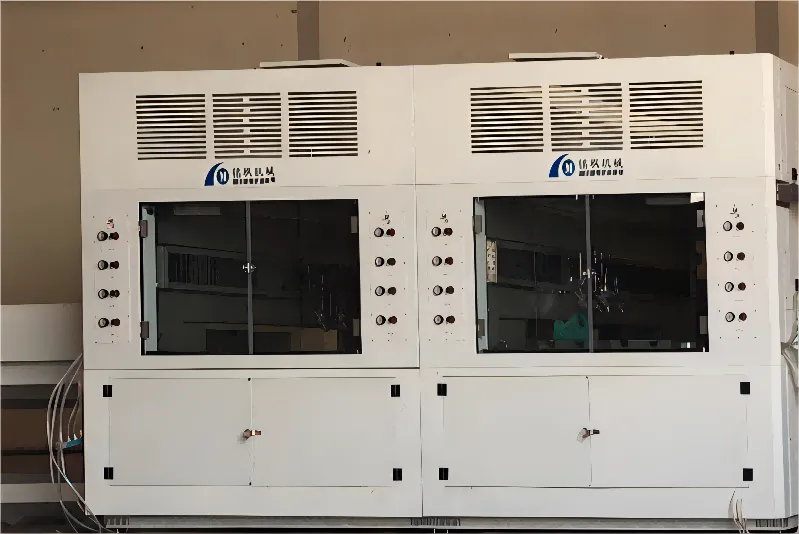
To ensure high coating quality, several process parameters must be carefully controlled when using an automatic spray painting system to coat plastic products.
1. Spray Gun Air Pressure
The air pressure of the spray gun affects the atomization efficiency of the coating material.
2. Spraying Distance
The distance between the spray gun and the workpiece must be kept consistent.
3. Coating Viscosity
The viscosity of the coating material influences spraying uniformity and leveling performance.
4. Conveying Speed
The conveying speed must be synchronized with the system's spraying capacity.
By properly controlling these parameters, the overall coating quality of the automatic spray painting system can be significantly improved.
How Does an Automatic Spray Painting System Enhance Coating Uniformity on Plastic Products?
During the process of coating plastic products, coating uniformity is one of the most critical quality indicators. Automatic spray painting systems can enhance coating uniformity through various methods.
For example:
•Utilizing multiple spray guns simultaneously
•Optimizing the movement trajectory of the spray guns
•Controlling the spraying speed
These methods ensure that the coating material covers the workpiece surface evenly, thereby improving the overall coating quality.
What Are the Advantages of Using an Automatic Spray Painting System for Plastic Products?
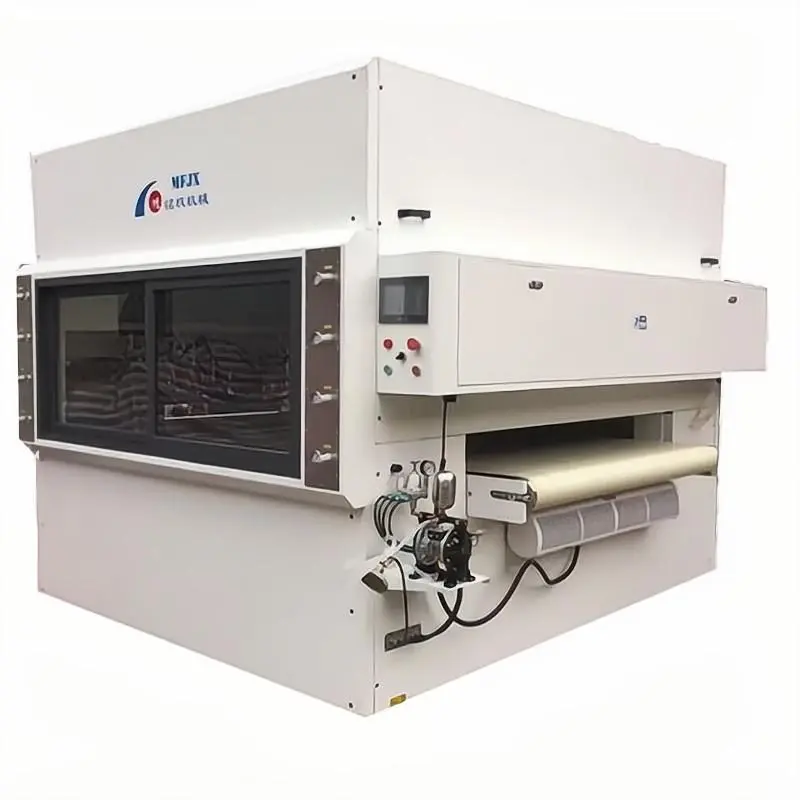
Compared to manual spraying, an automatic spray painting system offers distinct advantages when coating plastic products.
1. Increased Production Efficiency
Automatic spray painting systems are capable of continuous operation, making them ideally suited for high-volume production environments.
2. Improve Coating Quality
Automated equipment maintains stable spraying parameters.
3. Reduce Labor Costs
Automated painting systems reduce the need for manual spraying.
4. Increase Paint Utilization Efficiency
Precise control of the spraying process minimizes paint waste.
Consequently, automated painting systems have become essential equipment for many plastic product manufacturing enterprises.
Can customers purchase individual machines or full systems?
Customers can purchase individual machines or full coating systems from XMF Machinery, depending on their specific needs. As a flexible manufacturer and supplier, we offer standalone equipment—such as sanding machines, dust removal machines, roller coating machines, UV curing machines, and embossing machines. For applications requiring a higher level of automation, we supply complete production lines.