

In the furniture manufacturing, decorative materials, and building materials industries, UV roller coating machines have become essential equipment for modern panel surface coating due to their high efficiency, high precision, and low waste.
However, in actual production, the following question frequently arises:
"If the panel surface is not smooth, can the UV roller coating machine still apply paint normally?"
This is a crucial question because the flatness of the panel surface directly affects the coating thickness, uniformity, and gloss consistency.
Simply put, uneven panel surfaces do not necessarily preclude coating, but the equipment parameters and process steps must be adjusted appropriately based on the type and degree of unevenness and the process requirements.
Below, we will analyze this question in detail from a professional perspective, helping you determine when coating is possible, how to adjust coating parameters, and what key details to pay attention to.
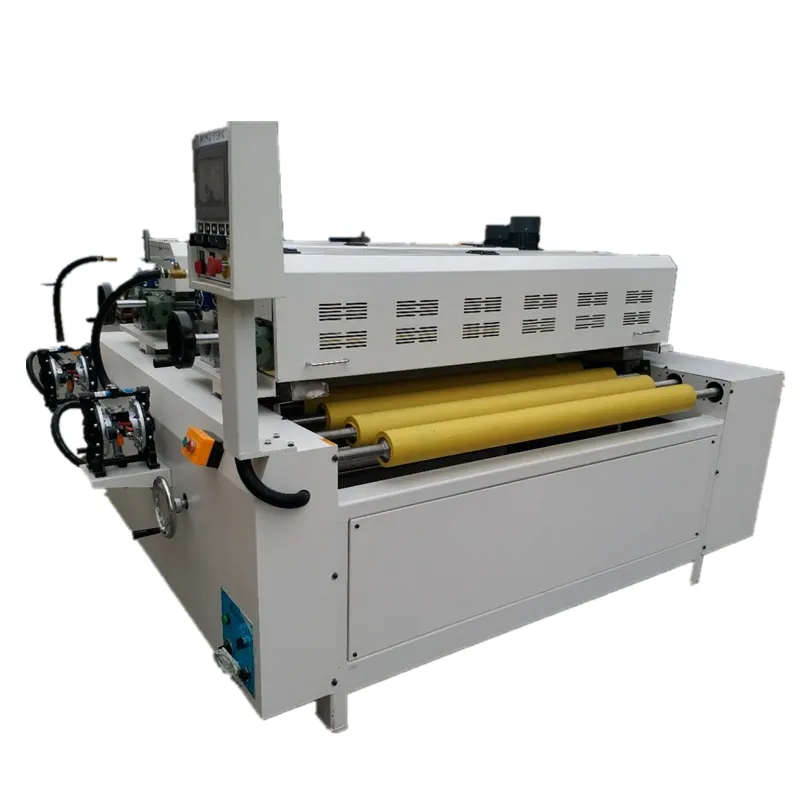
What is the working principle of a UV roller coating machine?
Before analyzing whether uneven panels can be coated, it is essential to understand how a UV roller coating machine works.
1. Basic Principles
A UV roller coating machine is a device that uses precision rollers to evenly coat the surface of a substrate with UV-curable coatings. Its main structure includes:
• Paint supply system: transports the paint;
• Metering roller: controls the paint film thickness;
• Coating roller: contacts the substrate to transfer the paint;
• Conveyor belt system: ensures stable passage of the substrate;
• UV curing unit: cures the coating by irradiating it with ultraviolet light.
2. Core Conditions for Coating
The prerequisite for coating is: The substrate surface must maintain stable, continuous, and uniform contact with the roller.
This means that when the substrate surface is uneven, has ripples, warps, or pits, the contact between the roller and the substrate will be affected, leading to the following problems:
• Localized coatings that are too thick or too thin;
• Uneven paint film flow;
• Significant differences in gloss;
• Even missed areas or paint buildup.
Therefore, the flatness of the substrate surface is one of the core physical conditions affecting the quality of UV roller coating.
What types of uneven substrate surfaces are there?
Before determining whether coating is feasible, it's crucial to differentiate between different types of unevenness, as their impact on the UV roller coating machine varies.
1. Slight Wavy Unevenness
This is commonly seen in micro-ripples caused by uneven pressing or sanding.
• Characteristics: Width less than 0.2mm; the overall surface remains relatively continuous.
➡ Can be compensated for by adjusting the roller gap and paint flowability.
2. Localized Pits or Indentations
This type of unevenness is usually caused by raw material defects or external pressure damage.
• Characteristics: Dotted or small-area depressions.
➡ Coating is possible, but the paint layer within the pits will be thicker, and shrinkage or shadows are likely to occur after UV curing.
3. Overall Warping or Uneven Thickness
If the substrate is generally warped or has significant thickness fluctuations, the coating roller cannot maintain stable contact.
➡ Direct roller coating is not recommended, as it will result in severe uneven thickness.
4. Deep Textured or Embossed Surfaces
Some wood grain or decorative panels have three-dimensional textures.
➡ Traditional rollers cannot fully reach the bottom of the texture, only covering the higher points.
For full coverage, flexible rollers or spray coating processes are required.
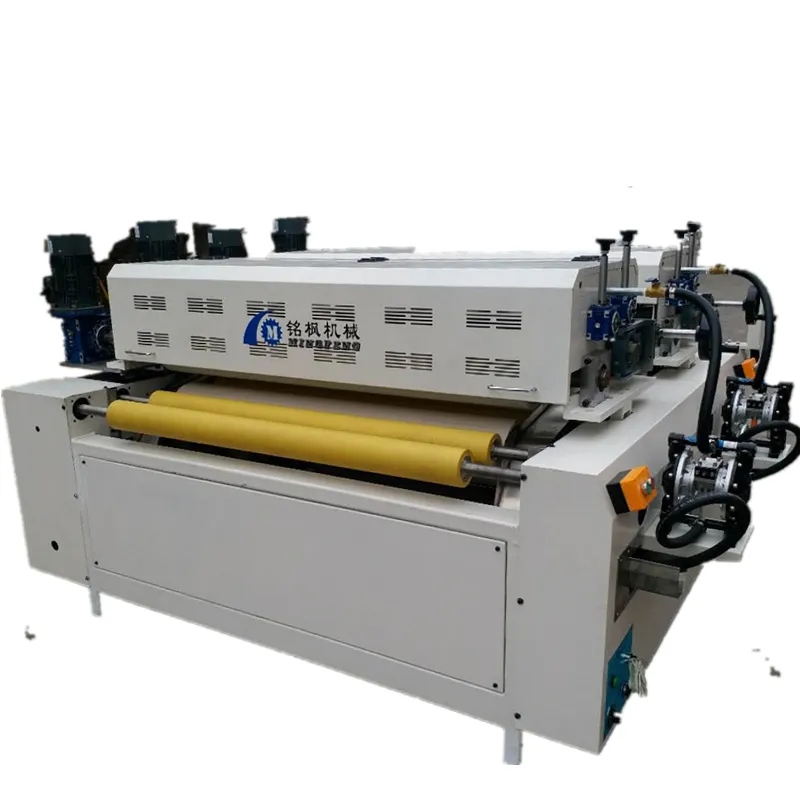
Why does a UV roller coating machine require a flat surface?
Many people mistakenly believe that as long as the equipment is precise, it can "automatically" compensate for unevenness on the surface. In fact, the structure of a UV roller coating machine dictates that it can only achieve ideal coating on a flat surface. The reasons are as follows:
1. Roller Contact Method Determines Transfer Uniformity
Paint is transferred through mechanical contact between the roller and the board surface.
If the surface has unevenness, the roller will "hang" over the recessed areas, resulting in insufficient paint in these areas.
2. Fixed Metering Gap, Unable to be Dynamically Adjusted
The gap between the metering roller and the coating roller is typically 0.05–0.15 mm, a fixed value.
If the board thickness fluctuates beyond the gap control range, it will cause differences in paint layer thickness.
3. Limited Coating Flowability
UV coatings have a high viscosity (typically 20–40 seconds/Ford Cup 4), making self-leveling difficult even in depressions.
Therefore, if the surface is noticeably uneven, the coating cannot automatically fill the gaps.
4. No Further Flow Correction After Curing
UV curing is an instantaneous physical process and does not level out like solvent-based coatings.
Once cured by light, all thickness variations will be fixed.
In summary, flatness directly determines coating quality and is one of the key conditions for determining whether a UV roller coating machine can be used.
What levels of unevenness can still be addressed with a UV roller coating machine?
Not all uneven surfaces are uncoated. With proper control parameters and auxiliary measures, slightly uneven surfaces can still be processed.
Permissible Unevenness Range
Generally speaking:
• Unevenness deviation ≤ ±0.15 mm: Normal coating is possible;
• Deviation 0.15–0.3 mm: Roller gap and viscosity need adjustment;
• Deviation exceeding 0.3 mm: Direct roller coating is not recommended; sanding or leveling should be performed first.
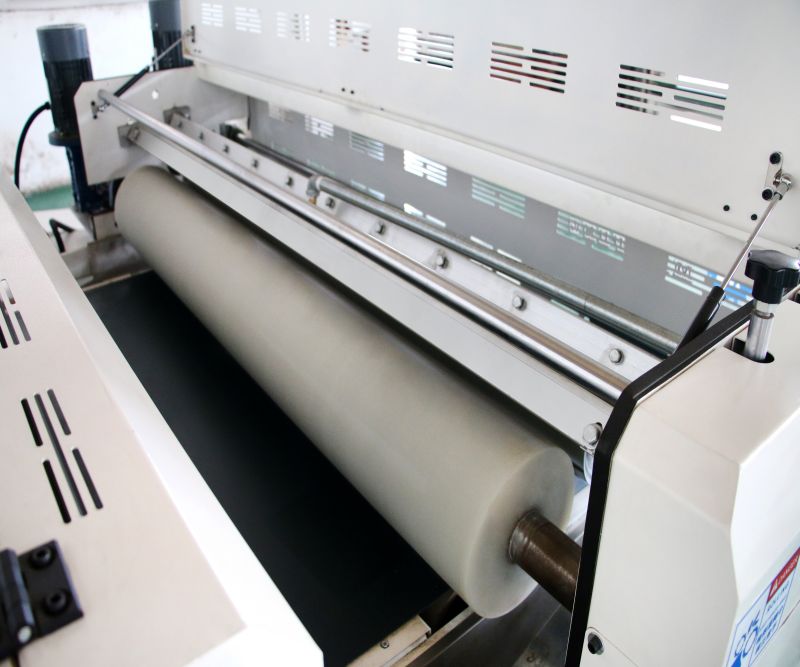
What are some typical problems that may occur when coating on uneven surfaces?
Even with optimized equipment parameters, if the unevenness of the substrate exceeds a reasonable range, the UV roller coating machine may still encounter the following problems during coating:
1. Uneven Coating Thickness
The paint layer is thinner in raised areas and thicker in recessed areas, resulting in a significant gloss difference after curing.
2. Missed Coating or Mottling
No paint transfer occurs in recessed areas not reached by the roller, resulting in inconsistent color depth.
3. Paint Film Stringing or Breakage
Warping of the substrate causes a momentary loss of pressure on the roller, causing the paint to break and form string-like marks.
4. Bubbles or Pinholes
Air trapped in recessed areas after paint buildup makes it difficult for it to escape, leading to bubbles or pinholes after UV curing.
5. Edge Film Breakage
Unevenness causes the paint to stretch at the edges, making it prone to cracking after UV curing.
These problems not only affect the appearance but also reduce the abrasion resistance and adhesion of the finished product.
Can unevenness on the board surface be solved by multiple roller coatings?
Some manufacturers try to use a UV roller coating machine to apply multiple coats to compensate for surface unevenness.
Theoretically, this method can partially improve the coverage of recessed areas, but the effect is limited.
Analysis of Reasons:
• UV coating is an instant curing structure; each coat is applied on top of an already cured layer and does not actively fill in the underlying recesses.
• Multiple coats lead to uneven thickness accumulation, which may actually increase inconsistent gloss.
• Accumulated curing stress can easily cause board warping or coating cracking.
Therefore, the number of roller coatings is not a fundamental solution to unevenness; the key lies in substrate pretreatment and flatness control.
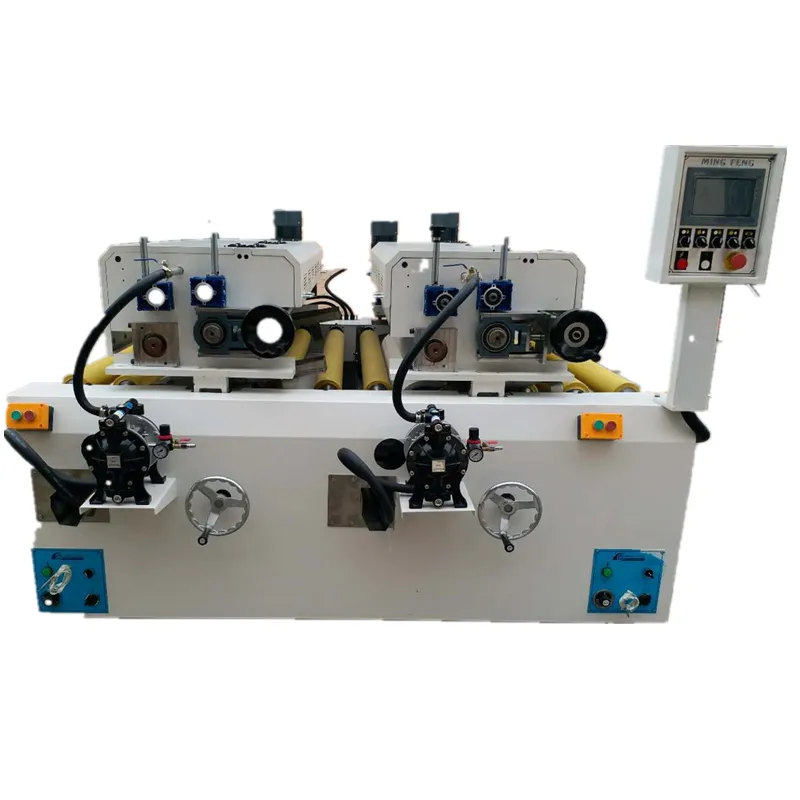
How to optimize coating results for uneven substrates?
If the substrate surface has some unevenness, and a UV roller coating machine must be used, the following optimization measures can be taken:
1. Enhance the sanding process
Use a wide-band sander or fine sander before coating to improve surface smoothness as much as possible.
It is recommended that the final sanding grit be P240–P320 to ensure consistent contact.
2. Use flexible rollers
Using medium-soft or soft rollers instead of hard rollers can improve adaptability to localized depressions.
3. Adjust the paint supply system
Appropriately increase the paint supply and reduce the paint viscosity to give it a certain leveling ability.
4. Control the UV curing energy
Excessive UV lamp energy will cause instant curing, preventing the paint from self-leveling.
Reducing the energy by 10–20% can delay the curing time, allowing the coating a short period of flow correction.
5. Primer Smoothing Solution
Before applying the topcoat, smooth the surface using a UV primer roller coating followed by sanding, then apply the top coat.
Can XMF Machinery supply complete automatic coating production lines?
Yes, XMF Machinery is a professional manufacturer that supplies complete automatic coating production lines for various industries. Our production lines integrate sanding machines, dust cleaner machines, roller coating machines, automatic spraying machines, curtain coating machines, UV dryer machines, and embossing machines. Customers can purchase a full line or customized combinations according to their process requirements. As a factory with strong engineering capabilities, we focus on environmental protection, automation, and efficiency.