

In industrial coating, UV roller coating machines are widely used on the surfaces of products such as wood flooring, furniture, plastic sheets, metal sheets, paper, and PET film due to their high efficiency, energy saving, environmental friendliness, and precise thickness control.
However, many operators encounter a practical problem during use: can a UV Roller Coating Machine be used with a coating that is too thick?
From both a theoretical and practical perspective, the answer is: yes, it can be used, but only if the parameters and formulation are properly adjusted.
UV Roller Coating Machines have certain requirements regarding coating viscosity. A coating that is too thick will affect coating uniformity, leveling, and curing efficiency. Therefore, whether it can be used depends on whether the operator understands the equipment's working principle, the rheological properties of the coating, and the key points of process parameter control.
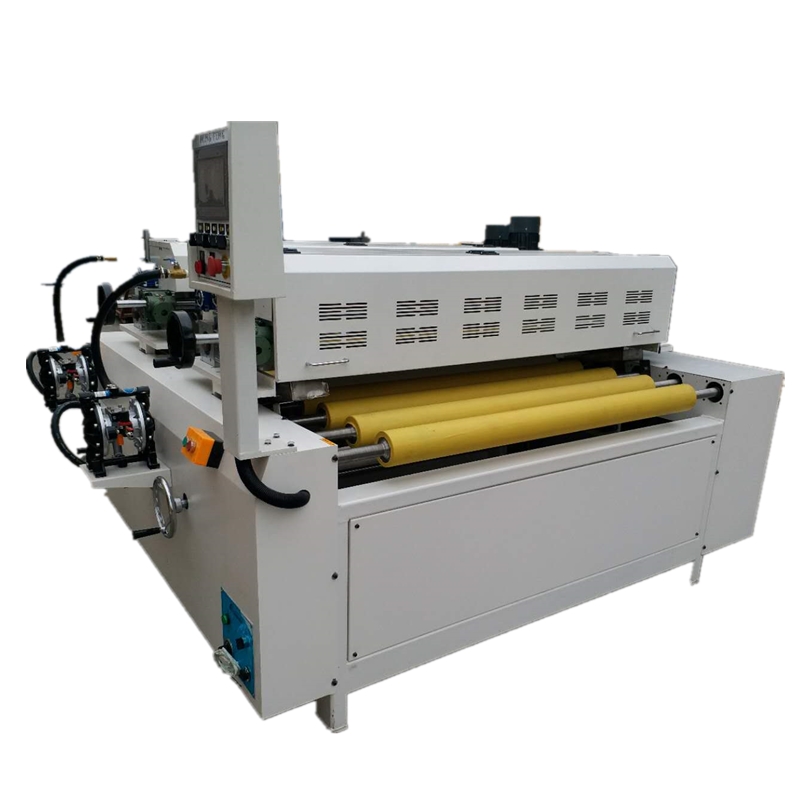
How does a UV Roller Coating Machine work?
A UV Roller Coating Machine is a precision device that uses a roller transfer coating method. Through mechanical transmission and roller gap control, it achieves precise quantitative transfer and uniform spreading of UV-curable coatings.
Its main structure includes:
• Paint supply system: stably delivers paint to the paint supply roller;
• Metering roller: adjusts the paint film thickness;
• Transfer roller: transfers the paint to the substrate;
• Back pressure roller and conveyor belt: ensures smooth passage of the substrate;
• UV curing system: uses ultraviolet light to instantly cure the paint.
In this process, the paint's flowability (i.e., viscosity) plays a decisive role in the coating effect. If the paint is too thick, its flowability is poor, which may lead to insufficient transfer or uneven surface; if it is too thin, it is prone to sagging, accumulation, or ripples.
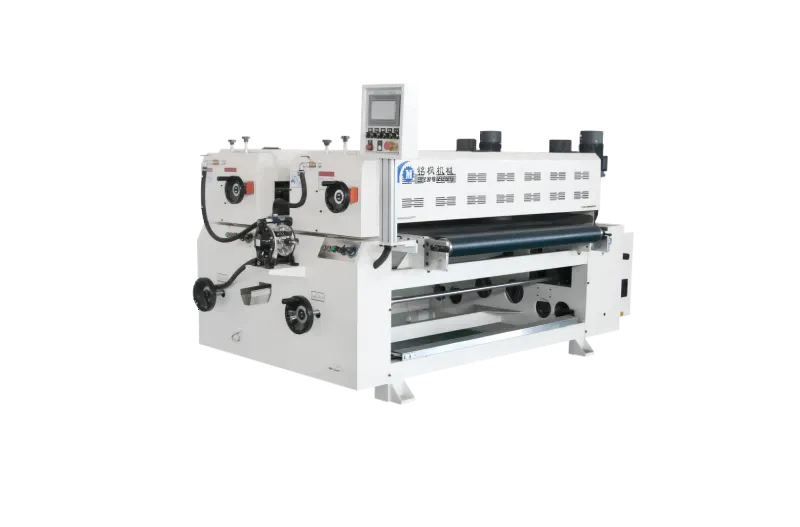
Why does paint that is too thick affect the performance of a UV Roller Coating Machine?
The viscosity of the paint determines its transfer characteristics and film-forming properties in a UV Roller Coating Machine. When the paint is too thick, the equipment may experience the following problems during the coating process:
1. Uneven coating thickness
Thick paint is not easy to level, and when the coating roller speed changes, it is easy to form local uneven thickness, affecting surface smoothness.
2. Difficulty in Coating Transfer
Insufficient shear force between the metering roller and the transfer roller makes it difficult for high-viscosity coatings to be effectively transferred to the substrate, resulting in partial missed coatings or mottling.
3. Surface Bubbles or Pinholes
Bubbles in thick coatings are difficult to escape, especially before UV curing. They are quickly trapped inside the film, forming pinholes or pitting.
4. Incomplete Curing
High-viscosity coatings typically have a high solids content. As the coating thickness increases, UV light penetration decreases, leading to sufficient surface curing but insufficient curing of the underlying layers.
5. Increased Energy Consumption and Roller Load
Due to the high transfer resistance of thick coatings, the torque load on the equipment increases, causing roller friction and temperature rise. Long-term operation is detrimental to equipment maintenance.
Therefore, although UV Roller Coating Machines can handle a certain range of high-viscosity coatings, flowability matching must be achieved through parameter optimization and coating adjustment.
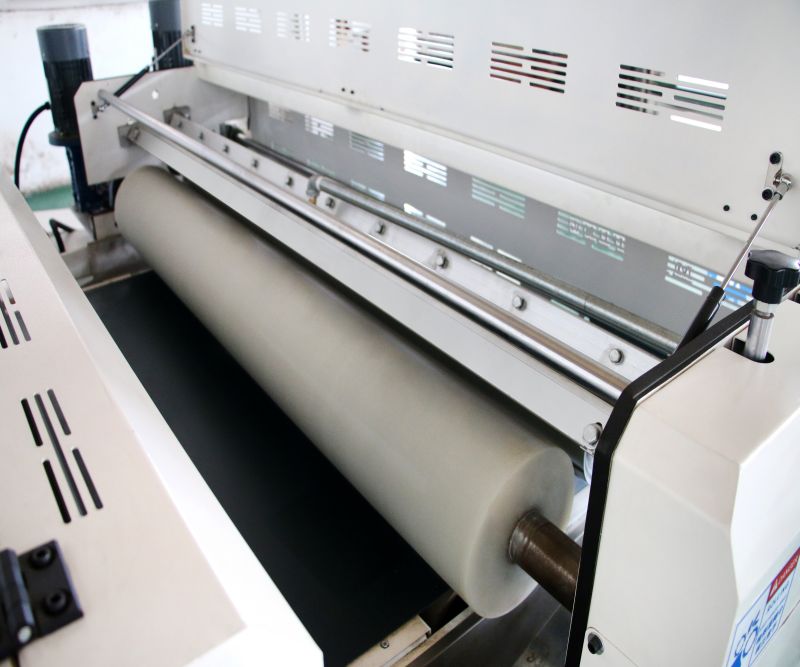
What is the suitable coating viscosity range for a UV Roller Coating Machine?
Different brands and models of UV Roller Coating Machines have slightly different requirements for coating viscosity, but most machines are generally suitable for the following ranges:
• Low viscosity coatings: 20–80 seconds (Ford Cup 4)
• Medium viscosity coatings: 80–150 seconds
• High viscosity coatings: 150–300 seconds (requires heating or process adjustment)
When the coating viscosity exceeds 300 seconds, the coating transfer efficiency decreases significantly. In this case, external auxiliary measures are needed, such as:
• Coating preheating (to reduce viscosity)
• Installing a heating circulation system
• Adjusting roller speed and gap
• Using a high-torque drive roller
Through these methods, UV Roller Coating Machines can still handle the application requirements of high-viscosity coatings.
Can thinner be added directly when the coating is too thick?
Many operators would immediately think of adding thinner to reduce viscosity, but this method requires extreme caution when using UV-cured coatings for UV Roller Coating Machines.
1. Common solvents are not recommended
UV coatings are 100% solids systems and contain no volatile solvents. Adding common thinners will disrupt the reaction balance of the UV-curing system, leading to incomplete curing, a sticky surface, and reduced adhesion.
2. Formulation can be adjusted appropriately
If viscosity adjustment is necessary, the coating manufacturer should add reactive diluent monomers (such as HDDA, TPGDA, etc.) according to the formulation characteristics. These monomers participate in the UV curing reaction and will not affect film quality.
3. Temperature adjustment is safer
Heating to reduce viscosity is recommended over adding thinners. Heating the UV coating to 35℃~45℃ can significantly improve flowability without compromising system stability.
How to adjust parameters of a UV Roller Coating Machine to suit thick coatings?
Correct equipment parameter adjustments are crucial when coating viscosity is high. The following are optimization strategies for UV Roller Coating Machines:
1. Increase the roller gap appropriately
Increasing the gap between the metering roller and the transfer roller reduces shear stress on the coating, preventing the coating from being squeezed and generating bubbles.
2. Reduce Roller Speed
High speeds can cause shear cracking in thick coatings. Reducing the speed allows for smoother flow and transfer of the coating.
3. Increase Coating Temperature
A temperature control device can be added to the paint supply line to maintain the coating within a suitable temperature range, thus reducing viscosity.
4. Increase Paint Supply Pressure
Appropriately increasing pump pressure ensures that high-viscosity coatings flow smoothly into the metering rollers without interruption or stagnation.
5. Optimize UV Lamp Energy
High-viscosity coatings typically result in thicker layers. Therefore, increasing the UV energy density or extending the irradiation time is crucial for complete curing.
Will overly thick coatings damage the UV Roller Coating Machine?
Theoretically, short-term use will not cause significant damage. However, prolonged operation with high-viscosity coatings without adjustments can indeed lead to equipment wear or performance degradation. Common effects include:
• Increased motor load → Increased heat generation in the drive system;
• Excessive stress on roller bearings → Increased wear;
• Shortened scraper seal life → Increased risk of residual paint accumulation and leakage;
• Pump system blockage or pressure fluctuations → Unstable paint supply.
Therefore, when the paint is found to be too thick, process parameters should be adjusted or the paint condition optimized first, rather than forcing operation.
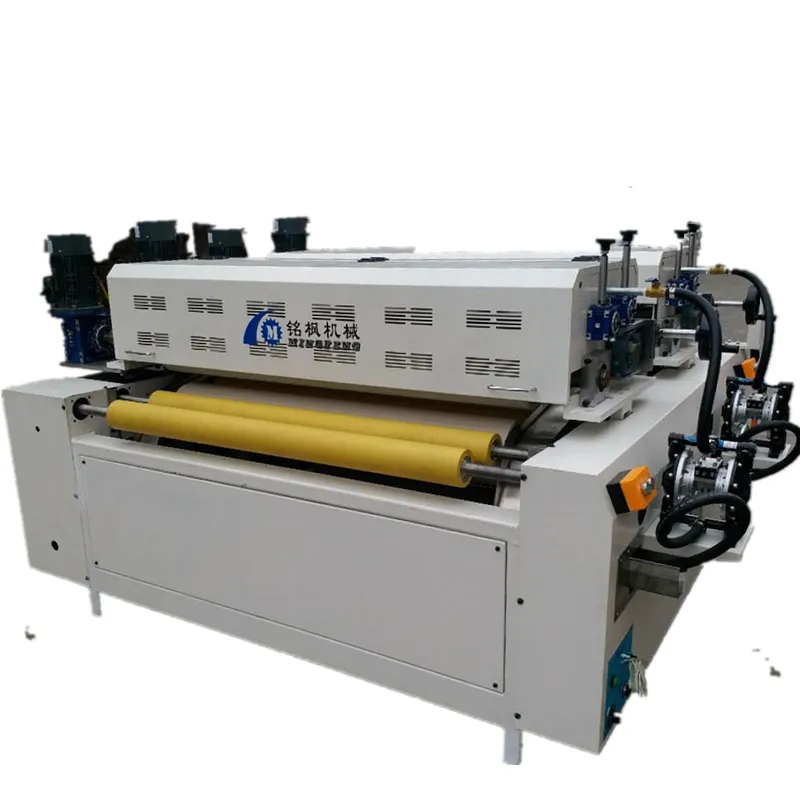
Which types of thick paints are still suitable for a UV Roller Coating Machine?
Not all high-viscosity paints are unsuitable. In fact, many UV paints designed specifically for roller coating have inherently high viscosity. Suitable paint types include:
• High-solids UV primers: Relatively low flowability, but uniform application can be achieved by heating and lowering the speed;
• High-gloss or high-filler UV topcoats: High viscosity but strong leveling properties, suitable for roller finishing;
• Touch-sensitive and matte paints: Formulated with higher viscosity to create special textures, but can still be used with a UV Roller Coating Machine by adjusting parameters.
The key is to adjust the process according to the characteristics of the coating, rather than using the same set of parameters for all formulations.
How to prevent defects in thick coatings when using a UV Roller Coating Machine?
Thick coatings are prone to causing a range of surface defects on UV Roller Coating Machines, such as bubbles, orange peel, flow marks, and uneven gloss.
To avoid these problems, the following measures can be taken:
• Use a vacuum degassing device to remove air from the coating in advance;
• Keep the roller surface clean to prevent residual paint or dust from affecting coating;
• Add a filter to the paint supply system to prevent particle clogging;
• Control the workshop temperature and humidity to avoid environmental factors affecting flowability;
• Set an appropriate settling time to allow air bubbles to rise before use.
By using these methods, UV Roller Coating Machines can maintain high-quality output even when using high-viscosity coatings.
Can a UV Roller Coating Machine automatically detect coating viscosity?
No. Most UV Roller Coating Machines rely on manual viscosity detection and parameter adjustment. However, high-end models can automatically adjust the flow rate through a viscosity sensor linked to the paint supply system.
If the coating is too thick, causing poor transfer, can the pressure be increased?
A moderate increase is possible, but excessive pressure may cause air bubbles or damage the roller surface. A combination of "low speed + temperature control + small pressure increases" is recommended.
Can an air agitator be used to dilute the coating?
Not recommended. Pneumatic agitation easily introduces air, causing foaming. Use a slow electric agitator and allow it to stand to degas.
How to determine if the coating viscosity is suitable for a UV Roller Coating Machine?
A Forecast cup test can be used. A viscosity between 80 and 150 seconds is generally ideal. If it exceeds 200 seconds, consider increasing the temperature or adjusting the formulation.
A UV Roller Coating Machine can still be used even with thick coating, but scientific control is required.
Thick coating does not mean that a UV Roller Coating Machine cannot be used.
However, the prerequisite is that the coating viscosity, equipment parameters, temperature control, and curing energy must be scientifically matched.
To ensure stable coating results, the following points must be observed:
1. Maintain the paint viscosity within the equipment's applicable range;
2. Adjust the roller gap and speed ratio;
3. Reduce viscosity by heating, not by arbitrarily adding thinner;
4. Keep the paint supply system sealed and clean;
5. Optimize UV lamp energy to ensure thick film curing.
Through these methods, the UV Roller Coating Machine can not only handle high-viscosity paints smoothly but also ensure a smooth coating, strong adhesion, and thorough curing, achieving high-quality, high-efficiency coating production.
Does XMF Machinery provide warranty services for its machines?
Yes, all machines purchased from our company include warranty coverage. This gives buyers confidence in our high-quality standards and ensures long-term peace of mind. During the warranty period, we supply technical support, spare parts, and professional assistance to keep your equipment running at top performance, making your purchase risk-free.