

In surface coating processes for furniture, flooring, and decorative panels, the UV roller coating machine has become one of the core pieces of equipment in automated production. It is widely used in various UV coating processes due to its high efficiency, low waste, uniform paint film, and stable gloss.
However, many companies and operators have a key question during use: "Can a UV roller coating machine apply base coat?"
This question seems simple, but to answer it accurately, it is necessary to analyze multiple aspects, including the characteristics of the base coat, the roller coating principle, process compatibility, equipment parameters, and substrate adhesion. This article will systematically analyze this question to help you scientifically understand whether a UV roller coating machine is suitable for base coat application and how to ensure ideal results in the process.
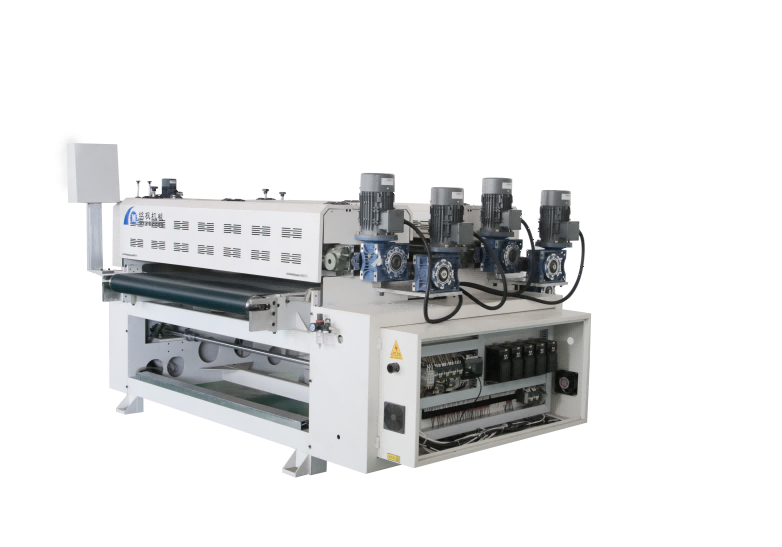
What is a UV roller coating machine?
A UV roller coating machine is an automated device that uses precision rollers to evenly apply UV coating to the surface of a substrate. It achieves smooth transfer and uniform distribution of the paint through the coordinated action of multiple rollers, including an application roller, transfer roller, and leveling roller.
Its core advantages include:
• High coating uniformity – film thickness is controlled through precision machinery;
• High paint utilization – virtually no paint waste;
• Suitable for flat panels – especially furniture panels, flooring, plastic panels, and metal panels;
• Seamless integration with UV curing systems – after roller coating, the material can directly enter the UV curing section for rapid film formation.
This type of equipment is typically used for applying varnishes, primers, putty layers, or topcoats, but under certain conditions, it can also be used for roller coating of base coats (color base coatings).
What are the characteristics of base coats?
Why should roller coating processes be approached with caution?
To determine whether a UV roller coating machine can apply base coats, it is essential to understand the characteristics of the base coat.
The primary function of a base coat (color base coating) is to provide color coverage and a basic decorative effect. It has the following characteristics:
• High pigment content: To form a stable color layer, the proportion of pigment in the base coat is usually relatively high.
• Strong hiding power: Requires uniform coverage of the substrate, without showing through or uneven coloring.
• High viscosity: Due to the high pigment content, the base coat has relatively poor flowability.
• Prone to sedimentation or clogging: Prolonged use may result in layering or pigment deposition.
These characteristics determine significant differences between base coats and clear UV varnishes in terms of flowability, uniformity, and coating methods. Therefore, to successfully apply base coats using a UV roller coating machine, process conditions must be specifically adjusted.
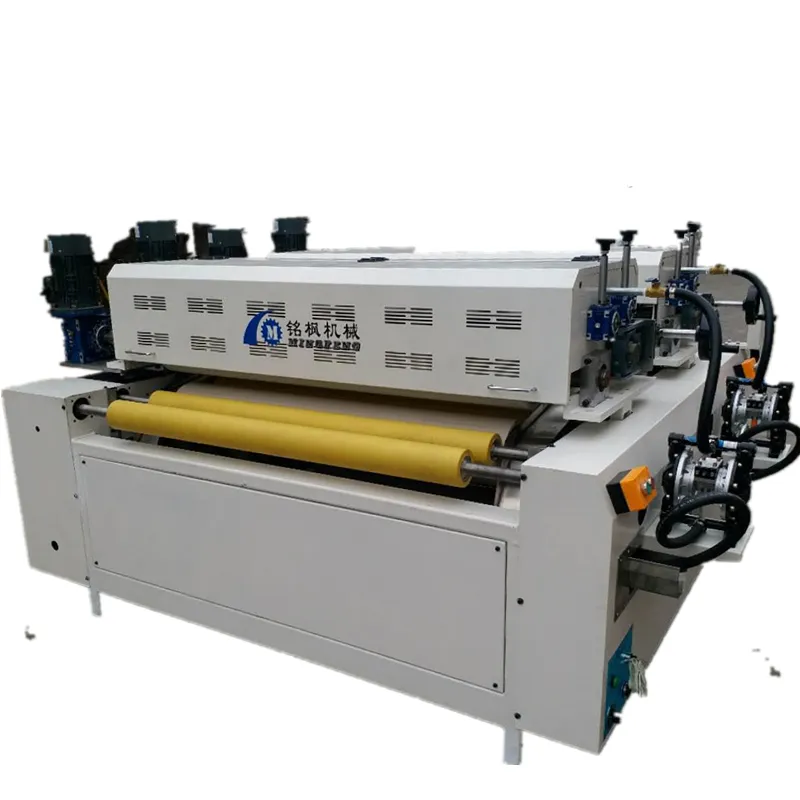
Can a UV roller coating machine directly apply base coats?
The answer is: Yes, but certain conditions must be met.
The core advantage of a UV roller coating machine lies in its high-precision coating control and surface smoothness. If the base coat's formulation, viscosity, pigment dispersion, leveling properties, and roller parameters are properly adjusted, a uniform coloring effect can be achieved.
✅ Feasible conditions include:
1. The base coat is suitable for a roller coating system
Choose a UV base coat specifically designed for roller coating; its pigment particle size is small, its flowability is strong, and it will not clog the roller.
2. Viscosity Control Within a Reasonable Range
Generally, a viscosity of 15-25 seconds (Ford Cup 4) is required to ensure smooth transfer and prevent paint overspray.
3. Roller Surface Hardness Matching Material
Silicone rollers or solvent-resistant rubber rollers are recommended, as they resist pigment abrasion and ensure uniform transfer.
4. Effective Filtration System
The base coat must be filtered before entering the roller coating system to prevent impurities or lumps from affecting the film surface.
5. Sufficient Curing Energy
Due to the strong opacity of the base coat pigments, the UV lamp power needs to be increased to ensure complete internal curing.
If the above conditions are met, the UV roller coating machine can certainly roll-coat base coats with high quality.
What problems might be encountered when using a UV roller coating machine to roll base coats?
Although technically feasible, the following potential problems should be noted in practice:
1. Uneven Pigment Distribution Leading to Color Difference
If the viscosity of the base coat is too high or pigment deposits during the roller coating process, uneven color depth will occur. At this point, the stirring and circulation system should be strengthened.
2. Pigment clogging the roller texture
If the pigment particles are coarse or the roller is not thoroughly cleaned, it can easily lead to clogging of the transfer roller surface, causing uneven coloring or streaking.
3. Incomplete curing
The opacity of the base coat will hinder UV penetration. The UV lamp intensity needs to be increased or the irradiation time extended to ensure complete curing of the paint film's base layer.
4. Coating too thick, making leveling difficult
If the coating amount is not properly controlled, it can lead to paint buildup, runs, or pinholes. The amount of adhesive applied should be appropriately reduced or the leveling time increased.
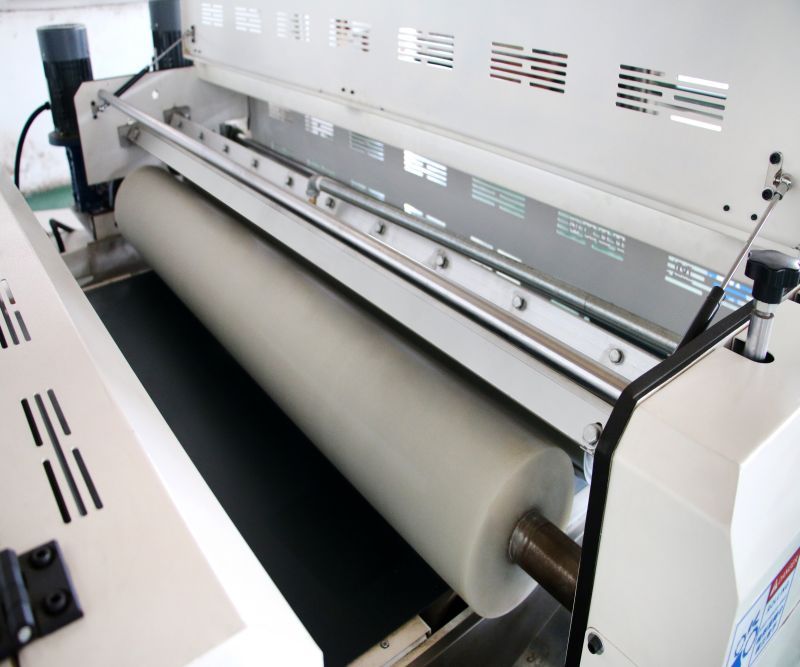
What are the advantages of using a UV roller coating machine to apply base coats?
With proper process adjustments, using a UV roller coating machine to apply base coats has significant technical advantages:
• High coating uniformity: Mechanical control of coating thickness results in better color consistency than spraying.
• High paint utilization: Extremely low paint loss, almost zero waste.
• Suitable for mass production: Continuous automated coloring, with efficiency far exceeding manual or spraying methods.
• Environmentally friendly: No solvent evaporation, reducing VOC emissions.
• Strong film adhesion: Rolling application ensures a tighter bond between the base coat and the substrate, enhancing adhesion.
Therefore, for products such as flat decorative panels, wood panels, PVC panels, and metal panels, using a UV roller coating machine to apply base coats is an efficient, controllable, and stable process.
Key Parameter Control for UV Roller Coating Machine Base Coating
To achieve ideal results in actual production, the following parameters need to be carefully monitored:
• Coating amount control: Generally, the base coat film thickness should be controlled between 5 and 15 μm.
• Roller speed: The ratio of main roller speed to conveyor belt speed should be maintained at 1.3:1 to 1.5:1.
• Temperature control: Room temperature should be maintained at 20-25℃ to prevent pigment sedimentation.
• UV curing energy: Adjusted according to color depth at 1200-1800 mJ/cm².
• Filtration and circulation: Replace the filter cartridge every shift to prevent pigment deposition.
If these parameters are properly controlled, a UV roller coating machine can achieve high-quality base coat application.
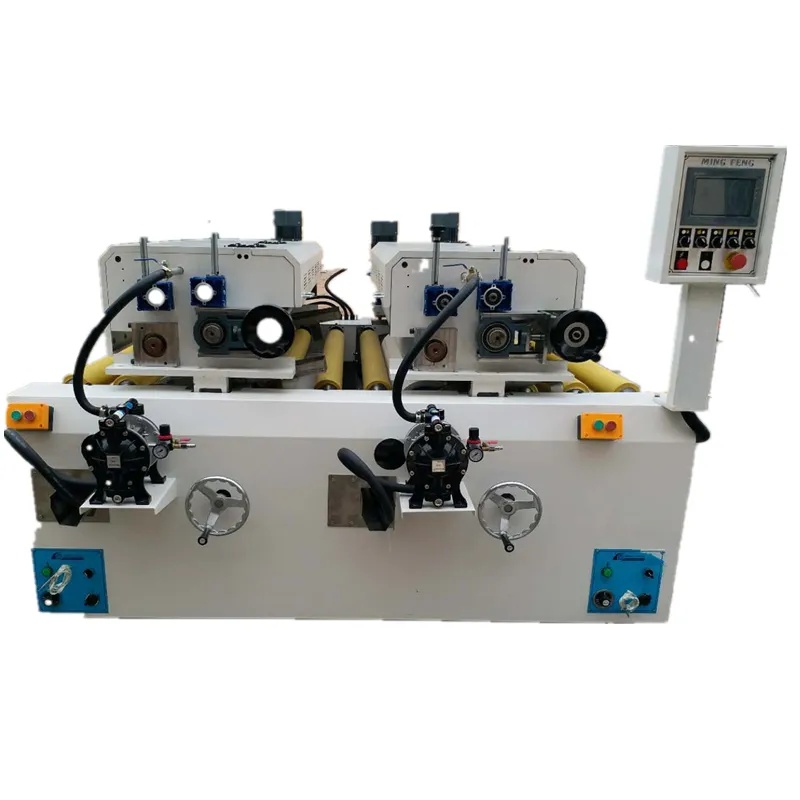
How to handle the transition between the base coat and pre-coat processes?
On a coating production line, UV roller coating is usually not a standalone process, but rather used in conjunction with other processes:
• Pre-process: Substrate sanding → Dust removal → Sealing primer (sealing wood grain)
• Intermediate process: UV roller coating → UV curing → Light sanding
• Post-process: Topcoat or high-gloss paint → Final curing
This process ensures a distinct paint film layering, strong adhesion, and uniform color, providing an ideal foundation for subsequent surface treatments.
Common Problems Using a UV Roller Coating Machine
Problem 1: What to do if the color is uneven or inconsistent in shade?
Solution:
• Check if the base coat is stirred evenly;
• Maintain paint circulation;
• Adjust the roller pressure and speed ratio.
Problem 2: What if the paint film contains particles or impurities?
Solutions:
• Increase paint filtration precision (300 mesh or higher);
• Clean the rollers and scrapers;
• Maintain a clean workshop.
Problem 3: Color lightens after curing?
Solutions:
• Increase UV lamp intensity or extend irradiation time;
• Optimize the photoinitiator ratio in the base coat formulation.
Through targeted optimization, UV roller coating machines can fully achieve high-standard finishes in base coat applications.
Who is Foshan XMF Machinery and what does the company specialize in?
Foshan XMF Machinery Co., Ltd. is a professional manufacturer and supplier of surface coating and printing machinery, founded in 2006 and located in Lishui Town, Nanhai District, Foshan City, Guangdong Province. As a factory with an advantageous geographical location and complete industrial supporting resources, XMF Machinery focuses on the research, design, manufacturing, sales, and service of high quality coating equipment.
Our main products include roller coating machines, UV dryer machines, automatic spraying machines, printing machines, curtain coating machines, embossing machines, sanding machines, putty primer machines, and dust cleaner machines.