
In the field of modern industrial surface treatment, "coating technology" has always been a key link in improving product quality and performance. Among the many coating methods, curtain coating machines are widely used in industries such as wood products, plastics, metals, and paper due to their advantages of high efficiency, uniformity, and energy saving.
With the maturity of UV curing technology, more and more companies are starting to ask: "Can a curtain coating machine apply UV paint?"
The answer is yes—not only can it, but under certain conditions, UV curtain coating machines have become one of the important pieces of equipment for achieving high-quality UV coatings.
This article will systematically answer this question from multiple perspectives, including technical principles, applicable conditions, equipment structure, key operating points, and coating control, helping readers to deeply understand the matching relationship between curtain coating machines and UV paints.
What is a curtain coating machine? What is its basic principle?
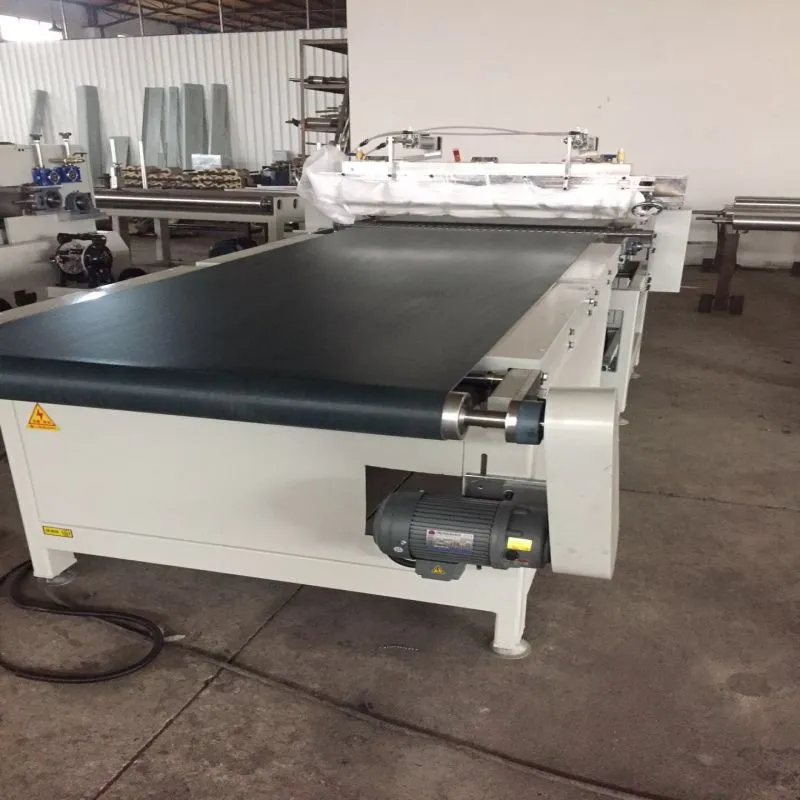
A curtain coating machine is a device that uses liquid paint to form a uniform paint curtain (i.e., a liquid curtain) through a slit or overflow channel, so that the surface of the workpiece is uniformly coated as it passes through the curtain. Its key features are:
• Non-contact coating: The workpiece surface does not directly contact the roller or nozzle;
• Uniform coating: Coating thickness can be precisely controlled, resulting in high surface smoothness;
• Paint saving: The recirculation system allows for paint recycling, minimizing waste;
• High adaptability: Suitable for various materials such as flat panels, boards, decorative panels, and furniture panels.
From a coating principle perspective, curtain coating primarily relies on gravity and liquid flow characteristics to form a continuous paint film. Therefore, fluid viscosity, surface tension, and the flow stability of the paint are all key parameters.
What is UV paint? What are its main characteristics?
UV paint (Ultraviolet Curing Coating) is a special type of paint that cures by rapidly polymerizing its molecular structure under ultraviolet light. Its key features include:
• Rapid curing: Curing is fast, completed within seconds;
• High hardness and abrasion resistance: The resulting paint film is dense and hard;
• Environmentally friendly and solvent-free: Most UV paints do not emit VOCs;
• Energy-efficient: No high-temperature drying is required, significantly reducing energy consumption;
• High gloss and strong decorative properties: Extremely high surface finish, suitable for high-end surface treatment.
Due to these advantages, UV paints are widely used in wood coating, plastic products, appliance housings, flooring, decorative panels, and other fields. So, the question arises—can this special paint be applied using a curtain coating method?
Can a curtain coating machine apply UV paint?
✅ Answer: Yes, but a specialized UV curtain coating machine is required.
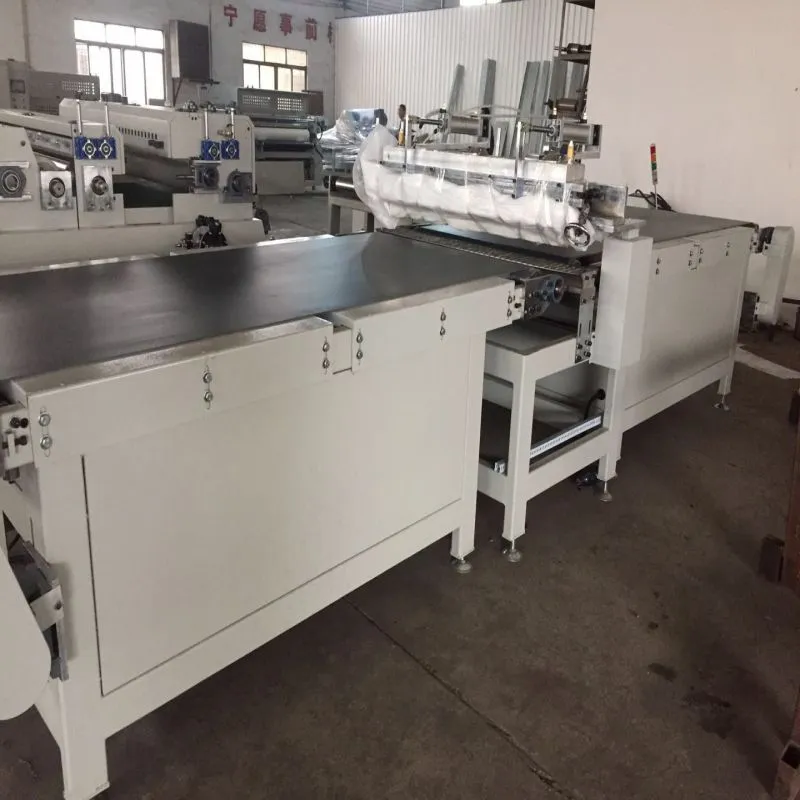
Theoretically, UV paint is a liquid coating, meeting the basic requirements of curtain coating: it can form a liquid curtain with good flowability. However, UV paint differs from traditional solvent-based or water-based paints; its viscosity characteristics, reactivity, and curing mechanism are more complex, therefore it must be used with a specially designed UV curtain coating machine.
UV curtain coating machines are optimized in several ways to address the characteristics of UV paints:
• Utilize a closed system to prevent photoreaction and premature curing of the UV paint;
• Employ constant temperature and flow control to ensure the stability of the paint curtain;
• Equipped with an anti-UV light leakage structure to protect the paint's performance;
• Features a precise flow adjustment and pumping system to adapt to the high viscosity characteristics of UV paints.
Therefore, although ordinary curtain coating machines are structurally similar to UV curtain coating machines, using them directly with UV paints can lead to unstable paint curtains, uneven curing, and even equipment blockage.
Why choose a UV curtain coating machine for applying UV paints?
1. Extremely High Coating Uniformity
UV curtain coating machines directly cover the workpiece surface with a liquid curtain, virtually eliminating roller marks or spray bubbles, making them particularly suitable for the process requirements of high-gloss UV coatings.
2. High Paint Utilization Rate
Traditional spraying methods typically achieve a utilization rate of 40% to 60%, while UV curtain coating machines can achieve a paint utilization rate of over 90%. The paint recycling system can reuse UV paint that has not yet come into contact with the workpiece, reducing costs.
3. Precise Coating Thickness Control
By adjusting parameters such as overflow rate, flow rate, and liquid viscosity, the UV curtain coating machine can achieve micron-level thickness control, meeting the needs of high-end decorative and functional coatings.
4. Compatible with Multiple Substrates
Whether it's wood, plastic, glass, or metal panels, as long as the surface is flat, the UV curtain coating machine can achieve a high-adhesion UV coating.
5. High Production Efficiency and Easy Maintenance
The curtain coating machine has a relatively simple structure, making cleaning and maintenance convenient. When used with a UV curing line, it enables continuous and automated production.
UV Curtain Coating Machine Working Principle Explained
The core of the UV curtain coating machine lies in forming a uniform and stable paint curtain through an overflow system, which is then allowed to fall vertically onto the workpiece surface using gravity. The main components include:
• Paint Supply System: Typically composed of a constant pressure pump, flow regulating valve, and return pipe, ensuring stable circulation of the UV paint.
• Overflow Head: The paint overflows evenly from the head, forming a liquid curtain. The precision of the coating groove has a significant impact on the coating effect.
• Conveying System: Used to pass the workpiece through the liquid curtain at a constant speed, ensuring consistent coating thickness.
• Recovery System: Paint that does not fall onto the workpiece is recovered into a storage tank to avoid waste.
• UV Curing System: The workpiece immediately enters the UV lamp zone after coating for curing, quickly forming a hard coating film.
The entire process does not require air jets or contact rollers, greatly reducing the risk of surface defects.
What parameters should be considered when applying UV paint using a UV curtain coating machine?
1. Viscosity Control
The viscosity of the UV paint directly affects the stability of the curtain. Too high a viscosity can cause the curtain to break; too low a viscosity can easily cause sagging. Ideally, it should be controlled between 20 and 80 seconds (Ford-4 cup, 25°C).
2. Flow Rate and Pump Speed
The pumping speed should be matched to the workpiece width and film thickness. Too high a flow rate may cause curtain fluctuations, while too low a flow rate will result in incomplete film formation.
3. Overflow Gap
The overflow outlet must be uniform and straight, with a gap tolerance controlled within ±0.01mm to ensure a smooth curtain.
4. Workpiece Speed
The conveyor speed affects the coating thickness, generally ranging from 5 to 40 m/min, adjusted according to the UV paint's curing performance and target thickness.
5. Environmental Control
The temperature is recommended to be maintained between 20 and 25℃, and the humidity should not exceed 70% to prevent changes in paint surface tension that could cause curtain instability.
Can a regular curtain coating machine be used directly to apply UV paint?
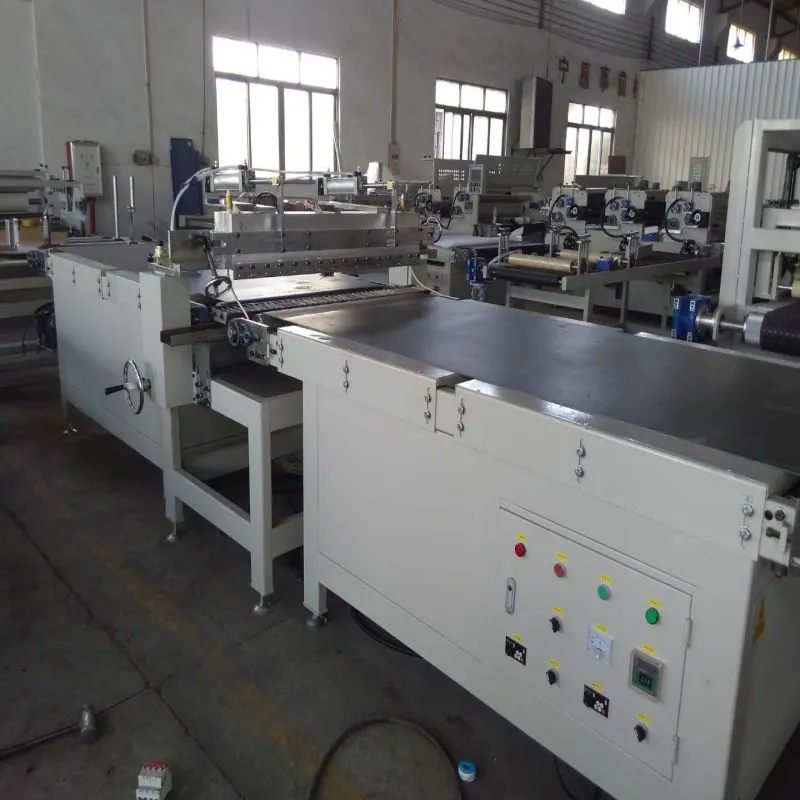
It is not recommended. Regular curtain coating machines lack UV protection, making the paint prone to premature curing; their liquid circulation system is also not optimized for the high viscosity of UV paint, easily leading to clogging or uneven flow.
What types of UV paint can a UV curtain coating machine handle?
Most 100% solids UV paints, UV-cured acrylic paints, and UV wood coatings can be used, but the flowability must be suitable for the curtain coating process.
Is it necessary to cure the UV paint immediately after application?
Yes. UV paint is a photosensitive material. Prolonged exposure to air will affect its leveling effect; it should be placed in the UV curing zone within seconds.
Is cleaning a UV curtain coating machine difficult?
Relatively easy. The equipment uses an anti-stick structure. Cleaning can be done with a special UV thinner or cleaning solution. After thoroughly draining the paint, clean the overflow tank.
Can it be used for double-sided coating?
Yes, but a double curtain system or a reversing mechanism between two machines is required to achieve continuous coating on both surfaces.
How to choose a suitable UV curtain coating machine?
When selecting a UV curtain coating machine, pay close attention to the following aspects:
• Coating width and production cycle time: Ensure the equipment specifications match the product dimensions;
• Overflow system structure: Precision stainless steel overflow channels with adjustable gaps are preferred;
• Fluid control system: Supports constant pressure and constant flow to accommodate the high viscosity characteristics of UV paints;
• Safety protection design: Includes UV protection, leak prevention, and premature curing prevention structures;
• Maintenance convenience: Modular design and easy-to-clean structure are more suitable for frequent paint change operations;
• Brand and after-sales service: Choose a manufacturer with experience in technical support to ensure long-term stable operation.
What after-sales services does XMF Machinery provide?
XMF Machinery provides professional after-sales service to ensure customer satisfaction and stable machine operation. As a long-term supplier and manufacturer, we offer technical support, operation guidance, and process optimization advice. Our team assists customers with installation, commissioning, and troubleshooting. Buyers can rely on our factory for spare parts supply and continuous technical communication.