

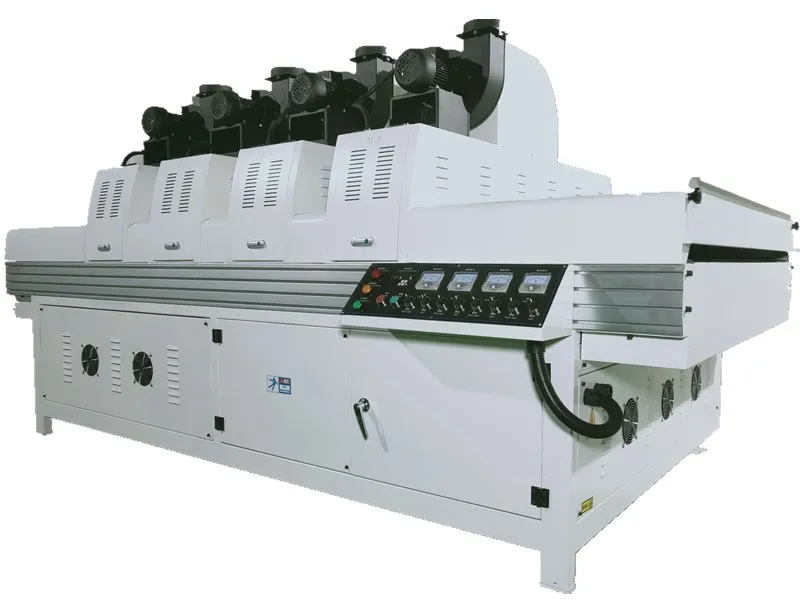
In the modern surface treatment and coating industry, UV dryer machines have gradually become essential equipment for industrial drying and curing due to their high efficiency, low energy consumption, and solvent-free emissions.
However, when it comes to plastic products, many engineers and manufacturers often ask:
"Can UV dryer machines be safely used on plastic materials?"
"Will plastic products deform or yellow under high-intensity UV irradiation?"
These questions are very representative because plastics differ from materials such as metals and wood; they are more heat-sensitive, have lower surface energy, and exhibit significant differences in lightfastness.
This article will provide an in-depth analysis from multiple perspectives, including the working principle of UV dryer machines, the characteristics of plastic materials, their applicable scope, control conditions, and compatibility with different types of plastics, to help readers systematically understand this issue.
Why is it necessary to discuss whether "UV dryer machines are suitable for plastics"?
In industrial production, UV drying processes are widely used in wood coating, paper printing, and curing of protective films for electronic components. However, due to their unique material properties, plastic products have always been one of the most challenging applications in UV drying.
This is because plastics possess the following three main characteristics:
1. High sensitivity to heat distortion
The heat distortion temperature of most plastics is only between 60–100℃, while traditional UV lamps generate heat during irradiation. Improper control can lead to product warping or deformation.
2. Significant differences in UV absorption
Different plastics absorb UV light to varying degrees. For example, polycarbonate (PC) is prone to yellowing, while polypropylene (PP) has a lower UV absorption rate, affecting curing efficiency.
3. Surface adhesion challenges
Plastics have low surface energy, often resulting in insufficient adhesion of UV coatings or inks, affecting the bonding strength of the cured layer.
Therefore, whether a UV dryer machine is suitable for plastic products cannot be answered with a simple "yes" or "no," but should be determined comprehensively based on the material type and process conditions.
What is the working principle of a UV dryer machine?
To understand its impact on plastics, it is essential to first understand the basic working mechanism of a UV dryer machine.
1. UV Curing Principle
UV dryer machines use high-intensity ultraviolet (UV) radiation to cause photoinitiators in coatings or inks to absorb UV energy, releasing free radicals or cations, thereby initiating a resin polymerization reaction and forming a dense coating film within seconds.
This method differs from traditional thermal drying; it does not rely on high-temperature solvent evaporation but directly achieves chemical cross-linking through light energy.
2. Typical UV Spectral Ranges
UV dryer machines primarily use the following UV wavelengths:
• UVA (320–400 nm): Strong penetrating power, used for deep curing;
• UVB (280–320 nm): High energy but shallow penetration;
• UVC (200–280 nm): Strong surface curing ability.
By rationally designing the lamp power and spectral distribution, the energy output can be adjusted for different materials.
3. Equipment Composition
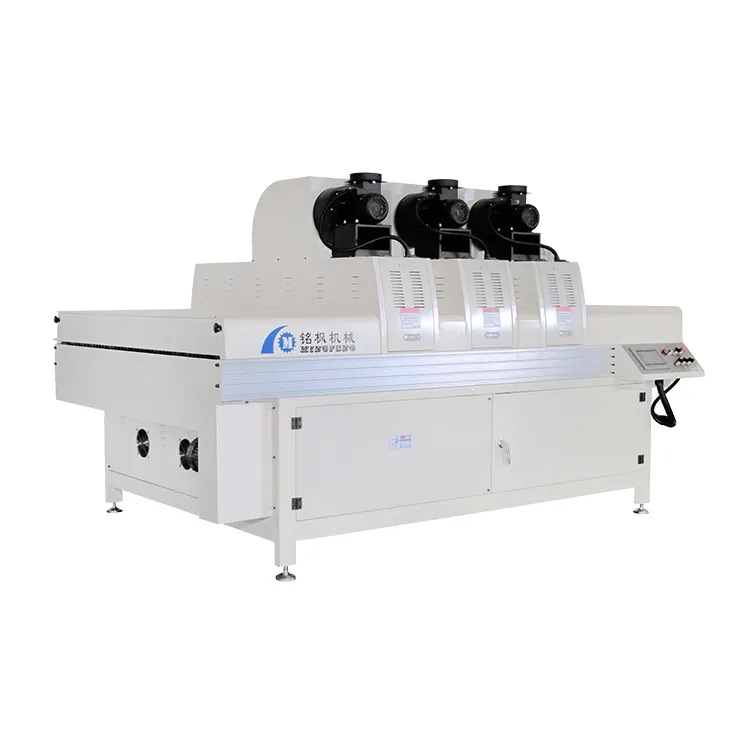
A typical UV dryer machine consists of the following components:
• UV lamps (or LED light sources);
• Lamp covers and reflector system;
• Conveyor belt system;
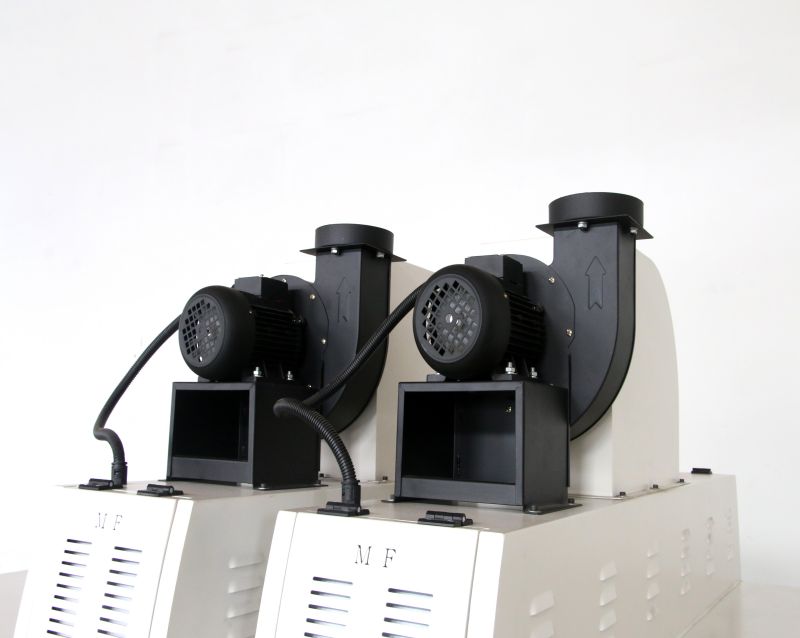
• Air-cooled or water-cooled heat dissipation device;
• Control system (energy regulation and temperature monitoring).
Understanding its principles allows for a more accurate determination of which plastic products are safe to be processed using a UV dryer machine.

Can a UV dryer machine be used directly for all plastics?
The answer is no. Not all plastics can be directly used with a UV dryer machine.
This is because different plastics have significantly different physical and chemical properties.
1. Applicable Plastic Types
Some thermoplastic materials, after formulation optimization, the addition of UV-resistant additives, or high temperature resistance, can adapt to the UV drying process. For example:
Material Types | Is it suitable for a UV dryer machine? | Reasons for use |
| ABS (Acrylonitrile-Butadiene-Styrene) | Available | Good temperature resistance, moderate surface energy |
| PC (Polycarbonate) | Available under certain conditions | Requires low-temperature UV lamps or LED light sources |
| PVC (Polyvinyl Chloride) | Suitable | Commonly used in UV printing and coating |
| PET (Polyethylene Terephthalate) | Suitable | Higher temperature resistance, good curing |
| PP (Polypropylene) | Difficult to achieve | Low surface energy, requires treatment |
| PS (Polystyrene) | Only suitable for short-term irradiation | Easily deformable, requires high temperature control |
| PA (Nylon) | Not recommended | Highly hygroscopic, prone to discoloration |
Therefore, UV dryer machines are "partially suitable for plastics," but the specific material type must be considered.
2. Reasons for Unsuitable Plastics
Some plastics, such as nylon and polyoxymethylene, are prone to degradation, yellowing, or gas release under UV light, making them unsuitable for UV curing environments.
Therefore, the phrase "--some can" in the title is a scientific judgment based on the differences in the properties of various plastics.
Why can some plastic products be safely dried in a UV dryer machine?
The reason some plastics can be safely dried in a UV dryer machine lies in the scientific combination of energy control, spectrum selection, and temperature management.
1. Adjustable UV Energy
Modern UV dryer machines allow adjustment of lamp power via the power system, typically ranging from 30% to 100%.
For heat-sensitive materials, the power can be set at 50-60%, ensuring curing while reducing heat load.
2. Use of Cold Light UV Lamps or LED Light Sources
Traditional mercury lamps, while powerful, generate high temperatures. Many UV dryer machines today use UV LED light sources, which offer advantages including:
• Almost no infrared heat radiation;
• Concentrated wavelength (typically 365-395nm);
• Stable energy output;
• Longer lifespan.
These cold light source UV dryer machines are particularly suitable for surface curing of plastic products.
3. Cooling System (Air or Water)
Some UV dryer machines are equipped with efficient cooling systems that reduce the temperature of the irradiated area through air or water cooling, maintaining the surface temperature between 40–60℃ to prevent heat deformation.
4. Coating System Compatibility
Dedicated UV plastic coatings or UV inks typically contain flexible resins and low-shrinkage formulations, compatible with plastic substrates, thus ensuring stable curing in the UV dryer machine.
These technologies work together to allow some plastic products to safely complete the curing process using a UV dryer machine.
Under what conditions is the use of a UV dryer machine not recommended?
Although UV dryer machines are extremely efficient, direct application to plastic products is not recommended in the following situations:
• Plastics with poor temperature resistance (e.g., PE, PP) and no surface treatment;
• Thin-walled or large products prone to heat warping;
• UV lamp power too high (exceeding 120W/cm²) without cooling;
• Failure to select dedicated UV plastic coatings or inks;
• Surface exhibiting moisture absorption, contamination, or static electricity buildup.
In these situations, UV irradiation may lead to problems such as deformation, yellowing, bubbling, and poor adhesion.
How to determine if a plastic product is suitable for a UV dryer machine?
Before formal production, a scientific evaluation can be conducted through the following steps:
1. Material Heat Deflection Temperature Test
Understand the plastic's HDT (Heat Deflection Temperature) and ensure it is higher than the UV dryer machine's operating temperature.
2. Surface Energy Test
Measure the surface energy using test ink or the contact angle method. If it is less than 38 dyn/cm, it is recommended to perform corona treatment or plasma treatment before using the UV dryer machine.
3. Sample Curing Experiment
Select a small sample for short-term UV irradiation and observe whether discoloration, deformation, or decreased adhesion occurs.
4. Temperature Monitoring
Use an infrared thermometer to monitor the surface temperature during the test, keeping it below 70℃.
These four steps can effectively determine the compatibility of the plastic product with the UV dryer machine.
What are the key points of the UV dryer machine process for curing plastic products?
If a UV dryer machine is confirmed for use, the following operating guidelines must be strictly followed:
1. Proper Power and Speed Settings
• Power should be controlled at 40–70%;
• Conveyor speed should be adjusted according to coating thickness;
• Maintain a balance between light energy and curing depth.
2. Prefer UV LED Light Sources
LED light sources are more suitable for plastic surfaces, especially transparent or light-colored products, significantly reducing heat buildup.
3. Control Irradiation Distance
The distance between the UV lamp and the plastic surface should typically be maintained at 80–120 mm. Too close a distance will cause excessively rapid temperature rise.
4. Adequate Cooling
For closed-type UV dryer machines, a forced-air cooling outlet should be installed to prevent overheating within the chamber.
5. Use Dedicated UV Plastic Coatings
These coatings possess excellent flexibility and resistance to yellowing, effectively reducing post-curing stress.
Strictly controlling these parameters can significantly improve the safety and stability of UV dryer machines in plastic product applications.
Is a UV dryer machine suitable for plastic products?
Based on the above system analysis, we can clearly conclude that:
UV dryer machines can be used for some plastic products, but not all plastics are suitable.
Suitability depends on the plastic's temperature resistance, surface energy, photosensitivity, and coating system compatibility.
Material characteristics should be assessed and process conditions optimized before use.
This includes power settings, irradiation distance, spectrum selection, and cooling method.
UV LED dryers are recommended as a priority.
Their low-temperature, energy-saving, and stable characteristics make them safer for plastic materials.
In short:
• For materials such as ABS, PVC, and PET, UV dryer machines are "suitable";
• For materials such as PP and PS, "suitable under certain conditions";
• For PA and PE materials, "not recommended".
How does XMF Machinery help reduce coating costs for customers?
Our coating machines are designed to optimize paint usage, minimize waste, and shorten drying times. This not only lowers operational costs but also ensures a more environmentally friendly process. Buyers who purchase our equipment benefit from low long-term running costs, high efficiency, and reliable performance, making our machines a high-value investment at competitive prices.