

In modern spraying processes, reciprocating automatic spraying machines are widely used in industries such as wood products, plastic products, and hardware accessories due to their high efficiency, high degree of automation, and uniform coating.
However, when the coating target shifts from wood and plastic to metal surfaces, many users wonder: are reciprocating automatic spraying machines suitable for metal surface coating?
Metal surface coating processes often have higher requirements, involving factors such as adhesion, corrosion resistance, paint film thickness control, and spray uniformity.
This article will systematically analyze the applicability, technical advantages, precautions, and optimization solutions of reciprocating automatic spraying machines in metal coating, helping readers fully understand the equipment's performance and application conditions.
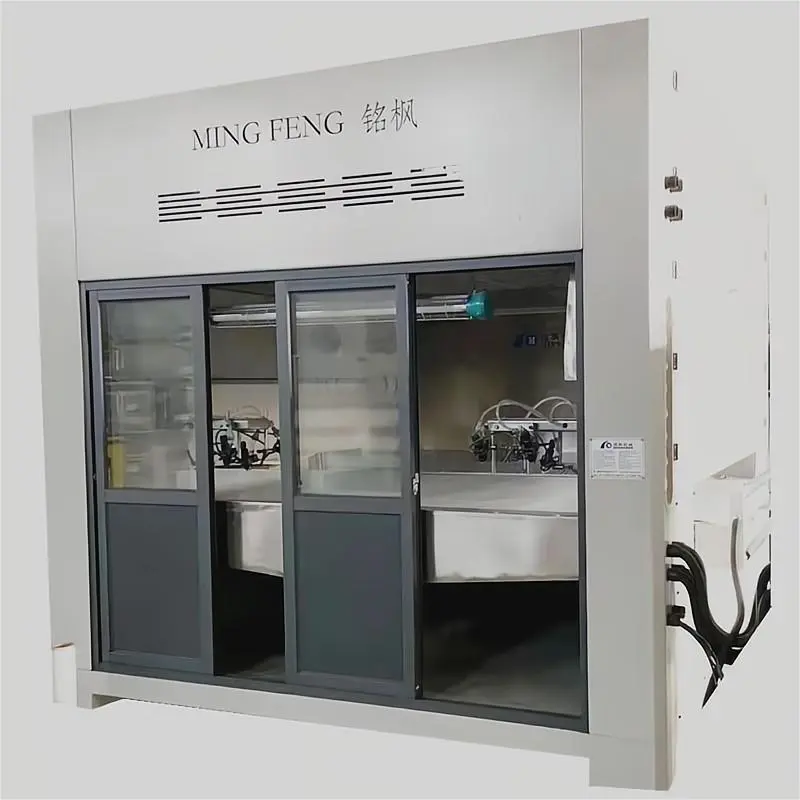
What is the working principle of a reciprocating automatic spraying machine?
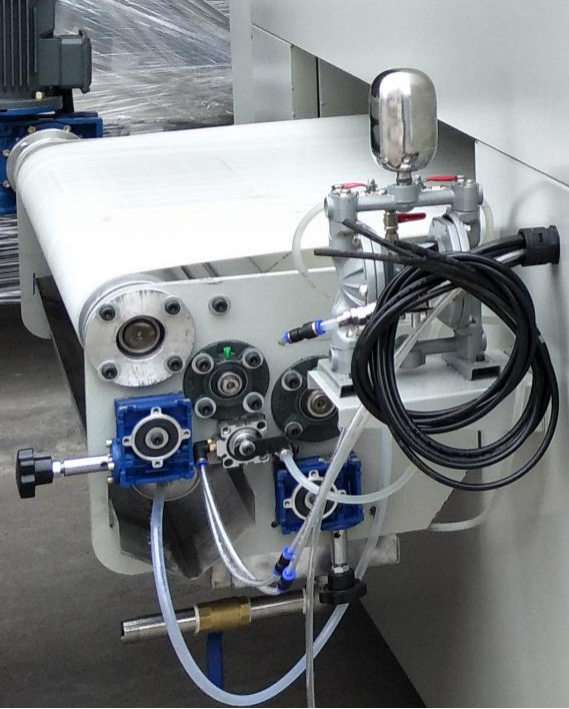
This type of equipment mainly consists of a spraying control system, a reciprocating robotic arm, a conveying system, a spray gun assembly, and an air and paint supply system. Its core function is to achieve uniform movement of the spray gun through the reciprocating motion of a robotic arm, resulting in more precise and efficient spraying.
Its operating principle can be simplified into three core steps:
• The conveyor system transports the workpiece into the spraying area;
• The spray gun moves along a reciprocating trajectory, automatically adjusting the spraying angle and distance according to the workpiece position;
• The CNC or PLC control system controls the spraying speed, spray width, and spray gun opening and closing time through program settings, ensuring uniform coating adhesion to the surface.
Due to the use of high-precision motion control and a stable airflow system, the reciprocating automatic spraying machine can achieve a very uniform spraying effect on flat or regularly shaped surfaces.
What are the special characteristics of metal surface spraying?
When considering whether a reciprocating automatic spraying machine is suitable, it is essential to recognize that the spraying process requirements for metal surfaces are fundamentally different from those for wood and plastics.
The main characteristics of metal surfaces include:
1. Smooth and dense surface
Metal surfaces are smooth, have few pores, and high density, making it difficult for coatings to penetrate or adhere. Therefore, higher adhesion of the primer is required, ensuring sufficient atomization and uniform coverage.
2. Strict requirements for film thickness and uniformity
Metal products often need to withstand friction, impact, or corrosion after spraying. Uneven coating can easily lead to problems such as peeling and cracking.
3. Complex types of coatings
Common coatings for metal spraying include epoxy primers, polyurethane paints, acrylic paints, and electrophoretic paints. These have high viscosity and fast drying, requiring high precision in spray gun atomization and flow control.
4. High thermal conductivity, easily affected by temperature
Metal absorbs and dissipates heat quickly. If there is a large temperature difference in the spraying environment or airflow, it will affect the leveling and drying quality of the paint film.
These factors determine that only spraying equipment with good atomization control, flow stability, and motion precision can be competent for coating metal surfaces.
Can a reciprocating automatic spraying machine meet the technical requirements of metal spraying?
The answer is yes—reciprocating automatic sprayers can be used for metal surface spraying, provided the parameters are properly adjusted and the equipment is configured correctly.
Below, we analyze its suitability from several key technical perspectives.
1. Uniform Atomization, Meeting the Adhesion Requirements of Metal Spraying
Reciprocating automatic sprayers are typically equipped with high-precision atomizing spray guns. By adjusting the air pressure and fluid ratio, fine and stable paint mist particles can be obtained. This is crucial for smooth metal surfaces, as only fine and uniform paint mist can achieve good surface coverage and adhesion.
2. Precise Control of Spray Distance and Speed, Preventing Sagging
The equipment can control the spray gun's stroke speed, spray distance, and angle through a program, ensuring consistent coating thickness and sufficient atomization.
For the metal primer and topcoat spraying stages, this control can significantly reduce common problems such as "sagging" and "exposed substrate."
3. High Repeatability, Ensuring Batch Consistency
Metal parts are usually mass-produced, requiring consistent coating. Reciprocating automatic spray coating machines, relying on a programmable control system, can repeatedly execute the same spraying path, ensuring consistent paint film thickness and gloss on each workpiece.
4. Adaptable to various spraying materials
This equipment supports various spraying media, including solvent-based, water-based, and powder coatings. Simply changing the spray gun or adjusting the feeding system allows it to adapt to different metal coating types.
5. Enhanced results when used with pretreatment processes
If metal parts have undergone pretreatment such as degreasing, rust removal, and phosphating, using a reciprocating automatic spray coating machine can achieve stronger adhesion and a longer corrosion resistance life.
In summary, reciprocating automatic spray coating machines fully meet the process requirements of metal spraying, and their precision control capabilities are even superior to manual spraying.
What parameters should be considered when using a reciprocating automatic spray coating machine for metal spraying?
Although reciprocating automatic spray coating machines are suitable for metal spraying, problems may occur if the parameters are not set correctly.
Key Adjustment Points for Reciprocating Automatic Spray Coating Machines:
1. Matching Air Pressure and Paint Flow Rate
For metal parts spraying, the recommended air pressure is between 0.35–0.45 MPa. The paint flow rate should be adjusted appropriately according to the viscosity.
Too low air pressure will result in poor adhesion, while too high pressure will easily lead to overspraying and waste.
2. Spraying Distance Control
Maintaining a distance of 20–30 cm between the spray gun and the workpiece surface is ideal.
Too close a distance will cause sagging, while too far a distance will result in insufficient atomization or a rough coating.
3. Spraying Speed and Reciprocating Frequency
The spray gun movement speed should be adjusted according to the type of paint and the shape of the workpiece, generally maintained within the range of 0.5–1.5 m/s.
The reciprocating frequency should not be too fast to ensure sufficient coverage.
4. Ambient Temperature and Humidity Control
When spraying metal parts, the ambient humidity should be below 70%, and the temperature should be maintained between 20–28℃.
Excessive humidity will affect adhesion, while excessively low temperature will affect paint mist leveling.
5. Spray Gun Angle and Overlap Rate
A 45° or 60° spray angle is typically used, with approximately 50% overlap between spray patterns, ensuring uniform paint film thickness and a smooth surface.
By precisely adjusting these parameters, reciprocating automatic sprayers can efficiently complete the application of primer, topcoat, and protective layer to metal parts.
What are the advantages of using a reciprocating automatic sprayer for metal surface painting?
Advantages of using a reciprocating automatic sprayer for metal surface painting:
1. Improved Spraying Consistency and Precision
Manual spraying is easily affected by factors such as operator experience and fatigue. Reciprocating automatic sprayers, through program-controlled movement paths, maintain constant speed, angle, and distance, significantly improving spraying consistency.
2. Reduced Paint Consumption
Through precise atomization control and spray pattern calculation, reciprocating automatic sprayers reduce overspray and waste, saving 10–30% of paint.
3. Increased Production Efficiency
The equipment can operate continuously, enabling simultaneous operation of multiple spray guns. Uniform coating can be completed in a single pass, significantly improving production efficiency.
4. Reduced Labor and Maintenance Costs
Due to its high degree of automation, operators only need to monitor and maintain the equipment, reducing manual intervention and safety risks.
5. Cleaner Spraying Environment
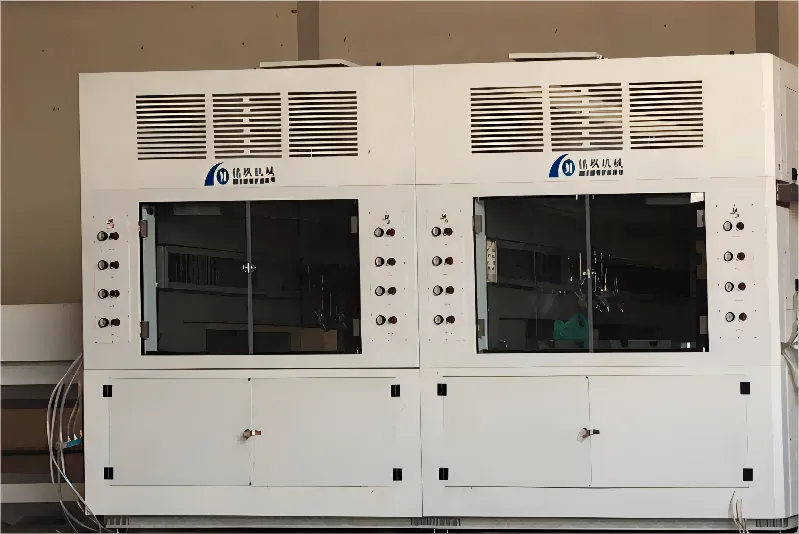
The automatic spraying machine, used in conjunction with a closed spray booth and filtration system, effectively reduces dust and organic solvent leakage, ensuring a clean and safe production environment.
What are the key maintenance points for reciprocating automatic spraying machines in metal spraying?
To ensure continuous and efficient operation of the equipment, daily maintenance and upkeep are essential.
1. Regularly Clean the Spray Guns
Metal paints are mostly high-solids coatings, which easily clog nozzles. After each day's work, the spray guns and paint delivery lines should be thoroughly cleaned with thinner or a special cleaning solution.
2. Check the Lubrication of the Reciprocating Mechanism
The robotic arm of the reciprocating automatic spraying machine needs continuous reciprocating motion. Poor lubrication will affect the accuracy of the spraying trajectory and may even cause the motor to overheat.
3. Keep Air Dry
Moisture or oil in compressed air can affect atomization quality. Regularly drain water from the air tank and use an air filter dryer.
4. Regularly Calibrate the Spray Path
Slight deviations may occur over time. The spray gun path should be regularly calibrated using a program or laser positioning system.
5. Check the Electrical Control and Sensing Systems
The PLC control system, spray gun switch signals, limit switches, etc., should be checked regularly to prevent intermittent or uncontrolled spraying.
Good maintenance not only extends equipment life but also ensures consistent spraying results every time.
Which types of metals are best suited for reciprocating automatic spray coating machines?
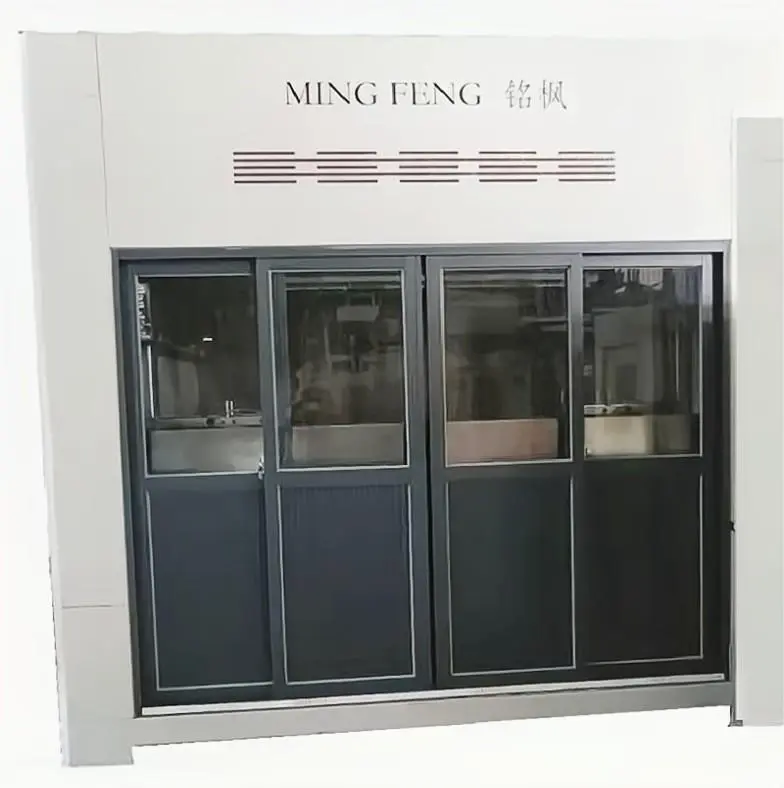
Not all metal surfaces require the same spraying method; the characteristics of different metals determine compatibility. However, reciprocating automatic spray coating machines can be widely used in most metal parts coating production lines, simply by selecting the appropriate primer and spraying parameters based on the metal's characteristics.
How does XMF Machinery ensure coating consistency across batches?
XMF Machinery ensures coating consistency through precise machine design and stable control systems. Our roller coating machines provide uniform coating thickness, while automatic spraying machines maintain consistent spray patterns. UV dryer machines deliver controlled curing results to prevent surface defects. As a manufacturer focused on quality, we test machines under real production conditions before delivery.