
In modern furniture board, flooring, and door panel coating production, curtain coating machines are widely used in surface treatment processes due to their high efficiency, uniform coating, and paint savings. However, in actual operation, many users are concerned about one issue—are curtain coating machines prone to paint sagging?
Sagging is one of the common surface defects in coating. If not properly controlled, it can lead to uneven coating thickness, surface drips, and affect the appearance and quality of the product.
This article will systematically analyze the causes, influencing factors, prevention, and control methods of curtain coating machine sagging from a technical perspective, helping readers to fully understand and master this key process issue.
What is a curtain coating machine?
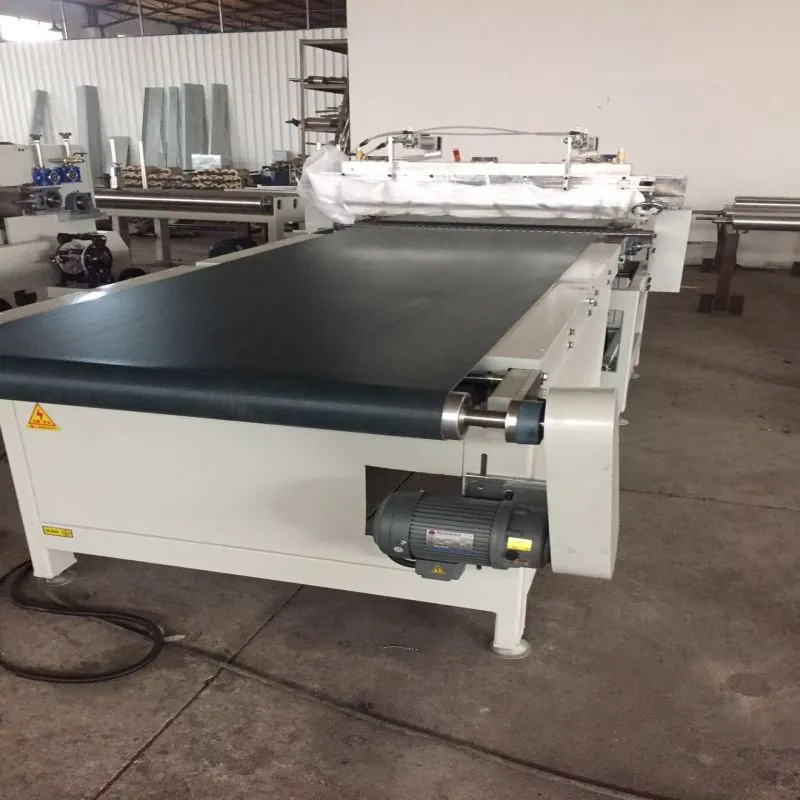
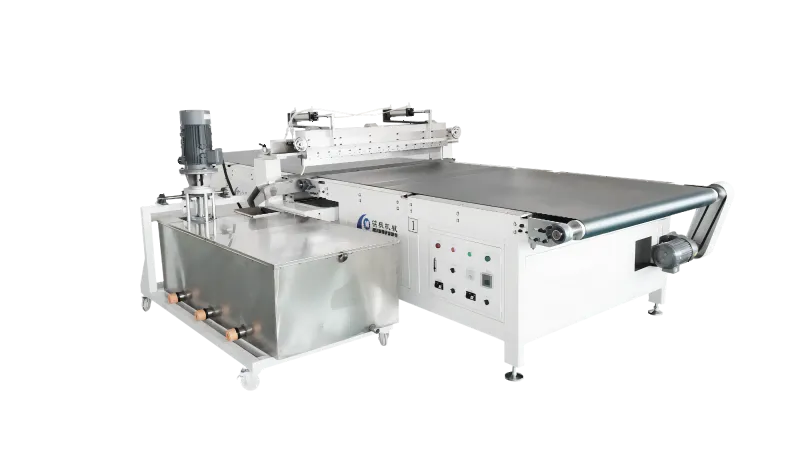
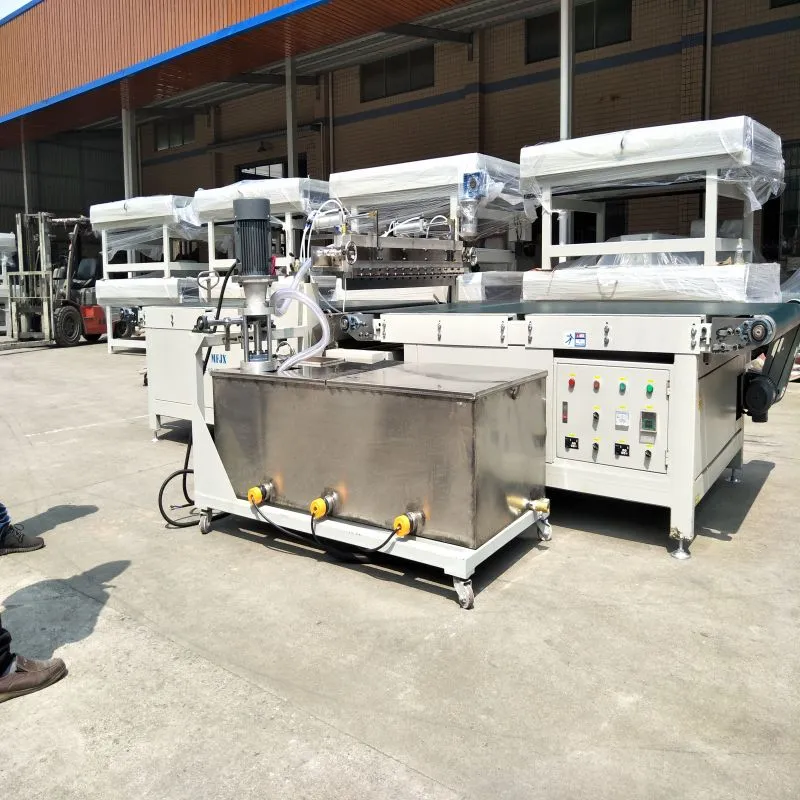
A curtain coating machine is a mechanical device that uses a free-falling liquid to form a coating curtain for coating flat workpieces. Paint flows out from a storage tank and overflows to form a stable liquid "curtain." When furniture boards or other substrates pass under this curtain, the paint is evenly covered on the surface.
The main structure of a curtain coating machine includes:
• Liquid storage system: Ensures stable paint flow;
• Overflow curtain trough: Forms a continuous and uniform paint curtain;
• Conveyor platform: Controls the speed and smoothness of workpiece passage;
• Return circulation system: Recovers excess paint, reducing waste.
The key principle of a curtain coating machine lies in:
Allowing the paint to flow evenly under gravity, forming a dense and smooth coating on the furniture board surface.
This process places extremely high demands on the rheological properties of the paint (especially viscosity and surface tension). Improper parameter control can lead to problems such as sagging.
Why does sagging occur in curtain coating machines?
Sagging refers to the phenomenon where paint flows downwards under gravity before it has cured on the workpiece surface, causing localized thickening of the coating or the formation of drip marks.
In a curtain coating machine, the coating falls as a liquid curtain, resulting in extremely high initial fluidity. Therefore, sagging is relatively more likely to occur, mainly due to the following factors:
1. Inappropriate Coating Viscosity
Coating with too low a viscosity flows too quickly and is prone to sagging due to gravity. Conversely, while coating with too high a viscosity is less prone to sagging, the curtain becomes unstable and may even break.
Therefore, controlling the coating viscosity is the primary condition for preventing sagging.
2. Excessive Coating Amount
The coating thickness of a curtain coating machine is determined by both the liquid flow rate and the conveying speed. If the flow rate is too high and the speed too slow, the coating thickness increases, and the surface tension is insufficient to support gravity, easily leading to sagging.
3. Poor Adhesion to the Board Surface
For high-density, smooth, or insufficiently sanded furniture board surfaces, insufficient coating adhesion and excessively long initial flow time can also cause the coating to slide down.
4. Slow Curing Speed of Coating
If a PU or UV coating system is used, a slow curing reaction will cause the coating to remain on the surface for too long, resulting in gravity flow.
5. Effects of Temperature and Humidity
Excessively high or low ambient temperatures will alter the viscosity and evaporation rate of the coating, thus affecting the coating stability of the curtain coating machine. Especially under high humidity conditions, the coating flows too quickly, increasing the risk of sagging.
How does sagging on a curtain coating machine differ from other coating methods?
The manifestations and causes of sagging differ among different coating methods such as spraying, roller coating, and curtain coating.
• Sagging in spraying is mainly caused by excessive localized paint application or improper distance control;
• Sagging in roller coating often occurs at edges or in recesses;
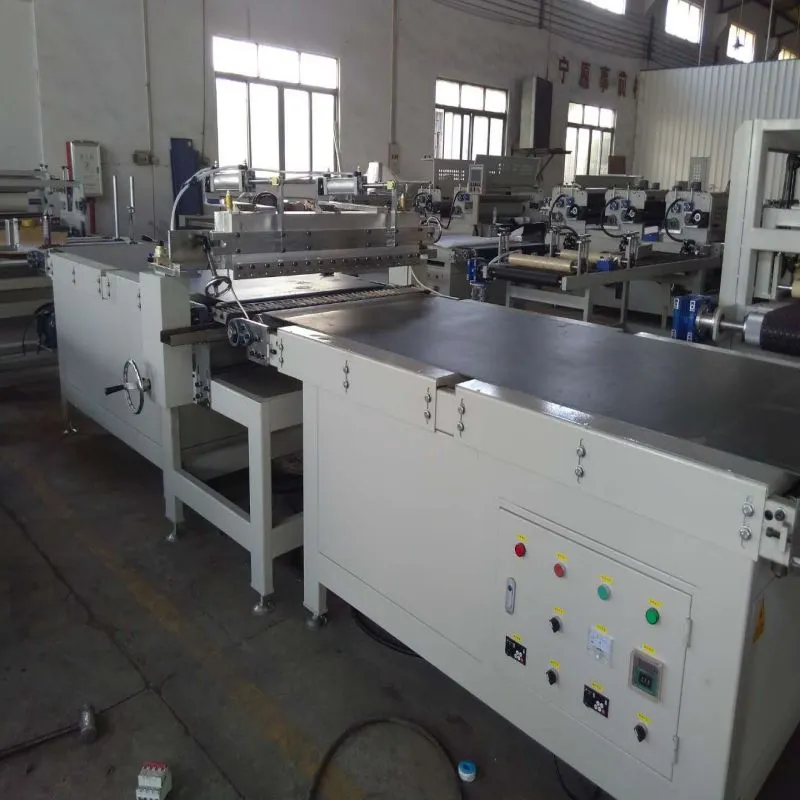
Sagging on a curtain coating machine, however, is related to the overall flowability under gravity, belonging to the natural flow problem in a continuous curtain system.
Because curtain coating machines produce thicker coatings and cover a very wide area in a single application, they are more prone to overall sagging when parameters are not set correctly. However, sagging issues can be completely avoided by mastering key process parameters such as viscosity, flow rate, and speed.
What are the typical manifestations of sagging issues in curtain coating machines?
Sagging issues in curtain coating machines can usually be identified by the following characteristics:
• Vertical flow lines on the coating: Flow lines or build-up form on the surface along the direction of gravity;
• Abnormal local gloss: The gloss of the sagging area is significantly higher than other areas;
• Uneven coating thickness: Thinner at the top and thicker at the bottom;
• Obvious surface ripples after drying: Differences in surface tension caused by paint flow;
• Flow marks after UV curing: Particularly noticeable on high-gloss UV furniture boards.
These phenomena not only affect the appearance but also cause difficulties in subsequent processes such as lamination, polishing, or topcoat application. In severe cases, rework is required, reducing production efficiency.
How to effectively prevent sagging issues in curtain coating machines?
Preventing sagging is a crucial aspect of curtain coating machine operation. The following analysis focuses on three aspects: paint performance, machine adjustment, and environmental conditions.
1. Controlling Coating Performance Parameters
• Adjusting Coating Viscosity Appropriately
Generally, the coating viscosity for a curtain coating machine should be maintained within the range of 20–40 seconds (DIN 4 cup).
Too low viscosity will cause sagging, while too high viscosity will easily cause curtain breakage. Therefore, it should be precisely adjusted according to the coating type and curtain height.
• Using Appropriate Rheology Modifiers
By adding leveling agents, thixotropic agents, etc., the rheological properties of the coating can be improved, giving it a certain degree of thixotropy during the flow stage, thus achieving both leveling and preventing sagging.
• Selecting a Formulation Matching the Curing Speed
For UV systems, the photoinitiator ratio can be adjusted; for PU systems, the curing agent ratio can be controlled to ensure that the initial drying speed is sufficient to support the coating.
2. Optimizing Curtain Coating Machine Process Parameters
• Controlling Coating Flow Rate and Drop Height
Excessive flow rate or excessive curtain height will increase the impact force, resulting in an excessively thick coating. Generally, a drop height of 25–35 cm is most suitable.
• Adjust Conveyor Speed Appropriately
Slow conveyor speed will result in an excessively thick coating and prolonged dwell time before curing. For general furniture boards, a conveyor speed of 6–12 meters per minute is recommended.
• Maintain Curtain Stability
Curtain fluctuations will cause uneven coating, leading to localized accumulation or slippage. Ensure the overflow trough is clean and the liquid curtain is continuous and stable.
• Pay Attention to Board Flatness and Cleanliness
Dust or grease on the furniture board surface will cause poor paint adhesion and slippage. Thoroughly clean the surface before use.
3. Control Production Environment Conditions
• Temperature Control: 20–25°C
Excessively high temperatures will reduce viscosity and accelerate flow; excessively low temperatures will affect leveling. Maintaining a constant temperature helps stabilize the coating.
• Humidity Control: 40–60%RH
Excessively high humidity will affect solvent evaporation and film formation; excessively low humidity can easily cause paint dry edges.
• Maintain stable airflow
Strong winds should be avoided in the coating area to prevent liquid curtain disturbance or uneven surface drying.
Can drips from curtain coating machines be repaired in post-processing?
If the drips after curtain coating are minor, they can be corrected through subsequent processes. Common methods include:
• Light sanding: After the coating has cured, lightly sand with fine sandpaper to remove drip marks;
• Recoating a repair layer: Apply a thin layer again using a curtain coating machine or roller coater;
• UV spot polishing: For high-gloss furniture panels, uneven gloss can be repaired with a polishing machine.
However, if the drips are severe, re-sanding and recoating are often required, which increases labor and material costs. Therefore, the best strategy to prevent drips is prevention rather than post-treatment repair.
Can XMF Machinery supply embossing machines for specialized designs?
XMF Machinery produces embossing machines capable of creating unique patterns on wood, metal, ceramics, and plastics. Buyers who purchase from our factory benefit from low prices, wholesale options, and professional quotes. Our company also provides customized solutions for different substrates, including special-shaped wood line roller coating machines.
With high quality standards and long-term reliability, XMF Machinery is a trusted manufacturer and supplier for businesses seeking efficient and precise embossing solutions.