

In the field of surface treatment for modern woodworking, home furnishing, flooring, and decorative materials, curtain coating machines have become essential equipment for achieving high-precision and high-efficiency coating. However, many operators and factory managers often raise this question during use:
"Are curtain coaters prone to paint clogging?"
This is a highly representative question, related to the continuity of production, coating quality, and maintenance costs.
This article will systematically explain the structure, working principle, paint characteristics, causes of paint clogging, prevention methods, and maintenance strategies of curtain coating machines, helping you to fully understand the operating mechanism of curtain coating machines, correctly understand the essence of the "paint clogging" problem, and master effective solutions.
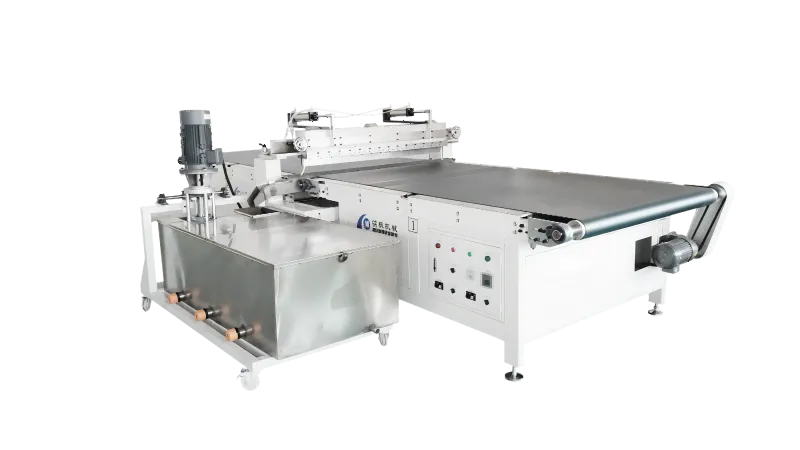
What is the working principle of a curtain coater?
Is the paint clogging problem related to structural design?
A curtain coating machine is a non-contact coating device that forms a "coating curtain" through the free fall of liquid. The paint is pumped from the storage tank to the distribution head, forming a stable and continuous thin curtain of liquid through slits or overflow outlets. When a workpiece (such as MDF board, particleboard, wooden door, or decorative panel) passes under the liquid curtain, the coating evenly covers its surface, achieving a highly consistent coating thickness.
Key components of a curtain coating machine include:
• Liquid reservoir and circulation system: Maintains the volume and flowability of the coating liquid.
• Pumping and filtration unit: Ensures a stable supply of coating liquid and filters impurities.
• Curtain head: Forms the liquid curtain through narrow slits and is a crucial component affecting paint clogging.
• Conveying system: Ensures the workpiece passes smoothly through the liquid curtain.
• Coating recovery system: Collects and recycles uncoated coating liquid.
In this system, "paint clogging" mainly refers to the solidification, sedimentation, or particle accumulation in the coating flow channel, nozzle, or return channel, leading to uneven or interrupted liquid flow. This phenomenon is closely related to equipment structure, coating characteristics, and operation and maintenance.
Are curtain coating machines really prone to paint clogging?
From both a theoretical and practical perspective, curtain coating machines are not prone to paint clogging. Conversely, with proper use and maintenance, the probability of paint clogging in curtain coating machines is far lower than in spray or roller coating equipment.
1. Continuous Paint Flow
During operation, the paint in a curtain coating machine is constantly circulating, exhibiting extremely high fluidity. Paint is continuously pumped from the storage tank to the coating head and then back to the tank. This dynamic circulation greatly reduces stagnant areas, thus lowering the risk of paint clogging.
2. Precise and Deposition-Preventing Slit Structure in the Coating Head
Modern curtain coating machines employ a slit structure machined from stainless steel or high-precision aluminum alloy. The internal surfaces undergo special polishing treatment, making it difficult for cured substances to adhere. Simultaneously, the formation of the liquid curtain is controlled by constant pressure, preventing paint from accumulating.
3. Effective Impurity Blocking with a Filtration System
The equipment is typically equipped with a multi-stage filtration system (coarse filtration + fine filtration), effectively preventing particles, air bubbles, or foreign impurities from entering the liquid curtain system, reducing the probability of clogging.
Therefore, from a technological perspective, curtain coating machines are not inherently prone to paint clogging. However, under certain conditions, improper paint management or equipment maintenance can still lead to localized paint blockage.
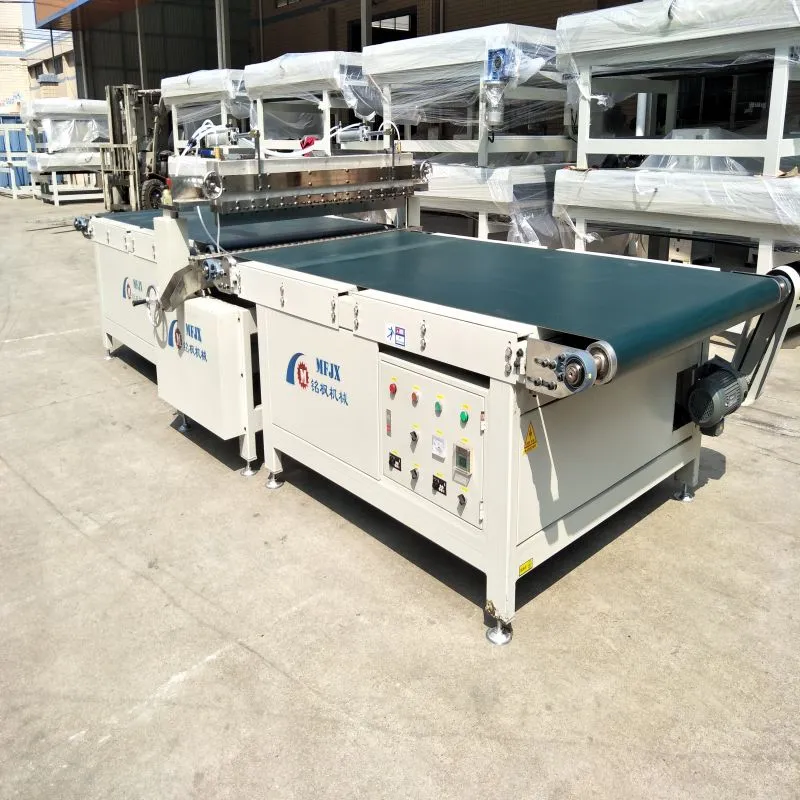
Why does paint blockage occur in curtain coaters? What are the common causes?
Although curtain coaters are scientifically designed, paint blockage can still occur in practical applications.
Here are some common causes of paint blockage in curtain coaters:
1. Inappropriate Paint Viscosity
Paint with excessively high viscosity will affect flowability, making the liquid curtain formation unstable, and may even stagnate and dry within the narrow slits of the coating head. Conversely, excessively low viscosity may also cause uneven flow, resulting in incomplete coating.
2. Paint Contains Particles or Impurities
During long-term use or circulation, if the paint is not adequately filtered, it is easy for dust, sawdust, hardened lumps, and other particulate matter to mix in, thus clogging the pipes or slits.
3. Paint Curing Reaction Not Effectively Controlled
For UV paints or two-component paints, if unreacted components remain in the system or the lighting conditions are abnormal, the paint will cure prematurely, thus clogging the flow channels.
4. Incomplete Cleaning
If the curtain coating machine is not thoroughly cleaned after each use, residual paint will dry and adhere to the coating head or the inner walls of the pipes, easily causing blockages during the next startup.
5. Improper Ambient Temperature and Humidity
Excessively high temperatures accelerate paint evaporation and surface drying, while excessively low humidity can lead to solvent imbalance. These factors affect paint flowability, indirectly causing paint blockage.
Which parts of a curtain coating machine are most prone to paint blockage?
Not all parts of the curtain coating machine system are prone to paint blockage. Blockage typically occurs in the following key locations:
• Coating head slits: The core area for liquid curtain formation. Impurities or dried paint accumulation directly affect coating uniformity.
• Return pipes: If solidified particles are mixed into the recovered paint, they may accumulate in bends or at the filter.
• Filter unit: Filter blockage is a common problem and requires regular replacement.
• Pump body and valves: Long-term paint stagnation or uneven flow can lead to deposits in these areas.
Regularly checking these areas is crucial for preventing paint clogging.
How to effectively prevent paint clogging on curtain coaters?
Paint clogging can be completely controlled through scientific management and standardized operation. The following are core strategies for preventing paint clogging on curtain coaters.
1. Strictly control paint viscosity and temperature
Paint should be adjusted according to the manufacturer's recommended range. Use a viscometer to regularly check and maintain it within the optimal flow range (e.g., 18-25 seconds DIN 4 cup). Simultaneously, control the paint temperature between 20–25°C to ensure fluid stability.
2. Enhance filtration system management
• Employ multi-stage filtration: coarse filtration (100 mesh) + fine filtration (200 mesh or higher);
• Replace filter cartridges regularly to prevent paint backflow and the introduction of sediment.
• Use compatible solvents when cleaning filters to ensure no residual paint adheres.
3. Daily cleaning and protection of the coating head
After coating, clean the inside of the coating head immediately to prevent residual paint from drying and hardening.
Use a dedicated solvent (compatible with the coating system) to circulate and rinse for 5–10 minutes, and keep the slits dry.
4. Set appropriate coating circulation time
Avoid prolonged static circulation; if the machine is stopped for more than 30 minutes, drain the system or switch to cleaning fluid circulation.
5. Maintain good environmental conditions
Keep the temperature stable and the air clean to prevent dust particles from entering the system. Increase ambient humidification if humidity is too low to prevent solvent evaporation from causing the coating to dry and harden.
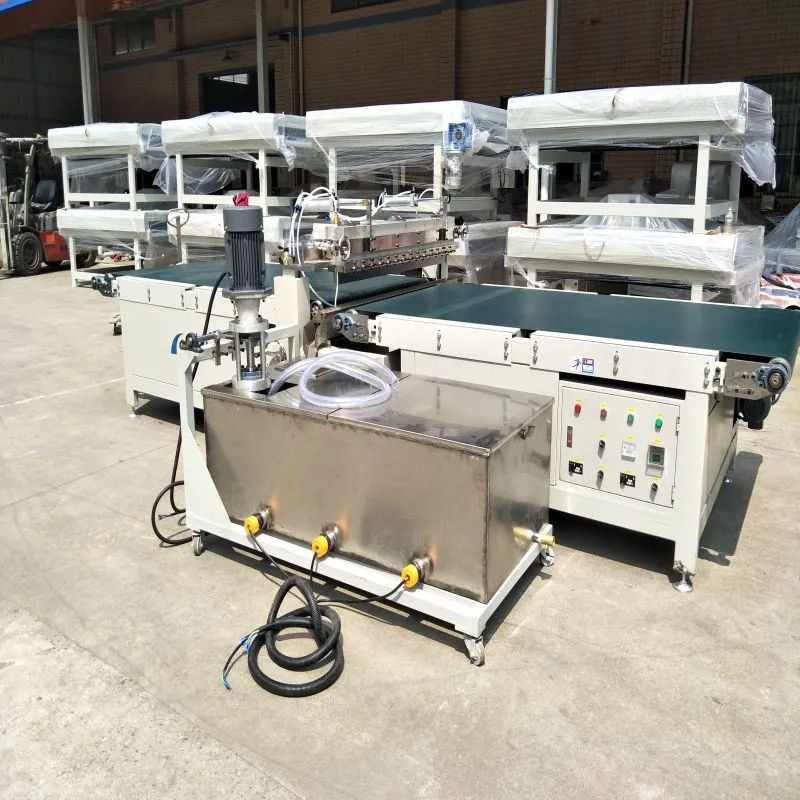
What should I do if the curtain coating machine gets clogged?
Even with preventative measures, clogging may occasionally occur. In this case, proper handling is necessary.
1. Stop coating immediately
If uneven liquid curtain, breakage, or reduced flow is detected, immediately stop delivery and pumping to prevent damage to the coating head.
2. Check the coating circulation system
Open the circulation pipes and check for sediment or hardened lumps. If present, thoroughly clean and replace the filter.
3. Clean the coating head slits
Use a soft-bristled brush or high-pressure cleaning equipment to remove residual paint. Do not use metal tools to scrape.
4. Inspect the pump body and return system
Ensure the pump impeller is free of paint clumps and that valves operate smoothly. Disassemble and clean if necessary.
5. Readjust paint ratio and viscosity
Paint blockage often stems from changes in paint viscosity or unstable reactions. After cleaning, retest the paint viscosity and curing properties.
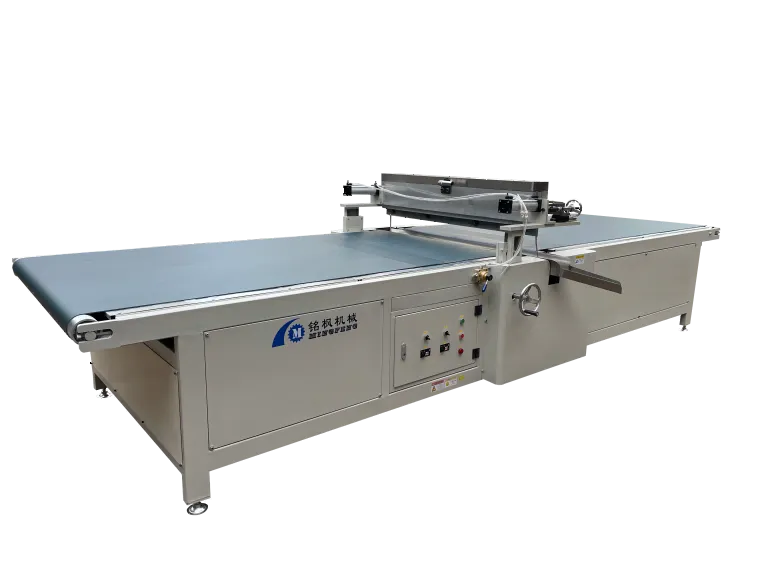
The Relationship Between Paint Blockage and Operating Habits in Curtain Coating Machines
Besides equipment design and paint quality, the operator's daily habits are also a significant factor determining the frequency of paint blockage.
• Mistake 1: Prolonged downtime without cleaning.
• Mistake 2: Mixing paints, leading to reactions or precipitation.
• Mistake 3: Using incompatible solvents for cleaning, causing chemical reactions.
• Mistake 4: Neglecting the status of the filtration system.
Good operating practices (such as cleaning immediately after each coating and regularly checking system flow) can significantly improve the service life and operational stability of the curtain coating machine.
Curtain coating machines are not prone to paint clogging; the key lies in scientific management.
Regarding the question, "Are curtain coating machines prone to paint clogging?", the answer is very clear: —Curtain coating machines are not prone to paint clogging.
Paint clogging is only an abnormal phenomenon under certain extreme conditions, mainly stemming from improper paint management, filtration, or untimely cleaning. As long as viscosity is properly controlled, the filtration system is kept clean, and the equipment is cleaned according to specifications, curtain coaters can operate stably for extended periods, consistently delivering high-quality coating results.
Therefore, for applications such as wood products, MDF, particleboard, and decorative panels, curtain coaters remain one of the most reliable, economical, and efficient coating solutions.