

Surface spraying has become increasingly important in modern manufacturing since it influences product aesthetics, longevity, and marketability.
Apart from furniture and automotive industry where paint is applied mostly over metal surfaces to prevent corrosion and enhance looks of the goods, electronic devices, hardware, machinery, as well as building material decoration have also seen many manufacturers turning more and more toward painting processes in order to not only look good but also to increase their value.
A few years ago, numerous organizations were dependent mostly on human effort for painting the object surfaces. The use of the manual method in paint application was widespread as it required little equipment investment and was also very easy to handle. But, as a consequence of the growth in production, a demand for higher quality standards has been voiced by the clients and the workers' wages have risen, the weaknesses of manual spraying have become more visible.
Manual spraying’s major problem is how it is highly error-prone and yet human-dependent. There are a lot of different factors that influence the process of painting, such as how skilled the worker or painter is, temperature and humidity, position of the spraygun, moving speed of the paint applicator, degree of the paint misting, and also conditions of the working environment. It is impossible even for a professionally trained painter to keep on making the same paint spray every time for a considerable period through manual painting only.
Take for example if a group of workers from the production painting department was assigned to work the same kind of product at the same time they did not have much paint spray knowledge and they were also given very little guidance. They might have been able to do an average job but it might still be far from what was really wanted by the company. The finished products may show differences in color tones, film layers thickness variation, lack of some parts being fully painted, a lot of paint being sprayed to a minimum area (known as overspray), drips and an appearance akin to an orange peel.
In recent years, painting machines have evolved into one of the key elements of an automated workshop for high-end production.
Automated systems use the power of machine-controlled movements, computer-controlled settings, and smart spraying modules to bring in a whole new level of spraying operation without the interference of human errors.
Spraying errors that are often the result of human mistakes and inconsistencies can therefore be minimized considerably by replacing humans with machines that operate automatically. It can be safely said that spraying robots not only speed up production but also greatly enhance product quality as compared with manual spraying. As a result, manufacturers can produce a higher and consistent level of quality at a much faster rate.
If we look at some of the statistics on the application of industrial automation, the use of automated spray equipment would generally lead to a decline of 30% to 70% of painting quality variations. Moreover, a considerable decrease in time and money spent on repairing paint job and also in material consumption will definitely result. For those engaged in bulk manufacturing, better quality means greater profit margin.
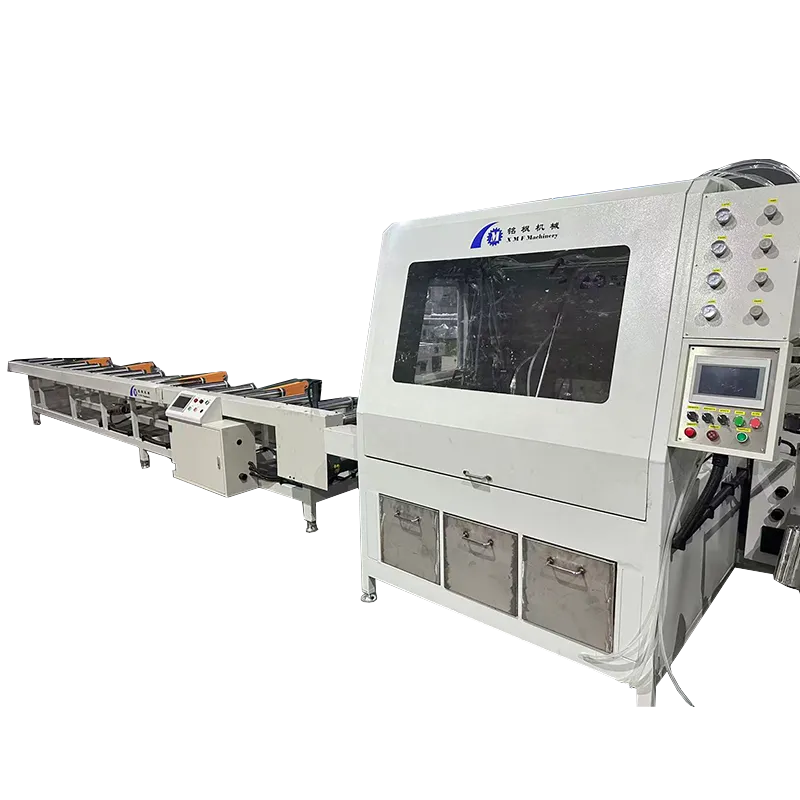
Why is manual spraying prone to errors?
Manual spraying may seem like simply applying paint evenly to the product surface, but it actually involves several parameters that require precise control. These include the distance between the spray gun and the product, the spray gun's movement speed, the spray angle, paint pressure, and the number of coats, all of which affect the final result.
Because these parameters rely heavily on the operator's experience, they are prone to variation.
1. Unstable spraying distance leads to variations in paint film thickness
The distance between the spray gun and the product surface is a crucial factor affecting spraying quality.
If the spray gun is too close, the paint concentration per unit area increases, easily resulting in an excessively thick paint film, runs, or uneven drying. If the distance is too far, it may lead to increased paint loss during atomization, resulting in insufficient coverage or a rough surface.
Even with training, it is difficult to maintain a consistent spray gun distance throughout the entire spraying process during manual operation.
For example, when manually painting a large sheet or complex structural part, the operator needs to constantly move the arm to adjust its position. Over long periods, this movement can lead to variations in paint film thickness across different areas.
Automatic Spraying Machines, on the other hand, control the spray gun position through mechanical structures, maintaining a fixed distance and reducing this error.
2. Variations in Spraying Speed Cause Color and Thickness Differences
The speed of the spray gun movement is also a crucial factor affecting coating quality.
If the movement speed is too fast, insufficient paint is absorbed per unit area, potentially resulting in a lighter color or incomplete coverage; if the speed is too slow, localized paint buildup can occur, leading to uneven thickness.
During manual spraying, it is difficult for operators to maintain a completely consistent movement speed over extended periods.
Especially in high-volume production environments, employees need to repeat spraying actions hundreds or even thousands of times daily. As fatigue increases, the stability of their movements gradually decreases.
Automatic Spraying Machines, however, control the movement speed through a program, operating according to preset parameters regardless of the production volume.
3. Differences in Operator Experience Affect the Final Results
Manual spraying is highly dependent on the operator's skill level.
Experienced spray painters can typically adjust their spraying methods by observing the product's surface condition, but new employees require a longer training period to reach a stable level.
For businesses, staff turnover also poses quality risks. If key spray painting personnel leave, new employees need retraining, which can easily lead to fluctuations in product quality.
Automatic Spraying Machines, on the other hand, save spraying parameters through digital programs, shifting production experience from "relying on individual skills" to "relying on equipment standards."
This is a key reason why more and more manufacturing companies are choosing automatic painting machines.
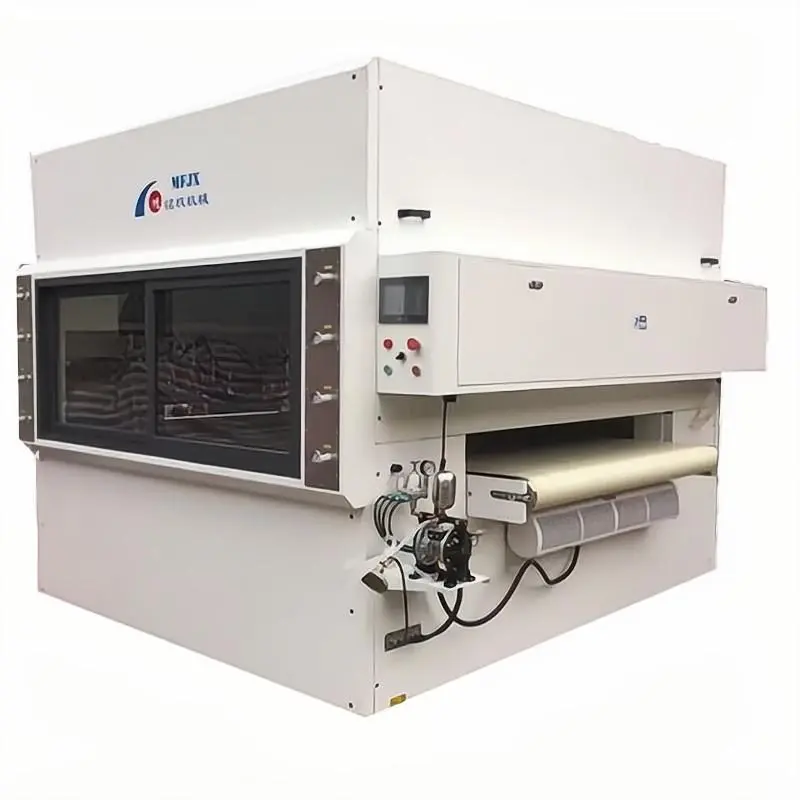
How do Automatic Spraying Machines reduce manual spraying errors?
Automatic Spraying Machines do not simply replace manual spray guns; rather, they standardize the entire spraying process through mechanical control, intelligent systems, and parameter management.
1. Precise Control of Spray Gun Movement Trajectory
One of the biggest advantages of Automatic Spraying Machines is their ability to repeat movements along a set path.
In traditional manual spraying, the spray gun's movement trajectory may be influenced by operating habits, while automatic spray painting machines can achieve precise path control through robotic arms, reciprocating machines, or dedicated motion systems.
For example, in the painting of automotive parts, the product surface may have complex curves. Manual operation requires relying on experience to adjust the spray gun angle, while an automatic painting machine can program its motion according to the product structure, ensuring the spray gun always maintains the optimal spraying angle.
This precise motion effectively reduces:
• Missed areas;
• Repeated spraying;
• Localized over-thickness;
• Insufficient edge coverage.
This advantage is particularly significant for industrial products requiring high consistency.
2. Automatic control of spraying distance improves paint film uniformity
Automatic Spraying Machines typically use a fixed mechanical structure to control the distance between the spray gun and the workpiece, making the spraying process more stable.
A stable distance ensures consistent paint atomization, resulting in similar coating thicknesses across different areas of the product.
For example, in furniture panel production, significant variations in the spray gun distance can cause color differences between the center and edges of the panel. An automatic painting machine maintains uniform parameters throughout the sprayed area, improving the overall product finish.
According to data from some industrial coating applications, the adoption of automatic spray painting machines significantly reduces paint film thickness deviation, making it easier to control within process requirements compared to manual spraying.
3. Reduced Human Influence Through Programmed Parameters
Modern automatic spray painting machines are typically equipped with PLC control systems that can save spraying parameters for different products.
These parameters include:
• Spray gun movement speed;
• Spraying pressure;
• Paint flow rate;
• Number of sprays;
• Spray gun opening time.
When a company produces different product models, it only needs to call the corresponding program.
The greatest value of this approach lies in transforming a process that previously relied on employee experience into a standardized production flow.
For example, a furniture company producing multiple models of cabinet doors would require workers to readjust their operating methods every time a product is changed if manual spraying is used. With automatic painting machines, however, process transitions can be quickly completed simply by switching programs.
4. Stable Control of Paint Consumption, Reducing Material Waste
During manual spraying, paint consumption often varies significantly due to different operating habits.
Some employees, to ensure effective coverage, may increase the amount of paint sprayed, leading to material waste; others, to increase speed, may reduce the amount sprayed, affecting product quality.
Automatic Spraying Machines can precisely control the paint output, spraying according to set parameters.
This not only ensures product quality but also reduces production costs.
For companies engaged in long-term, high-volume production, even a small reduction in daily paint waste can accumulate into significant cost savings over time.
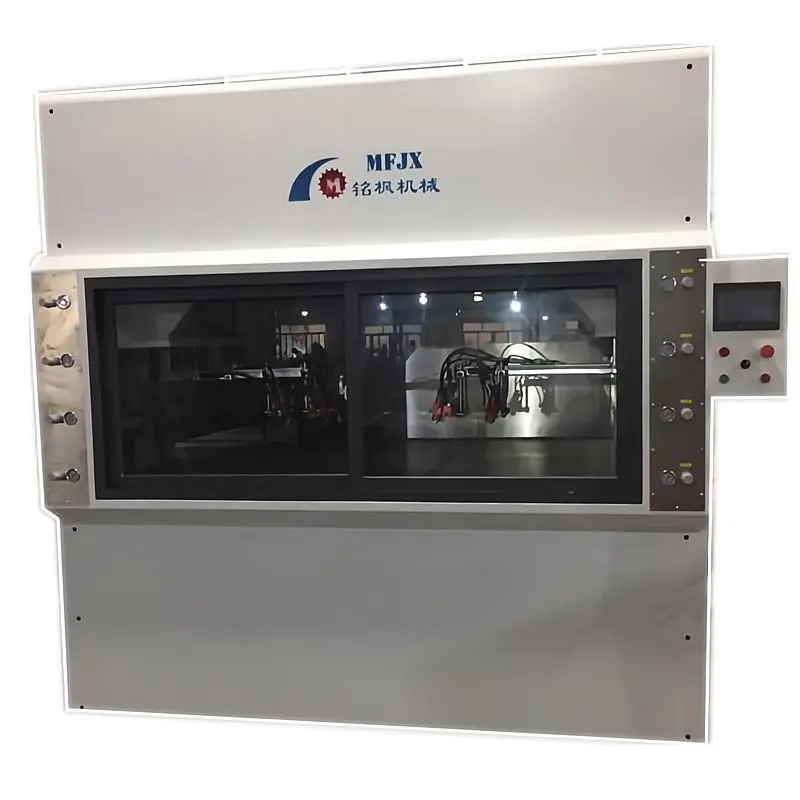
How do Automatic Spraying Machines reduce manual spraying errors in different industries?
Automatic Spraying Machines reduce manual spraying errors not only through increased equipment speed but, more importantly, through their ability to achieve more stable spraying process control tailored to the specific characteristics of products in different industries. Different industries have different requirements for spraying quality. For example, the furniture industry prioritizes paint film smoothness and color consistency, the automotive industry focuses on covering complex structures and durability, and the electronics industry emphasizes aesthetics and refined spraying. Therefore, automatic painting machines need to be matched with industry-specific processes to maximize their error reduction advantages.
1. Furniture and Timber Industry: Reducing Paint Film Thickness and Color Variation
Furniture manufacturing is one of the most mature applications of automatic painting machines. Products such as wooden doors, cabinets, tabletops, and decorative panels typically require multiple spraying steps, including primer, topcoat, and UV coating. These products have high aesthetic requirements, and even slight differences in spraying can affect the final sales results.
When traditionally spraying wood manually, the wood surface has texture and absorbency, leading to variations in paint absorption across different areas. If the sprayer doesn't control the paint application properly, problems such as inconsistent color depth, insufficient coverage at edges and corners, or uneven paint film thickness can easily occur.
Automatic Spraying Machines can programmatically control the spray gun's movement path, ensuring that each board is sprayed along the same trajectory. Simultaneously, the equipment can stably control spraying pressure and paint flow, reducing fluctuations caused by manual operation.
For example, in large furniture manufacturing companies, hundreds or even thousands of the same cabinet doors may be processed daily. If relying on manual spraying, even using the same paint, color differences can occur between different employees. Automatic Spraying Machines can maintain standardized spraying parameters, ensuring consistent appearance across batches.
Furthermore, the furniture industry typically requires multiple coating layers. Automatic Spraying Machines can be integrated with UV curing machines, conveyor systems, and automated inspection equipment to form a complete automated coating production line, making the entire production process more stable.
2. Metal Manufacturing Industry: Reducing Insufficient Coverage and Thickness Deviations
Metal product coating typically prioritizes protective performance. Automotive parts, machinery housings, hardware components, and building metal materials all require coatings to enhance corrosion resistance and extend service life.
One of the biggest sources of error when manually spraying metal products is the difficulty in evenly covering complex structural areas. For example, a mechanical part may contain grooves, holes, and surfaces with multiple angles. Relying on manual adjustment of the spray gun angle easily leads to localized missed areas.
Automatic Spraying Machines, through robotic arms, multi-axis motion systems, or automatic reciprocating mechanisms, can complete spraying along a preset trajectory, maintaining relatively stable coating results even with complex structures.
In the automotive parts manufacturing sector, automatic painting machines have become key equipment for improving quality stability. Automotive parts typically require high consistency, as even slight coating variations can affect appearance, corrosion resistance, and even subsequent assembly.
Automatic spraying machines allow companies to precisely control spraying distance, angle, and speed, resulting in a more uniform protective layer on the product surface.
Meanwhile, the metal industry often produces in large batches, and manual spraying is susceptible to employee fatigue. For example, after working continuously for several hours, spraying speed and intensity may change. Automatic spraying machines, however, can maintain consistent operating conditions for extended periods, making them particularly suitable for continuous industrial production.
3. Plastics Industry: Reducing Adhesion Poorness and Appearance Defects
Plastics coating is another area heavily reliant on automatic spraying machines. Mobile phone casings, automotive interior parts, appliance panels, and consumer electronics all require spraying to improve their appearance and functionality.
Plastics have unique characteristics compared to wood and metal; their surface energy is typically lower, making direct paint adhesion difficult. If spraying parameters are not properly controlled, problems such as paint peeling, pinholes, orange peel texture, and uneven surface finish can easily occur.
When manually spraying plastic parts, operators need to adjust the spraying method according to the product's condition, which requires a high level of skill. Automatic Spraying Machines, on the other hand, can control the spraying process through fixed parameters, resulting in a more stable coating.
For example, electronic product casings typically require high gloss, no color difference, and no obvious spraying marks. If speed variations occur during manual spraying, it can lead to localized color differences. Automatic Spraying Machines maintain a stable motion trajectory, improving the consistency of the product's appearance.
For the plastics industry, Automatic Spraying Machines not only reduce human error but also increase production cycle time, meeting the demands of rapid updates and mass production in the consumer electronics industry.
What economic benefits do automatic spraying machine possess compared with manual spraying?
A return of investment (ROI) is one of the main worries of numerous companies that will buy automatic painting machines. Despite the fact that the initial cost of automatic spraying machines is greater than that of manual machines, they offer significant savings in the long term regarding the production costs.
First of all, automatic spraying machines bring down the labor expense.
The increasing labor costs in manufacturing have put companies relying solely on skilled spraying workers at a disadvantage as they face difficulties in finding such workers and also experience the high turn-over staff problem. Besides that, automatic spraying machines can greatly reduce the repetitive work of human beings and thus the level of production consistency can be further improved.
Second, automatic spraying machines reduce losses of materials. Manual painters can be prone to the excessive use of paint to make sure every place is covered. But with automatic sprays, the amount of paint being released is accurately regulated, and that is how both the material consumption and the workmanship are enhanced together.
From some industrial applications, it was shown that a certain percentage of paint can be saved with the use of automated spray systems instead of manual operation. Of course, the percentage itself is different depending mostly on product types, spray methods and equipment layout.
Last but not least, the usage of automatic spraying machines cuts down rework or correction. It is not hard to imagine a product getting spoiled due to a paint application issue, and that is just one more expense in terms of both materials and labor if an error is not discovered in good time. It is one such feature of automatic spray painting machines that allows the paint job to be practically free from blemishes, and thereby greatly reduces the chance of any kind of correction.
In conclusion, besides speeding up the production and saving manpower, automatic spray painting machines also offer a powerful means of quality assurance and cost control over a large number of production batches.
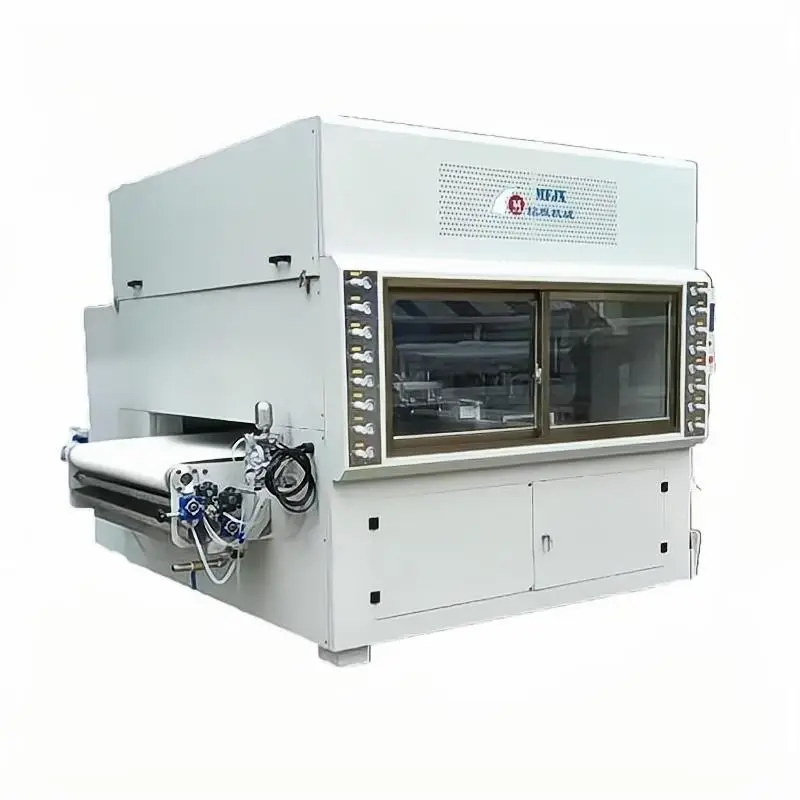
FAQ
1. Can automatic spraying machines completely eliminate manual spraying errors?
Automatic spraying machines cannot completely eliminate all errors, but they can significantly reduce errors caused by manual operation. Through program control and precise motion systems, spraying quality can be made more consistent.
2. Which industries are suitable for automatic painting machines?
Automatic spraying machines are widely used in industries such as furniture, wood, automotive parts, hardware, electronics, plastics, and machinery.
3. What is the biggest advantage of automatic spraying machines compared to manual spraying?
The biggest advantage is stability. Automatic spraying machines can maintain consistent operating parameters, resulting in more consistent spraying effects across different batches of products.
4. Can an Automatic Spraying Machine reduce production costs?
Yes. Although the initial investment is higher, in the long run, an automatic painting machine can reduce labor costs, material waste, and rework losses.
5. What is the most important factor when choosing an Automatic Spraying Machine?
The appropriate equipment should be selected based on the product material, size, production quantity, and spraying requirements, rather than simply comparing equipment prices. An automatic spray painting machine that suits your specific production needs will maximize its value.